
Chef Lupita
Agua de Alfalfa
Ciudad de México's highland market agua fresca, fresh alfalfa blended with pineapple and lime until bright green, strained clean, and poured cold from the vitrolero.
A cooking platform built around craft, culture, and the stories behind what we eat.
Created by
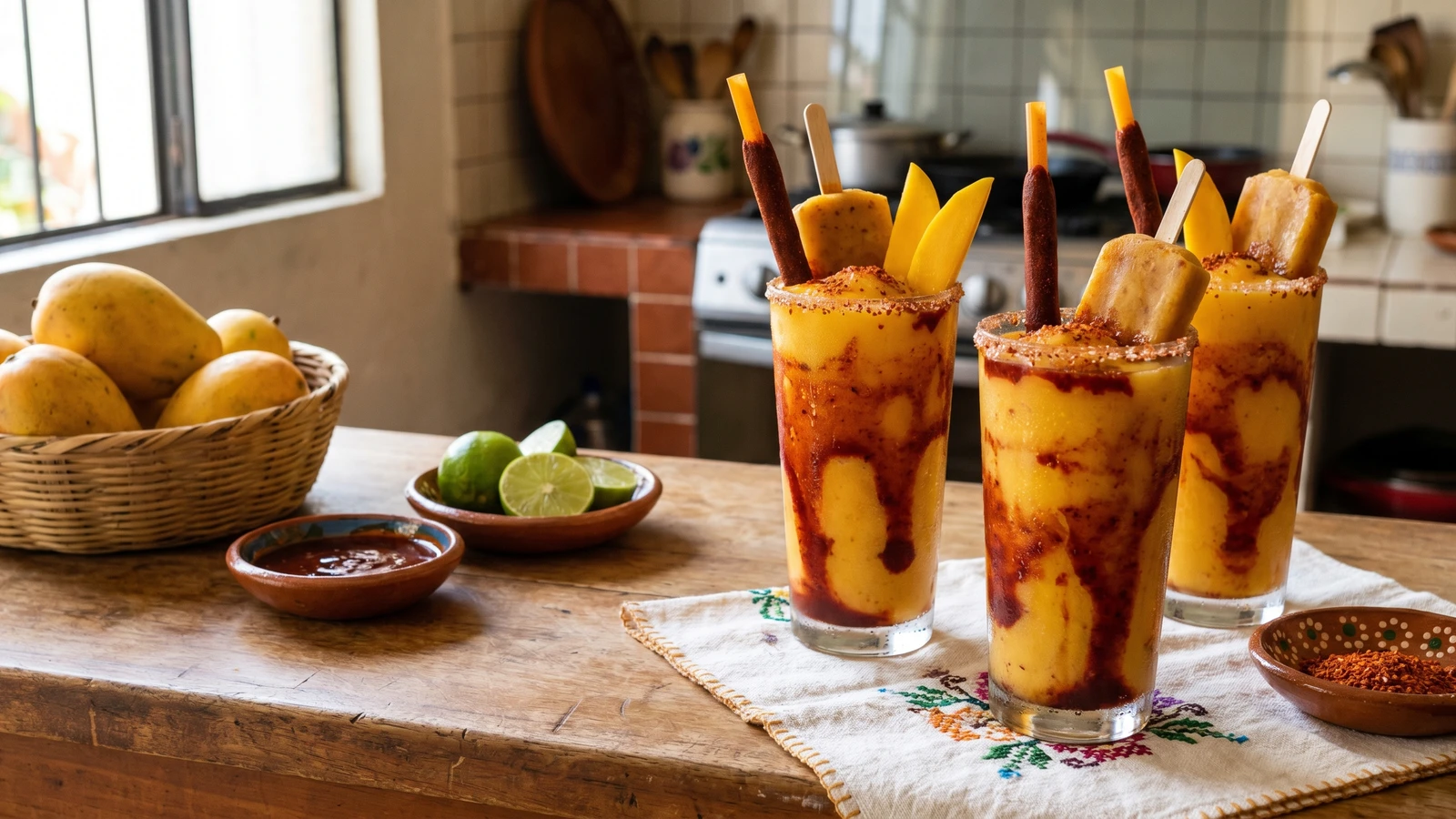
Colima's street-corner frozen mango drink, layered with glossy chamoy, lime, chile piquin, tamarind candy, and enough ice to stand up to a Manzanillo afternoon.
Colima, the small Pacific state between Jalisco and Michoacan, owns this version through heat, mango, and street habit. In Tecoman and Manzanillo, ripe mango is not a luxury ingredient. It is what the market gives you when the air is heavy and the afternoon wants something cold, sour, salty, and sweet in the same glass.
The mango does the body, but the chamoy does the character. Good chamoy tastes of dried fruit, chile de arbol, guajillo, tamarind, jamaica, lime, sugar, and salt. Bad chamoy tastes like red syrup from a plastic bottle. Use the plastic bottle if that is all you have, but understand the compromise. A chamoyada lives or dies by that red sauce.
I learned this style from women running paleta and raspado stands near the coast, the ones who work fast because the ice does not wait. They layer the glass, not because it photographs nicely, but because every spoonful should hit differently: mango first, then chile, then salt, then tamarind. La cocina no es decoracion, es trabajo, even when the work is a frozen drink in a plastic cup.
Chamoy in Mexico descends from Asian salted preserved fruit traditions that entered Mexican port and trade networks in the 19th and 20th centuries, then became fully Mexican through chile, lime, tamarind, and local fruit. The frozen chamoyada grew from the same popular street-food world as raspados, paletas, and nieves de garrafa, especially in hot western and coastal states where fruit and ice became an everyday economy. Colima's mango-producing region around Tecoman makes mango chamoyada feel local rather than generic: the fruit is the state speaking through the glass.
Quantity
4 large
peeled and diced, plus extra spears for serving
Quantity
3 cups
Quantity
1/2 cup
Quantity
1/3 cup
plus more only if the blender needs it
Quantity
3 tablespoons
or to taste depending on the mangoes
Quantity
1/4 teaspoon
Quantity
1 cup
divided
Quantity
2 tablespoons
Quantity
1 tablespoon
Quantity
1 tablespoon
Quantity
4
Quantity
4
Quantity
for wetting the glass rims
| Ingredient | Quantity |
|---|---|
| ripe Manila or Ataulfo mangoespeeled and diced, plus extra spears for serving | 4 large |
| ice | 3 cups |
| fresh lime juice | 1/2 cup |
| cold waterplus more only if the blender needs it | 1/3 cup |
| sugaror to taste depending on the mangoes | 3 tablespoons |
| fine sea salt | 1/4 teaspoon |
| homemade chamoydivided | 1 cup |
| chile piquin powder | 2 tablespoons |
| fine sea salt for the rim | 1 tablespoon |
| sugar for the rim | 1 tablespoon |
| tamarind candy straws | 4 |
| small mango paletas (optional) | 4 |
| lime wedges (optional) | for wetting the glass rims |
Mix the chile piquin powder, salt, and sugar on a small plate. Rub the rim of each tall glass with a lime wedge, then dip it into the chile mixture. Chile piquin gives a sharp, clean bite. Do not use a mystery red powder from the back of the cabinet. Preguntale a las senoras del mercado.
Spoon two tablespoons of chamoy into the bottom of each glass. Drag a little up the inside walls with the spoon so the red sauce streaks the glass. This is not decoration only. Each sip should pull mango, lime, salt, chile, and fruit vinegar together.
Put the diced mango, ice, lime juice, cold water, sugar, and sea salt in the blender. Blend until thick and smooth, like a frozen raspado that can still move through a straw. If the blender struggles, add water one tablespoon at a time. Do not thin it into agua fresca. That is another drink.
Pour the mango mixture halfway into each prepared glass. Add another spoonful of chamoy, then fill with more mango. The layers should look uneven and generous, the way a paletera serves it when the afternoon heat is doing its work.
Drizzle the remaining chamoy over the top. Add mango spears, a tamarind candy straw, and a small mango paleta if using. Serve immediately, before the ice loosens and the mango loses its body. Asi se hace y punto.
1 serving (about 425g)
Culinary guides, cultural storytelling, and the editorial depth that makes cooking meaningful.
Discover Culinary ExplorerChef Lupita
Ciudad de México's highland market agua fresca, fresh alfalfa blended with pineapple and lime until bright green, strained clean, and poured cold from the vitrolero.

Chef Lupita
Aguascalientes' Lenten agua fresca, jewel-red from cooked beet and full of apple, banana, orange, lettuce, and ground peanuts, served cold when Holy Week meets the Feria de San Marcos.

Chef Lupita
Sonora and Sinaloa's creamy malted barley water, built on toasted cebada perla, Mexican canela, vanilla from Papantla, and evaporated milk. Pink-beige, rich, and served cold over heavy ice in a heavy glass tumbler. Liquid cookie comfort the northwest way.

Chef Lupita
Yucatán's everyday tonic of boiled chaya leaves blended with lima agria, sugar, and ice. The bright green jarra that sits on every Peninsula table from Mérida to Valladolid.