
Chef Dimitra
Chios Nerantzi Glyko Koutaliou (Νεράντζι Γλυκό Κουταλιού)
Chios bitter orange peel rolled into tight coils, blanched through clean waters, then preserved in a clear fragrant syrup for the spoon-sweet tray.
A cooking platform built around craft, culture, and the stories behind what we eat.

Created by
Zakynthos mandolato is the Ionian almond nougat that depends on one honest test: honey syrup beaten into egg white until the ribbon stands, then pressed between thin wafers.
Mandolato Zakynthou is Zakynthos's Ionian almond nougat: white, chewy, honeyed, crowded with toasted almonds, and held between thin wafer sheets. It isn't cake, and it isn't a syrup sweet. It is a feast-day confection, cut small because sweetness should behave itself.
The method that decides it is the beating after the hot honey syrup meets the egg white. Cook the syrup to 143°C, then beat until the mass turns thick and heavy and a ribbon sits on the surface before sinking. Stop too early and it will ooze between the wafers. Push too far and the almonds won't fold in. That is the line.
For Zakynthos I keep the flavor plain: good honey, toasted blanched almonds, and the small breath of vanilla many island confectioners use. I don't invent it. I find it, I test it, I write it down. Cut it with coffee after Christmas dinner or wrap pieces for a name-day; this is how a sweet stays alive, on the table and in the hand.
Mandolato Zakynthou belongs to the Ionian island kitchen shaped by Venetian rule from 1485 to 1797; its name comes from mandorla, the Italian word for almond. It sits beside Italian mandorlato and torrone, but Zakynthos made the form its own with local honey, egg white, almonds, and wafer sheets. In the nineteenth and twentieth centuries, confectioners and fair vendors sold it for Christmas, weddings, and panigyria, portable enough to travel home in a paper packet.
Quantity
2 large sheets
trimmed to fit a 20 x 30cm pan
Quantity
350g
Quantity
300g
Quantity
250g
Quantity
80ml
Quantity
30g
Quantity
70g
room temperature
Quantity
1 teaspoon
Quantity
1/4 teaspoon
Quantity
1/2 teaspoon
| Ingredient | Quantity |
|---|---|
| edible wafer sheets (fyllo ostias, φύλλα όστιας)trimmed to fit a 20 x 30cm pan | 2 large sheets |
| whole blanched almonds | 350g |
| Greek thyme honey or mild blossom honey | 300g |
| granulated sugar | 250g |
| water | 80ml |
| glucose syrup (optional) | 30g |
| egg whitesroom temperature | 70g |
| lemon juice | 1 teaspoon |
| fine sea salt | 1/4 teaspoon |
| vanilla powder | 1/2 teaspoon |
Line a 20 x 30cm shallow pan with parchment, leaving a little overhang. Trim one wafer sheet to fit the bottom and keep the second sheet ready for the top. Once the nougat is beaten, it sets its mind quickly, so the pan must be waiting.
Heat the oven to 160°C. Spread the almonds on a tray and toast for 10 to 12 minutes, until they smell sweet and nutty but stay pale. Turn the oven off and leave them warm inside. Warm almonds fold into the nougat without shocking it into stiffness.
Put the egg whites, lemon juice, and salt in the bowl of a stand mixer fitted with the whisk. Beat to soft peaks, not dry peaks. The whites should mound and lean over at the tip, ready to take the syrup.
Put the honey, sugar, water, and glucose syrup, if using, in a heavy saucepan. Stir over medium heat only until the sugar dissolves, then stop stirring and let it boil to 143°C, or 145°C in a damp kitchen. Hot sugar burns badly, so keep the handle turned in and work calmly.
With the mixer running on medium-low, pour the hot syrup into the egg whites in a thin stream down the side of the bowl. Increase to medium-high and beat for 8 to 10 minutes, until the nougat turns ivory, thick, and heavy, and a ribbon sits on the surface before slowly sinking. This is the step that decides the set.
Add the vanilla powder, then fold in the warm almonds with a sturdy oiled spatula, or switch briefly to the paddle attachment on low speed. Work quickly and scrape right to the bottom of the bowl so every almond is coated.
Scrape the nougat onto the bottom wafer and spread it into an even slab with an oiled spatula. Lay the second wafer on top and press gently with parchment and a flat board. Do not chase perfect corners. Zakynthos mandolato should look generous, not nervous.
Let the mandolato set at cool room temperature for at least 3 hours, preferably 4. Lift it from the pan and cut it into small bars with a long serrated knife. Wrap pieces in parchment and store airtight at cool room temperature for up to 2 weeks.
1 serving (about 26g)
Culinary guides, cultural storytelling, and the editorial depth that makes cooking meaningful.
Discover Culinary ExplorerChef Dimitra
Chios bitter orange peel rolled into tight coils, blanched through clean waters, then preserved in a clear fragrant syrup for the spoon-sweet tray.

Chef Dimitra
Chios gives vanilla submarine its mastic breath: a pearly spoon sweet stirred stiff, served cold in water, and offered as the simplest kerasma.
Chef Dimitra
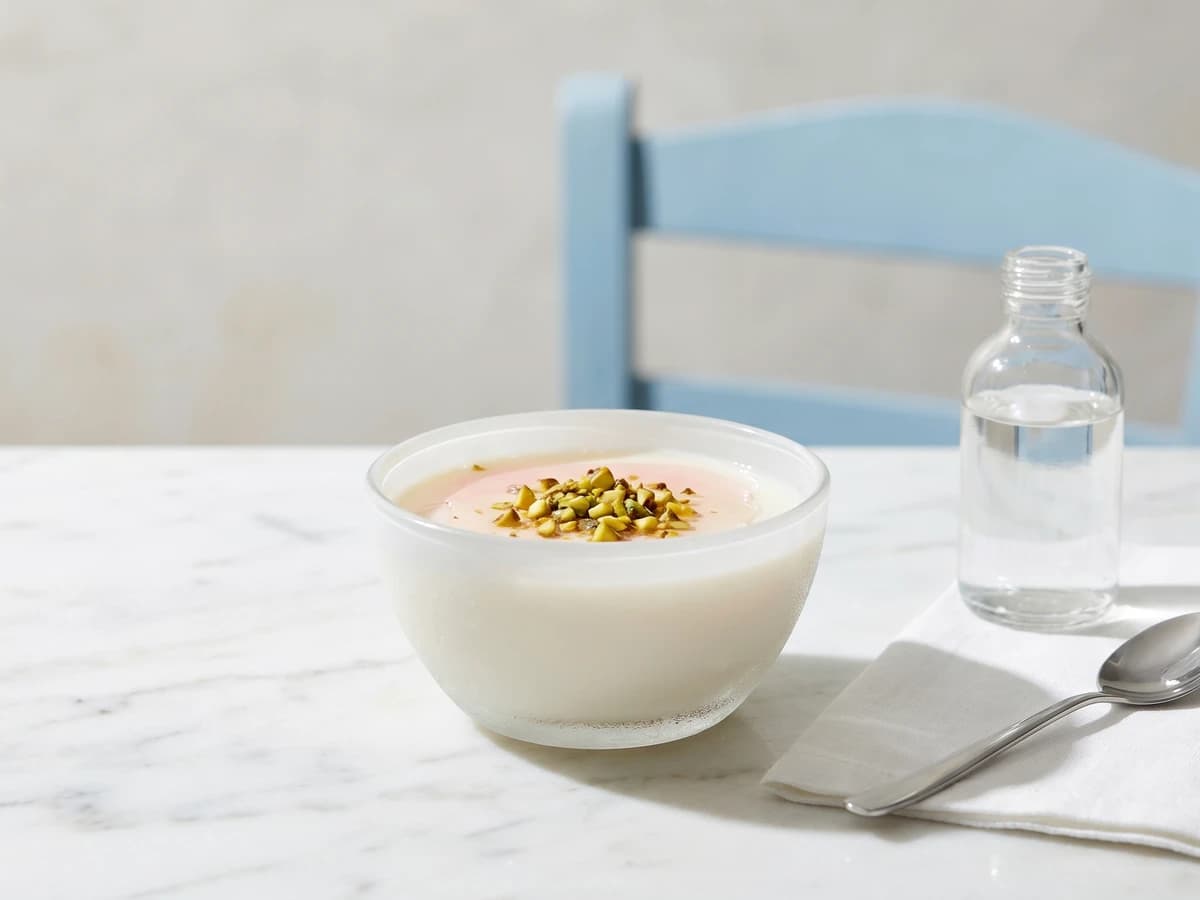
Mahalepi is the cooling milk pudding of Cyprus and the Politiki table: pale, trembling, and loosened at the spoon with cold rosewater syrup.
Chef Dimitra
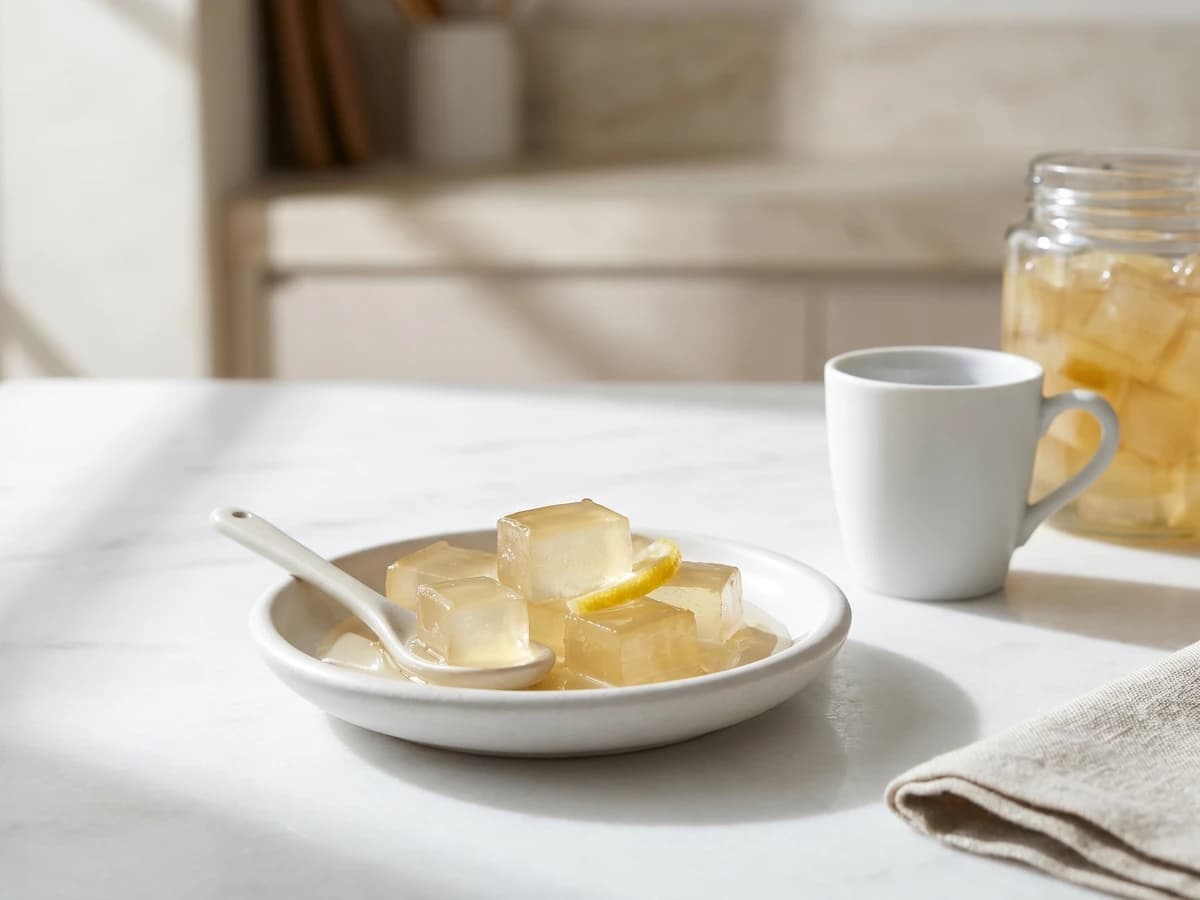
Cyprus keeps the watermelon after the red flesh is gone: firm white rind, lime-soaked for snap, simmered slowly in lemon syrup until each piece shines on the spoon.