
Chef Lesia
Buzhenyna (буженина, garlic-studded roast pork)
A whole pork neck takes garlic into little knife pockets, roasts until the crust goes dark and fragrant, then rests overnight so every cold slice tastes better than shop ham.
A cooking platform built around craft, culture, and the stories behind what we eat.
Created by
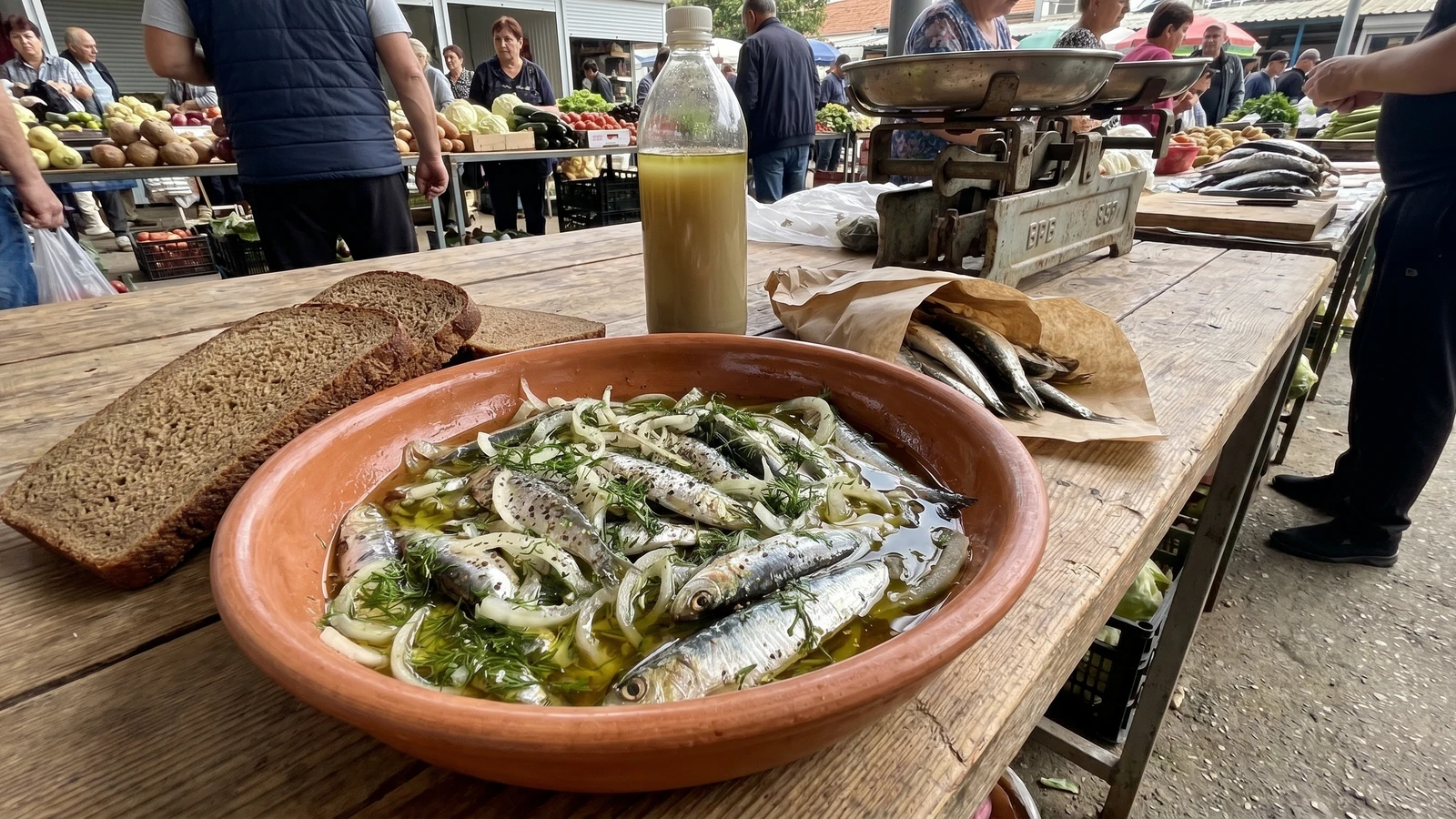
The fish go into the bowl silver and nervous, and by morning they have turned firm, glassy, and briny enough to make bread taste necessary.
The most beautiful thing about khamsa is that you barely cook it at all. The tiny anchovies go into the bowl silver and nervous, layered with salt, and by morning they have turned firm, glassy, and briny enough to make bread taste necessary. This is food from the Black Sea edge: cheap, quick, sharp with onion, softened with green sunflower oil, eaten with fingers if the table is honest.
Malosolna means lightly salted, so the salt must be measured against the fish, not thrown in like a handful of winter road. Too little and the fish stays soft and uncertain; too much and you've made something for storing, not eating tonight. Six percent by weight is where I start. Aunt Nadia would write, "until it looks like glass," and annoyingly, she was right.
Keep everything cold. This is the one place where I want your scale and your fridge working harder than your romance. Once the fish has tightened and the flesh turns translucent at the backbone, you rinse only if it tastes too salty, then dress it simply: onion, dill, black pepper, Ukraine in a bottle of oil. Enough for eight guests or one hungry Ukrainian.
Khamsa is the Black Sea anchovy, especially tied to Odesa, Mykolaiv, Kherson, and the Azov-Black Sea fishing coast, where autumn and winter shoals made it one of the most democratic seafoods on the table. Light salting was a household and market method, different from long preservation salting: it made fish ready by the next day, still tender and bright, sold from buckets and eaten with bread, potatoes, onion, and sunflower oil.
Quantity
1 kg
very fresh or previously frozen, kept cold
Quantity
60g
6 percent of the fish weight
Quantity
1 small
very thinly sliced
Quantity
3 tablespoons
Quantity
1 small bunch
roughly chopped
Quantity
1 teaspoon
lightly crushed
Quantity
1
crumbled
Quantity
1 tablespoon
for loosening
Quantity
to serve
| Ingredient | Quantity |
|---|---|
| small anchovies, ideally Black Sea khamsavery fresh or previously frozen, kept cold | 1 kg |
| fine sea salt6 percent of the fish weight | 60g |
| red or white onionvery thinly sliced | 1 small |
| unrefined sunflower oil | 3 tablespoons |
| dillroughly chopped | 1 small bunch |
| black peppercornslightly crushed | 1 teaspoon |
| bay leaf (optional)crumbled | 1 |
| cold water or mild brine from the bowl (optional)for loosening | 1 tablespoon |
| rye bread or boiled potatoes (optional) | to serve |
Keep the anchovies cold from the moment they reach your kitchen. If they are fresh-caught, freeze them first for parasite safety, then thaw in the fridge. They should smell clean and marine, not sour or tired. Tiny fish forgive a lot at the table, but they don't forgive warmth.
Rinse the fish quickly in very cold water and drain well. If the anchovies are tiny, you can salt them whole, the southern market way. If they are larger or your guests are nervous, pinch off the heads and pull away the guts with them. Work quickly, over a cold bowl, until the fish still feel firm under your fingers.
Weigh the drained fish, then weigh salt at 6 percent of that weight: 60g salt for 1 kg fish. This number decides the dish. The salt pulls out a little moisture, firms the flesh, and seasons the fish through without turning it into something dry and hard.
Scatter a thin layer of salt in a glass or enamel bowl, lay in a layer of anchovies, then salt again. Add the crushed pepper and bay leaf if using, then continue until everything is used. Cover and press lightly with a small plate so the fish sit close together but are not crushed.
Refrigerate overnight, or until the fish have released a little clear brine and the flesh has tightened. Look at the thickest fish near the backbone: it should be translucent and glossy, not raw-looking and cloudy. Taste one. If it tastes alive, clean, and properly salty, it is ready.
Lift the fish from the brine. If they taste too salty, give them a quick cold rinse and pat dry; if they taste right, leave them alone. Fold with the sliced onion, dill, black pepper, and sunflower oil. Let it sit just long enough for the onion to lose its sharp shout, then serve with rye bread or boiled potatoes.
1 serving (about 170g)
Culinary guides, cultural storytelling, and the editorial depth that makes cooking meaningful.
Discover Culinary ExplorerChef Lesia
A whole pork neck takes garlic into little knife pockets, roasts until the crust goes dark and fragrant, then rests overnight so every cold slice tastes better than shop ham.
Chef Lesia
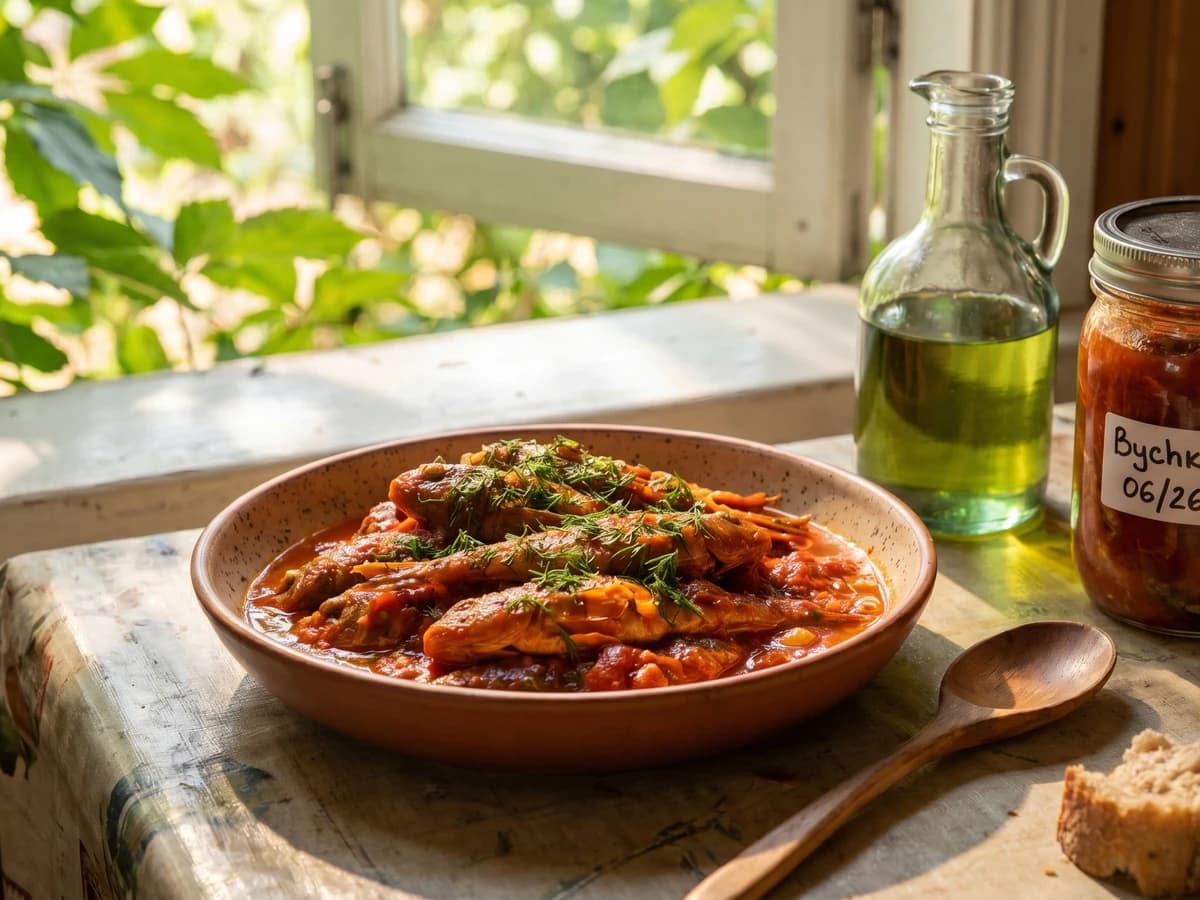
Small Azov gobies go into tomato bright as market cloth and come out soft enough that the bones give up. This is Mariupol food: cheap, red, generous, and better tomorrow.

Chef Lesia
The first sound is the meat against the board: flat, sharp, changing as the fibres loosen. Fry the cutlets fast, then let onion gravy do the soft finishing.

Chef Lesia
A heap of tiny silver fish becomes supper by the oldest Odesa trick: clean them, press them together, fry until the edges crackle, and let lemon and dill do the talking.