
Chef Dean
Basler Brunsli
Chewy Swiss chocolate-almond cookies perfumed with cinnamon and cloves, their crackled sugar crust giving way to fudgy, intensely flavored centers that have graced Basel's Christmas tables for over three centuries.
A cooking platform built around craft, culture, and the stories behind what we eat.

Created by
Tender, golden Swiss butter cookies perfumed with fresh lemon zest, brushed with egg wash to achieve that signature glossy finish that has graced holiday tins from Zurich to Geneva for generations.
Every Swiss grandmother guards her Mailänderli recipe like a state secret, though the ingredients rarely vary: butter, sugar, eggs, flour, and lemon. The magic lives in the proportions and the technique. These are the cookies that appear in bakery windows across Switzerland the moment December arrives, stacked in neat rows, their golden surfaces catching the light like burnished coins.
The name suggests Milanese origins, a nod to the centuries of cultural exchange across the Alps. Whether Italian bakers brought the recipe north or Swiss confectioners simply admired their southern neighbors, no one can say for certain. What matters is that Mailänderli became Switzerland's own, as essential to a Swiss Christmas as fondue to a winter evening.
This is not a complicated cookie. That's precisely the point. When you bite through the thin, glossy crust into the tender, buttery crumb within, you taste generations of home bakers who understood that restraint can be its own form of sophistication. The lemon doesn't shout. It whispers. The sweetness stays in balance. The texture yields without crumbling.
I've watched students overthink these cookies, searching for the secret technique. There isn't one. Use good butter, fresh lemons, and don't overwork your dough. Chill it properly. Roll it evenly. Brush on that egg wash with care. The rest takes care of itself.
Quantity
250g (1 cup plus 2 tablespoons)
Quantity
200g (1 cup)
Quantity
1/4 teaspoon
Quantity
2
finely grated zest only
Quantity
3
Quantity
1 whole
Quantity
400g (3 1/4 cups)
Quantity
1
beaten with 1 tablespoon heavy cream for egg wash
| Ingredient | Quantity |
|---|---|
| unsalted butter, softened | 250g (1 cup plus 2 tablespoons) |
| granulated sugar | 200g (1 cup) |
| fine sea salt | 1/4 teaspoon |
| lemonsfinely grated zest only | 2 |
| large egg yolks | 3 |
| large egg | 1 whole |
| all-purpose flour | 400g (3 1/4 cups) |
| egg yolkbeaten with 1 tablespoon heavy cream for egg wash | 1 |
In a large bowl, beat the softened butter with the sugar and salt until light and fluffy, about 3 minutes with a stand mixer or 5 minutes by hand. The mixture should turn pale and increase noticeably in volume. This aeration creates the tender crumb that distinguishes a proper Mailänderli from a dense shortbread.
Add the lemon zest and rub it into the butter mixture with your fingertips for a moment. This releases the oils and perfumes the entire dough. Add the egg yolks and whole egg one at a time, beating well after each addition. Scrape down the sides of the bowl. The mixture may look slightly curdled. Don't worry. The flour will bring it together.
Add the flour in three additions, mixing on low speed or folding by hand until just combined after each. Stop the moment no dry streaks remain. Overworked dough produces tough cookies. The finished dough should be smooth, pliable, and slightly tacky but not sticky.
Divide the dough in half and flatten each portion into a disc about one inch thick. Wrap tightly in plastic and refrigerate for at least 2 hours, or overnight. Cold dough rolls cleanly and holds its shape when cut. Rushing this step guarantees frustration.
Preheat your oven to 350°F (175°C). Line baking sheets with parchment paper. Working with one disc at a time, roll the dough on a lightly floured surface to about 1/4-inch thickness. Use a light touch and rotate the dough frequently to prevent sticking. Cut shapes with cookie cutters, gathering scraps gently and re-rolling once. Traditional shapes include hearts, stars, moons, and simple rounds.
Transfer cut cookies to prepared baking sheets, spacing them one inch apart. These cookies don't spread much, so you can fit them reasonably close. Using a soft pastry brush, apply a thin, even coat of the egg wash to the top of each cookie. Work gently to avoid distorting the shapes. This wash creates the characteristic golden sheen.
Bake for 10 to 12 minutes, rotating the pan halfway through. The cookies are done when the edges turn light gold and the tops display an even, glossy bronze. The centers should feel set but not hard when pressed lightly. Remove from oven and let cookies rest on the baking sheet for 2 minutes before transferring to a wire rack to cool completely.
1 serving (about 19g)
Culinary guides, cultural storytelling, and the editorial depth that makes cooking meaningful.
Discover Culinary ExplorerChef Dean
Chewy Swiss chocolate-almond cookies perfumed with cinnamon and cloves, their crackled sugar crust giving way to fudgy, intensely flavored centers that have graced Basel's Christmas tables for over three centuries.

Chef Dean
Nuremberg's legendary soft gingerbread cookies, rich with ground nuts and ancient spices, baked on delicate wafer bases and finished with gleaming chocolate or snow-white icing. A gift-worthy tradition since the medieval spice trade.
Chef Dean
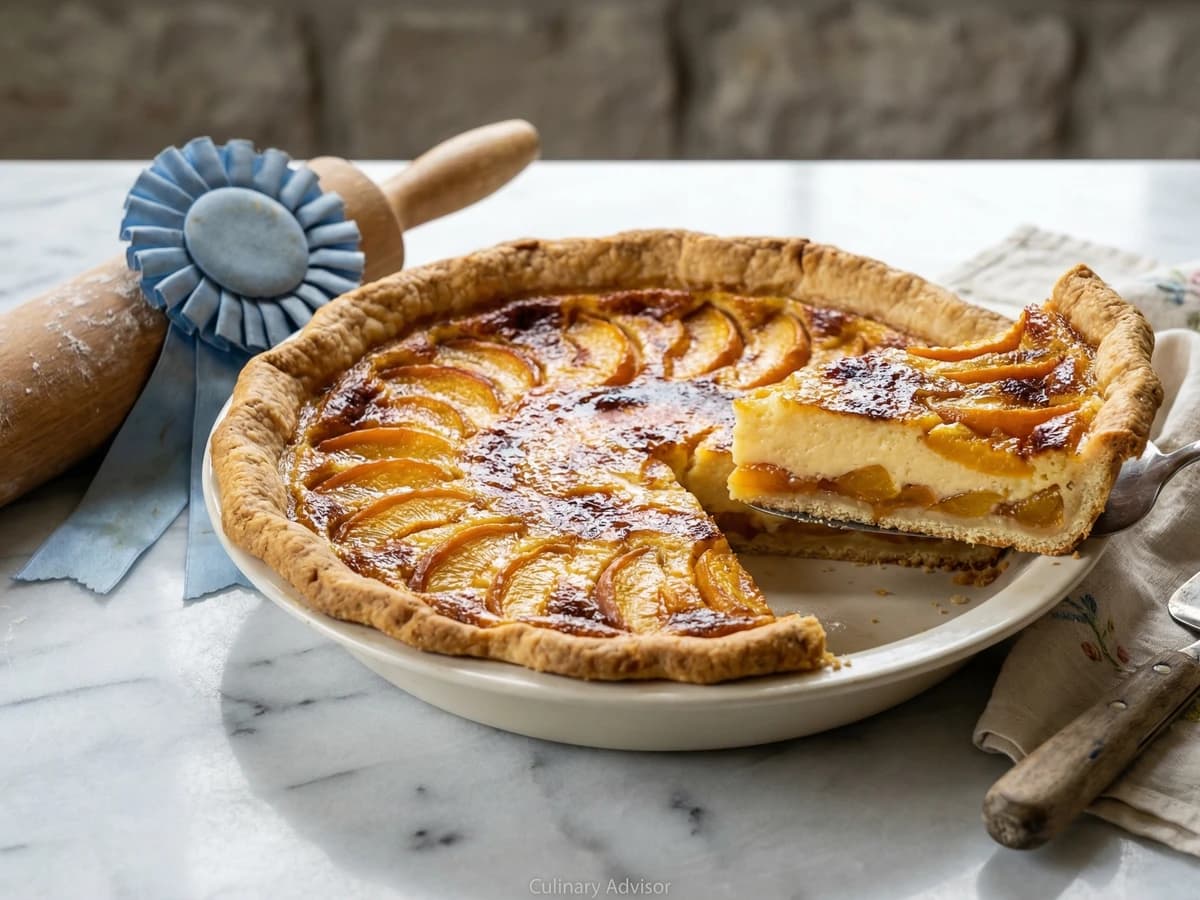
A pillowy yeasted crust cradling ripe fruit beneath a trembling layer of sweet cream custard, baked until golden and served with the pride of generations of German-Russian grandmothers who carried this recipe across an ocean and a continent.

Chef Dean
Thin, shattering spice cookies pressed into carved wooden molds, carrying the warm perfume of cinnamon, cardamom, and cloves that has announced the arrival of St. Nicholas for six hundred years.