Culinary Explorer
A cooking platform built around craft, culture, and the stories behind what we eat.
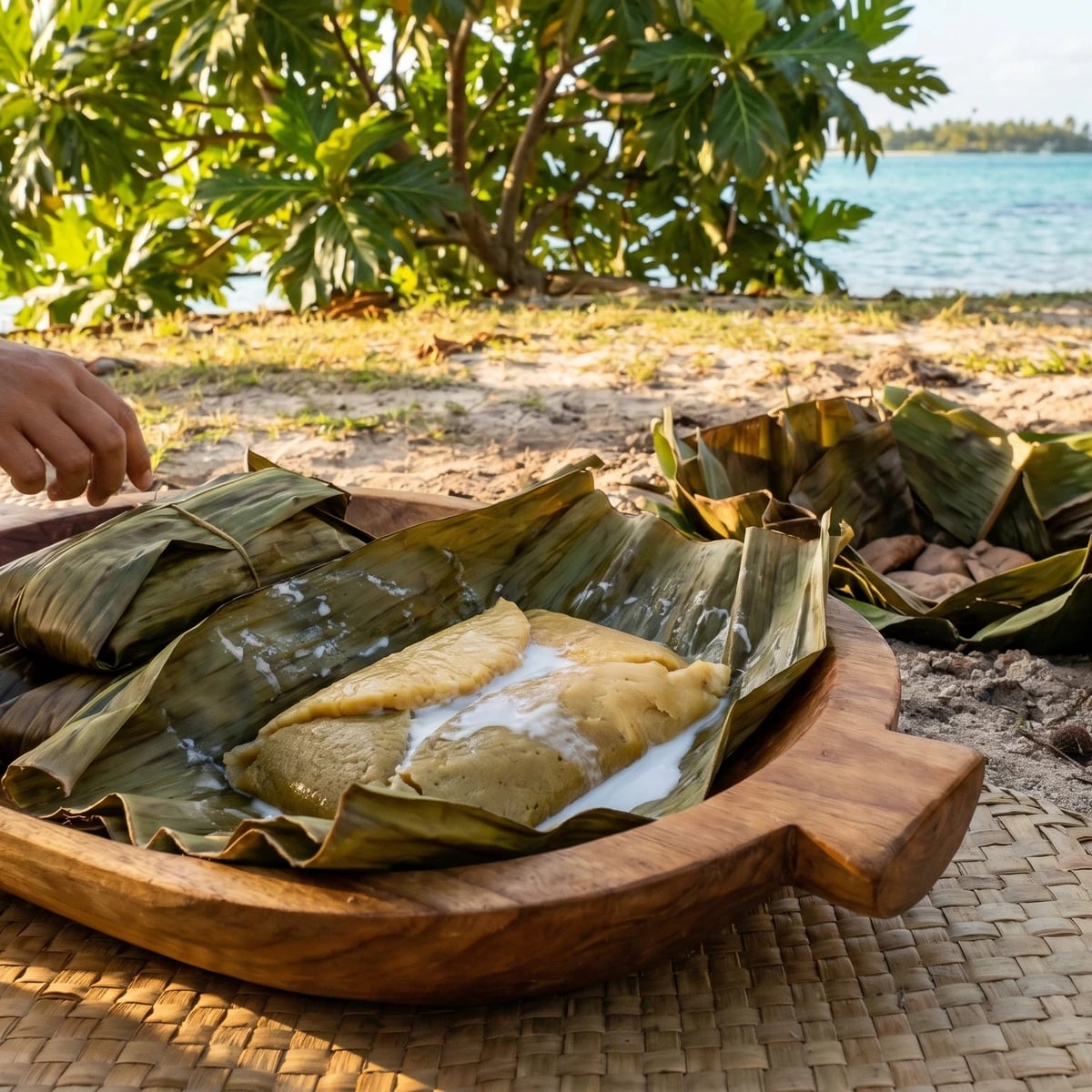
Mahi (Tahitian Fermented ʻUru Breadfruit with Coconut Cream)
Created by Chef Makoa
Ripe Tahitian ʻuru kept sour the old way, kneaded with coconut cream and wrapped in leaf until it sets into a tangy, glossy starch beside fish, pork, or one quiet bowl of rice.
The canoe teaches you to feed the day you can't see yet. In Tahiti, on the fenua, the land, that teaching lives in mahi: ripe ʻuru, breadfruit, scraped and kept until it turns sour enough to carry a family past the season. This is Tahitian food. I say that first because the hand matters.
A Tahitian aunty once opened a leaf packet for me and watched my face before she told me anything. The smell was sharp, not spoiled, and the coconut cream had made the sour paste shine. She laughed because I was doing that careful guest thing, looking too hard, trying to understand before eating. Then she said, plain as anything, this is how you don't waste the breadfruit when the tree gives more than one week can hold.
The cousins know this law all across the Triangle, but each island keeps it its own way. Hawaiʻi has ʻulu and poi from kalo. The Marquesas have mei and popoi. Sāmoa, Tonga, and the Cooks have their own hands with ʻulu, mei, and taro. Tahiti's hand here is preservation: let the ripe ʻuru sour, then knead it with coconut cream and steam it in leaves until it sets soft and tangy. One ocean, one canoe, many bowls.
Most of us no have a leaf-lined pit under a breadfruit tree. So this version uses a clean crock, leaves, a little salt, and a steamer, and I tell you straight where the home kitchen begins and the old pit knowledge belongs to Tahitian families who carry it. Cook it open-handed. Learn the deep parts from Tahiti's own elders. The sourness is not a mistake. It is the island answer to scarcity.
Ingredients
ripe ʻuru (Tahitian breadfruit) flesh
Quantity
4 pounds
from 2 to 3 large breadfruit, peeled and cored
fine sea salt
Quantity
2% by weight of prepared ʻuru, about 1 1/2 to 2 tablespoons
for the home crock ferment
banana, breadfruit, or tī leaves
Quantity
8 to 10
rinsed, softened, and divided
| Ingredient | Quantity |
|---|---|
| ripe ʻuru (Tahitian breadfruit) fleshfrom 2 to 3 large breadfruit, peeled and cored | 4 pounds |
| fine sea saltfor the home crock ferment | 2% by weight of prepared ʻuru, about 1 1/2 to 2 tablespoons |
| banana, breadfruit, or tī leavesrinsed, softened, and divided | 8 to 10 |
Where cooking meets culture.
Culinary guides, cultural storytelling, and the editorial depth that makes cooking meaningful.
Discover Culinary Explorer