
Chef Zohra
Baghrir (بغرير)
The lacy Moroccan pancake of fine semolina, cooked on one side only so every little hole stays open for warm butter and honey.
A cooking platform built around craft, culture, and the stories behind what we eat.
Created by
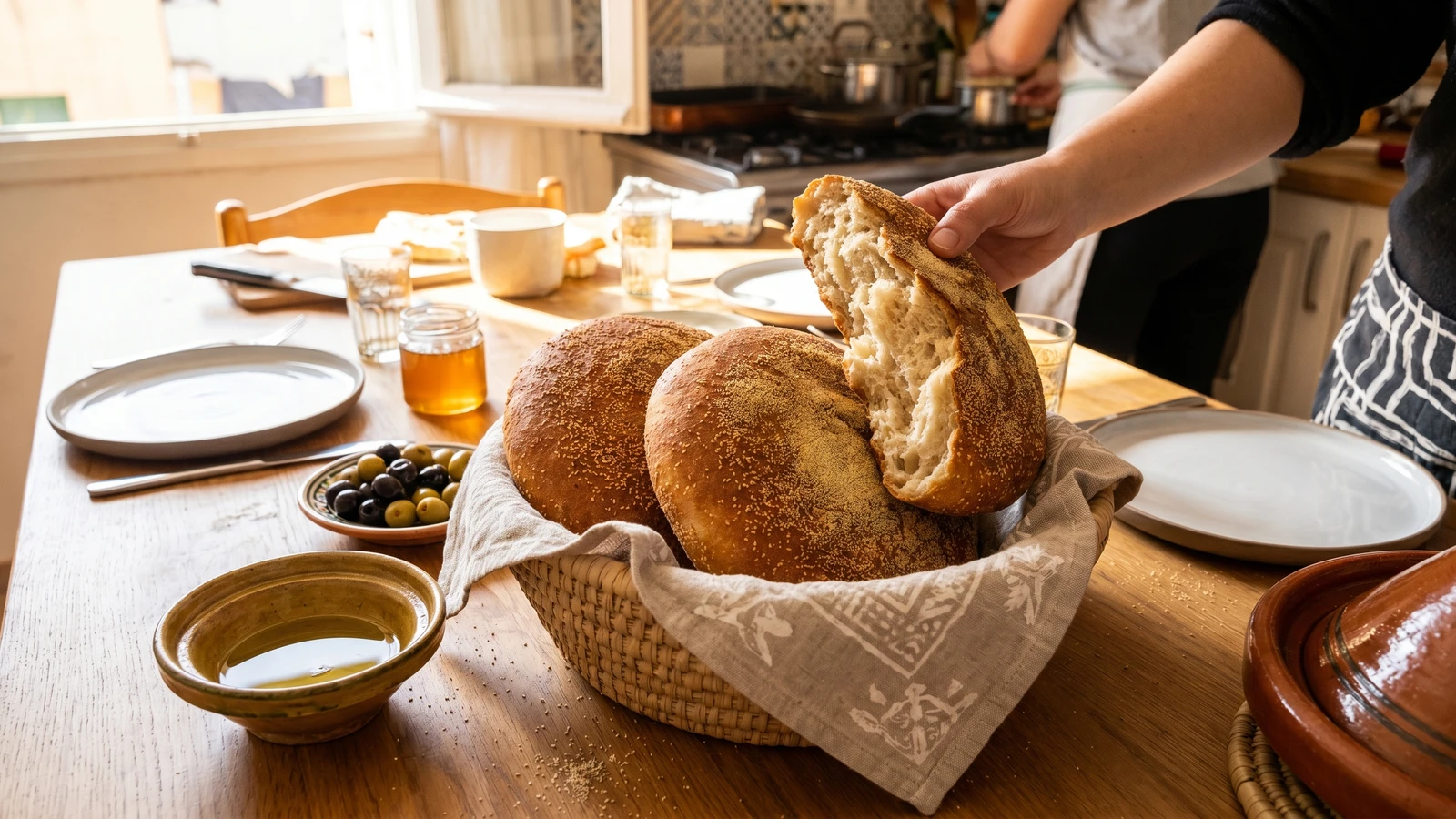
A Rif oven bread with a real sourdough tang: two slow rises, a seeded scored top, and the chewy crumb that holds olive oil, tagine sauce, and a full table.
The dough tells you first. When the beldi yeast is alive, it smells lightly sour and warm, like flour that has remembered yesterday's bread. If the yeast is tired, don't force it. Sourcing comes before technique, and no hot oven rescues a dead leaven.
Mafuna belongs to the Rif around Al Hoceima, one of des cuisines marocaines, not some generic Moroccan flatbread. It is an oven bread, rested through two rises, scored, seeded, and sent into strong heat. The old ferran teaches the hand before the clock: you read the oven by its heat, then trust the crust to form quickly so the inside stays thick and chewy.
At home, use a baking stone or a covered heavy pot to imitate that first fierce heat. The cover traps moisture from the dough long enough for the loaf to swell, then you uncover it so the crust browns and firms. Tear it warm, not sliced thin. Mafuna wants olive oil, olives, a tagine to scoop clean, and one more person at the table.
Mafuna is associated with the Rif mountains of northern Morocco, especially around Al Hoceima, where Amazigh household breads were shaped by mountain grain, wild beldi leavens, and communal ferran ovens. Its exact dating is not fixed in written sources, but the practice belongs to the older Maghrebi bread culture that predates the modern bakery and carried grain, salt, and sour leaven between home and neighborhood oven. The name and method vary by village, which is part of the truth of Moroccan bread: there is not one loaf, but many named loaves by region, grain, and oven.
Quantity
150g
at peak
Quantity
500g
plus more for dusting
Quantity
150g
Quantity
420ml
plus 1 to 2 tbsp if needed
Quantity
12g
Quantity
1 tbsp
plus more for the bowl
Quantity
2 tbsp
Quantity
1 tbsp
Quantity
for dusting
| Ingredient | Quantity |
|---|---|
| active beldi wild yeast starter or mature sourdough starterat peak | 150g |
| strong bread flourplus more for dusting | 500g |
| fine semolina or very fine durum flour | 150g |
| lukewarm waterplus 1 to 2 tbsp if needed | 420ml |
| fine sea salt | 12g |
| olive oilplus more for the bowl | 1 tbsp |
| sesame seeds | 2 tbsp |
| nigella seeds or anise seeds (optional) | 1 tbsp |
| coarse semolina | for dusting |
Make sure the beldi yeast is at its peak before you begin: domed, bubbly, and lightly sour, not flat or sharp. Stir it with the lukewarm water until cloudy. This is the one thing that decides the bread. A living leaven gives Mafuna its tang and strength; a tired one gives you heaviness.
In a wide bowl, mix the bread flour and fine semolina. Pour in the leaven water and gather the dough with your hand until no dry flour remains. Let it sit 20 minutes, then add the salt and olive oil and knead 8 to 10 minutes, until the dough feels elastic and slightly tacky. If it tears dry, wet your hand and keep working. La balance est dans les yeux, the scale is in the eyes.
Oil the bowl lightly, tuck the dough into a smooth round, cover it, and let it rise 4 to 6 hours at room temperature, until it has grown by about half and feels airy under your fingers. It does not need to puff like a sweet bread. Mafuna keeps a dense, chewy heart, so look for life, not ballooning.
Dust the work surface with coarse semolina and divide the dough in two. Shape each piece into a tight round, then press gently into a thick disk about 3cm high. Set the loaves on semolina-dusted parchment or a floured cloth. Keep the shape sturdy. This bread is not thin griddle bread; it needs thickness for that chewy crumb.
Cover the shaped loaves and let them rise 1 1/2 to 2 hours, until the dough looks relaxed and springs back slowly when pressed. Heat the oven during the last 45 minutes to 240°C with a baking stone, steel, or heavy covered pot inside. In the ferran, the hand reads the heat; at home, a long preheat gives the stone the same job.
Brush the tops lightly with water, scatter sesame seeds and nigella or anise if using, then score each loaf with a shallow cross or three short slashes. The scoring gives the dough a place to open cleanly in the heat, so the crust doesn't split wherever it wants.
Slide the loaves onto the hot stone, or place one loaf at a time into the hot covered pot. Bake covered for 18 minutes, then uncover and bake 12 to 17 minutes more, until the crust is deep golden, firm under your knuckles, and the bottom sounds hollow. The covered start gives the loaf its lift; the uncovered finish makes the crust strong enough to scoop sauce clean.
Let the loaves rest on a rack at least 30 minutes before tearing. The crumb finishes setting as it cools, and if you open it too early it turns gummy. Serve warm or at room temperature, with olive oil, olives, cheese, honey, or beside a tagine.
1 serving (about 570g)
Culinary guides, cultural storytelling, and the editorial depth that makes cooking meaningful.
Discover Culinary ExplorerChef Zohra
The lacy Moroccan pancake of fine semolina, cooked on one side only so every little hole stays open for warm butter and honey.

Chef Zohra
Small rounds of Moroccan bread puffed on a hot pan, tender inside with a pocket ready for sauce, olives, honey, or whatever the table has made room for.

Chef Zohra
A Chaouia griddle bread halfway between loaf and light beignet, made from a loose semolina dough spread by hand, fried gold, and eaten warm with butter, honey, or olive oil.

Chef Zohra
A pan-cooked semolina galette, golden at the edges and tenderly crumbly inside, called harcha in much of Morocco and mbesses in the Oujda east.