
Chef Jeong-sun
Aehobak-guk (애호박국, Korean Zucchini Soup)
A clean summer soup of Korean zucchini and salted shrimp, built on quick anchovy-kelp broth and finished before the half-moons lose their shape on a weeknight table.
A cooking platform built around craft, culture, and the stories behind what we eat.

Created by
The red fish stew made from the day's clean bones and flesh: radish-sweet broth, just enough gochugaru, tofu, and crown daisy added at the end so the fish still tastes like fish.
Maeuntang starts at the fish counter, not at the spice shelf. Ask what came in clean that morning, and the stew is already half-decided: rockfish from the coast, cod when winter has weight, pollock when the table needs economy and comfort. Cook the month you're standing in, because fish tells the truth faster than vegetables do.
At a hoe (회, raw sliced fish) restaurant, maeuntang often arrives after the sashimi platter, built from the head and bones left from the fish you just ate. That isn't a poor second course. It is the table refusing waste, and it may be the part people remember. At home, buy the fish bone-in and let the radish do its quiet work; it sweetens the broth and gives the spice somewhere to rest.
The mistake is thinking red means heavy. Maeuntang needs gochugaru for heat and color, a little gochujang for body, and no more. Clean the blood from the backbone, remove the gills, skim the foam, and add the crown daisy at the end so it stays green and lightly bitter. Notebook 44 says 900 grams fish to 6 cups broth, 3 tablespoons gochugaru, 1 tablespoon gochujang. 손맛 is real; I measure it anyway, because one extra spoon can make the fish disappear.
Maeuntang is part of Korea's fish-market and coastal restaurant table, often served after hoe (raw sliced fish) so the head, bones, and remaining trim become the second course instead of waste. The red version depends on chili, which entered Korean cooking after peppers came from the Americas through East Asia in the late sixteenth and seventeenth centuries; earlier fish soups leaned more on clear broth, soybean paste, and salted seafood. Inland versions use freshwater fish such as carp or catfish, while coastal pots follow the day's catch, including rockfish, cod, pollock, sea bass, and snapper.
Quantity
900g to 1kg
scaled, gutted, gills removed, cut into 2-inch pieces
Quantity
1/2 teaspoon
for the fish
Quantity
6 cups
Quantity
1 piece, about 4 inches square
Quantity
8 large
heads and guts removed
Quantity
300g
peeled and cut into 1/4-inch half-moons
Quantity
1/2 medium
sliced 1/2 inch thick
Quantity
100g
rinsed
Quantity
1/2 small
cut into 1/2-inch half-moons
Quantity
200g
cut into 1/2-inch slabs
Quantity
100g
trimmed
Quantity
2
cut into 2-inch lengths
Quantity
1
sliced on the diagonal
Quantity
1
sliced on the diagonal
Quantity
60g
tender stems and leaves, cut into 3-inch lengths
Quantity
1 cup
cut into 3-inch lengths
Quantity
3 tablespoons
Quantity
1 tablespoon
Quantity
2 teaspoons
Quantity
1 tablespoon
Quantity
1 tablespoon fish sauce, or 2 teaspoons saeujeot
saeujeot finely chopped
Quantity
1 tablespoon
Quantity
1 tablespoon
minced
Quantity
1 teaspoon
grated
Quantity
1/4 teaspoon
freshly ground
Quantity
2 tablespoons
to loosen the seasoning paste
Quantity
up to 1/4 teaspoon salt or 1 teaspoon fish sauce
to finish if needed
| Ingredient | Quantity |
|---|---|
| bone-in firm white fishscaled, gutted, gills removed, cut into 2-inch pieces | 900g to 1kg |
| fine sea saltfor the fish | 1/2 teaspoon |
| water | 6 cups |
| dried kelp (dasima) | 1 piece, about 4 inches square |
| dried anchovies (myeolchi)heads and guts removed | 8 large |
| Korean radish (mu)peeled and cut into 1/4-inch half-moons | 300g |
| onionsliced 1/2 inch thick | 1/2 medium |
| soybean sprouts (kongnamul)rinsed | 100g |
| zucchini (aehobak)cut into 1/2-inch half-moons | 1/2 small |
| firm tofucut into 1/2-inch slabs | 200g |
| enoki or oyster mushroomstrimmed | 100g |
| scallionscut into 2-inch lengths | 2 |
| green chilisliced on the diagonal | 1 |
| red chilisliced on the diagonal | 1 |
| crown daisy (ssukat)tender stems and leaves, cut into 3-inch lengths | 60g |
| minari (water dropwort) (optional)cut into 3-inch lengths | 1 cup |
| gochugaru (Korean chili flakes) | 3 tablespoons |
| gochujang (fermented chili paste) | 1 tablespoon |
| doenjang (fermented soybean paste) | 2 teaspoons |
| guk-ganjang (Korean soup soy sauce) | 1 tablespoon |
| fish sauce or saeujeot (salted shrimp)saeujeot finely chopped | 1 tablespoon fish sauce, or 2 teaspoons saeujeot |
| mirim, rice wine, or soju | 1 tablespoon |
| garlicminced | 1 tablespoon |
| fresh gingergrated | 1 teaspoon |
| black pepperfreshly ground | 1/4 teaspoon |
| water or brothto loosen the seasoning paste | 2 tablespoons |
| fine sea salt or fish sauce (optional)to finish if needed | up to 1/4 teaspoon salt or 1 teaspoon fish sauce |
Check the fish before you season it. The eyes should be clear, the flesh should spring back, and there should be no sour or ammonia smell. Rinse the pieces quickly under cold running water, especially the belly cavity and the blood line along the backbone. Cut away any gills left in the head. Pat dry, sprinkle with 1/2 teaspoon salt, and keep refrigerated 10 minutes while you start the broth. This firms the flesh so it does not fall apart in the pot.
Stir together the gochugaru, gochujang, doenjang, guk-ganjang, fish sauce or saeujeot, mirim, garlic, ginger, black pepper, and 2 tablespoons water or broth. Let it stand while the broth begins. Hydrating the gochugaru keeps the stew from tasting dusty, and the color blooms into the broth instead of floating in raw patches. The doenjang is only 2 teaspoons; it quiets the fish aroma, it should not turn this into doenjang-jjigae.
Put the 6 cups water, kelp, and anchovies in a wide 3.5 to 4 quart pot over medium heat. When the water reaches a simmer, pull out the kelp at once, or it turns the broth slick and faintly bitter. Simmer the anchovies 8 minutes more, then lift them out. Add the radish and onion and simmer 8 to 10 minutes, until the radish edges start to turn translucent. Radish is not filler here; it sweetens the broth and gives the chili a place to land.
Whisk the seasoning paste into the radish broth until no clumps remain. Add the soybean sprouts and zucchini and simmer 3 minutes. The vegetables need a small head start; the fish does not. Taste the broth now. It should be spicy and savory but a little under-salted, because the fish, tofu, and final reduction will change it.
Lower the fish pieces into the pot in one layer, head and bone-heavy pieces first. Spoon broth over the top instead of stirring. Simmer uncovered 7 to 8 minutes, skimming foam as it rises. Move the pot by its handles if anything catches. The fish is done when the flesh is opaque and begins to separate from the bone; if you use a thermometer, the thickest piece should read 63 C/145 F.
Slide the tofu and mushrooms into open spaces around the fish, not on top of it. Simmer 4 to 5 minutes, just until the tofu is heated through and the mushrooms soften. Keep the simmer steady, not violent. A hard boil breaks the fish and clouds the broth.
Scatter the scallions, green chili, red chili, crown daisy, and minari if using over the top. Press them lightly into the broth for 30 to 60 seconds, just until the greens relax but stay bright. Taste once more and add up to 1/4 teaspoon salt or 1 teaspoon fish sauce only if the broth needs it. Carry the pot straight to the table with rice and warn everyone about the bones. The greens are best eaten first, while their bitterness is still clean.
1 serving (about 560g)
Culinary guides, cultural storytelling, and the editorial depth that makes cooking meaningful.
Discover Culinary ExplorerChef Jeong-sun
A clean summer soup of Korean zucchini and salted shrimp, built on quick anchovy-kelp broth and finished before the half-moons lose their shape on a weeknight table.
Chef Jeong-sun
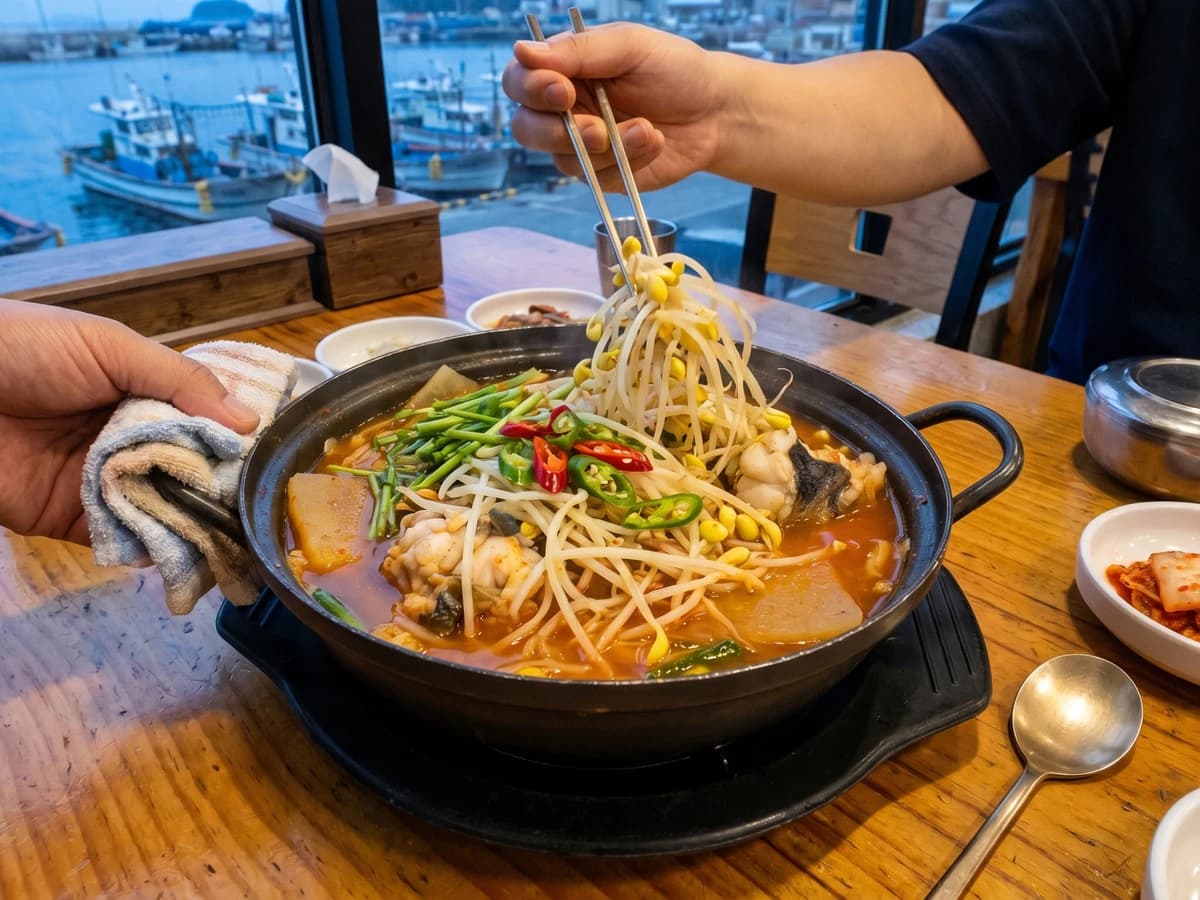
A Masan coast monkfish stew with firm white meat, gelatin at the bones, soybean sprouts for crunch, and a red broth seasoned to carry the fish, not bury it.

Chef Jeong-sun
A weeknight fish roe stew with radish and crown daisy in a clean spicy broth, where the whole success depends on adding the roe late enough that it sets tender, not chalky.

Chef Jeong-sun
Late-summer mallow leaves rubbed with salt until the bitter green water runs off, then simmered in a clean doenjang broth with dried shrimp, the quiet soup a Korean weeknight deserves.