
Chef Dimitra
Anginares a la Polita, Constantinople Artichokes (Αγκινάρες αλά Πολίτα)
Constantinople's spring artichokes, pale and lemony, braised with potato, carrot, peas, dill, and enough olive oil to make the sauce shine.
A cooking platform built around craft, culture, and the stories behind what we eat.
Created by
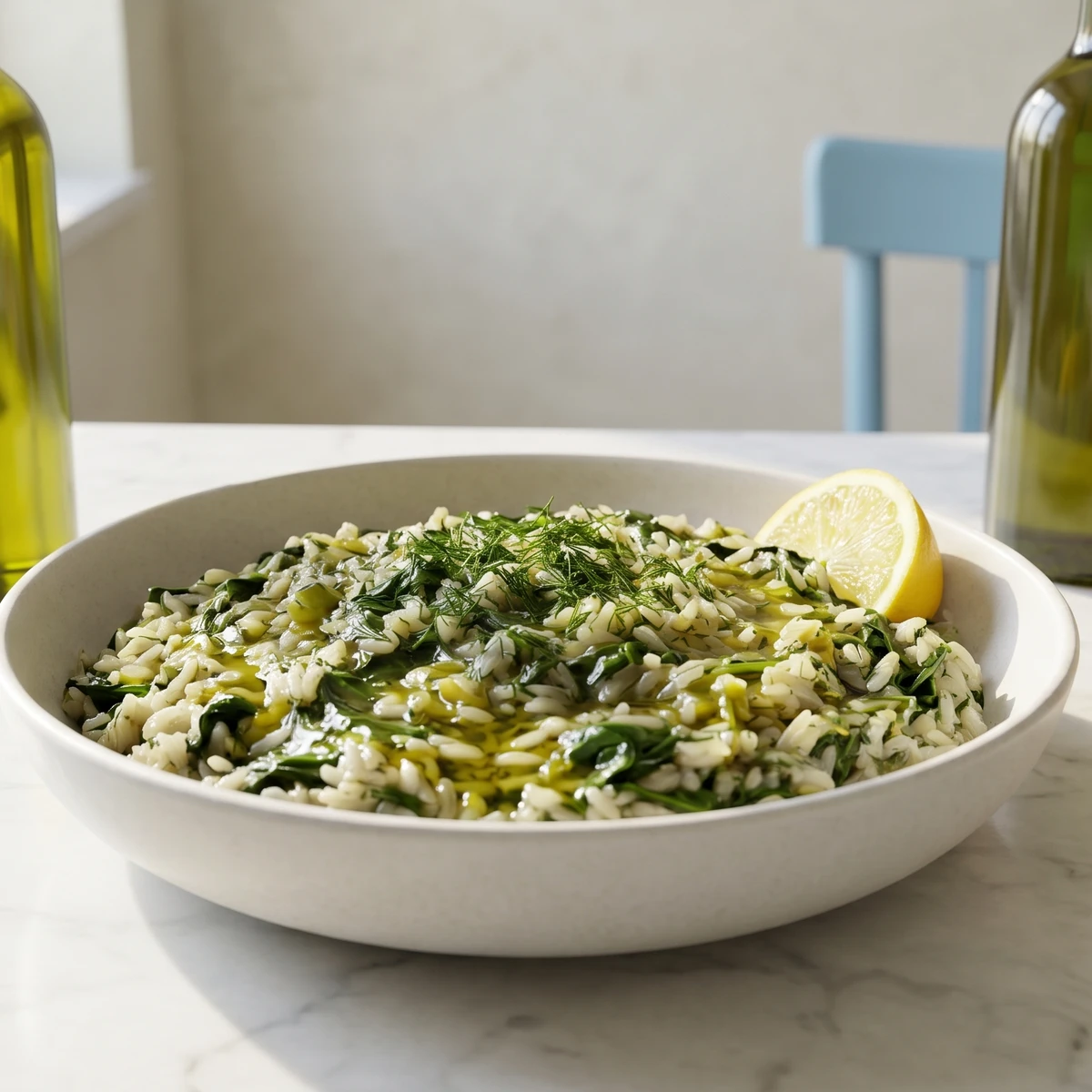
Macedonian spanakorizo is the green, lemony spinach rice of the fasting table, cooked loose in olive oil with dill, spring onion, and the lemon saved for the very end.
Macedonian spanakorizo is spinach rice from the northern table, green rather than red, with leek, spring onion, dill, and lemon. It is not a side dish pretending to be useful. It is a ladero, an olive-oil vegetable dish cooked as the meal itself, especially on fasting days.
The whole pot is decided at the end. Cook the rice gently in the spinach juices until it sits loose and soft, then take it off the heat before the lemon and dill go in. Boil the lemon with the greens and the color tires. Stir it in after the rest, and the dish wakes up.
The region is the dish's surname here: Greek Macedonia gives this version its leek and its clean lemon finish. In my Thessaloniki kitchen, I keep the tomato out because this pot is about the green taste of spinach, dill, and good oil. Λίγα και καλά, a few things, and good ones.
Spanakorizo belongs to the mainland ladera, the Greek family of vegetables cooked with olive oil as a sustaining dish, not a garnish. In Greek Macedonia, the green version with leek, spring onion, dill, and lemon fits the cool-season garden and the Orthodox fasting calendar. Tomato versions became common in many households after tomato entered everyday Greek cooking broadly in the nineteenth century, but the lemon-green pot remains its own regional habit.
Quantity
1kg
washed well, thick stems removed and roughly chopped
Quantity
100ml
divided
Quantity
1 large, about 180g
finely chopped
Quantity
1, about 120g trimmed weight
white and pale green parts thinly sliced
Quantity
4, about 120g
thinly sliced
Quantity
200g
rinsed and drained
Quantity
500ml
Quantity
1 1/2 teaspoons
plus more if needed
Quantity
1/2 teaspoon
Quantity
20g
finely chopped
Quantity
60ml
from about 2 lemons
Quantity
1 lemon
cut into wedges
| Ingredient | Quantity |
|---|---|
| fresh mature spinachwashed well, thick stems removed and roughly chopped | 1kg |
| extra virgin Koroneiki olive oildivided | 100ml |
| yellow onionfinely chopped | 1 large, about 180g |
| leekwhite and pale green parts thinly sliced | 1, about 120g trimmed weight |
| spring onionsthinly sliced | 4, about 120g |
| Greek Carolina ricerinsed and drained | 200g |
| hot water or light vegetable broth | 500ml |
| fine sea saltplus more if needed | 1 1/2 teaspoons |
| freshly ground black pepper | 1/2 teaspoon |
| fresh dillfinely chopped | 20g |
| fresh lemon juicefrom about 2 lemons | 60ml |
| lemon wedges (optional)cut into wedges | 1 lemon |
Wash the spinach in two or three changes of cold water, especially if it came in bunches from the market. Grit hides low in the stems. Drain it well, strip away any tough stems, and chop the leaves roughly. It doesn't need to be dry, just clean and free of sand.
Set a wide heavy pot over medium heat and add 70ml of the olive oil. Add the onion and leek with a pinch of the measured salt, and cook for 7 to 8 minutes until soft and sweet, not browned. Stir in the spring onions and cook 2 minutes more. This is the quiet base of the pot.
Add the spinach by the handful, turning it through the oil and onions as each handful collapses. Add the remaining salt and the black pepper. After 5 to 6 minutes the pot should be glossy and green, with enough spinach liquid gathered at the bottom to help cook the rice.
Stir in the rinsed rice until every grain is coated with the green oil. Pour in the hot water or broth, bring to a steady simmer, then lower the heat and cover the pot. Cook for 18 to 20 minutes, stirring once or twice from the bottom, until the rice is tender and the spanakorizo is loose, not dry like pilaf.
Take the pot off the heat. Stir in the dill, the remaining 30ml olive oil, and the lemon juice. This is the step that decides the dish: lemon added in a hot, active pot dulls the greens and flattens its own scent. Off the heat, it stays sharp and bright.
Cover the pot and let it rest for 10 minutes. Taste for salt and lemon. Serve warm or at room temperature with lemon wedges, and a final thread of olive oil if the pot asks for it. If it is not a fasting day, feta can sit beside it, not inside it.
1 serving (about 480g)
Culinary guides, cultural storytelling, and the editorial depth that makes cooking meaningful.
Discover Culinary Explorer
Chef Dimitra
Constantinople's spring artichokes, pale and lemony, braised with potato, carrot, peas, dill, and enough olive oil to make the sauce shine.

Chef Dimitra
Attica gemista orfana are the summer tray of tomatoes and green peppers, rice loose with mint, dill, and parsley, baked with potatoes until the vegetables slump and sweeten.

Chef Dimitra
Peloponnesian bamies laderes are high-summer okra in tomato and olive oil, a nistisimo pot that depends on one small mercy: vinegar before the braise.

Chef Dimitra
Cycladic briam is the summer tray of zucchini, potato, eggplant, tomato, and good olive oil, sliced thin and baked until the vegetables surrender into one sweet, red-gold pan.