
Chef Dimitra
Aegean Island Chtapodi me Kritharaki (Χταπόδι με Κριθαράκι)
Aegean island octopus, tomato, red wine, and toasted kritharaki share one pot, so the pasta drinks the briny sauce and stays glossy instead of turning heavy.
A cooking platform built around craft, culture, and the stories behind what we eat.
Created by
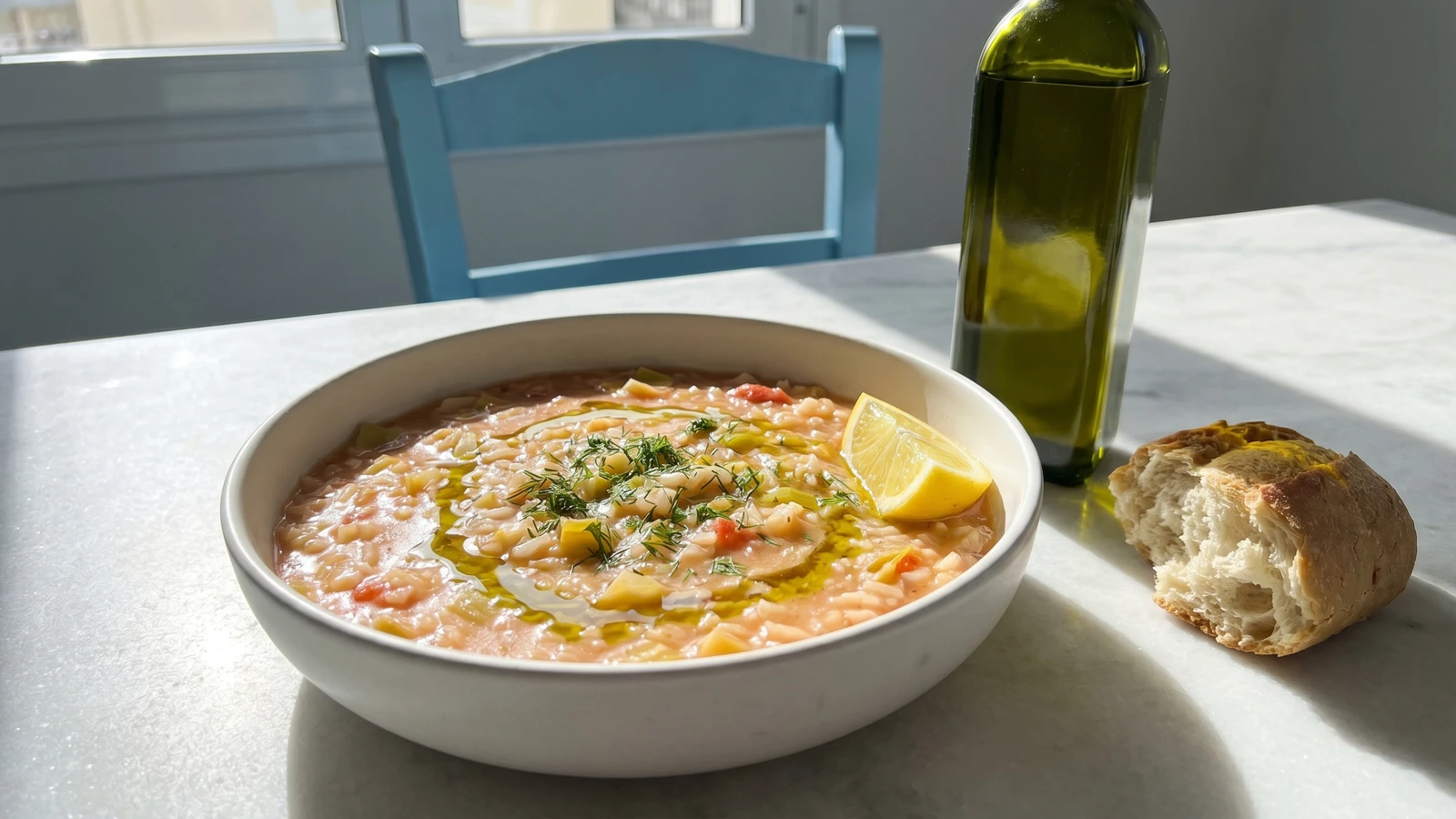
Macedonian prasorizo is a winter ladero of leeks, rice, tomato, and olive oil, cooked slowly until the leeks turn sweet and the rice settles creamy.
Macedonian prasorizo is leek rice from the winter pot, a ladero where olive oil does the carrying and the leeks give the sweetness. In northern Greece, where leeks belong to the cold months, this is Tuesday food: modest, filling, and better than it has any right to be.
The method is plain. Cook the leeks down first, slowly, until they lose their sharp edge and turn glossy in the oil. Only then does the rice go in. Rush that step and you get boiled rice with green bits. Give it time and the whole pot becomes soft, sweet, tomato-stained, and creamy without butter, cheese, or any cleverness.
This is also nistisimo, fit for the fasting table, which is why I protect it from fuss. Orthodox Lent didn't leave Greek cooks hungry. It taught them how much a few vegetables, rice, good olive oil, and patience can do.
Prasorizo belongs to the family of Greek ladera, vegetable dishes cooked generously in olive oil and often eaten during Orthodox fasting periods. Leeks have long been important in the winter kitchens of Greek Macedonia and Thrace, where cold-weather vegetable dishes such as prasopita and leek stews mark the season. The tomato version reflects the 19th and 20th century spread of tomato into everyday Greek pots; older village versions could be paler, finished more sharply with lemon.
Quantity
900g
white and pale green parts only, cleaned well and sliced 1cm thick
Quantity
80ml
plus more for finishing
Quantity
1 medium
finely chopped
Quantity
2
sliced
Quantity
180g
rinsed
Quantity
250g
grated
Quantity
200g
Quantity
700ml
Quantity
1 1/2 teaspoons
plus more to taste
Quantity
1/2 teaspoon
Quantity
1
Quantity
20g
chopped
Quantity
15ml
plus lemon wedges for serving
| Ingredient | Quantity |
|---|---|
| leekswhite and pale green parts only, cleaned well and sliced 1cm thick | 900g |
| extra virgin Koroneiki olive oilplus more for finishing | 80ml |
| yellow onionfinely chopped | 1 medium |
| spring onionssliced | 2 |
| medium-grain rice, preferably Greek Carolina ricerinsed | 180g |
| ripe tomatograted | 250g |
| canned crushed tomato (optional) | 200g |
| hot water or light vegetable broth | 700ml |
| fine sea saltplus more to taste | 1 1/2 teaspoons |
| freshly ground black pepper | 1/2 teaspoon |
| bay leaf | 1 |
| fresh dillchopped | 20g |
| fresh lemon juiceplus lemon wedges for serving | 15ml |
Trim the dark tops and root ends from the leeks, then split them lengthwise and rinse between the layers until no grit remains. Slice them into thick half-moons. Prasorizo is a leek dish before it is a rice dish, so don't be stingy here.
Warm the olive oil in a wide heavy pot over medium-low heat. Add the onion, spring onions, leeks, and 1/2 teaspoon of the salt. Cook for 18 to 22 minutes, stirring often, until the leeks collapse, turn glossy, and smell sweet. This is the step that decides the dish. If the leeks don't soften first, the rice cooks before their sweetness comes out, and the pot tastes thin.
Stir in the grated tomato and bay leaf. Cook for 5 minutes, until the tomato darkens slightly and the oil begins to show at the edges of the pot.
Add the rinsed rice, the remaining salt, black pepper, and hot water or broth. Stir once, bring to a gentle boil, then lower the heat and cook uncovered for 18 to 22 minutes, stirring now and then so the rice releases a little starch without catching on the bottom.
When the rice is tender and the pot is still loose and creamy, pull it from the heat. Cover and rest for 10 minutes. The rice will drink a little more liquid as it sits, so stop before it looks dry.
Remove the bay leaf. Stir in the dill and lemon juice, taste for salt, and finish with a thin thread of olive oil. Serve warm, with lemon wedges. Feta is welcome if you aren't keeping the fast, but the nistisimo pot needs nothing more than bread.
1 serving (about 480g)
Culinary guides, cultural storytelling, and the editorial depth that makes cooking meaningful.
Discover Culinary ExplorerChef Dimitra
Aegean island octopus, tomato, red wine, and toasted kritharaki share one pot, so the pasta drinks the briny sauce and stays glossy instead of turning heavy.

Chef Dimitra
Aegean coast psari plaki is the quiet whole-fish bake: onions and tomato softened first, fish laid on top, and olive oil doing its slow work until the bones release cleanly.

Chef Dimitra
Astakomakaronada is the Aegean islands' celebration pasta: spiny lobster, tomato, olive oil, and long noodles cooked in the shell broth, never drowned in cream or cheese.

Chef Dimitra
Aegean Easter goat on the spit, lean and full-flavored, turned slowly over charcoal and basted with lemon, oregano, garlic, and good olive oil.