
Chef Dimitra
Aegean Island Chtapodi me Kritharaki (Χταπόδι με Κριθαράκι)
Aegean island octopus, tomato, red wine, and toasted kritharaki share one pot, so the pasta drinks the briny sauce and stays glossy instead of turning heavy.
A cooking platform built around craft, culture, and the stories behind what we eat.
Created by
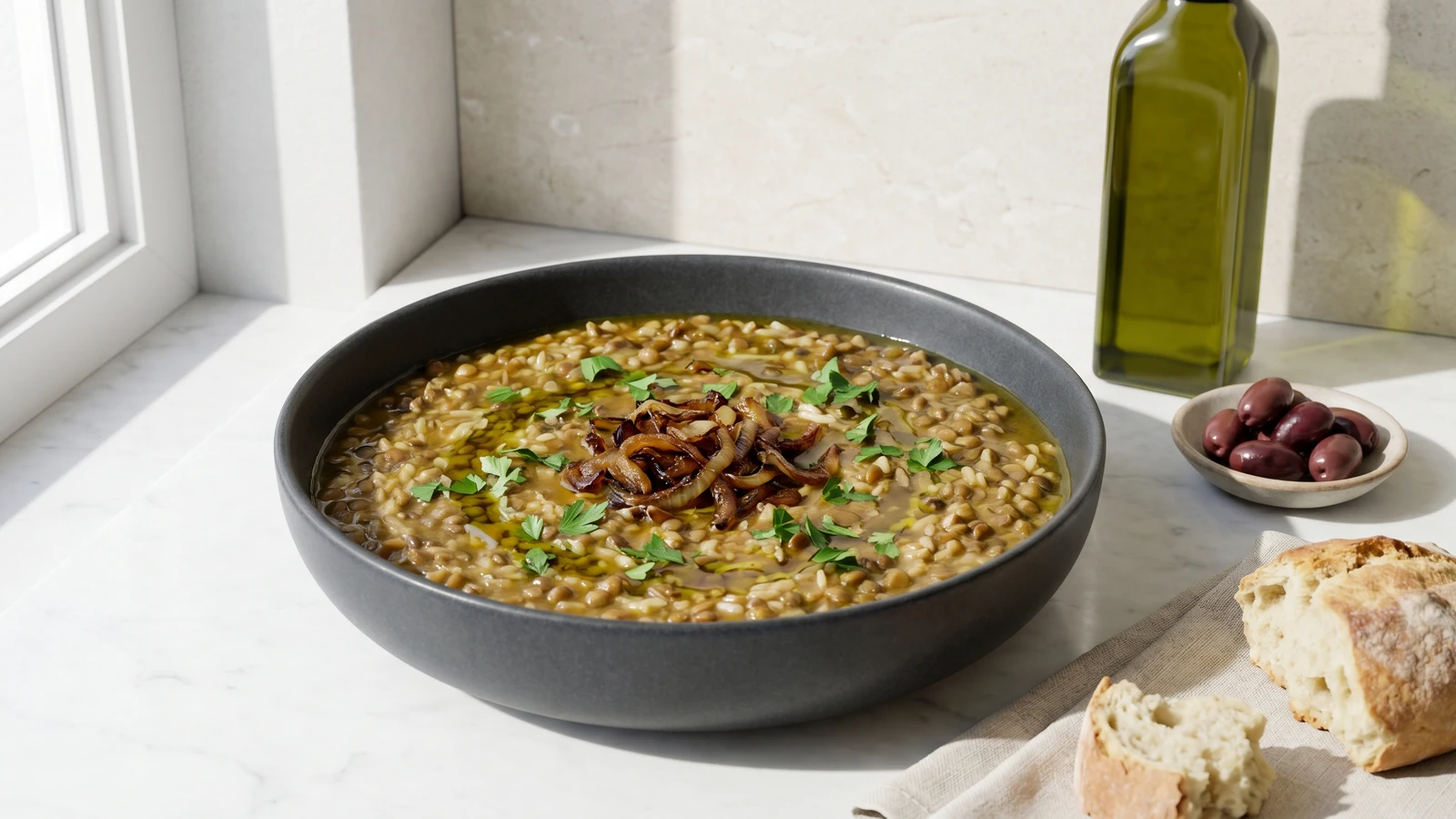
Macedonian fakorizo is the fast-day pot of lentils, rice, olive oil, and onions browned until sweet. Cheap food, yes. Poor food, never.
Macedonian fakorizo is lentils and rice cooked together into one soft, honest pot, the sort of nistisimo supper that fed northern Greek houses when meat and dairy were off the table. The dish is not trying to impress you. Brown lentils, rice, onions, olive oil, a bay leaf, and vinegar at the end. That is the whole truth of it.
The one method that decides it is the onion. Brown it slowly in olive oil before the lentils go in, until it turns sweet and deep gold. If you leave the onion pale, the pot tastes flat. If you burn it, the bitterness stays. Good olive oil, and patience.
This is weeknight food, but it isn't careless food. The lentils should be tender, the rice soft, the oil visible on the surface, and the vinegar just sharp enough to wake the whole spoonful. I write this one down because these cheap pots disappear first, and they are often the ones a country remembers by eating them.
Fakorizo belongs to the older fasting table of mainland Greece, especially in Macedonia and Thrace, where lentils and grains made a complete, inexpensive meal during Orthodox fasts. The pairing sits beside other eastern lentil-and-grain dishes, but the Greek version is kept plain: olive oil, browned onion, bay, and vinegar rather than heavy spices. Its name is literal, fakes and ryzi, lentils and rice, which is how everyday Greek dishes often announce themselves.
Quantity
250g
picked over and rinsed
Quantity
120g
rinsed
Quantity
3 large, about 450g total
thinly sliced
Quantity
90ml
Quantity
1
Quantity
1.1 litres
plus more if needed
Quantity
8g
plus more to taste
Quantity
1/2 teaspoon
Quantity
1 tablespoon
plus more for serving
Quantity
2 tablespoons
chopped
| Ingredient | Quantity |
|---|---|
| small brown lentilspicked over and rinsed | 250g |
| medium-grain ricerinsed | 120g |
| yellow onionsthinly sliced | 3 large, about 450g total |
| extra virgin Koroneiki olive oil | 90ml |
| bay leaf | 1 |
| waterplus more if needed | 1.1 litres |
| fine sea saltplus more to taste | 8g |
| freshly ground black pepper | 1/2 teaspoon |
| red wine vinegarplus more for serving | 1 tablespoon |
| flat-leaf parsley (optional)chopped | 2 tablespoons |
Pick through the lentils for small stones, then rinse them well under cold water. Put them in a pot with plenty of fresh water, bring to a boil, and cook for 5 minutes. Drain them. This first boil takes off the dusty edge without stealing the lentil's body.
Wipe the pot dry. Add the olive oil and sliced onions, then cook over medium heat for 18 to 22 minutes, stirring often, until the onions are deep golden and soft at the edges. Don't hurry this. In fakorizo, the browned onion is the sweetness, the depth, and half the meal.
Lift out one third of the browned onions and keep them aside for serving. Add the drained lentils, bay leaf, 1.1 litres water, salt, and pepper to the pot. Bring to a boil, then lower to a steady simmer and cook for 18 to 20 minutes, until the lentils are nearly tender but still hold their shape.
Stir in the rinsed rice. Simmer uncovered for 18 to 20 minutes, stirring now and then so the rice doesn't catch, until the lentils and rice are soft and the pot is loose but not soupy. Add a little hot water if it tightens before the rice is done.
Take out the bay leaf. Stir in the vinegar and taste for salt. Let the fakorizo sit off the heat for 10 minutes, because the rice settles and the lentils drink the last of the oil. Serve warm, with the reserved onions on top, parsley if you like, and more vinegar at the table.
1 serving (about 400g)
Culinary guides, cultural storytelling, and the editorial depth that makes cooking meaningful.
Discover Culinary ExplorerChef Dimitra
Aegean island octopus, tomato, red wine, and toasted kritharaki share one pot, so the pasta drinks the briny sauce and stays glossy instead of turning heavy.

Chef Dimitra
Aegean coast psari plaki is the quiet whole-fish bake: onions and tomato softened first, fish laid on top, and olive oil doing its slow work until the bones release cleanly.

Chef Dimitra
Astakomakaronada is the Aegean islands' celebration pasta: spiny lobster, tomato, olive oil, and long noodles cooked in the shell broth, never drowned in cream or cheese.

Chef Dimitra
Aegean Easter goat on the spit, lean and full-flavored, turned slowly over charcoal and basted with lemon, oregano, garlic, and good olive oil.