
Chef Thomas
Cauliflower Cheese
A whole cauliflower blanketed in strong, mustardy cheese sauce, baked until the top blisters gold and the kitchen smells like the kind of evening where nothing else needs doing.
A cooking platform built around craft, culture, and the stories behind what we eat.
Created by Chef Thomas
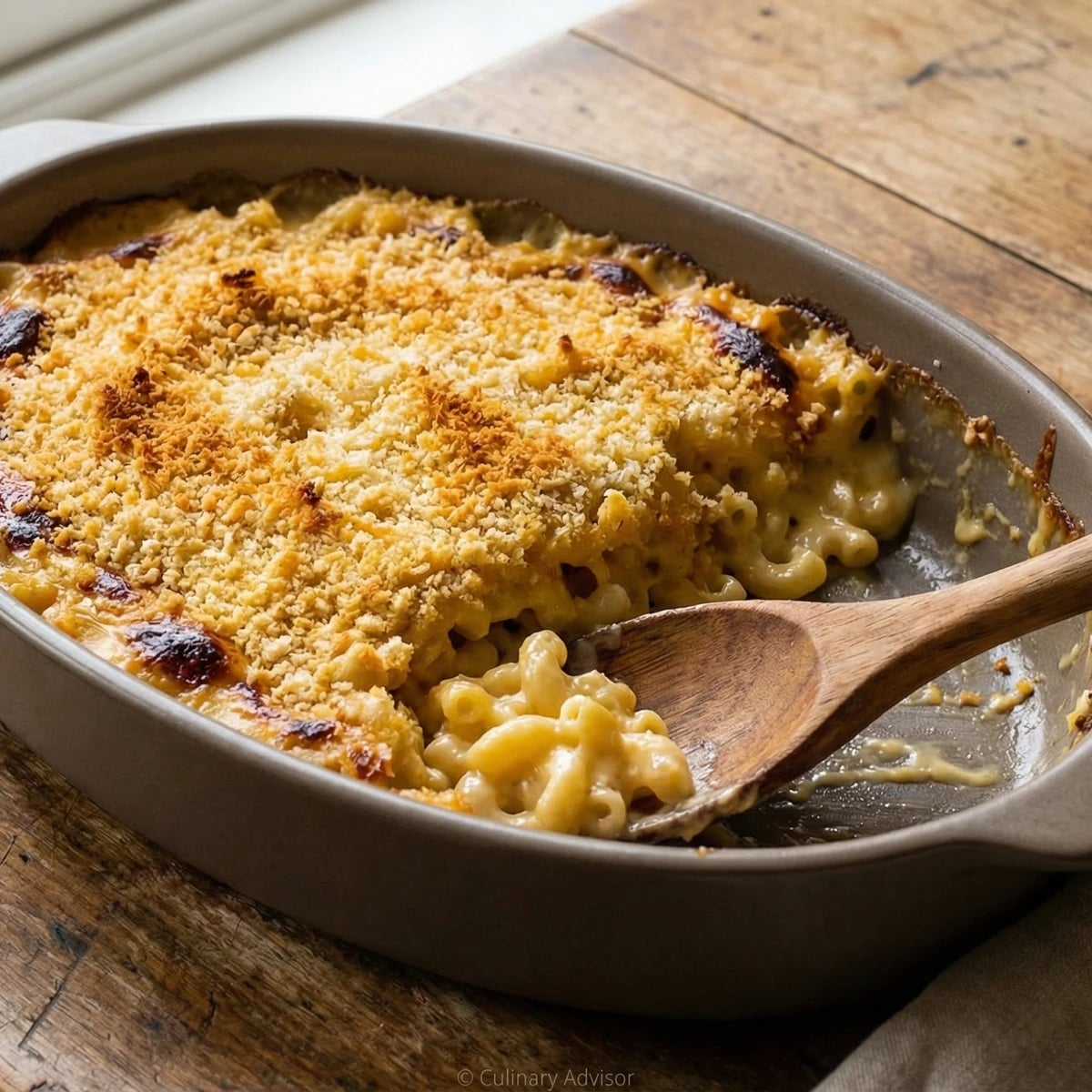
A baked macaroni cheese with a sharp cheddar sauce and a breadcrumb crust that cracks and turns golden, the kind of dish that makes a cold Tuesday feel like it was always the plan.
The kitchen window has steamed over. There's a pan of milk on the hob, a bay leaf turning slow circles in it, and the air smells of butter and flour coming together. This is a Wednesday in January. This is macaroni cheese weather.
I don't know why this dish works as well as it does. It's pasta in a cheese sauce, baked until the top goes golden and the edges bubble. Nothing clever. But the act of making it, stirring the roux, watching the sauce thicken, grating more cheese than seems reasonable, feels like care in its most practical form. You make it for the people who need warming up. You make it for yourself when no one else is going to.
The cheddar matters. A proper mature cheddar, sharp enough to cut through the richness of the sauce, is what makes this British and not just beige. A handful of mustard powder and a grating of nutmeg do the quiet work in the background, the things you can't quite identify but would miss if they weren't there. The breadcrumb crust is not optional. It gives you something to crack through, a contrast to the softness underneath, and the golden, crunchy bits around the edges are the cook's reward.
I wrote it down in the notebook years ago: macaroni cheese, rain, Tuesday, enough. A recipe is a conversation, not a contract. This one has stayed the same because it doesn't need improving. It just needs making.
Quantity
350g
Quantity
50g, plus extra for the dish
Quantity
50g
Quantity
600ml
Quantity
1
Quantity
1 teaspoon
Quantity
250g
coarsely grated
Quantity
to taste
Quantity
to taste
Quantity
pinch
freshly grated
Quantity
50g
Quantity
25g
finely grated
| Ingredient | Quantity |
|---|---|
| dried macaroni | 350g |
| unsalted butter | 50g, plus extra for the dish |
| plain flour | 50g |
| whole milk | 600ml |
| bay leaf | 1 |
| English mustard powder | 1 teaspoon |
| mature cheddarcoarsely grated | 250g |
| fine sea salt | to taste |
| black pepper | to taste |
| nutmegfreshly grated | pinch |
| coarse fresh breadcrumbs | 50g |
| Parmesan or similar hard cheese (optional)finely grated | 25g |
Bring a large pan of well-salted water to a rolling boil. Cook the macaroni for a minute or two less than the packet says. You want it firm, still with a bit of bite, because it's going into the oven next and will soften further in the sauce. Drain it, but save a mugful of the starchy cooking water. You may not need it, but it's useful if the sauce wants loosening later.
Melt the butter in a heavy-bottomed saucepan over a medium heat. When it foams, add the flour and stir it in with a wooden spoon. Cook this paste for a minute or so, stirring constantly, until it smells biscuity and has lost its raw, floury scent. That's the signal. Now start adding the milk, a good splash at a time, stirring firmly after each addition until the sauce is smooth before you pour in more. Drop in the bay leaf. It feels slow at first, but after the first few additions it comes together quickly. Once all the milk is in, let the sauce simmer gently for five minutes, stirring now and then. It should coat the back of a spoon thickly.
Take the pan off the heat. Fish out the bay leaf. Add the mustard powder, a grating of nutmeg, and most of the cheddar, keeping a small handful back for the top. Stir until the cheese has melted into the sauce completely. It should be glossy and golden and smell like the kind of evening where you don't leave the house. Season with salt and pepper. Taste it. Be honest with yourself. If it needs more salt, add more salt. If it needs more cheese, you know what to do.
Set the oven to 200C/180C fan. Butter an ovenproof dish, something that will hold everything with a little room to spare. Fold the drained pasta into the cheese sauce until every piece is coated. If it looks thick, add a splash of the reserved pasta water. Pour it into the dish. Mix the breadcrumbs with the remaining cheddar and the Parmesan, if you're using it, and scatter the lot over the top. Don't be neat about it. The uneven bits are the ones that catch and turn golden.
Bake for twenty to twenty-five minutes, until the top is deep golden and cracking in places and the sauce is bubbling up at the edges. You'll hear it before you see it. Let it sit for five minutes out of the oven. Not because you need to, but because a spoonful taken too soon will scald the roof of your mouth, and you'll be too impatient to taste anything properly. Serve it straight from the dish, at the table, with a big spoon. There are few better feelings than putting a warm plate of this in front of someone on a cold evening.
1 serving (about 375g)
Culinary guides, cultural storytelling, and the editorial depth that makes cooking meaningful.
Discover Culinary Explorer
Chef Thomas
A whole cauliflower blanketed in strong, mustardy cheese sauce, baked until the top blisters gold and the kitchen smells like the kind of evening where nothing else needs doing.

Chef Thomas
Homemade shortcrust pastry holding soft, sweet onions and strong cheddar in a pie that belongs to cold evenings, warm kitchens, and the quiet satisfaction of making something simple properly.

Chef Thomas
A Lancashire pie of layered potatoes and strong cheese under a butter pastry crust, baked until the kitchen smells of the kind of evening where you don't answer the door.

Chef Thomas
Chicken thighs and sweet leeks braised in a gentle, mustardy cream, tucked under golden puff pastry and baked until the top shatters at the touch of a spoon. A midweek pie that asks very little and gives back everything.