Chef Makoa
Lomi Lomi Salmon (Hawaiian Salted Salmon Salad)
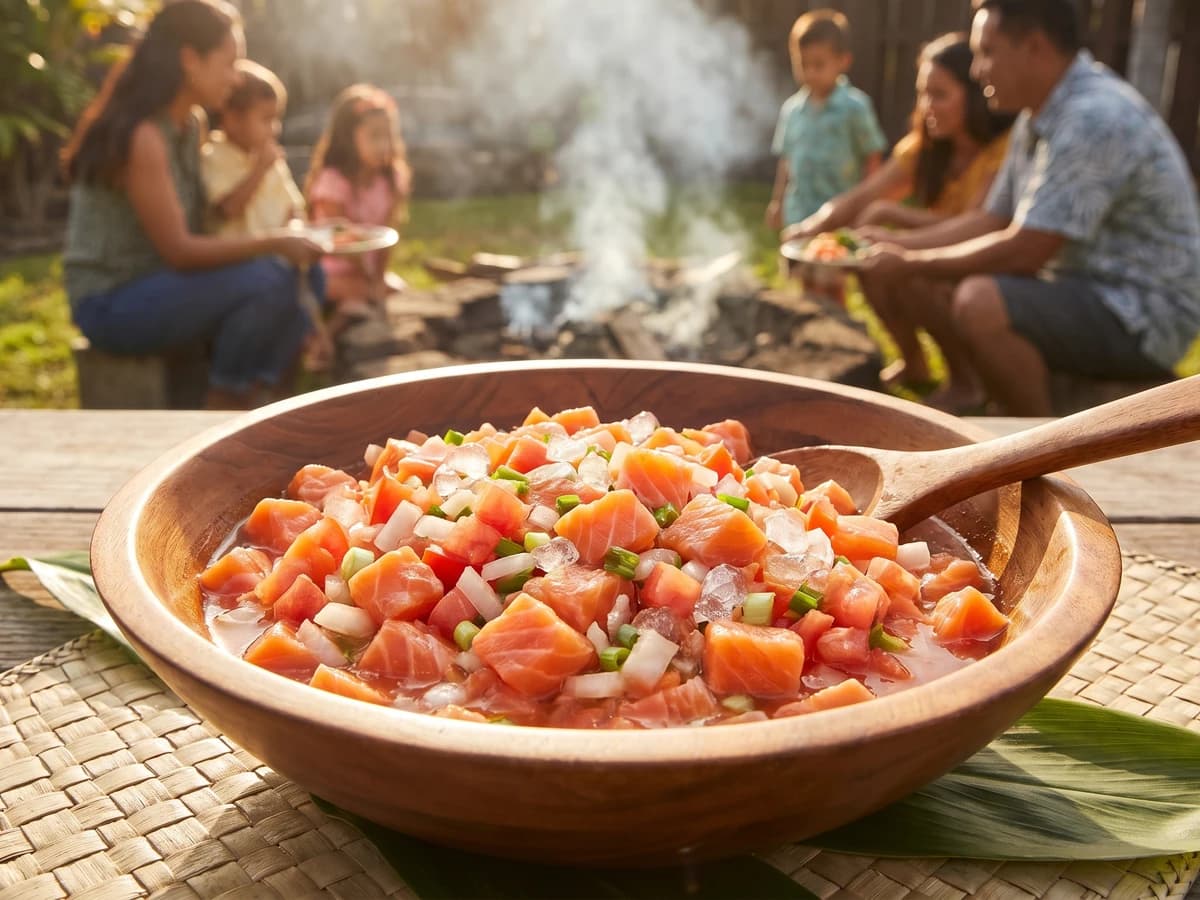
Salted salmon massaged by hand with tomato, sweet onion, green onion, and crushed ice, the cool Hawaiian lūʻau bowl that brightens the table beside poi, laulau, poke, and kālua puaʻa.
A cooking platform built around craft, culture, and the stories behind what we eat.
Created by
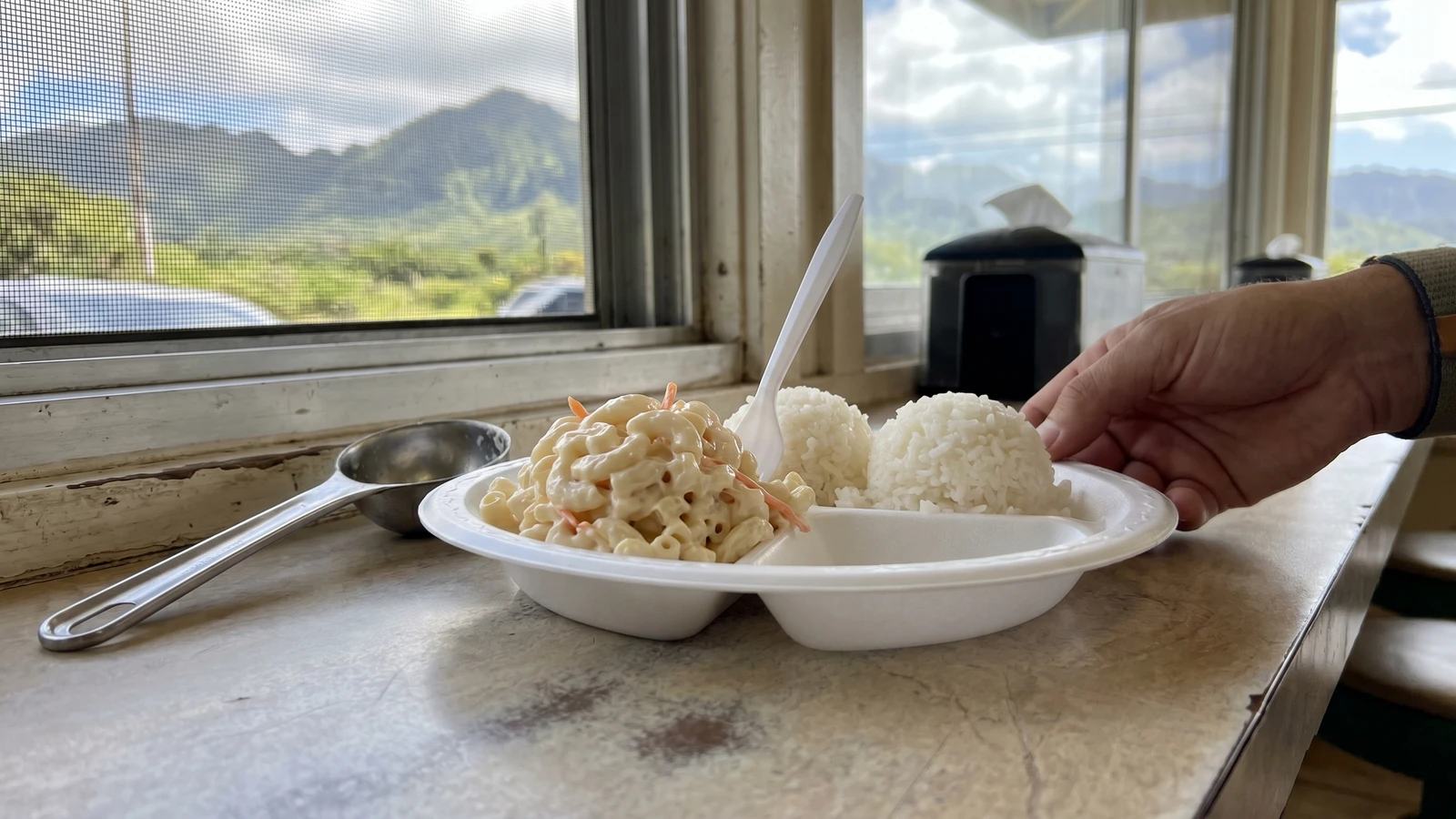
The Hawaiʻi Local plate-lunch scoop, soft elbow macaroni folded creamy with mayo, carrot, and grated onion, sitting beside two scoops rice like it belongs there, because it does.
Papa Kainoa used to say, Eat what you have, and he meant the loʻi, the irrigated taro patch, but he meant the lunch plate too. This mac salad belongs to Hawaiʻi, to the Local table that grew around sugar camps, lunch wagons, drive-ins, school cafeterias, and home kitchens with the rice cooker clicking on the counter. Not old Hawaiian deep food like poi or kālua from the imu, the Hawaiian earth oven, but Hawaiʻi food all the same, fed by Hawaiian, Japanese, Chinese, Portuguese, Korean, Filipino, Puerto Rican, and other hands who had to work, eat, and share.
Across the Triangle, every island has that everyday half of the table. Sāmoa has sapasui, Sāmoan chop suey, at toʻonaʻi, the Sunday meal. Tonga has lū pulu, corned beef wrapped in taro leaf with coconut cream. Tahiti has maʻa tinito, Chinese-style pork and beans as Tahiti made it its own. Same lesson. The deep foods carry the old root, and the newer foods carry the people through the workday. No blame the plate for being humble.
So cook the macaroni soft on purpose. That softness is plate-lunch grammar, not a mistake. The warm elbows drink the vinegar, the mayo settles in, the carrot gives just enough sweetness, and the grated onion disappears into the cream so nobody has to stop and negotiate a big raw bite. One scoop, always, beside two scoops rice. ʻĀina, kānaka, meaʻai, land, people, food, sometimes that looks like the taro board, sometimes like a two-compartment plate and a plastic fork.
Mac salad is Hawaiʻi Local food, not a pre-contact Hawaiian dish: it took shape in the late 19th and early 20th centuries around plantation lunch pails, school cafeterias, lunch wagons, and drive-ins, where rice, inexpensive proteins, and a creamy starch salad settled into the plate-lunch form. By the mid-20th century, the formula was plain and powerful, two scoops white rice, one scoop mac salad, and meat, reflecting the mixed labor communities of Hawaiian, Japanese, Chinese, Portuguese, Korean, Filipino, Puerto Rican, and other families. Across Polynesia, that same modern everyday pattern shows up by its own island names, including Sāmoan sapasui, Tongan lū pulu, and Tahitian maʻa tinito, proof that imported pantry goods become local when people feed them through their own table.
Quantity
1 pound
Quantity
2 tablespoons
for the pasta water
Quantity
1/4 cup
Quantity
2 cups, plus 1/2 cup more
divided for dressing and refreshing
Quantity
1/2 cup, plus 2 to 4 tablespoons more
as needed to loosen
Quantity
2 teaspoons
Quantity
1 teaspoon
plus more to taste
Quantity
1/2 teaspoon
Quantity
1 medium
peeled and finely grated
Quantity
2 tablespoons
finely grated with its juice
Quantity
1/2 cup
finely diced
| Ingredient | Quantity |
|---|---|
| elbow macaroni | 1 pound |
| kosher saltfor the pasta water | 2 tablespoons |
| apple cider vinegar | 1/4 cup |
| full-fat mayonnaisedivided for dressing and refreshing | 2 cups, plus 1/2 cup more |
| whole milkas needed to loosen | 1/2 cup, plus 2 to 4 tablespoons more |
| sugar | 2 teaspoons |
| kosher saltplus more to taste | 1 teaspoon |
| freshly ground black pepper | 1/2 teaspoon |
| carrotpeeled and finely grated | 1 medium |
| sweet onionfinely grated with its juice | 2 tablespoons |
| celery (optional)finely diced | 1/2 cup |
Bring a 6-quart pot of water to a hard boil and add the 2 tablespoons kosher salt. Stir in the macaroni and cook 1 to 2 minutes past the package time, until the elbows are swollen, tender all the way through, and still holding their shape. Al dente makes a stiff plate-lunch scoop. We want soft enough to take the dressing, not mush.
Drain the macaroni well but don't rinse it. Tip the warm elbows into a wide bowl or rimmed pan, sprinkle over the apple cider vinegar, toss gently, and let it sit for 10 minutes. The vinegar wakes up the pasta before the mayo comes in, and warm macaroni drinks better than cold.
Whisk 2 cups mayonnaise with the milk, sugar, 1 teaspoon kosher salt, and black pepper until loose and glossy, like it looks a little too much. That's right. Mac salad tightens as it rests, same way rice firms when the cooker clicks off.
Add the grated carrot, grated onion with its juice, and celery if you're using it to the warm macaroni. Pour in the dressing and fold from the bottom until every elbow is coated. It should look wetter than the final salad, pale ivory with orange flecks, smelling faintly sweet, oniony, and clean.
Cover and chill at least 2 hours, overnight if you can. Before serving, fold in the reserved 1/2 cup mayonnaise and a splash of milk only if the salad has gone tight. Taste for salt. The scoop should mound softly and settle, not stand stiff like cement.
Set one scoop beside two scoops white rice and your protein, or bring the bowl to the potluck with a spoon big enough for everybody. Keep it cold if it sits out; in warm weather set the bowl over ice and get it back to the fridge within 2 hours. No blame the plate for being humble.
1 serving (about 225g)
Culinary guides, cultural storytelling, and the editorial depth that makes cooking meaningful.
Discover Culinary ExplorerChef Makoa
Salted salmon massaged by hand with tomato, sweet onion, green onion, and crushed ice, the cool Hawaiian lūʻau bowl that brightens the table beside poi, laulau, poke, and kālua puaʻa.
Chef Makoa
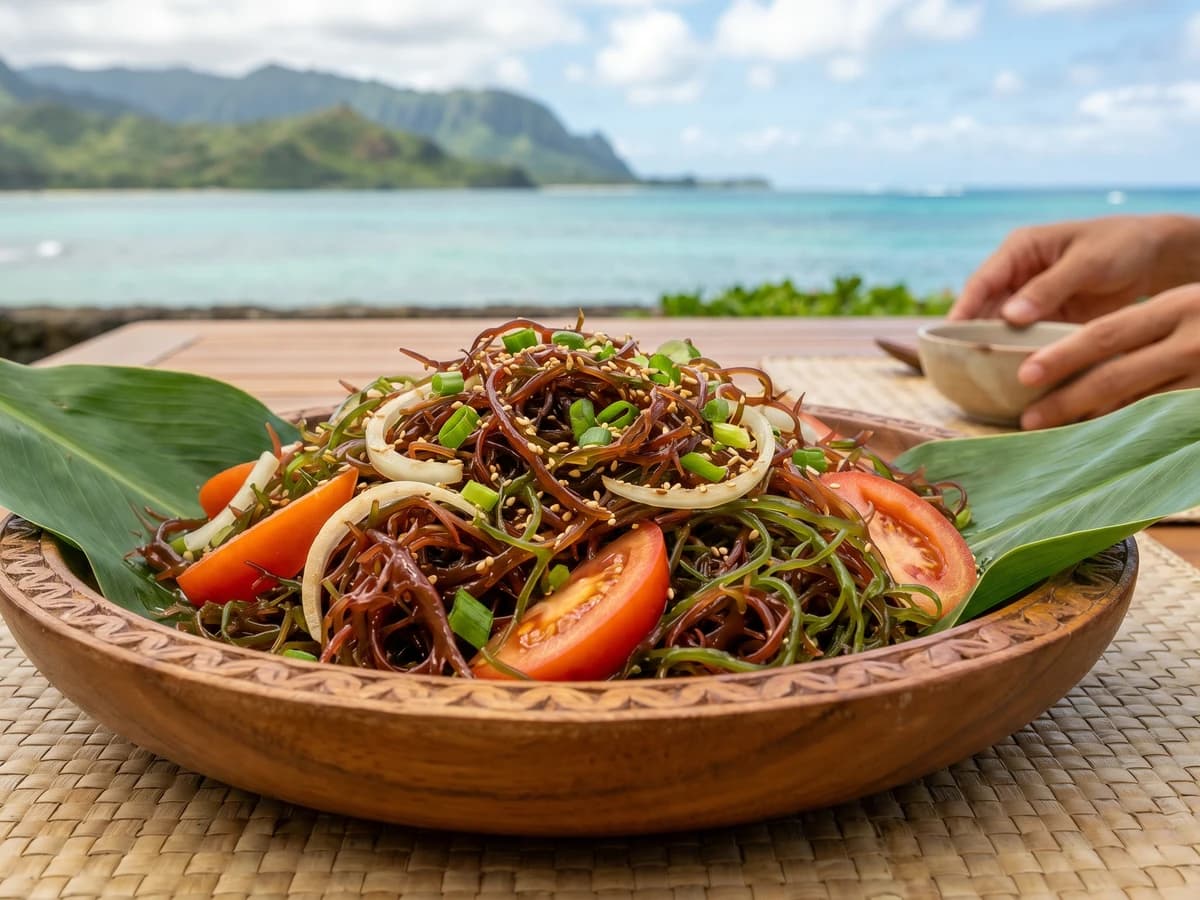
Hawaiʻi's reef bowl, ogo limu blanched crisp, dressed with tomato, sweet onion, shoyu, vinegar, and sesame, then brought to the lūʻau table beside fish, poi, and every cousin who came hungry.
Chef Makoa
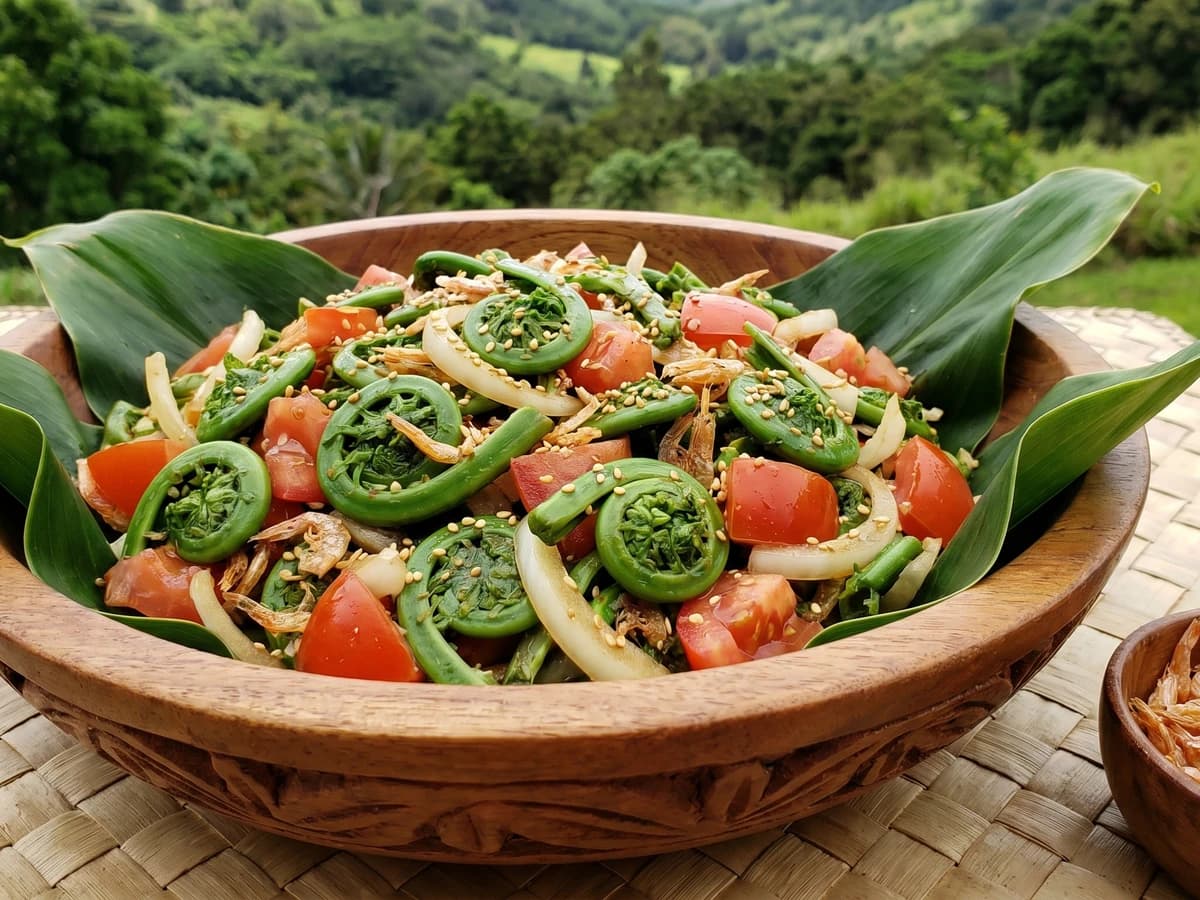
Crisp Hawaiian hōʻiʻo fiddleheads, blanched quick and tossed with tomato, sweet onion, dried shrimp, shoyu, sesame, and rice vinegar, the upland picking brought to the lūʻau table.
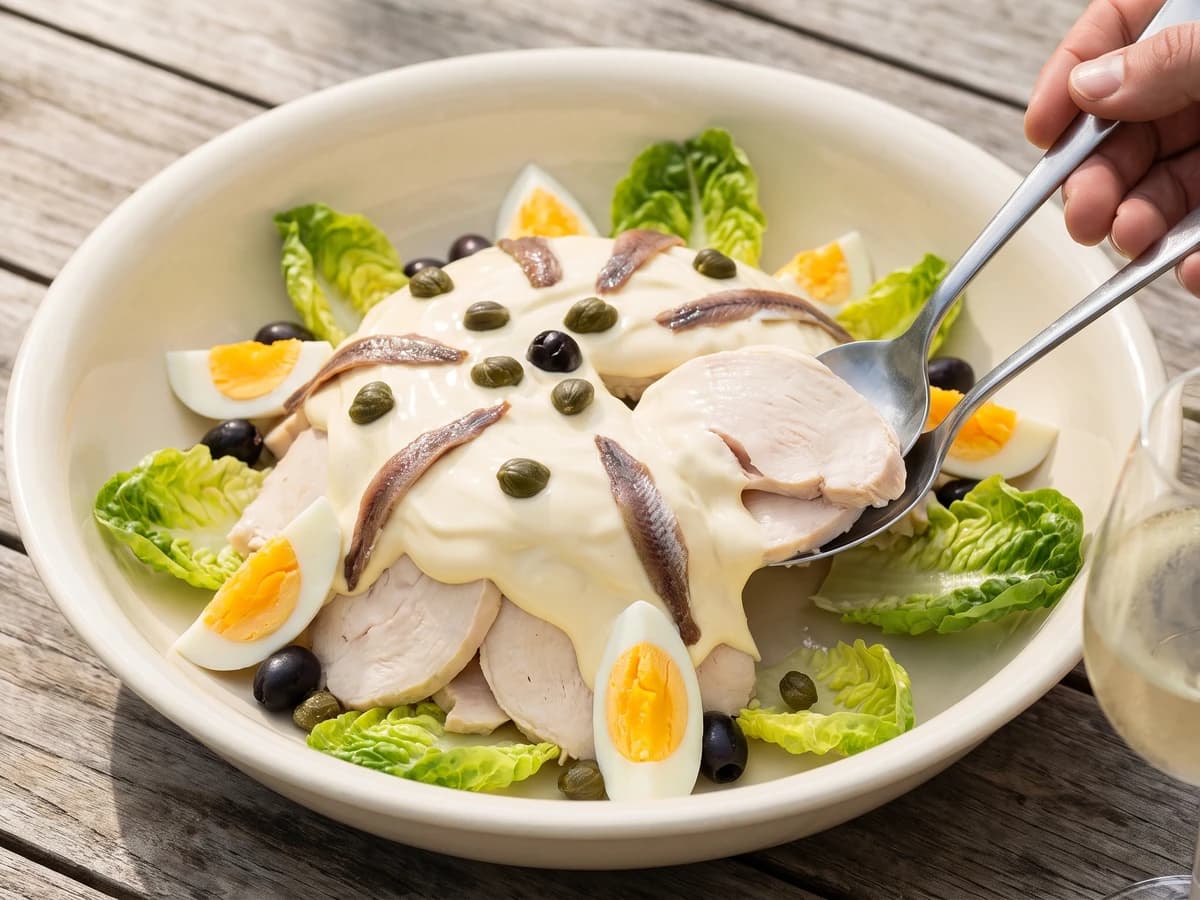
Chef Juliette
Cold roast chicken, ciseled lettuce, and a shining coat of homemade mayonnaise, arranged with capers, olives, anchovies, eggs, and lettuce hearts, then tossed at the table as the canon intends.