Chef Joost
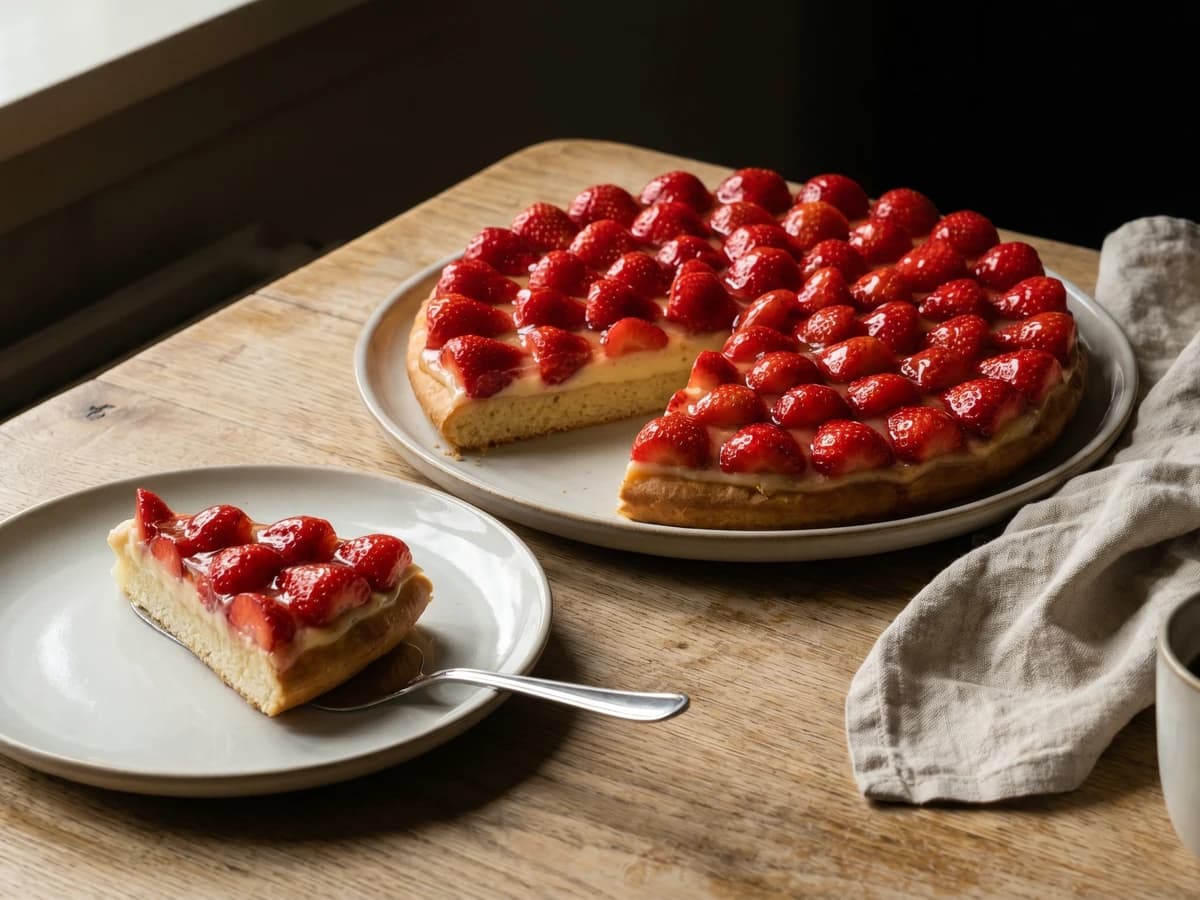
Aardbeienvlaai (Limburg Strawberry Vlaai)
The summer vlaai that politely breaks Limburg's baked-fruit rule: soft gistdeeg, cool pastry cream, and strawberries left fresh because June knows better than the oven.
A cooking platform built around craft, culture, and the stories behind what we eat.

Created by
Little streams of the Maas, baked into slim butter cookies: Rotterdam's nearly forgotten almond-filled koekjes, born in a baker's hand and saved by a granddaughter's memory.
Some recipes don't vanish all at once. They thin out, like a river seen from far away, until only one family remembers the bend. Maasstroompjes, little streams of the Maas, belong to Rotterdam in that tender way: not an old national monument, not a tourist tin, but a city cookie with flour on its cuffs and almond paste at its centre.
The name already tells you where to stand. The Maas is the river that made Rotterdam a harbour city, a working city, a place of cranes, bakeries, ships, and Saturday errands. In 1934, baker Slob made these slim butter cookies with a soft ribbon of amandelspijs, almond paste, running through them like a pale current. But let me tell you a secret: the loveliest Dutch baking often hides in local memory rather than grand cookbooks. If a granddaughter has to bring a biscuit back from recollection, you are dealing with something fragile enough to deserve your attention.
The method asks for restraint. Hou het altijd simpel, always keep it simple. The dough must be buttery but firm enough to hold a narrow shape, and the almond paste must be loosened just enough to pipe or roll without turning wet. Chill the filled strips before baking, because butter remembers every warm fingerprint. Then cut them small, bake them pale gold, and let the almond seam do its quiet work. Rotterdam never needed to shout to be Rotterdam.
Maasstroompjes are associated with Rotterdam baker Slob, who is said to have created the narrow almond-filled butter cookies in 1934 and named them for the Maas, the river that defines the city. The recipe survived not as a widely printed standard but through family memory, later revived by Slob's granddaughter, which makes it part of a modern Dutch pattern: regional bakery goods rescued before they disappear from the counter. Their name is straightforward rather than ancient, stroompjes meaning little streams, and that local naming ties the cookie directly to Rotterdam's harbour geography.
Quantity
200g
Quantity
50g
Quantity
1/4 teaspoon
Quantity
150g
cold and diced
Quantity
1
Quantity
1 tablespoon
plus a little more if needed
Quantity
150g
Quantity
1/2 teaspoon
finely grated
Quantity
1 small
divided
Quantity
1 tablespoon
Quantity
1 tablespoon
| Ingredient | Quantity |
|---|---|
| plain flour | 200g |
| fine caster sugar | 50g |
| fine salt | 1/4 teaspoon |
| unsalted buttercold and diced | 150g |
| egg yolk | 1 |
| cold milkplus a little more if needed | 1 tablespoon |
| almond paste (amandelspijs) | 150g |
| lemon zestfinely grated | 1/2 teaspoon |
| egg whitedivided | 1 small |
| sliced almonds (optional) | 1 tablespoon |
| pearl sugar or coarse sugar (optional) | 1 tablespoon |
Rub the flour, sugar, salt, and cold butter together with your fingertips until the mixture looks like fine crumbs with a few pea-sized flakes of butter left. Stir in the egg yolk and one tablespoon of cold milk, then press the dough together. If it cracks into dry sand, add milk by the teaspoon, not by the splash. You want a firm butter dough, not a soft cake batter.
Flatten the dough into a rectangle, wrap it, and chill it for at least 45 minutes. This is not delay for ceremony. Cold butter gives the cookie its clean snap and keeps the little streams narrow instead of letting them spread into puddles.
Knead the almond paste with the lemon zest and half the egg white until it becomes smooth and workable. It should hold its shape when rolled into a cord. If your amandelspijs is stiff, add a few drops more egg white; if it slumps, leave it alone and let your hands do the softening.
Roll the chilled dough on a lightly floured surface into a rectangle about 30 by 24 centimetres. Cut it lengthwise into four long strips, each about 6 centimetres wide. Divide the almond paste into four thin cords and lay one down the centre of each strip. Fold the dough over the filling and pinch the seam closed, then roll gently so the seam sits underneath.
Cut each filled strip into pieces about 4 centimetres long and set them seam-side down on a lined baking tray. Brush lightly with the remaining egg white and scatter over sliced almonds and pearl sugar if you like. Chill the tray for 20 minutes while the oven heats to 180C. A cold tray is the quiet difference between neat cookies and bakery sadness.
Bake for 13 to 16 minutes, until the edges are pale gold and the almond seam feels set when one cookie is lifted. Do not chase deep colour. Maasstroompjes are butter cookies, not spice biscuits; their charm is the contrast between the crisp pale shell and the soft almond current inside.
Let the cookies sit on the tray for five minutes, then move them to a rack to cool completely. The almond paste firms as it cools, and the butter shell becomes cleaner under the teeth. Store them in a tin once cold.
1 serving (about 17g)
Culinary guides, cultural storytelling, and the editorial depth that makes cooking meaningful.
Discover Culinary ExplorerChef Joost
The summer vlaai that politely breaks Limburg's baked-fruit rule: soft gistdeeg, cool pastry cream, and strawberries left fresh because June knows better than the oven.

Chef Joost
A Limburg vlaai is not a pie trying to be grand. It is a thin yeast-dough round, fruit-bright and generous, made for birthdays, coffee, and second slices.

Chef Joost
The December bakery counter made small: cold leafed pastry wrapped around lemon-scented amandelspijs, brushed gold, and scattered with almonds so one person gets the whole holiday in both hands.
Chef Joost
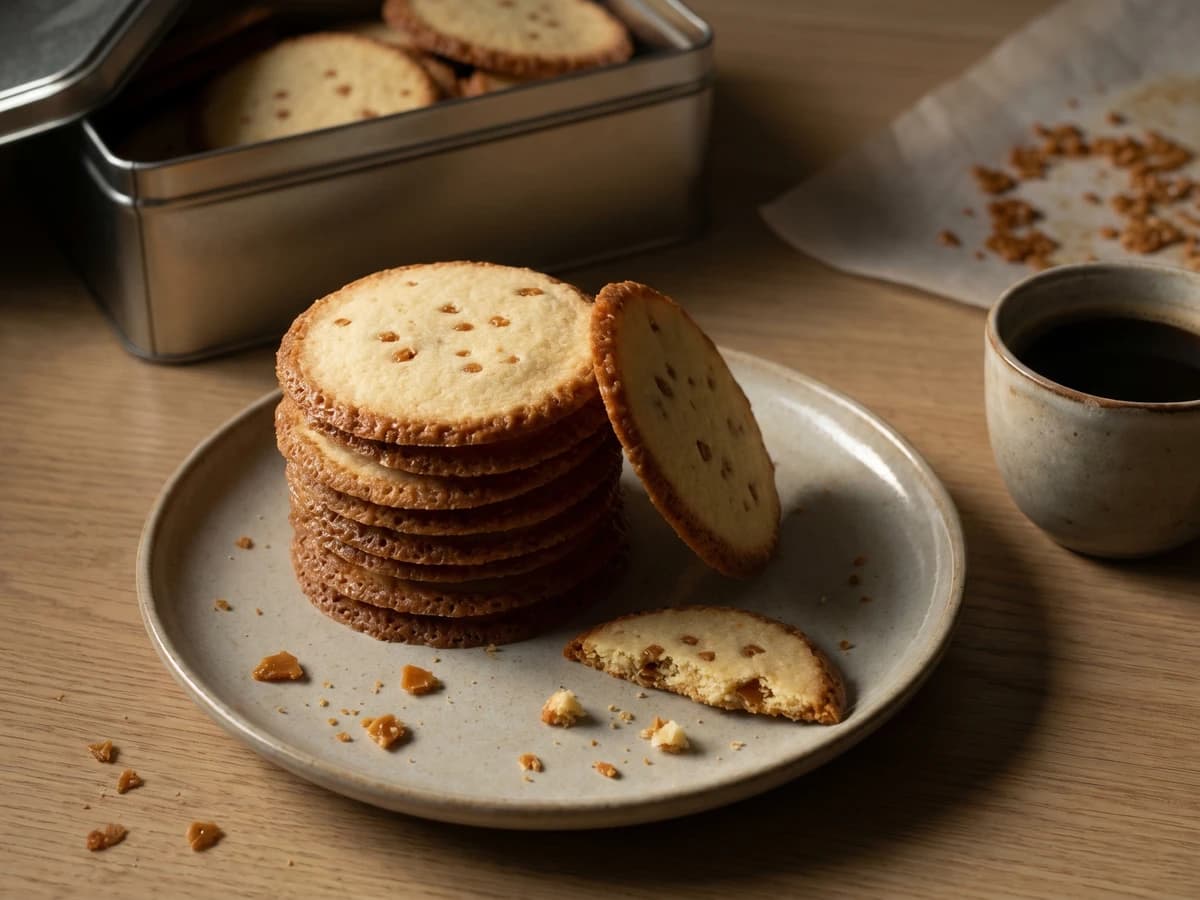
A thin Amsterdam cookie carrying a cog ship in its name: caramelized butter dough, almond nougatine, and a 1934 contest that turned municipal pride into something for coffee.