
Chef Makoa
Ahimaʻa Puaʻa (Tahitian Earth-Oven Pork)
Tahitian puaʻa cooked in the spirit of the ahimaʻa, the earth oven of maʻa Tahiti, wrapped in banana leaf and held low and slow until the meat gives in two fingers.
A cooking platform built around craft, culture, and the stories behind what we eat.

Created by
Tahiti's māʻa tinito, literally Chinese food, braises pork with red beans, macaroni, clear noodles, and greens into the Hakka-Tahitian comfort pot people feed to family.
The table in Tahiti tells the truth plain: the fenua, the land, remembers the canoe plants, and the kitchen also remembers the people who came later and stayed. Māʻa tinito, in reo Tahiti, means Chinese food, and this one belongs to Tahiti, not to some blurred plate called Polynesian. Pork, red beans, macaroni, cellophane noodles, soy, greens, rice underneath. It sounds like somebody's pantry after a long week, and that's exactly why it matters.
I learned this kind of dish with my hands open, because it isn't from my home seat in Hawaiʻi. A Tahitian auntie will tell it better than me, and the Chinese-Tahitian families who carried it into Papeʻete should tell the deepest parts. What I can say is this: the dish shows how an island keeps its old root and still feeds the new day. One ocean, one canoe, one root, and then the ships came, the workers came, the traders came, the families stayed, and the pot got bigger.
So cook it unfussy. Brown the pork well, let the beans thicken the broth, let the macaroni and glass noodles do what everyday food does, stretch the pot so one more cousin can eat. This is not the ahimaʻa, the Tahitian earth oven, and it doesn't pretend to be deep ceremony. It is comfort food that became Tahitian because Tahiti's people made room for it, ate it, argued over it, packed it for gatherings, and kept cooking it.
Chinese migration to Tahiti grew in the 19th century, especially with Hakka laborers brought to work cotton plantations around 1865, and their families became part of French Polynesia's food life over generations. Māʻa tinito means Chinese food in reo Tahiti, but the dish is now distinctly Tahitian: red beans, pork, macaroni, cellophane noodles, soy seasoning, greens, and rice all sharing one pot. It sits beside older Tahitian foods like ʻuru, taro, ʻia ota, and the ahimaʻa, showing the post-contact table without erasing the deep canoe-crop foundation beneath it.
Quantity
1 pound
cut into 1-inch pieces
Quantity
1 tablespoon
Quantity
1 large
sliced
Quantity
4
minced
Quantity
1 tablespoon
minced
Quantity
3 tablespoons
Quantity
1 tablespoon
for deeper color
Quantity
1 tablespoon
Quantity
1 tablespoon
Quantity
1 teaspoon
Quantity
1/2 teaspoon
Quantity
2 cups
or 1 can (15 oz), drained and rinsed
Quantity
4 cups
plus more as needed
Quantity
4 ounces
Quantity
2 ounces
soaked 10 minutes and drained
Quantity
2 cups
chopped
Quantity
2
sliced
Quantity
for serving
| Ingredient | Quantity |
|---|---|
| pork shoulder or pork bellycut into 1-inch pieces | 1 pound |
| neutral oil | 1 tablespoon |
| onionsliced | 1 large |
| garlic clovesminced | 4 |
| fresh gingerminced | 1 tablespoon |
| soy sauce | 3 tablespoons |
| dark soy sauce (optional)for deeper color | 1 tablespoon |
| oyster sauce | 1 tablespoon |
| tomato paste | 1 tablespoon |
| sugar | 1 teaspoon |
| black pepper | 1/2 teaspoon |
| cooked red kidney beansor 1 can (15 oz), drained and rinsed | 2 cups |
| low-salt pork or chicken stockplus more as needed | 4 cups |
| elbow macaroni | 4 ounces |
| dried cellophane noodlessoaked 10 minutes and drained | 2 ounces |
| Chinese cabbage or bok choychopped | 2 cups |
| green onionssliced | 2 |
| cooked rice | for serving |
Heat the oil in a heavy pot over medium-high heat. Season the pork lightly, then brown it in batches until the edges turn deep brown and glossy. Don't crowd the pot. That dark bottom is where the broth starts getting its backbone.
Lower the heat to medium and add the onion to the same pot. Cook until it softens and picks up the browned bits, then stir in the garlic and ginger until they smell warm and sharp, about one minute. Add the soy sauce, dark soy if using, oyster sauce, tomato paste, sugar, and black pepper, and stir until the pork is stained dark and shining.
Return all the pork to the pot, add the red beans and stock, and bring it to a gentle boil. Drop the heat low, cover partly, and simmer 45 to 60 minutes, until the pork gives under a spoon and the beans start thickening the broth. If it gets tight before the pork is tender, add a little more stock. Eat what you have, but don't rush the pot.
Stir in the macaroni and keep the stew at a steady simmer. Cook 8 to 10 minutes, stirring often so the pasta doesn't catch on the bottom, until the elbows are just tender and the broth has turned starchy and rich. Māʻa tinito should be spoonable and hearty, not dry.
Cut the soaked cellophane noodles once or twice with scissors so they don't tangle, then fold them into the pot with the cabbage or bok choy. Simmer 3 to 5 minutes, just until the greens soften and the clear noodles drink in the sauce. Taste for salt, soy, and pepper.
Turn off the heat and let the stew sit 10 minutes so the noodles settle and the broth clings to everything. Spoon it over rice and finish with green onion. This is food for a full table, not one precious bowl, so put the pot where hands can reach.
1 serving (about 480g)
Culinary guides, cultural storytelling, and the editorial depth that makes cooking meaningful.
Discover Culinary ExplorerChef Makoa
Tahitian puaʻa cooked in the spirit of the ahimaʻa, the earth oven of maʻa Tahiti, wrapped in banana leaf and held low and slow until the meat gives in two fingers.
Chef Makoa
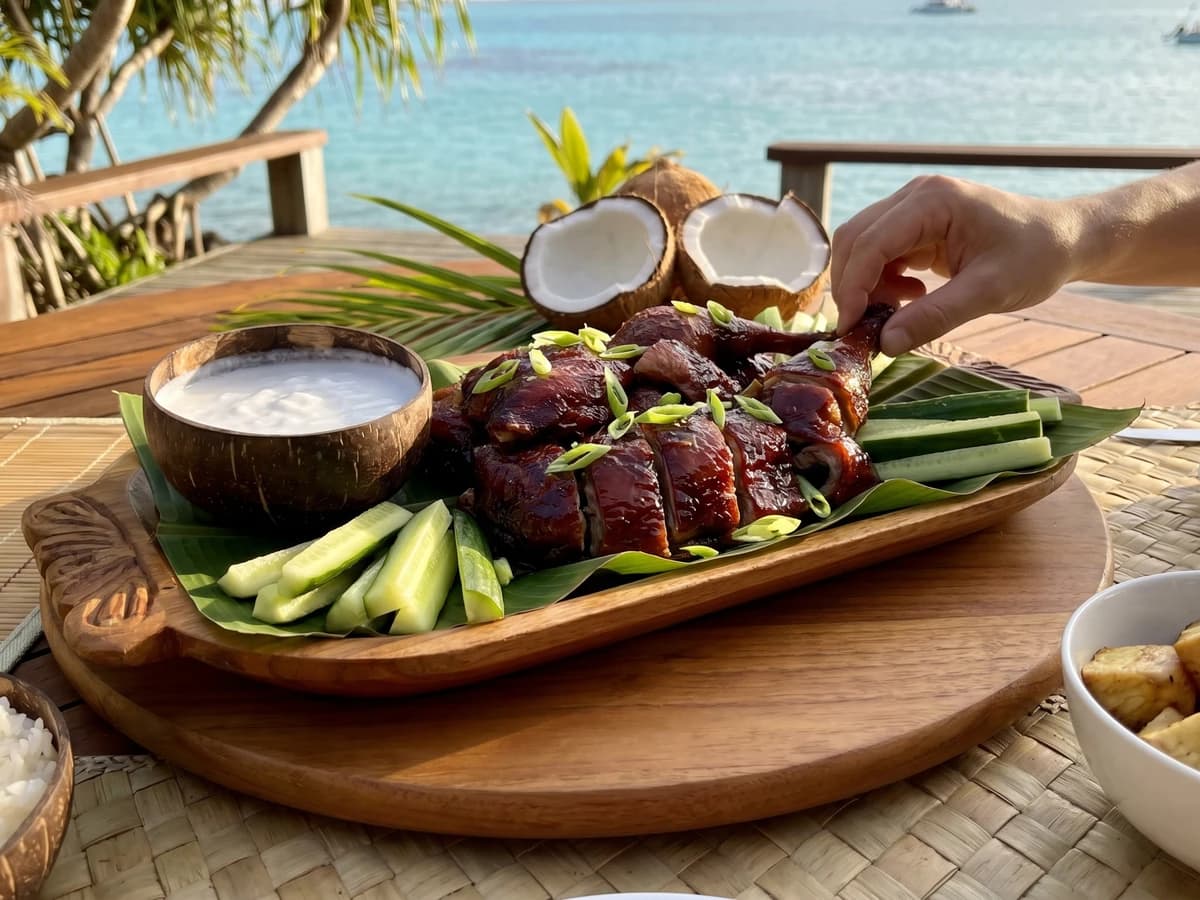
Glossy Chinese-Tahitian roast duck from Papeʻete, lacquered with soy, honey, and five-spice, carved for the lazy Susan, then dipped into thick fresh coconut milk beside rice, ʻuru, and a crowded table.
Chef Makoa
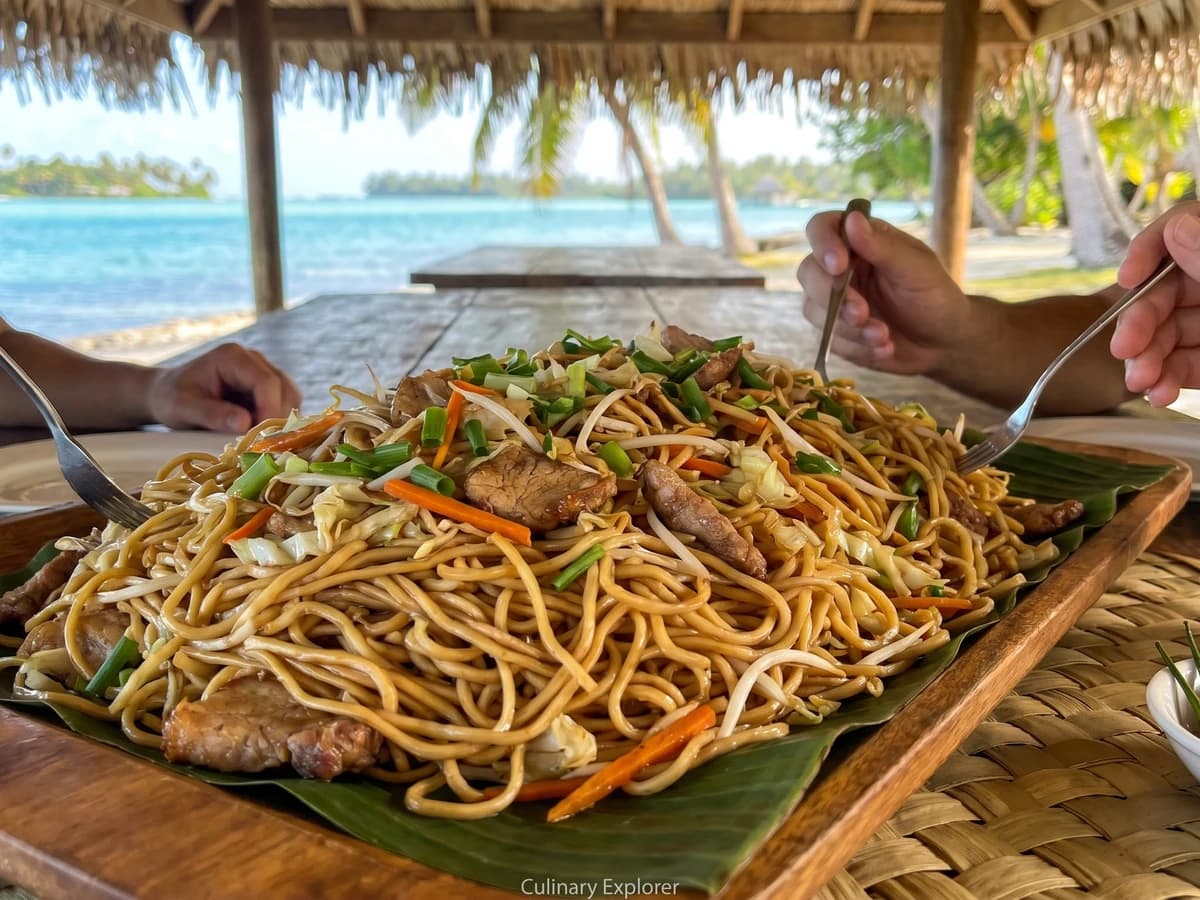
Tahiti's chao men is Hakka chow mein made fully local: glossy egg noodles, pork, cabbage, carrot, and green onion, fast from the wok and generous enough for the table.

Chef Makoa
Tahiti's fāfaru takes raw ʻahi into miti fāfaru, a pungent fermented seawater brine, then brings it back to the table with mitihue, breadfruit, and the lesson that good funk is food kept alive.