Chef Makoa
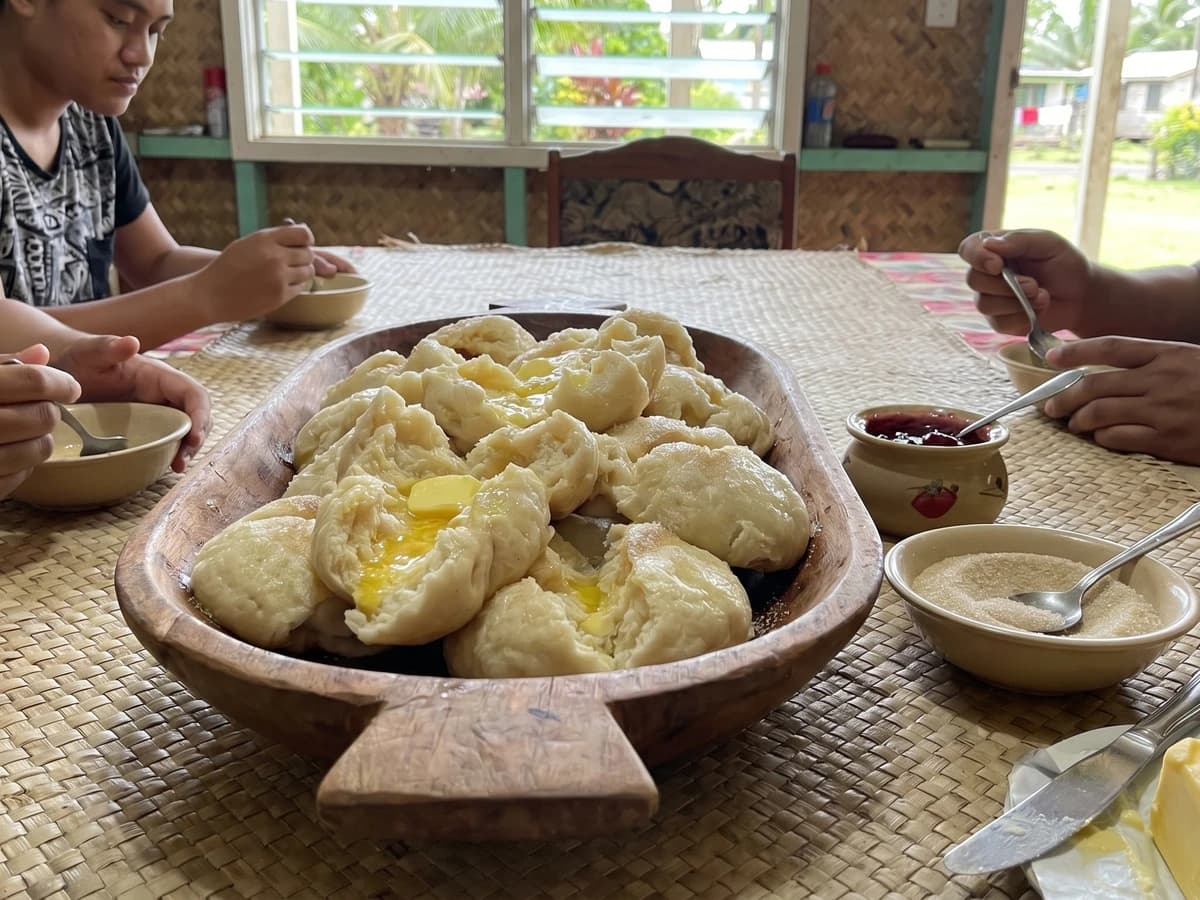
Tōpai (Tongan Boiled Breakfast Dumplings)
Tonga's weekday tōpai, soft flour dumplings boiled plain and eaten warm with butter, jam, or sugar. Humble food, budget food, the breakfast cousin of faikakai tōpai.
A cooking platform built around craft, culture, and the stories behind what we eat.

Created by
Tonga's mā molū is soft trader's-wheat bread made for tearing, not slicing, warm from the loaf with butter and jam, kin to the everyday wheat breads now sitting beside talo, ʻufi, mei, and lū.
At a Tongan table, kinship can arrive as one whole loaf, passed hand to hand before anyone reaches for a knife. Mā molū, soft bread, belongs to Tonga and to the kāinga, the extended family, that tears it warm at breakfast with butter and jam, or sets it beside tea after church. I learned to treat this loaf the way a Tongan auntie treated me: sit down, eat first, talk after.
This is not the oldest food of Tonga, and that matters. The deep table is talo, taro, ʻufi, yam, mei, breadfruit, fish, coconut, lū pulu and lū sipi, taro-leaf parcels cooked in the Tongan ʻumu, the earth oven. Mā molū came by the later road of wheat, sugar, yeast, and mission tea, and Tonga did what living people do. They made it feed the family.
Across the Triangle, the cousins took that later wheat road in their own hands: Sāmoan panipopo, coconut buns, Māori rēwena parāoa, potato-starter bread, and the sweet breads that settled into Hawaiʻi's plantation kitchens. They are not one generic bread. Same ocean, different tables. This one is Tongan, soft and plain in the best way, baked whole and torn, because the first serving is a sharing.
Keep the dough soft. That's the whole lesson. Too much flour makes a tight loaf, and no need for that. I cook this open-handed, with Tonga's people above mine, and for the family ways around the feast table and the old half-day work of faikakai, dumplings in coconut caramel, go sit with a Tongan grandmother. She should tell that story.
Mā molū means soft bread in Tongan, and it belongs to the post-contact wheat table that grew through nineteenth-century mission and trading routes rather than the older canoe-crop table of talo, ʻufi, mei, coconut, and fish. Flour, sugar, yeast, and tea entered everyday life through ports and churches, then Tonga made the loaf its own for breakfast, school lunch, church Sundays, and fatongia, the obligations that feed weddings, funerals, and family gatherings. Calling that line plainly, deep food beside mission food, keeps both truths intact: the elder crops keep their old dignity, and the soft loaf keeps its honest place on the living table.
Quantity
1 1/2 cups
105F to 110F
Quantity
1/2 cup
warmed
Quantity
1/3 cup
Quantity
4 1/2 teaspoons
about 2 packets
Quantity
6 cups
plus more only as needed
Quantity
2 teaspoons
Quantity
1/4 cup
melted and cooled
Quantity
2 tablespoons
melted, for brushing
Quantity
1 tablespoon
for the bowl
Quantity
for serving
| Ingredient | Quantity |
|---|---|
| warm water105F to 110F | 1 1/2 cups |
| evaporated milk or whole milkwarmed | 1/2 cup |
| granulated sugar | 1/3 cup |
| active dry yeastabout 2 packets | 4 1/2 teaspoons |
| all-purpose flourplus more only as needed | 6 cups |
| fine sea salt | 2 teaspoons |
| unsalted buttermelted and cooled | 1/4 cup |
| unsalted buttermelted, for brushing | 2 tablespoons |
| neutral oilfor the bowl | 1 tablespoon |
| soft butter and jam (optional) | for serving |
Stir the warm water, warm milk, and sugar together in a large bowl. Sprinkle the yeast over the top and let it stand 5 to 10 minutes, until it foams and smells sweet and alive. If it stays flat, start again with fresh yeast. No blame the dough for tired yeast.
Whisk the flour and salt together, then pour in the yeast mixture and the melted butter. Mix until the flour is taken up and the dough looks shaggy, soft, and a little rough. It should feel tacky, not dry. Mā molū wants softness from the beginning.
Knead by hand for 8 to 10 minutes, or with a dough hook for about 6 minutes, until the dough smooths out and springs back when pressed. It should pull from the bowl but still cling a little to your fingers. If it puddles, dust in flour one tablespoon at a time. If it feels stiff, wet your hands and keep kneading.
Oil the bowl, tuck the dough in, turn it once so the surface shines lightly, and cover it. Let it rise in a warm place for 60 to 90 minutes, until doubled and puffy. Press one finger into the dough. The dent should fill slowly, like the loaf is breathing back.
Grease two 9 by 5 inch loaf pans. Turn the dough out, divide it in half, and press each half into a rough rectangle. Roll each piece snugly into a loaf, pinch the seam, and set it seam-side down in the pans. Keep the loaves whole. This bread goes to the table for tearing.
Cover the pans and let the loaves rise 35 to 50 minutes, until they crown just over the rims and jiggle softly when the pan is moved. Heat the oven to 350F while they rise. If your kitchen is cool, give them time. The dough keeps its own clock.
Bake for 30 to 35 minutes, until the tops are honey-brown, the sides pull slightly from the pans, and the bottoms sound hollow when tapped. An instant-read thermometer should read about 190F in the center. If the tops brown early, lay foil loosely over them for the last few minutes.
Brush the hot loaves with melted butter so the crust goes soft and glossy. Rest 15 to 20 minutes, then set the loaf down whole and tear it warm at the table with butter and jam. Leftovers can become toast tomorrow. Eat what you have.
1 serving (about 95g)
Culinary guides, cultural storytelling, and the editorial depth that makes cooking meaningful.
Discover Culinary ExplorerChef Makoa
Tonga's weekday tōpai, soft flour dumplings boiled plain and eaten warm with butter, jam, or sugar. Humble food, budget food, the breakfast cousin of faikakai tōpai.
Chef Makoa
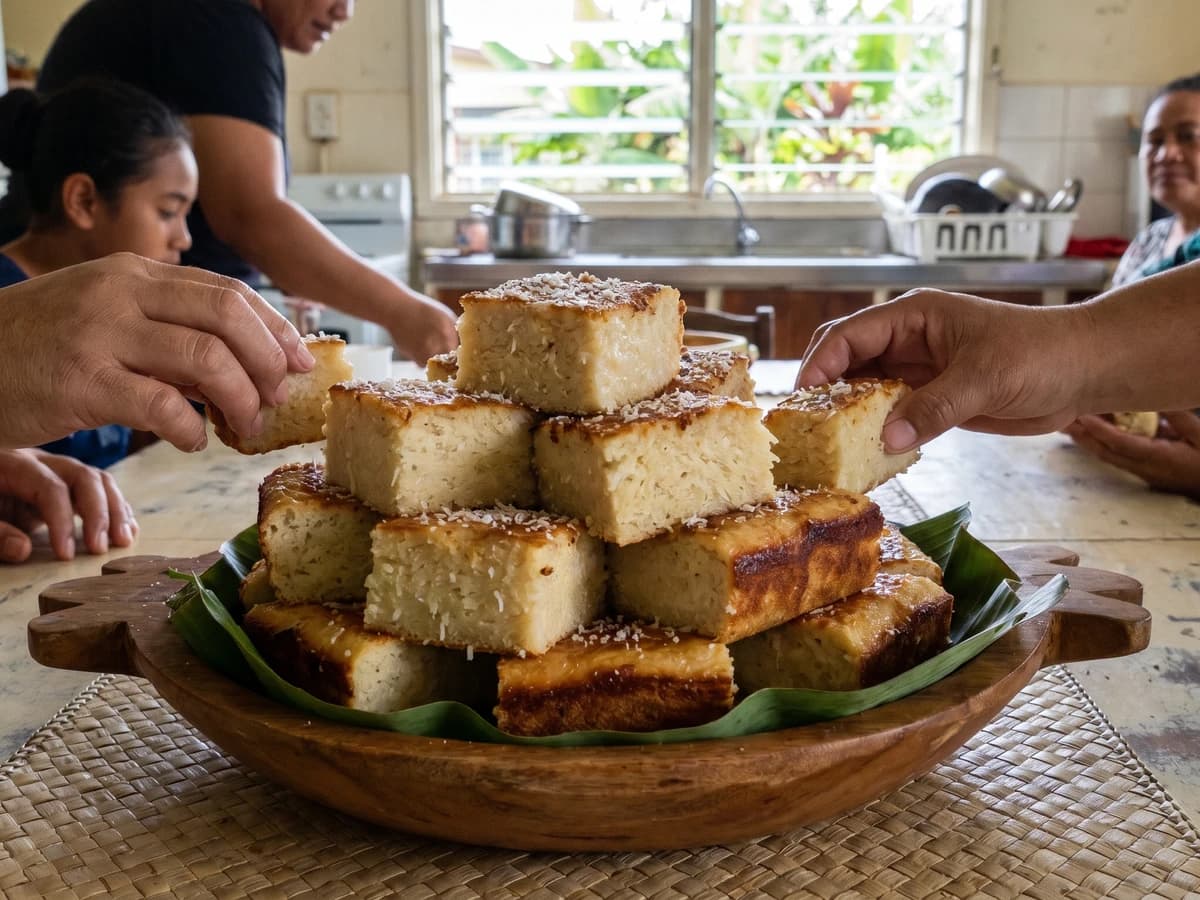
Tonga's touʻkutu takes manioke, cassava, and lolo, thick coconut cream, and bakes them into a golden, tender bread for Sunday morning, special tables, and quiet comfort.

Chef Juliette
Pâte à brioche ordinaire teaches enriched dough properly: wake the leaven, build strength before the last egg, then work in pliable butter by stages and let one long fermentation do its quiet work.

Chef Juliette
Ordinary brioche takes one exact measure of butter and a patient rise in the mould, becoming so light and silken that it can cradle fruit without losing its tender crumb.