Culinary Explorer

A cooking platform built around craft, culture, and the stories behind what we eat.
Discover Culinary Explorer
Los Tuxtlas Smoked Pork Loin (Carne de Chango)

Los Tuxtlas Smoked Pork Loin (Carne de Chango)

Created by

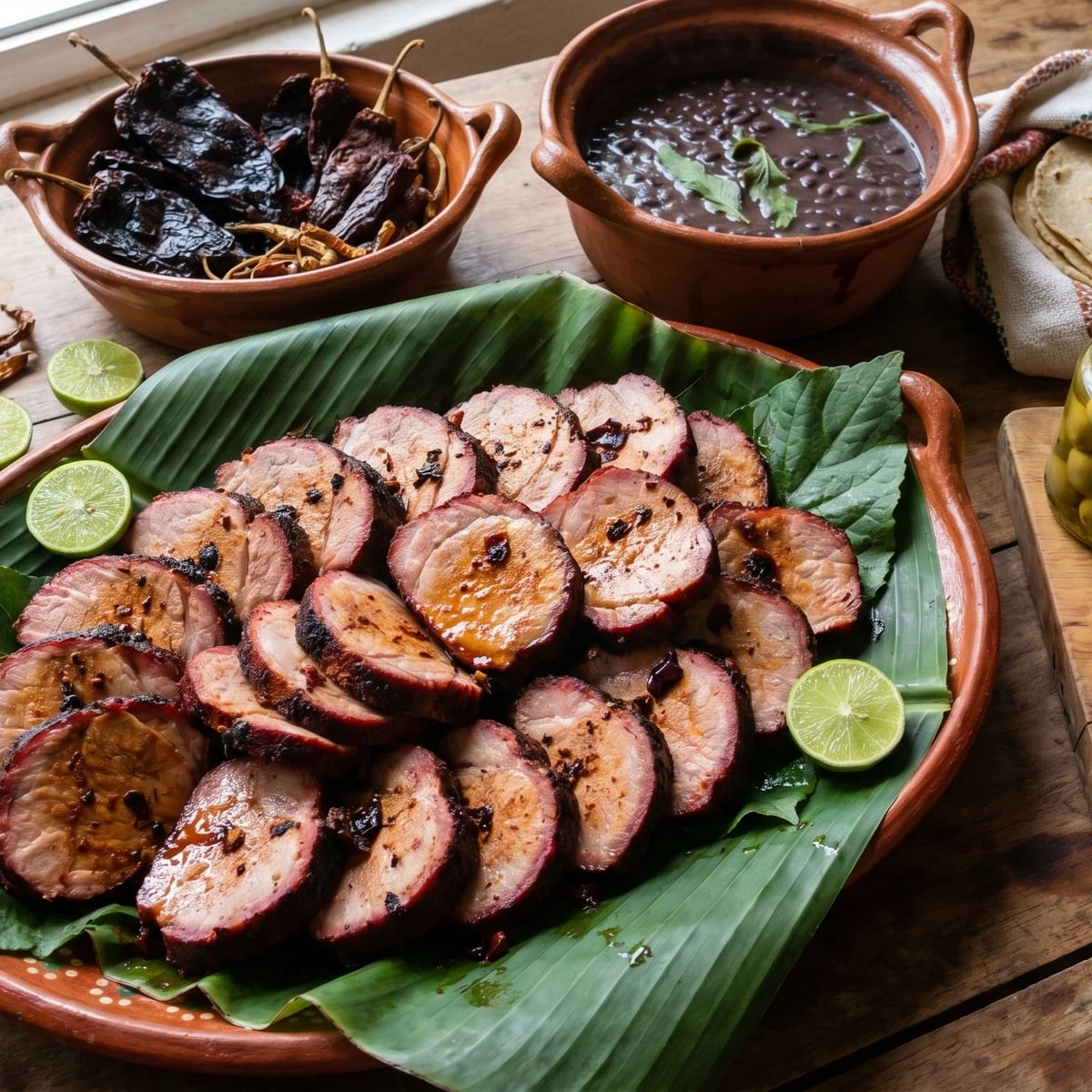
Veracruz's Los Tuxtlas smoked pork loin, cured with achiote, sour orange, chile ancho, and chipotle meco, then smoked over fruitwood until the meat turns mahogany and slices clean for the table.

Main Dishes
Mexican
Special Occasion
Make Ahead
Comfort Food
12 hr 45 min
Active Time
2 hr 30 min cook15 hr 15 min total
Yield8 servings

Veracruz, Los Tuxtlas, between Catemaco, San Andres Tuxtla, and Santiago Tuxtla, is where this dish lives. The mountains are volcanic, the air is wet, and the kitchens know smoke because smoke keeps meat honest in a climate that tries to spoil everything. Carne de chango is the old name. Today it is pork loin, salted, stained red with achiote, sour orange, chile ancho, and chipotle meco, then smoked until the outside turns mahogany and the center stays juicy.

The women I learned from around Catemaco don't treat smoking as an outdoor hobby. They use it like a pantry, a way to carry pork through a holiday week, a baptism, a house full of visitors. They rub the adobo into the meat with their hands, leave it overnight, and judge the wood by smell before they judge it by the clock. Preguntale a las senoras del mercado. They will tell you when the achiote is good and when the chile is old.

Veracruz is not the north, so don't drag flour tortillas into this. Corn tortillas, black beans with epazote, hoja santa, banana leaf on the table. The adobo is not barbecue sauce, and the name is not an invitation to tell jokes. The animal is pork. The memory is Los Tuxtlas. Cada estado, su propia cocina.

Carne de chango is a specialty of Catemaco, San Andres Tuxtla, and Santiago Tuxtla in Veracruz's Los Tuxtlas, a humid volcanic region where smoking helped preserve pork before refrigeration was reliable in rural kitchens. The nickname chango predates modern conservation law and points to older forest hunting practices in the Tuxtlas; today the recognized dish is pork loin marinated with achiote and smoked. Los Tuxtlas Biosphere Reserve was federally decreed in 1998, and the dish's survival as pork shows how regional kitchens can keep a name while changing the ingredient to fit law, ecology, and household economy.

The technique, the tradition, and the story behind every dish.

Discover Culinary Explorer

Ingredients

center-cut pork loin

Quantity

3 pounds

fat cap left on, silver skin trimmed

kosher salt

Quantity

1 tablespoon plus 1 teaspoon

grated piloncillo

Quantity

1 tablespoon

dried chile ancho

Quantity

3

stemmed and seeded

dried chile chipotle meco or chipotle seco

Quantity

2

stemmed

sour orange juice (naranja agria)

Quantity

1/2 cup

achiote paste

Quantity

3 tablespoons

garlic cloves

Quantity

6

peeled

dried Mexican oregano

Quantity

1 teaspoon

crumbled

cumin seeds

Quantity

1/2 teaspoon

allspice berries (pimienta gorda)

Quantity

6

whole cloves

Quantity

2

black peppercorns

Quantity

1 teaspoon

cane vinegar or apple cider vinegar

Quantity

2 tablespoons

manteca de cerdo

Quantity

2 tablespoons

softened

banana leaf pieces

Quantity

2 large

wiped clean and passed over a flame until pliable

hoja santa (acuyo) leaves

Quantity

4

wiped clean

guava, orange, or oak wood chunks

Quantity

2 to 3

for smoking

black beans de olla with epazote (optional)

Quantity

for serving

hand-pressed corn tortillas (optional)

Quantity

for serving

warmed

lime halves (optional)

Quantity

for serving

Equipment Needed

  • Cast iron comal for toasting chiles
  • High-powered blender
  • Glass, ceramic, or stainless steel dish for curing
  • Charcoal grill or smoker with a tight lid
  • Instant-read thermometer
  • Banana leaf-lined terracotta platter for serving

Instructions

  1. 1

    Trim and salt

    Pat the pork loin dry. Leave a thin fat cap, about 1/4 inch, because lean pork loin dries out fast and nobody from Los Tuxtlas asked for dry meat. Score the fat cap in shallow lines without cutting into the flesh. Mix the salt and piloncillo, rub it over every side, and set the pork on a rack in the refrigerator while you prepare the adobo. The salt begins its work now, and the piloncillo helps the achiote crust brown instead of tasting dusty.

  2. 2

    Toast the chiles

    Heat a dry comal over medium. Toast the chile ancho pieces for 20 to 30 seconds per side, pressing them flat with a spatula until they darken slightly and smell sweet. Toast the chipotle meco for only 10 to 15 seconds per side. It is already smoked, so you are waking it up, not punishing it. Toast the cumin, allspice, cloves, and black peppercorns for about 30 seconds, just until fragrant.

    If a chile turns black, throw it out. Burned chile makes bitter adobo, and there is no fixing that later. No me vengas con atajos.
  3. 3

    Blend the adobo

    Place the toasted chiles in a bowl and cover with hot water for 20 minutes. Drain them. In a blender, combine the softened chiles, sour orange juice, achiote paste, garlic, Mexican oregano, toasted spices, vinegar, and 2 tablespoons of the chile soaking liquid. Blend until completely smooth. The paste should be brick red, thick, and sharp from the sour orange. Reserve 1/4 cup of this clean adobo in a separate covered bowl for brushing during smoking.

  4. 4

    Rub and cure

    Massage the remaining adobo into the pork, pushing it into the scored fat and coating every side. Set the pork in a glass, ceramic, or stainless steel dish. Do not use aluminum. The acid and achiote will fight with it and stain everything. Cover and refrigerate for 12 to 24 hours, turning once. This is a salt cure and adobo cure, not a pink curing salt recipe. The time matters because the flavor has to move into the meat, not sit on the outside like paint.

  5. 5

    Dry the surface

    Take the pork out of the refrigerator 45 minutes before smoking. Scrape off any heavy puddles of adobo, but leave the red coating on the meat. Rub the softened manteca over the surface. La manteca es el sabor, and here it also protects a lean cut while the wood does its work. The surface should feel tacky before it goes into the smoker.

  6. 6

    Prepare the fire

    Set a smoker or covered charcoal grill for indirect cooking at 225F to 250F. Add guava or orange wood if you can find it. Oak works. Mesquite is northern cattle country and too aggressive for this Veracruz adobo. Put a drip pan under the grate and keep the fire steady. Cooking is work, not decoration.

  7. 7

    Smoke the loin

    Place the pork fat side up away from direct heat. Close the lid and smoke for 2 to 2 1/2 hours, brushing once after the first hour with the reserved clean adobo. Start checking the internal temperature at 1 hour 45 minutes. Pull the pork when the center reaches 145F. The outside should be deep red-brown, glossy in places from the manteca, and firm when pressed. Do not cook it until it shreds. This is loin, not shoulder.

    Use a thermometer. Guessing with pork loin is how people ruin good meat and then blame the recipe.
  8. 8

    Rest in leaves

    Pass the banana leaves over a gas flame or hot comal until they turn glossy and flexible. Lay the hoja santa leaves on the banana leaf, set the smoked pork on top, and fold the leaf loosely around it. Rest for 20 minutes. The leaves give the meat that Veracruz acuyo perfume without hiding the smoke.

  9. 9

    Slice and serve

    Slice the pork across the grain into 1/4-inch pieces. Set the slices on a banana leaf-lined clay platter and spoon any resting juices over the top. Serve warm or at room temperature with black beans de olla cooked with epazote, warm corn tortillas, and lime halves. The meat should slice cleanly, chew tender, and leave achiote on your fingers. Asi se hace y punto.

Chef Tips

  • Buy pork loin, not tenderloin. Tenderloin is too small and dries out before the smoke gives you the right crust. Ask for the fat cap to stay on.
  • Use chile chipotle meco or chipotle seco, not canned chipotle in adobo. The canned version brings tomato, sugar, and vinegar that belong to another preparation.
  • Naranja agria is the Veracruz answer here. If you cannot find sour orange, mix 1/4 cup fresh orange juice, 2 tablespoons lime juice, and 2 tablespoons grapefruit juice. That is a compromise, not an upgrade.
  • Use black beans with epazote on the table, not pinto beans. Pinto belongs more naturally to other regions. Veracruz kitchens know frijol negro.
  • Carne de chango is pork. The old name carries local history, but the dish on the table is smoked loin. Treat it with respect and don't turn it into a joke.

Advance Preparation

  • The adobo can be blended up to 3 days ahead and kept refrigerated in a covered jar.
  • The pork should cure at least 12 hours and no more than 24 hours. Around 18 hours is the clean point. Longer makes the texture too tight.
  • The smoked pork keeps refrigerated for 4 days. Slice it cold and serve at room temperature, or rewarm gently in a covered skillet with a spoonful of water and a little manteca.
  • Chill leftovers within 2 hours. Good cooking includes not making your family sick.

Frequently Asked Questions

Nutrition Information

1 serving (about 320g)

Calories
605 calories
Total Fat
21 g
Saturated Fat
7 g
Trans Fat
0 g
Unsaturated Fat
14 g
Cholesterol
105 mg
Sodium
1620 mg
Total Carbohydrates
59 g
Dietary Fiber
14 g
Sugars
5 g
Protein
48 g

Note: Chef personas and recipes are created with AI assistance. Cook with care: follow safe food-handling practices, check doneness with a thermometer when needed, and adapt for allergies and your kitchen.

Where cooking meets culture.

Culinary guides, cultural storytelling, and the editorial depth that makes cooking meaningful.

Discover Culinary Explorer

More from Veracruz Main Dishes

Browse the full collection