
Chef Lupita
Aporreadillo Michoacano con Huevo
Michoacán's Tierra Caliente almuerzo, where salted beef is softened, pounded, fried in lard, folded with egg and chile perón salsa, then served beside morisqueta like a proper working table.
A cooking platform built around craft, culture, and the stories behind what we eat.
Created by
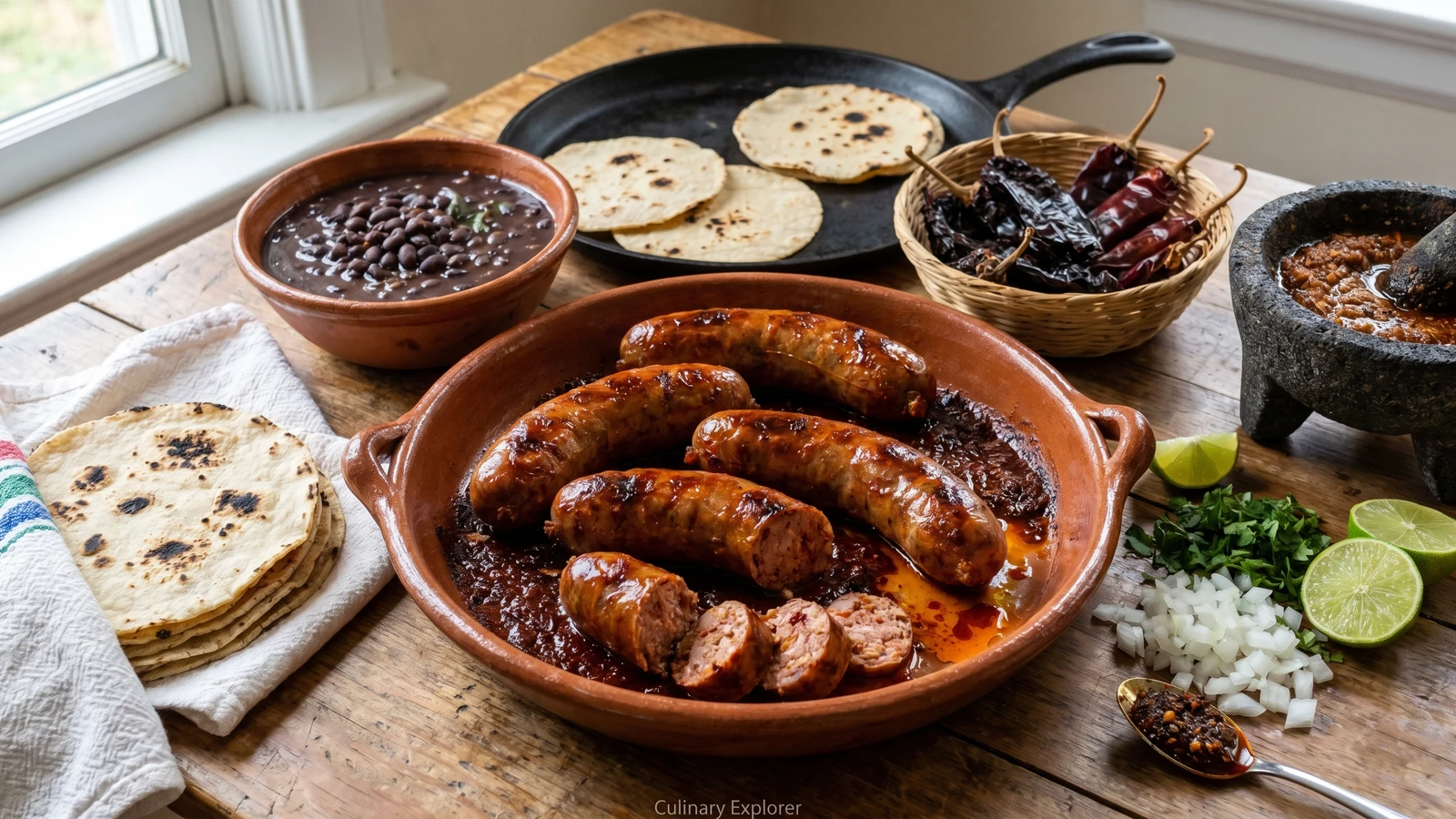
Central Veracruz's Xico longaniza is pork shoulder and fat cured overnight in chile ancho adobo with cumin, clove, garlic, and vinegar, then grilled for almuerzo with black beans and corn tortillas.
Veracruz, the central mountain belt between Xalapa and the slopes of Cofre de Perote, is where Longaniza de Xico lives. Xico is wet, green, and high, a town of coffee, mole xiqueno, sweet bread, and pork sausage hanging in market stalls with the red adobo set deep into the casing. This is not the loose red chorizo from a supermarket tube. The chile ancho, vinegar, cumin, and clove tell you where you are.
I learned the seasoning from women in Xico who did not measure the clove with a spoon. They smelled the adobo, rubbed a little between their fingers, and knew if the pork would taste right the next morning. The technique is practical: grind cold pork shoulder with enough fat, coat it with a chile-vinegar paste, stuff it into casing, and let the refrigerator do what the mountain air used to do. The overnight rest is not decoration. It is when the sausage becomes longaniza.
Do not chase heat here. This longaniza should taste deep, tangy, aromatic, and porky, with cumin underneath and clove at the edge. Serve it for almuerzo with black beans, epazote, corn tortillas, and a clay cazuela on the table. My mother used to say that breakfast tells you how a household thinks about money. This one thinks carefully. Saber cocinar es saber vivir.
Longaniza de Xico belongs to the highland cooking of central Veracruz, where colonial pig raising met the spice traffic moving through the port of Veracruz and the road toward Xalapa and Puebla. Cumin and clove were not native to Mexico; they entered through Spanish trade networks and stayed because Veracruz cooks folded them into chile-vinegar adobos for pork. Xico's version became a town marker alongside mole xiqueno and appears at almuerzo tables and during the July festivities for Santa Maria Magdalena, usually grilled and served with black beans, tortillas, and salsa.
Quantity
3 pounds
cut into 1-inch cubes and chilled
Quantity
12 ounces
cut into 1/2-inch cubes and chilled
Quantity
34 grams
Quantity
6
stemmed, seeded, and wiped clean
Quantity
3
stemmed, seeded, and wiped clean
Quantity
1/2 cup
Quantity
8
peeled
Quantity
1 1/2 teaspoons
Quantity
4
Quantity
1 teaspoon
Quantity
4
Quantity
1 teaspoon
Quantity
1/4 teaspoon
Quantity
1 teaspoon
Quantity
2 to 4 tablespoons
use only as needed
Quantity
8 to 10 feet
soaked in cool water and rinsed inside
Quantity
1 tablespoon
for pan-cooking if needed
Quantity
2 cups
warmed
Quantity
for serving
warmed
Quantity
for serving
Quantity
for serving
Quantity
for serving
Quantity
for serving
| Ingredient | Quantity |
|---|---|
| boneless pork shouldercut into 1-inch cubes and chilled | 3 pounds |
| pork back fatcut into 1/2-inch cubes and chilled | 12 ounces |
| kosher salt | 34 grams |
| dried chile anchostemmed, seeded, and wiped clean | 6 |
| dried chile guajillostemmed, seeded, and wiped clean | 3 |
| vinagre de cana or apple cider vinegar | 1/2 cup |
| garlic clovespeeled | 8 |
| cumin seeds | 1 1/2 teaspoons |
| whole cloves | 4 |
| black peppercorns | 1 teaspoon |
| pimienta gorda berries | 4 |
| dried Mexican oregano | 1 teaspoon |
| ground canela | 1/4 teaspoon |
| grated piloncillo | 1 teaspoon |
| reserved chile soaking liquiduse only as needed | 2 to 4 tablespoons |
| natural hog casingssoaked in cool water and rinsed inside | 8 to 10 feet |
| manteca de cerdofor pan-cooking if needed | 1 tablespoon |
| frijoles negros de olla with epazote (optional)warmed | 2 cups |
| hand-pressed corn tortillas (optional)warmed | for serving |
| finely diced white onion (optional) | for serving |
| chopped cilantro (optional) | for serving |
| lime halves (optional) | for serving |
| salsa macha veracruzana or salsa de chile seco (optional) | for serving |
Put the pork shoulder, pork back fat, grinder parts, and mixing bowl in the freezer for 25 minutes. You want everything very cold but not frozen solid. Sausage is built on clean grinding and cold fat. If the fat smears, the longaniza turns greasy and crumbly.
Heat a dry comal over medium. Toast the chile ancho and chile guajillo one or two at a time, about 20 seconds per side, just until the skins soften, darken slightly, and smell sweet. Do not blacken them. Burned chile makes bitter sausage, and no amount of cumin will save it.
Cover the toasted chiles with hot water, not boiling water, and let them soften for 20 minutes. While they soak, toast the cumin seeds, cloves, black peppercorns, and pimienta gorda on the comal for 30 to 45 seconds, just until fragrant. Grind the spices in a molcajete or spice grinder with the Mexican oregano, canela, and piloncillo.
Drain the chiles, saving a little soaking liquid. Blend the softened chiles with the vinegar, garlic, ground spice mixture, and 2 tablespoons of the soaking liquid. Blend until the adobo is smooth, thick, and brick red. It should smell sharp from vinegar, sweet from chile ancho, and warm from clove. If the blender struggles, add another spoonful of soaking liquid, only enough to move the blades.
Fit the grinder with a coarse die. Grind the chilled pork shoulder and back fat into the cold bowl. Sprinkle the salt over the meat and pour the adobo on top. Mix with clean hands for 3 to 4 minutes, folding and squeezing until the meat turns sticky and holds together when pressed against the side of the bowl. That tackiness is the bind. Without it, the sausage falls apart.
Melt a teaspoon of manteca de cerdo in a small skillet and fry a spoonful of the sausage mixture until cooked through. Taste it. The salt should be clear, the vinegar should cut through the pork, and the clove should be present but not shouting. Adjust with a small pinch of salt or a splash of vinegar now, before the meat goes into the casing.
Slide the rinsed hog casing onto the sausage stuffer. Fill it slowly with the longaniza mixture, guiding the casing so it fills firmly but does not stretch tight. Twist into 5- to 6-inch links. Prick any air pockets with a clean needle. No me vengas con atajos. The casing gives longaniza its snap and lets the adobo cure evenly.
Lay the links on a rack set over a sheet pan and refrigerate uncovered for 12 to 24 hours. This is a fresh cured sausage, not a shelf-stable dry sausage. The refrigerator rest lets the salt, vinegar, chile, cumin, and clove settle into the pork while the casing dries enough to brown properly on the comal.
Cook the longaniza over medium heat on a grill, comal, or heavy skillet, turning often, for 12 to 15 minutes. If using a skillet, add a small spoonful of manteca de cerdo only to start the browning. The casing should blister in places, the red fat should bead at the edges, and the center must reach 160F. High heat splits the casing before the fat renders. Be patient.
Rest the links for 5 minutes, then serve whole or sliced with frijoles negros de olla scented with epazote, warm corn tortillas, white onion, cilantro, lime halves, and salsa macha veracruzana. Flour tortillas belong to the north. Xico is Veracruz. Cada estado, su propia cocina.
1 serving (about 430g)
Culinary guides, cultural storytelling, and the editorial depth that makes cooking meaningful.
Discover Culinary ExplorerChef Lupita
Michoacán's Tierra Caliente almuerzo, where salted beef is softened, pounded, fried in lard, folded with egg and chile perón salsa, then served beside morisqueta like a proper working table.

Chef Lupita
Guerrero's Costa Grande aporreado is salted cecina pounded soft, scrambled with egg, and finished in a red guajillo and chile de árbol salsa loud with garlic and cilantro.

Chef Lupita
Los Altos de Chiapas turns two-night fermented white corn into a tart-sweet atole, cooked with canela and piloncillo, then poured hot into jícaras for desayuno.

Chef Lupita
Oaxaca's Mixteca region ferments nixtamalized masa for days until it turns tart and alive, then simmers it with piloncillo and canela into a thick, warm atole served at first light in clay.