
Chef Lupita
Aporreadillo Michoacano con Huevo
Michoacán's Tierra Caliente almuerzo, where salted beef is softened, pounded, fried in lard, folded with egg and chile perón salsa, then served beside morisqueta like a proper working table.
A cooking platform built around craft, culture, and the stories behind what we eat.
Created by
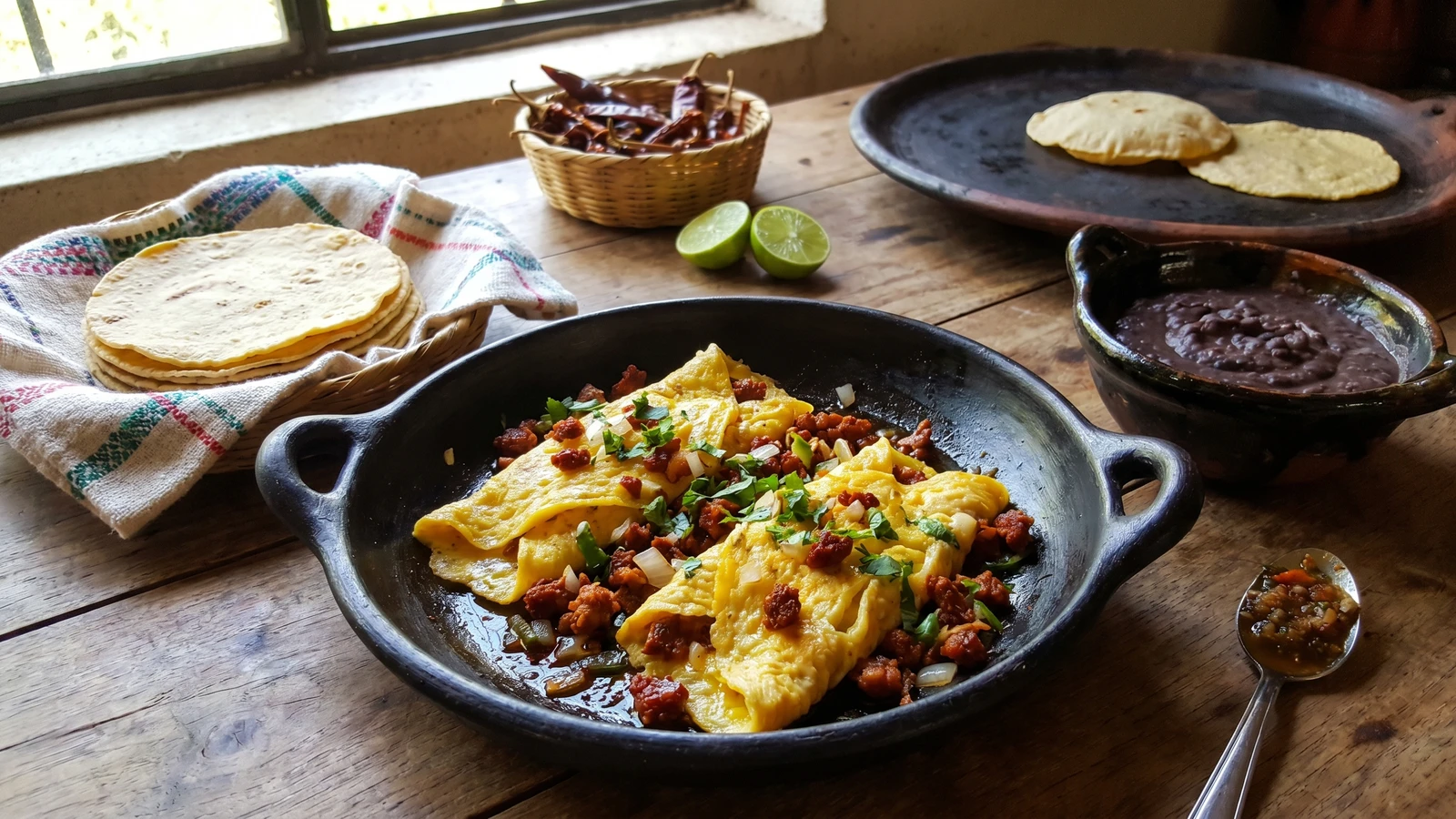
Chiapas highland longaniza, seasoned with chile simojovel, vinegar, garlic, and warm spices, fried until crisp and folded into soft eggs for a desayuno that knows its own state.
Chiapas, especially Los Altos around San Cristobal de las Casas and Comitan, puts longaniza on the breakfast table with eggs, black beans, tortillas, and coffee strong enough to wake the hills. This is the Maya south, not generic Mexican. The chile simojovel gives the sausage its regional bite, and the vinegar and spices keep the pork sharp instead of heavy.
A good longaniza chiapaneca is thinner and looser than the supermarket chorizo people confuse it with. It should fry into small crisp pieces, not melt into orange grease. The women who perfected this did it at the comal and cazuela, feeding families before market, school, and field work. They knew the balance: enough fat to brown the sausage, enough egg to soften it, enough tortilla to carry it.
You cook the longaniza first until it releases its red fat and the edges catch. Then the eggs go in low and slow. Do not beat them into rubber. Fold them until creamy and just set. Serve with frijol negro refrito in manteca de cerdo, a spoon of chirmol if you made it, and hand-pressed tortillas. Cada estado, su propia cocina.
Chiapas longaniza reflects the colonial introduction of pork and sausage-making techniques into a region already defined by Maya maize, beans, chiles, and market cooking. In Los Altos, especially San Cristobal de las Casas and Comitan, pork sausages seasoned with vinegar, garlic, clove, cinnamon, oregano, and local chiles became practical market foods because they could be cooked quickly for breakfast or almuerzo. Chile simojovel, grown around the northern Chiapas municipality of Simojovel, remains one of the state's defining dried chiles and separates this sausage from the red chorizos of central Mexico.
Quantity
12 ounces
casing removed if loose-packed
Quantity
1 tablespoon
Quantity
8
Quantity
2 tablespoons
Quantity
1/2 teaspoon, plus more to taste
Quantity
1/4 teaspoon
Quantity
1/4 small
finely chopped
Quantity
1
finely chopped
Quantity
2 tablespoons
chopped
Quantity
1 cup
for serving
Quantity
8 to 12
warmed
Quantity
for serving
Quantity
for serving
| Ingredient | Quantity |
|---|---|
| longaniza chiapanecacasing removed if loose-packed | 12 ounces |
| manteca de cerdo | 1 tablespoon |
| large eggs | 8 |
| whole milk or water | 2 tablespoons |
| kosher salt | 1/2 teaspoon, plus more to taste |
| freshly ground black pepper | 1/4 teaspoon |
| white onionfinely chopped | 1/4 small |
| fresh chile serrano or chile jalapenofinely chopped | 1 |
| fresh cilantrochopped | 2 tablespoons |
| frijol negro refritofor serving | 1 cup |
| hand-pressed corn tortillaswarmed | 8 to 12 |
| chirmol chiapaneco (optional) | for serving |
| lime halves (optional) | for serving |
If your longaniza is in a casing, slit it lengthwise and pull the pork loose. If it is already loose-packed from a Chiapas-style butcher, leave it as it is. Smell it before it touches the pan: vinegar, garlic, chile simojovel, clove, cinnamon, and pork. If it smells sweet like commercial breakfast sausage, you bought the wrong thing.
Crack the eggs into a bowl. Add the milk or water, salt, and black pepper. Beat only until the yolks and whites come together. You are not making foam. You want eggs that will fold around the sausage and stay tender.
Heat a wide clay cazuela or heavy skillet over medium. Add the manteca de cerdo. When it melts, add the longaniza and break it into small pieces with a wooden spoon. Fry for 7 to 9 minutes, stirring often, until the pork is cooked through, the edges turn crisp, and the fat in the pan is stained red from the chile. La manteca es el sabor. Do not drain it unless your sausage was poorly made and swimming in grease.
Add the chopped white onion and chile serrano to the sausage. Cook for 2 minutes, just until the onion loses its raw edge. Do not brown it hard. This is breakfast, not a stew base. The onion should stay sweet and the chile should stay bright.
Lower the heat to medium-low. Pour the beaten eggs over the sausage. Let them sit for 20 seconds, then fold slowly from the edges toward the center. Keep folding until the eggs are softly set and still glossy in places, about 2 to 3 minutes. Pull the pan off the heat before they look fully dry. The hot cazuela will finish them. Así se hace y punto.
Scatter the cilantro over the eggs and taste for salt. Serve immediately with frijol negro refrito, warm hand-pressed corn tortillas, lime halves, and chirmol if you have it. Chirmol is a cooked salsa, not raw pico de gallo. Put the cazuela on the table and let people make their own tacos. Saber cocinar es saber vivir.
1 serving (about 360g)
Culinary guides, cultural storytelling, and the editorial depth that makes cooking meaningful.
Discover Culinary ExplorerChef Lupita
Michoacán's Tierra Caliente almuerzo, where salted beef is softened, pounded, fried in lard, folded with egg and chile perón salsa, then served beside morisqueta like a proper working table.

Chef Lupita
Guerrero's Costa Grande aporreado is salted cecina pounded soft, scrambled with egg, and finished in a red guajillo and chile de árbol salsa loud with garlic and cilantro.

Chef Lupita
Los Altos de Chiapas turns two-night fermented white corn into a tart-sweet atole, cooked with canela and piloncillo, then poured hot into jícaras for desayuno.

Chef Lupita
Oaxaca's Mixteca region ferments nixtamalized masa for days until it turns tart and alive, then simmers it with piloncillo and canela into a thick, warm atole served at first light in clay.