
Chef Lupita
Birria Tacos with Consome
Jalisco's goat birria, born around Cocula and carried into Guadalajara's markets, slow-braised in ancho, guajillo, cascabel, and chile de arbol, then tucked into corn tortillas crisped in its own red fat.
A cooking platform built around craft, culture, and the stories behind what we eat.
Created by
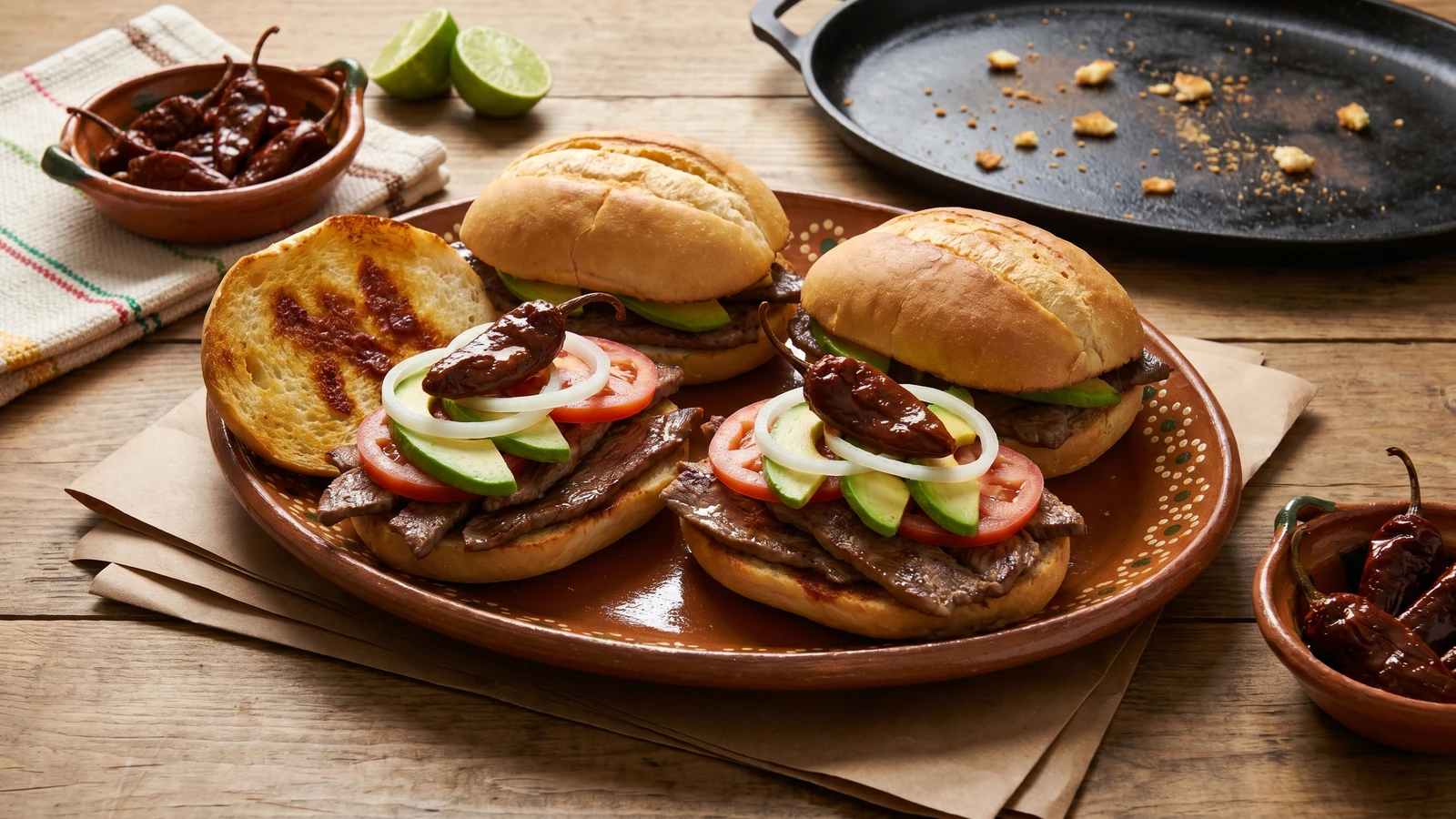
San Luis Potosí's weeknight lonche, a split telera filled with thin bistec from the plancha, ripe aguacate, jitomate, white onion, and one smoky chile chipotle en adobo sitting proudly on top.
San Luis Potosí, in the Altiplano at the Bajío's northern edge, is where this lonche lives: in panaderías with trays of teleras, in mercado counters, and in home kitchens where dinner has to be fast but still has to taste like someone was paying attention.
The bread matters first. Telera or a small bolillo, never a flour tortilla, never an American sub roll. The bistec is thin, slapped onto a hot plancha with a little manteca de cerdo, and cooked fast so the edges brown before the meat dries out. The aguacate softens it, the jitomate and cebolla keep it fresh, and the chile chipotle en adobo on top gives the lonche its smoky bite. Not a sauce bath. Not a casserole filling. This is handheld food from a specific state. Cada estado, su propia cocina.
I learned this style from señoras in San Luis Potosí who worked faster than any restaurant cook, one hand on the bread knife, the other moving bistec across the plancha. They didn't decorate the sandwich. They built it. A hot telera, beef, vegetables, one chipotle, and a little adobo staining the crumb. Saber cocinar es saber vivir.
The word "lonche" is an adaptation of English "lunch," widespread in northern and western Mexico by the early twentieth century through rail, mining, and border labor networks. San Luis Potosí, a mining and railway hub during the Porfiriato, turned the lonche into an urban market meal: wheat telera or bolillo, affordable plancha meat, and condiments that could be served quickly. The chile chipotle en adobo crowning the sandwich reflects central Mexican preserving practice, smoked jalapeños stewed with vinegar, piloncillo, garlic, and spices, later standardized by Mexican canneries in the twentieth century.
Quantity
4
split lengthwise
Quantity
1 1/4 pounds
top round, sirloin, pulpa blanca, or pulpa negra
Quantity
1 1/2 teaspoons, divided
Quantity
1/2 teaspoon
Quantity
2
finely grated
Quantity
1 tablespoon
Quantity
2 tablespoons, divided
Quantity
2
sliced or lightly mashed
Quantity
2 medium
sliced
Quantity
1 small
sliced very thin
Quantity
4 whole
Quantity
2 tablespoons
Quantity
for serving
| Ingredient | Quantity |
|---|---|
| soft teleras or small bolillossplit lengthwise | 4 |
| thin-cut beef bistectop round, sirloin, pulpa blanca, or pulpa negra | 1 1/4 pounds |
| kosher salt | 1 1/2 teaspoons, divided |
| freshly ground black pepper | 1/2 teaspoon |
| garlic clovesfinely grated | 2 |
| fresh lime juice | 1 tablespoon |
| manteca de cerdo | 2 tablespoons, divided |
| ripe Hass avocadossliced or lightly mashed | 2 |
| jitomates guaje or Roma tomatoessliced | 2 medium |
| white onionsliced very thin | 1 small |
| chiles chipotles en adobo | 4 whole |
| adobo sauce from the chipotles | 2 tablespoons |
| lime halves (optional) | for serving |
Split the teleras lengthwise with a serrated knife. Press the soft crumb lightly with your fingers so the filling has a place to sit, but do not hollow the bread into a shell. This is a lonche, not an American sub. The bread should still have body.
Lay the thin bistecs on a tray. Rub them with 1 teaspoon salt, the black pepper, grated garlic, and lime juice. Let them sit for 10 minutes while the plancha heats. No longer. Lime tightens thin beef if you leave it too much time, and then you will blame the meat instead of your timing.
Heat a wide cast-iron plancha, comal, or heavy skillet over medium-high heat. Melt 1 tablespoon manteca de cerdo and place the teleras cut side down. Toast until the crumb is golden in spots and lightly crisp at the edge, 1 to 2 minutes. This little layer of fat protects the bread from the beef juices. La manteca es el sabor, even when you use only a spoonful.
Raise the heat to high and add the remaining tablespoon of manteca. Cook the bistec in batches, 45 to 60 seconds per side, just until browned at the edges and still juicy. Do not crowd the plancha. Crowded beef sweats, and sweaty beef makes a sad lonche. Transfer the cooked bistec to a board and slice it into wide strips.
Sprinkle the avocado with the remaining 1/2 teaspoon salt. Keep the jitomate slices and white onion ready. If the onion is very sharp, rinse it quickly under cold water and pat it dry. You want bite, not punishment. Not all Mexican food is about heat. Sometimes the balance is the point.
Spoon the adobo sauce into a corner of the hot plancha for 10 seconds, just until it loosens and darkens slightly. Roll the whole chipotles through it. The chile should look glossy and brick-red, with the smoke of the jalapeño and the sweetness of the adobo coming forward. Use whole chipotle en adobo, not chipotle mayonnaise. No me vengas con atajos.
Spread or layer the aguacate on the bottom half of each toasted telera. Add the hot bistec strips, then the jitomate and white onion. Spoon a little warm adobo over the beef and set one whole chile chipotle on top of each lonche so it is visible when the bread closes. Cap with the top half and press lightly with your palm.
Serve the lonches while the bread is still warm and the bistec is juicy. Wrap each one in papel de estraza or set them on a brown-glazed clay plate with lime halves on the side if you want them. This is weeknight food, but it still has rules. Así se hace y punto.
1 serving (about 330g)
Culinary guides, cultural storytelling, and the editorial depth that makes cooking meaningful.
Discover Culinary ExplorerChef Lupita
Jalisco's goat birria, born around Cocula and carried into Guadalajara's markets, slow-braised in ancho, guajillo, cascabel, and chile de arbol, then tucked into corn tortillas crisped in its own red fat.

Chef Lupita
Sonora's working morning burrito: chicharrón de cáscara stewed in chile colorado with diced potato, rolled tight in a paper-thin tortilla sobaquera and eaten standing up at the carreta.

Chef Lupita
Mocorito's pork chilorio, shredded and confited in lard with chile ancho and pasilla, rolled into a thin handmade flour tortilla. The burrito Sinaloa sends out into the world.

Chef Lupita
Sonora's morning burrito of mashed pinto frijoles puercos and melted queso asadero, wrapped in a paper-thin sobaquera and seared on the comal until the cheese pulls in long strings.