Chef Makoa
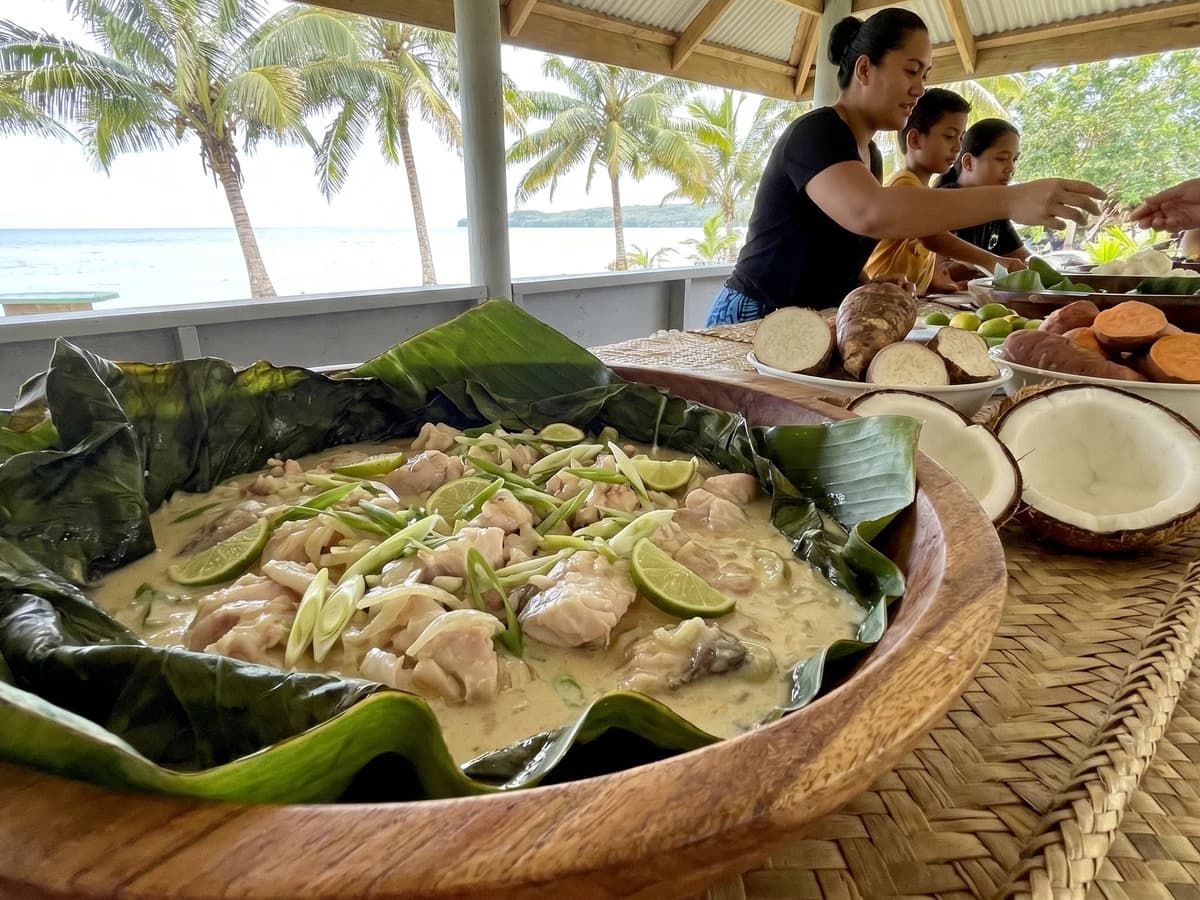
Ika Lolo (Tongan Fish Baked in Taro Leaves and Coconut Cream)
Tonga's ika lolo, fresh fish folded into taro leaves with ginger, garlic, and coconut cream, then baked until the leaf goes silky and the fish stays sweet under the coconut.
A cooking platform built around craft, culture, and the stories behind what we eat.
Created by
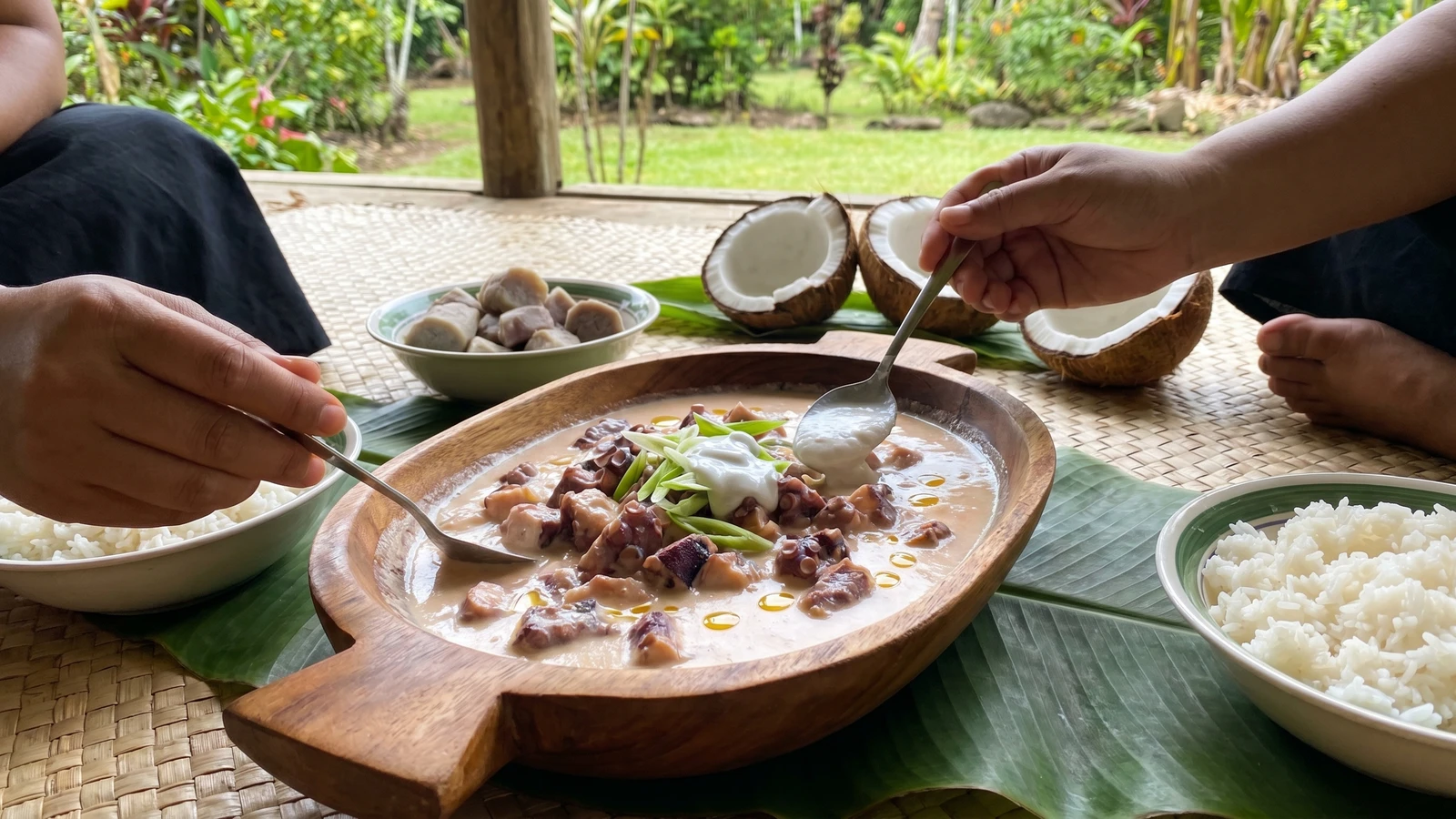
Tonga's loʻi feke takes reef octopus slow in coconut cream, onion, and tomato until the meat gives under the spoon and the sauce turns rich enough for rice, talo, or ʻulu.
At a Tongan table, the ocean is family before it is food. Loʻi feke belongs to Tonga, to the hands that know the reef and the lagoon, to the fāmili, the family, that can turn one octopus and one coconut into a pot rich enough for everybody. This is my cousins' dish, not my family's, and I cook it open-handed. For the feast protocol and the deep Tongan meanings, go sit with Tongan elders, aunties, and uncles. They should tell their own story.
The word feke itself has cousins all over the Triangle: Sāmoa says feʻe, Hawaiʻi says heʻe, Aotearoa has wheke, Tahiti has feke too. Same creature, same old root, one ocean carrying the names outward. But this bowl is Tongan. Its closest kitchen cousin is Sāmoa's faiʻai feʻe, octopus cooked with coconut, while Tonga's loʻi feke lets the feke simmer slow in thick lolo niu, coconut cream, with onion and tomato until the sauce clings and shines.
You don't rush octopus. It has two moods: quick or patient. This dish chooses patient. First you let the feke soften in its own liquor, then you bring in the coconut cream low and easy so it thickens without breaking hard. The sauce should look heavy and glossy, the octopus tender but still itself, not falling apart into strings.
Eat it the way the islands eat now. Put talo, ʻulu, manioke, or rice beside it. Use fresh coconut cream if you can, because that's the soul of so much western island food, but use a good can when that's what your pantry gives you. Eat what you have. One ocean, one canoe, one root, and one pot set wide enough for one more.
Loʻi feke is Tongan, rooted in the reef foodways of the western Polynesian islands where octopus, coconut, and starch crops sit close together on the same table. The shared old word for octopus shows the voyaging family line clearly: Tongan feke, Sāmoan feʻe, Hawaiian heʻe, Māori wheke, and Tahitian feke all point back to one ocean of related speech and food knowledge. Coconut cream dishes like loʻi feke and Sāmoa's faiʻai feʻe also show how a canoe crop, the niu, became a way to make seafood rich enough for ceremony, comfort, and everyday feeding.
Quantity
2 pounds
fresh or fully thawed if frozen
Quantity
1 tablespoon
plus more to taste
Quantity
1 cup
plus more as needed
Quantity
2 cups
or one 13.5-ounce can thick coconut cream
Quantity
1 large
thinly sliced
Quantity
2
chopped
Quantity
2 cloves
lightly crushed
Quantity
1 small
split
Quantity
1 tablespoon
for finishing
Quantity
2
thinly sliced, for finishing
Quantity
for serving
| Ingredient | Quantity |
|---|---|
| cleaned octopus (feke)fresh or fully thawed if frozen | 2 pounds |
| coarse sea saltplus more to taste | 1 tablespoon |
| waterplus more as needed | 1 cup |
| fresh coconut cream (lolo niu)or one 13.5-ounce can thick coconut cream | 2 cups |
| onionthinly sliced | 1 large |
| ripe tomatoeschopped | 2 |
| garlic (optional)lightly crushed | 2 cloves |
| fresh chili (optional)split | 1 small |
| fresh lime juice (optional)for finishing | 1 tablespoon |
| green onions (optional)thinly sliced, for finishing | 2 |
| boiled talo, ʻulu, manioke, or white rice | for serving |
If the fishmonger hasn't done it, remove the beak, eyes, and inner sac from the feke, the Tongan word for octopus. Rub it well with the coarse salt, working over the skin and suckers, then rinse clean. Cut the arms and head into big two-inch pieces. Frozen octopus is no shame here; the cold already helped tenderize it, and a living kitchen uses what it can get.
Put the octopus in a heavy pot with the water. Cover and cook over low heat for 35 to 50 minutes, until a small knife slides into the thickest piece with some give but no hard bounce. The octopus will release its own purple-brown liquor, and that's good. Keep it gentle. High heat makes feke tighten up like an uncle who heard bad news.
Lift the octopus pieces into a bowl and keep about half a cup of the cooking liquor in the pot. If there is a lot more, boil it down for a few minutes until it tastes briny and strong, not watery. That liquor is the ocean part of the sauce, so don't throw it away unless it's too salty.
Lower the heat and add the coconut cream, onion, tomatoes, garlic if using, and chili if you want a little bite. Stir until the cream loosens into the octopus liquor and turns pale rose from the tomato and feke. This is where fresh lolo niu, coconut cream, shows why the western islands love it so much. A can will feed the house on a weeknight, but fresh has the deeper breath.
Return the octopus to the pot and simmer uncovered or partly covered for 20 to 30 minutes, stirring now and then, until the coconut cream thickens and coats the spoon. The sauce should look glossy and heavy, with little golden coconut oil pearls at the edge. If the octopus still has fight in it, add a splash of water and keep it low. No blame the feke. It just needs more time.
Taste for salt. Add the lime only if the sauce wants a small lift, then fold in the green onion if using. Serve the loʻi feke family-style with boiled talo, ʻulu, manioke, or plain rice, something quiet to catch all that coconut cream. Put the pot in the middle and let people take from it. That's the right shape for this food.
1 serving (about 280g)
Culinary guides, cultural storytelling, and the editorial depth that makes cooking meaningful.
Discover Culinary ExplorerChef Makoa
Tonga's ika lolo, fresh fish folded into taro leaves with ginger, garlic, and coconut cream, then baked until the leaf goes silky and the fish stays sweet under the coconut.
Chef Makoa
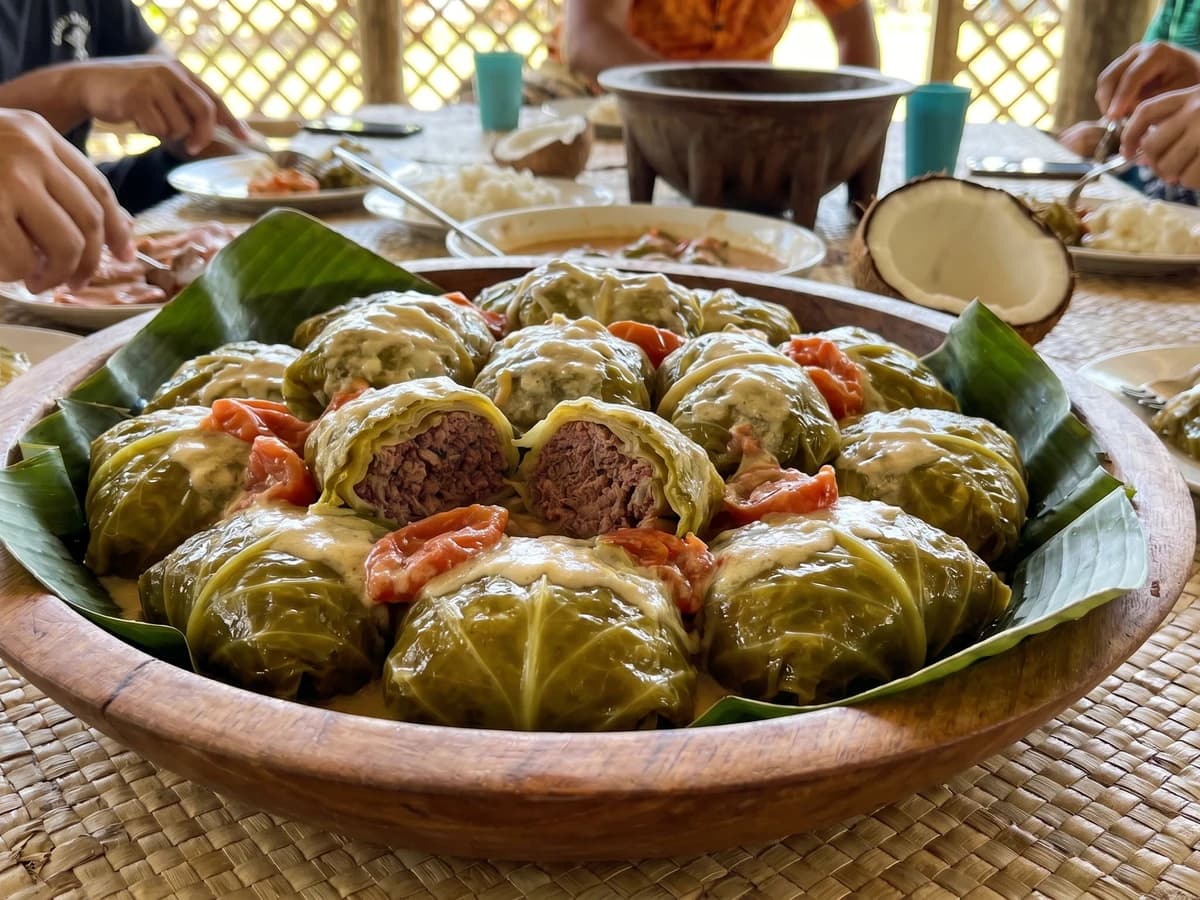
Tonga takes cabbage, tinned corned beef, tomato, onion, and coconut cream, then bakes them into generous parcels for Sunday tables. Cheap food, feast hand, everybody fed.
Chef Makoa
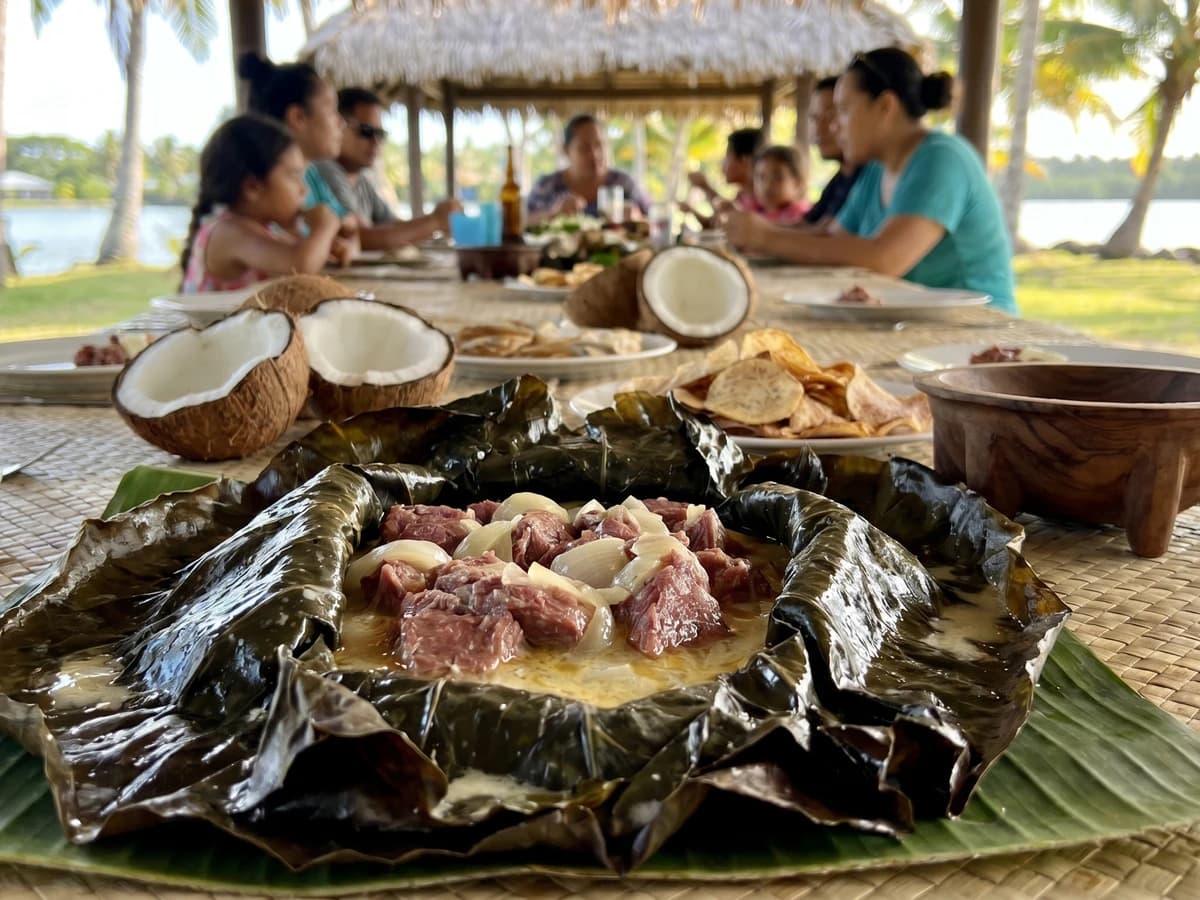
Tonga's lū pulu folds taro leaves around corned beef, onion, and lolo niu coconut cream, then bakes it slow until leaf and meat turn soft, dark, and rich.
Chef Makoa
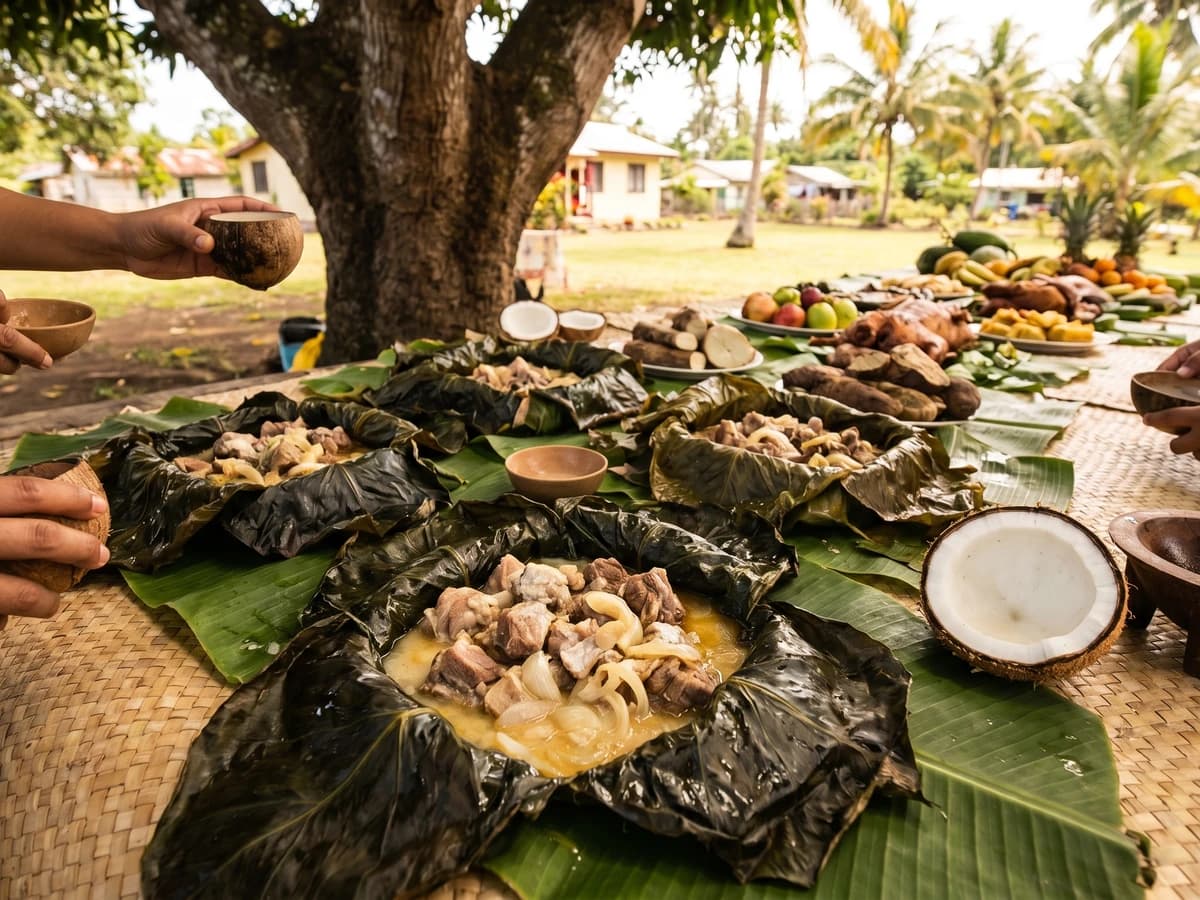
Tonga's lū sipi wraps young taro leaves around fatty mutton, onion, and coconut cream, then cooks it slow until the leaf goes dark and the meat gives up soft.