Chef Elsa
Almjause (Alpine Hut Snack Board)
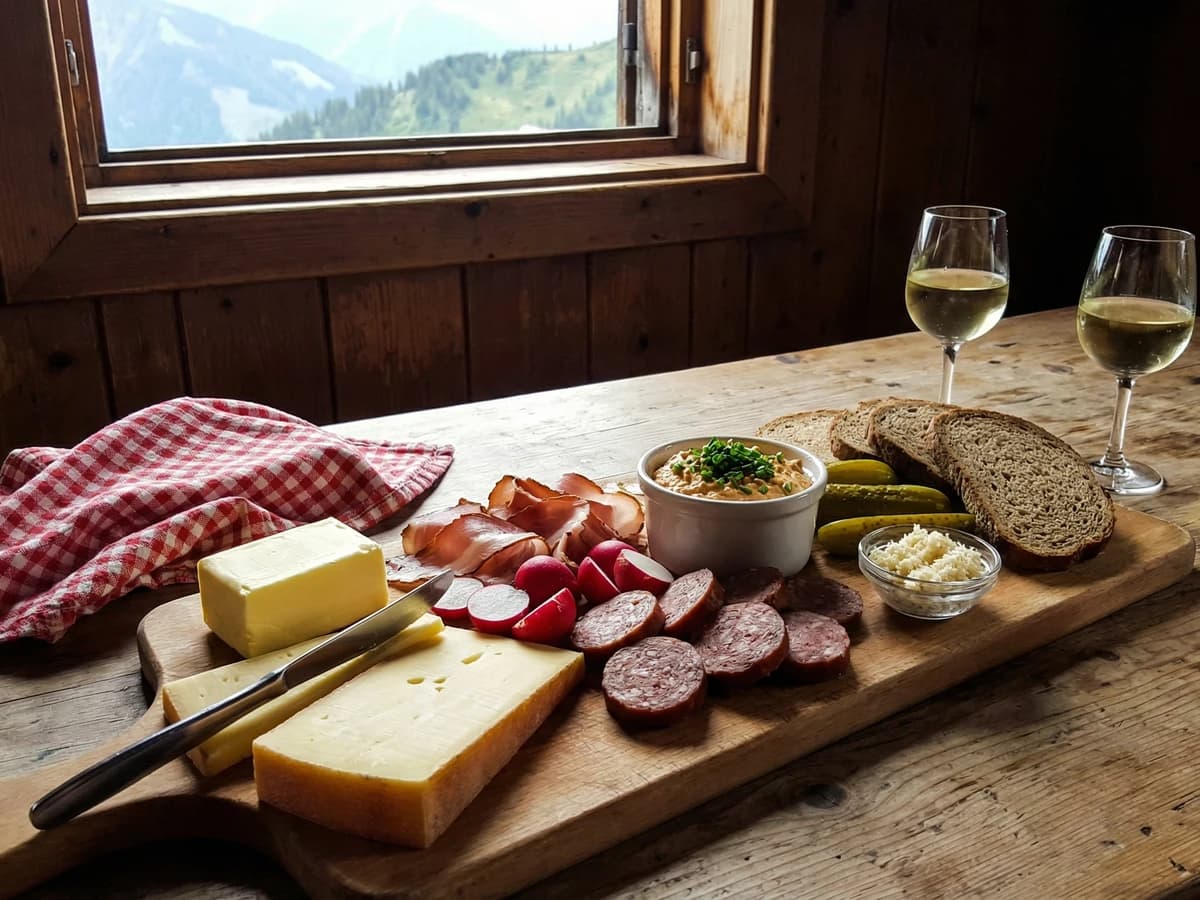
A wooden board loaded with mountain cheese, juniper-smoked Speck, air-dried Hauswürstel, handmade Liptauer, fresh Kren, and thick-cut Bauernbrot, the way Austrian Almhütten have fed hikers for generations.
A cooking platform built around craft, culture, and the stories behind what we eat.
Created by
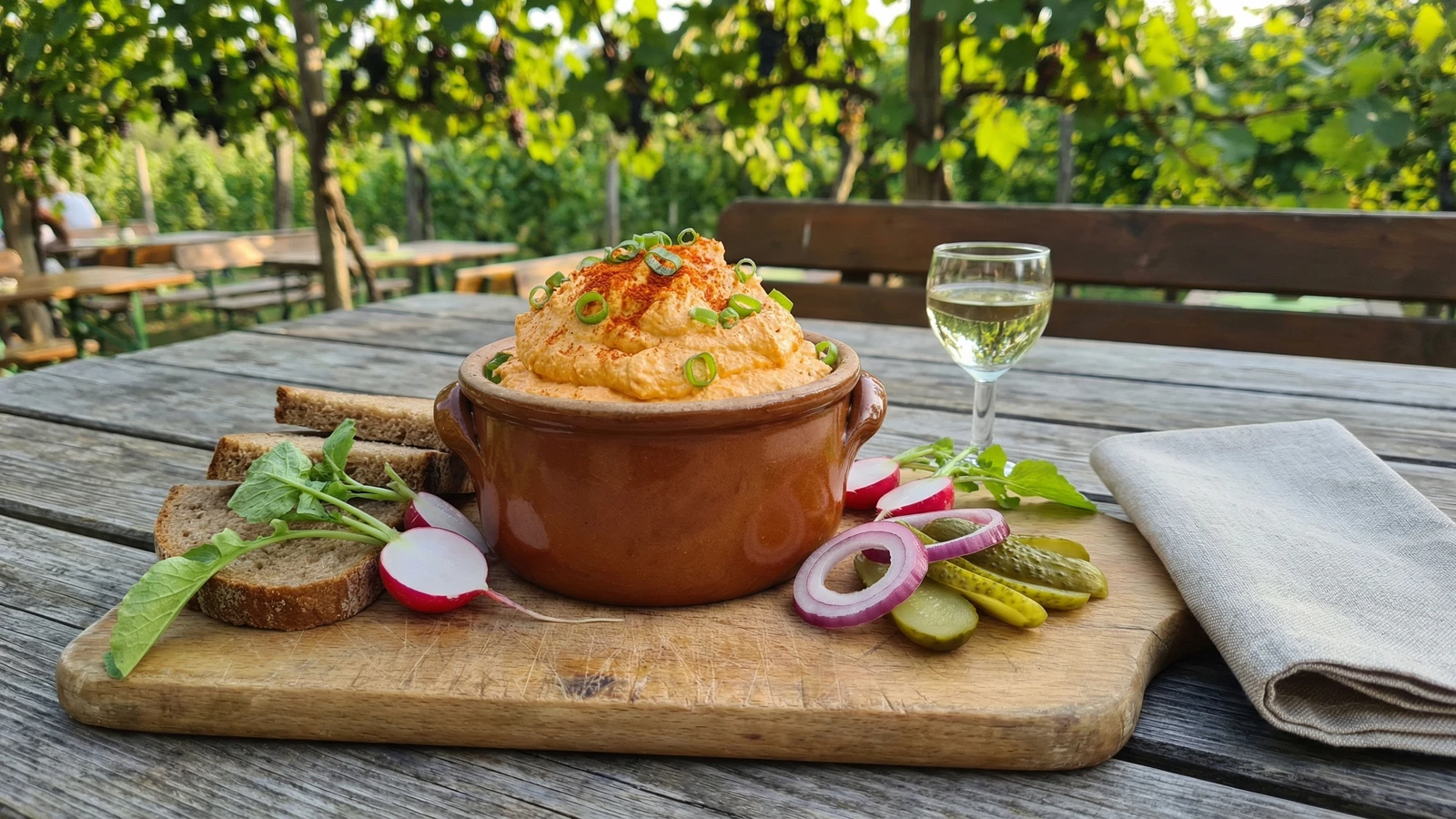
The paprika-orange cheese spread on every Heuriger board in Austria, made with Topfen, butter, capers, and caraway, and best eaten on dark bread with a glass of Grüner Veltliner in reach.
Every Austrian Heuriger has Liptauer on the board. It sits there in its little crock, orange as a September sunset, surrounded by dark bread and radishes and cornichons, and it's the first thing you reach for when the wine arrives. I've eaten Liptauer at wine taverns from Vienna's Neustift am Walde all the way out to the Wachau, and the ones that stay with you are never complicated. Good Topfen, good paprika, a confident hand with the caraway. That's the whole secret.
Gretel always said Liptauer was the dish that proved Austrian cooking isn't about technique, it's about ingredients and patience. You mix everything together in a bowl, you put it in the fridge, and you wait. The resting does the work for you. Fresh off the spoon, it tastes like paprika and onion and cheese, all separate. After two hours in the cold, it tastes like one thing. After a night, it tastes like a Heuriger garden in late summer.
I make this at my restaurant in Salzburg every week. It's on the bar menu as part of a Brettljause, the Austrian snack board that turns an Achterl of wine into a proper occasion. People who've never had Liptauer before always look surprised at how much flavor comes from something this simple. People who grew up with it just nod and spread it on their bread like they're coming home.
Liptauer takes its name from the Liptó region, now Liptov in modern Slovakia, which was part of the Kingdom of Hungary within the Habsburg Empire. The original Liptói túró was a crumbly sheep's cheese from that region, and when it traveled to Vienna it was blended with butter and paprika to make it spreadable. By the 19th century, the spread had become inseparable from Viennese Heuriger culture, one of the clearest examples of how Austro-Hungarian cuisine absorbed flavors from across the empire and made them its own.
Quantity
250g
full fat
Quantity
80g
softened to room temperature
Quantity
1 tablespoon
Quantity
1 tablespoon
Quantity
2 tablespoons
drained and finely chopped
Quantity
1 small
very finely minced
Quantity
1 tablespoon
lightly toasted and ground
Quantity
2
mashed to a paste
Quantity
1 tablespoon
finely cut, plus more for serving
Quantity
to taste
Quantity
for serving
Quantity
for the board
| Ingredient | Quantity |
|---|---|
| Topfen (quark or curd cheese)full fat | 250g |
| unsalted buttersoftened to room temperature | 80g |
| sweet Hungarian paprika (edelsüß) | 1 tablespoon |
| Dijon or mild Austrian mustard | 1 tablespoon |
| capersdrained and finely chopped | 2 tablespoons |
| white onionvery finely minced | 1 small |
| caraway seedslightly toasted and ground | 1 tablespoon |
| anchovy fillets (optional)mashed to a paste | 2 |
| fresh chivesfinely cut, plus more for serving | 1 tablespoon |
| salt and freshly ground black pepper | to taste |
| dark rye bread or Schwarzbrot | for serving |
| radishes, cornichons, extra paprika (optional) | for the board |
Press the Topfen through a fine sieve into a large bowl. This takes two minutes and most people skip it. Don't. Sieving breaks up any lumps and gives the finished spread that smooth, creamy consistency you get at a good Heuriger. If your quark is very wet, set it in the sieve over a bowl for ten minutes to drain off excess liquid first. A watery Liptauer tastes thin and won't hold together on bread.
Add the softened butter to the sieved Topfen and beat them together with a wooden spoon or spatula until completely smooth and homogeneous. The butter must be genuinely soft, not cold, not melted. If you can press your thumb into it easily, it's ready. The butter is what gives Liptauer its richness and its ability to spread like silk across dark bread. Without enough butter, you just have seasoned cheese.
Warm the caraway seeds in a small dry pan over medium heat, shaking occasionally, until they smell fragrant and start to pop. About two minutes. Grind them in a mortar or spice grinder. Freshly toasted caraway is a completely different ingredient from the dusty powder in the back of your cupboard. The heat wakes up the oils, and those oils are what give Liptauer its warm, earthy backbone.
Add the paprika, mustard, chopped capers, minced onion, ground caraway, mashed anchovies if using, and chives to the Topfen mixture. Stir everything together thoroughly. The spread should turn a warm, sunset orange from the paprika. Taste it. Add salt carefully, especially if you've included the anchovies and capers, which bring their own salt. A few grinds of black pepper. The flavors need to be distinct but balanced: the paprika should lead, the mustard should hum underneath, the capers should give you little bursts of brine, and the caraway should linger at the finish.
Cover the bowl and refrigerate for at least one hour, preferably two. This is not optional. The flavors need time to get to know each other. Fresh Liptauer tastes like a list of ingredients. Rested Liptauer tastes like one thing, and that one thing is exactly what you want with a glass of Grüner Veltliner on a warm evening.
Mound the Liptauer into an earthenware crock or shape it into a generous dome on a wooden board. Dust the top with a little extra paprika and scatter fresh chives over it. Surround it with sliced dark rye bread, radishes, sliced cornichons, and whatever else belongs on a good Brettljause. Bring the whole board to the table and let people help themselves. This is not a dish you plate individually. It's a dish you share. Mahlzeit!
1 serving (about 75g)
Culinary guides, cultural storytelling, and the editorial depth that makes cooking meaningful.
Discover Culinary ExplorerChef Elsa
A wooden board loaded with mountain cheese, juniper-smoked Speck, air-dried Hauswürstel, handmade Liptauer, fresh Kren, and thick-cut Bauernbrot, the way Austrian Almhütten have fed hikers for generations.

Chef Elsa
Dark, spiced, and wickedly good: Blunzn mashed with onion, mustard, and marjoram into the kind of spread that disappears first from every Heuriger Brettl, scooped up on torn hunks of dark bread.

Chef Elsa
A silky potato and sour cream spread with raw onion and paprika, piled onto dark rye bread the way they serve it at every Heuriger in Lower Austria. No cheese, despite the name. Just good potatoes and honest cooking.
Chef Elsa
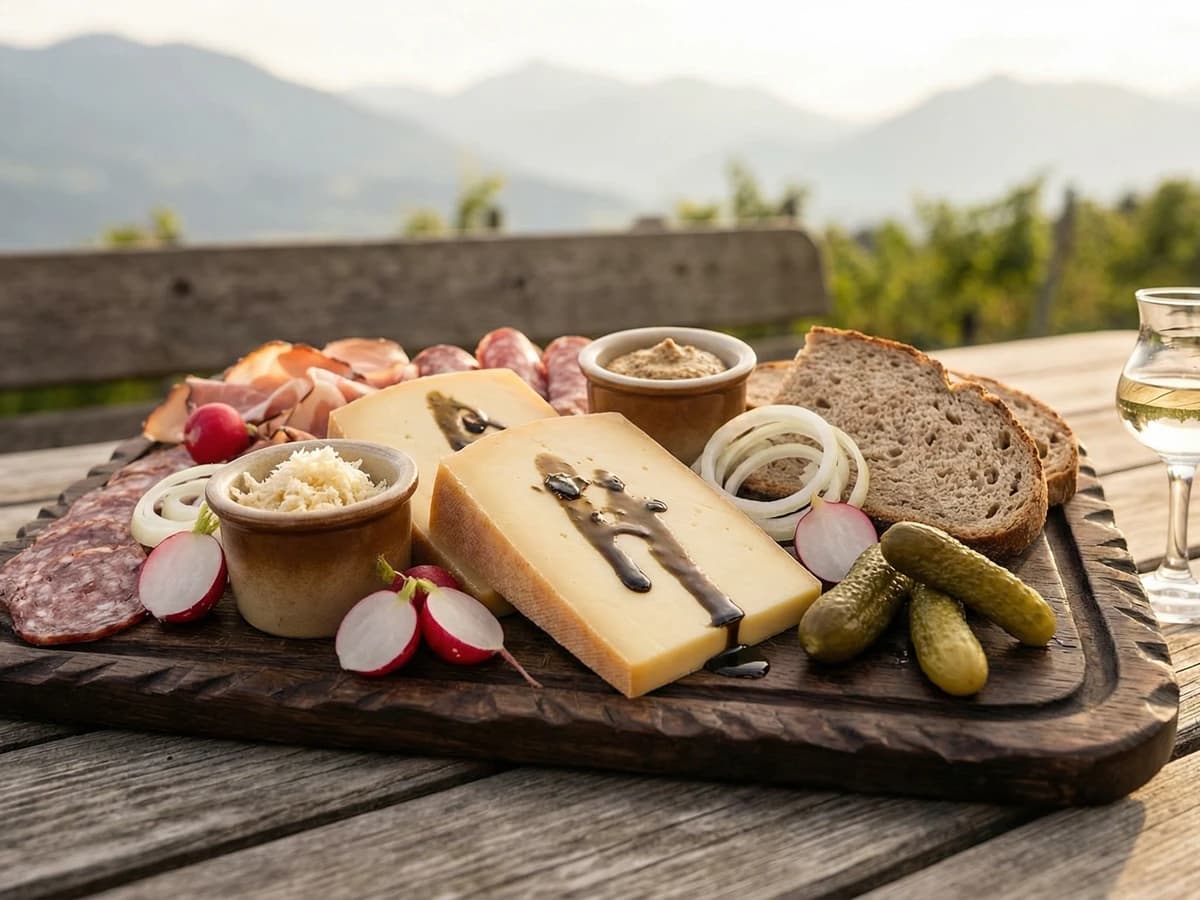
A proper Carinthian Brettljause built around PDO Gailtaler Almkäse, nutty raw-milk alpine cheese served with Speck, dark Bauernbrot, pickles, fresh horseradish, and everything you need for an afternoon on an Almhütte terrace.