
Chef Juliana
Açaí com Camarão do Pará
You think açaí belongs with banana and granola because that's the version that traveled. In Pará, thick unsweetened açaí sits beside shrimp, rice, and farinha. Anota aí: same fruit, different meal.
A cooking platform built around craft, culture, and the stories behind what we eat.
Created by
You don't need a churrasco diploma. Medium coals, whole sausages, and patience give you linguiça that stays juicy, browns evenly, and lands right on the pê-efe beside rice, beans, and couve.
You hear the grill crackle and think, quietly, isso não é pra mim. Someone else knows the fire. Someone else knows when to turn. Nonsense. A gente learns this the same way a gente learns rice: one plain step, one good checkpoint, one mistake less than last time.
Churrasco gaúcho belongs to the South and to the people who keep that fire, and I won't pretend I own their tradition from my São Paulo kitchen. What I can teach is the home version that works: fresh pork linguiça, medium coals, no stabbing the poor thing full of holes, and enough patience for the casing to brown before it splits. Cozinhar não é dom, é um aprendizado. Anota aí.
The method is simple because the sausage already carries its seasoning. Your job is heat control. Too hot and the skin tears, the fat runs into the fire, and dinner gets dry while you stand there pretending smoke is flavor. Medium coals give the inside time to cook while the outside gets glossy, browned, and snappy under the teeth.
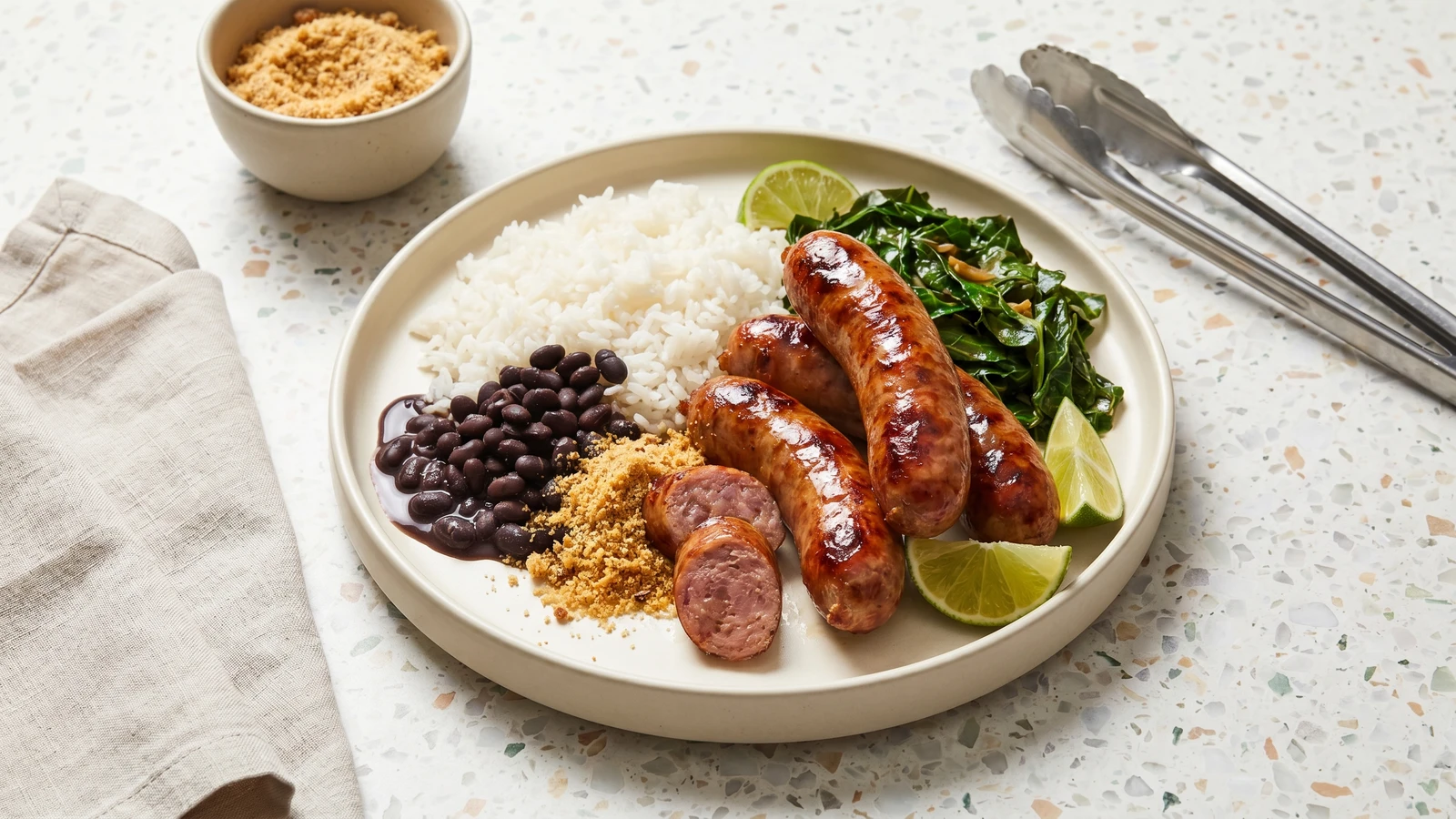
Put it on the pê-efe and it stops being party food only. Rice, beans, linguiça, couve, maybe a spoon of farofa if the day deserves it. Comida de verdade, no packet, no powder, no theater. Just dinner solved.
Linguiça na brasa belongs inside the churrasco tradition of Rio Grande do Sul, shaped by the southern pampas, outdoor fires, and the ranching culture of the 18th and 19th centuries. The sausage itself also carries older Portuguese sausage-making habits and later immigrant butcher traditions, which is why one butcher's linguiça gaúcha may taste more of garlic, another of wine, pepper, or herbs. In Brazil, "gaúcha" usually points to a regional grilling style and seasoning family, not one protected formula, and it is often the first thing served because it cooks faster than the larger cuts still working over the coals.
Quantity
2 pounds
kept whole, not pricked
Quantity
1 tablespoon
for the grill grate
Quantity
4 cups
for serving
Quantity
3 cups
for serving
Quantity
2 cups
for serving
Quantity
1 cup
for serving
Quantity
1
cut into wedges
| Ingredient | Quantity |
|---|---|
| fresh linguiça gaúcha pork sausage linkskept whole, not pricked | 2 pounds |
| neutral oilfor the grill grate | 1 tablespoon |
| cooked arroz brancofor serving | 4 cups |
| cooked feijão caseirofor serving | 3 cups |
| couve refogadafor serving | 2 cups |
| farofa (optional)for serving | 1 cup |
| lime (optional)cut into wedges | 1 |
Take the linguiça out of the fridge 20 minutes before grilling and lay it on a tray in one layer. Leave the links whole and dry the surface with a towel if they look wet. Cold, damp sausage hits the fire and tightens fast, which makes the casing more likely to split before the middle cooks.
Light the charcoal and wait until the coals are covered with pale ash and glowing red underneath, with no tall flames licking the grate. Hold your hand about 5 inches above the grate: you should manage 4 to 5 seconds before pulling away. That's medium heat, and medium is what gives the pork time to cook through before the casing bursts.
Push most of the coals to one side so you have a hotter side and a calmer side. Oil the clean grate with a folded towel held in tongs. This gives you control, because sausage fat likes to drip and flare, and a calm side lets you move the links away instead of panicking and burning dinner.
Lay the linguiça on the medium side of the grill with a little space between each link. Do not prick it. The casing is the little wall holding the juices in; poke holes in it and the fat runs out, feeds the fire, and leaves you with dry sausage pretending it had no choice.
Turn the links every 2 to 3 minutes with tongs, rolling them gently instead of squeezing. Watch for even browning, tight glossy skin, and small blisters here and there. Turning often keeps one side from taking all the heat, so the casing browns instead of tearing open.
If fat drips and flames jump up, move the sausage to the calmer side until the fire settles, then keep cooking. Don't fight fire with more fire, that is how people make black casings and raw middles. You want steady heat, not drama.
Cook until the sausages reach 160°F, 71°C, in the center, about 18 to 24 minutes depending on thickness. If you don't have a thermometer, cut into one link: the center should be firm, opaque, and juicy, not soft or raw-looking. Ground pork needs to be cooked through, and guessing is a silly place to prove courage.
Move the linguiça to a clean platter and let it rest 5 minutes before slicing or serving whole. The juices settle back into the meat during that short rest. Cut too soon and they run across the board, and then everyone wonders why the sausage tastes tired.
Serve with arroz branco, feijão caseiro, couve refogada, and a spoon of farofa if you have it. If your beans are from scratch, soak them overnight so they cook evenly and sit easier, then finish them with a real refogado and mash a ladle of cooked beans into it so the caldo turns creamy instead of watery. That's the pê-efe doing its quiet work: rice, beans, linguiça, something green, dinner resolved.
1 serving (about 600g)
Culinary guides, cultural storytelling, and the editorial depth that makes cooking meaningful.
Discover Culinary ExplorerChef Juliana
You think açaí belongs with banana and granola because that's the version that traveled. In Pará, thick unsweetened açaí sits beside shrimp, rice, and farinha. Anota aí: same fruit, different meal.

Chef Juliana
You think savory açaí is not for you. I understand. Then you taste the cold, dark bowl beside hot fried fish, rice, greens, and farinha, and dinner gets very quiet.

Chef Juliana
You think salted beef and rice sound like trouble. Anota aí: soak the charque, brown it properly, build the refogado, and this one pot resolves dinner.

Chef Juliana
You think a Maranhão green rice belongs to somebody else's clever hands. It doesn't. Wilt the vinagreira, build the refogado, fold it through arroz soltinho, and dinner gets bright, coastal, and yours.