
Chef Juliana
Água de Coco
You think opening a coconut belongs to the beach vendor. It doesn't. Chill the fruit, shave the cap, tap a small door, and you've solved the cold drink beside your pê-efe.
A cooking platform built around craft, culture, and the stories behind what we eat.
Created by
You need four ingredients, one blender, and the nerve to stop blending before the peel turns bitter. Creamy, cold, unmistakably Brazilian, and ready before dinner hits the table.
You know that little voice saying, "isso não é pra mim," even about a drink? Tell it to sit down. If you can wash a lime, measure water, and press a blender button without wandering off to reorganize your life, you can make this.
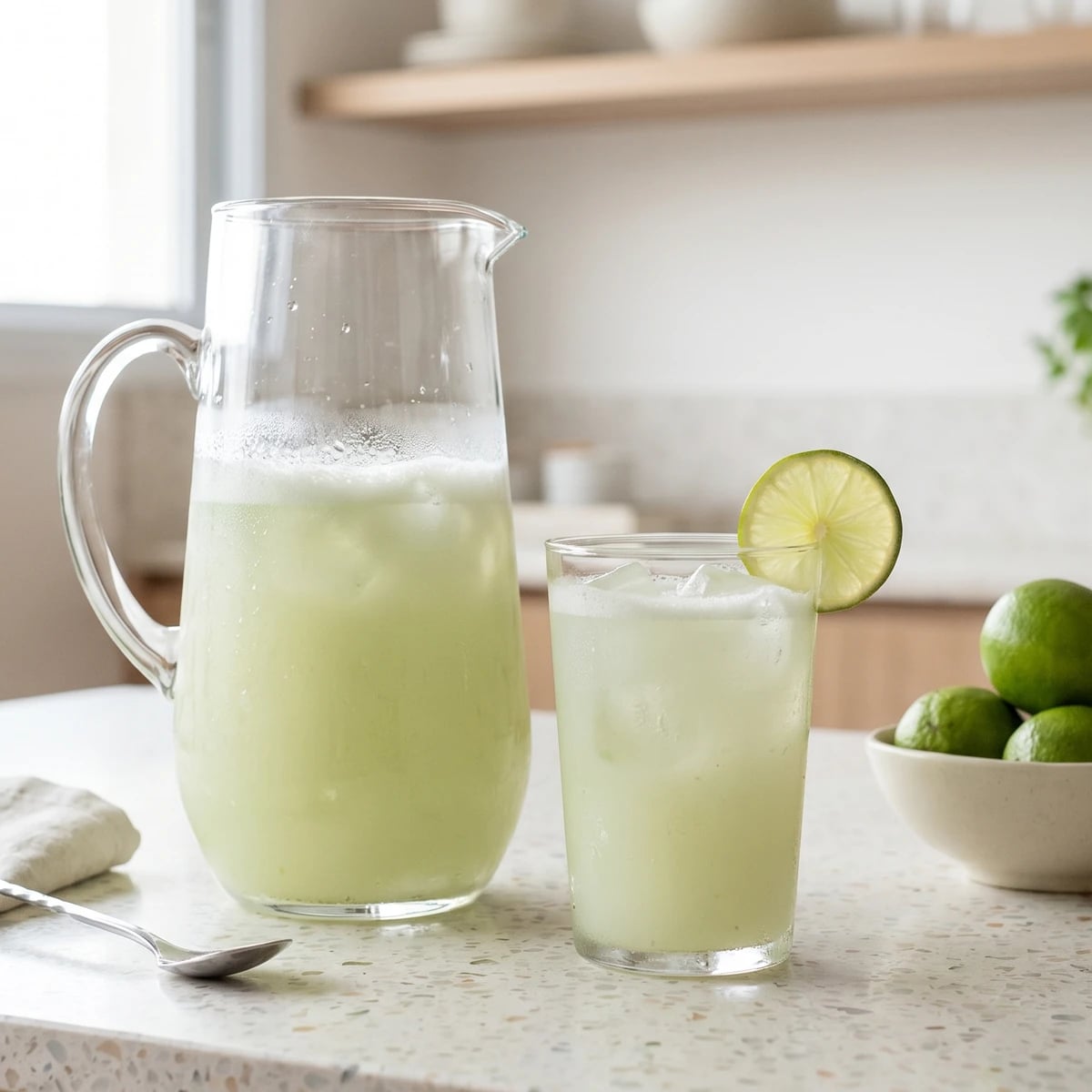
A cold jar on the table matters more than people admit. The pê-efe is rice, beans, something from the pan, something green, and often a drink that makes the whole plate feel finished. Not soda, not powder pretending to be fruit. Comida de verdade can be this simple: lime, water, sugar, condensed milk, and a strainer.
The peel is not decoration here, it's the point. You blend the whole lime briefly so the fragrant oils in the green skin perfume the drink, then you strain fast before the white pith starts bossing everyone around with bitterness. That's the method. Not mystery, not talent. Cozinhar não é dom, é um aprendizado, and blending limeade counts.
Serve it right away, properly cold, with dinner outside if the night is kind. It tastes like someone in the house bothered, which is half the work of making a table feel like home.
Limonada suíça is a Brazilian blended limeade, despite the name: in Brazil, "limão" usually means what English speakers call lime, and the drink is made with whole green limes. The "Swiss" label is commonly linked to the use of condensed milk and to old soda-fountain naming habits, not to Switzerland as a culinary origin. Its place is modern Brazilian home and snack-bar life, served cold, strained, and drunk immediately before the lime peel turns bitter.
Quantity
4
washed well, ends trimmed
Quantity
4 cups
Quantity
1/4 cup, plus more to taste
Quantity
1/3 cup
Quantity
2 cups, plus more for serving
| Ingredient | Quantity |
|---|---|
| small thin-skinned limeswashed well, ends trimmed | 4 |
| cold water | 4 cups |
| sugar | 1/4 cup, plus more to taste |
| sweetened condensed milk | 1/3 cup |
| ice | 2 cups, plus more for serving |
Pick limes that feel heavy for their size, with smooth, thin, bright green skin. Wash them well, then trim off the hard ends. Thin skin gives you perfume without too much bitter white pith, and tired thick-skinned limes will punish the whole jar. If the limes are dry and sad today, make another drink. Don't blame the recipe for bad fruit.
Cut each lime into quarters and pull out any obvious seeds. If you see a thick white center running through the lime, slice most of it away. That white part is where bitterness hides, and a gente wants sharp, fragrant lime, not a drink that tastes like chewing the peel.
Put the lime pieces, cold water, sugar, condensed milk, and ice in the blender. Pulse 5 or 6 times, then blend only 8 to 10 seconds, just until the limes are chopped and the liquid turns pale green and foamy. Stop there. Longer blending grinds the pith too fine and drags bitterness into the drink.
Pour the mixture through a fine strainer into a pitcher, pressing gently with a spoon but not smashing it to death. You want the cold, creamy liquid, not every bitter scrap forced through the mesh. Straining quickly keeps the peel's fragrance and leaves the harshness behind.
Taste the limonada now. It should be cold, bright, a little creamy, and sweet enough to round off the lime without turning into dessert in a glass. Add a spoonful more sugar if your limes are fierce, stir well, and pour over fresh ice. Serve immediately, because the peel keeps talking even after you strain it.
1 serving (about 375g)
Culinary guides, cultural storytelling, and the editorial depth that makes cooking meaningful.
Discover Culinary Explorer
Chef Juliana
You think opening a coconut belongs to the beach vendor. It doesn't. Chill the fruit, shave the cap, tap a small door, and you've solved the cold drink beside your pê-efe.

Chef Juliana
Nobody is scared of a blender. Cachaça, coconut milk, condensed milk, and ice go in, and thirty seconds later the churrasco drink is solved.

Chef Juliana
You don't need a bar kit. Fresh maracujá, cachaça, condensed milk, and thirty honest seconds in the blender make a cold Brazilian toast that tastes bright, tart, and grown-up.

Chef Juliana
You don't need a machine to make coffee that smells like a Brazilian kitchen. Hot water, fresh grounds, a clean coador de pano, and the patience to pour like you mean it.