
Chef Joost
Aspergesoep (Dutch White Asparagus Soup)
White asparagus is Limburg's spring clock, and this soup uses every pale stem and peeling to make wit goud, white gold, taste like the season it refuses to outlive.
A cooking platform built around craft, culture, and the stories behind what we eat.

Created by
The south's own sweet-sour stew, where vinegar, appelstroop, cloves, and gingerbread turn tough meat into the dark glossy dish Limburg refuses to share quietly.
The name already tells you, if you listen in Limburgish. Zoer is sour, vleisj is meat. Sour meat. A blunt name for a sly dish, because the first taste is not only sour at all: it is dark, sweet, spiced, and almost glossy enough to read by. But let me tell you a secret, this is not hachee with a southern accent. Limburg has its own table, its own speech, its own borderland memory, and zoervleisj belongs to that soft hill country along the Maas where Dutch kitchens look south and east as naturally as north.
In my grandmother's second notebook, the stews are written like weather reports: onions until brown, meat until tender, patience until done. Zoervleisj would have made perfect sense to her, even though it is Limburg's child, not Zeeland's. The old wisdom is the same. Vinegar does the first work while you sleep, tenderizing the meat and giving the dish its clean sour backbone. Then appelstroop, apple syrup, walks in with orchard sweetness, and ontbijtkoek, spiced breakfast cake, thickens the sauce the old way while leaving cinnamon, clove, and ginger behind like a trail of footprints.
Hou het altijd simpel, always keep it simple. Marinate the beef properly, brown the onions without hurry, and let the pot barely murmur until the meat gives way to the spoon. The sauce should finish sweet-sour, not sugary, not sharp. Serve it as Limburg does, with friet, and don't apologize for the fries. Some dishes know exactly where they belong.
Zoervleisj belongs to the Maas-Rhine family of vinegar-marinated meat stews, closely related to German Sauerbraten but made distinctly Limburgish through appelstroop and ontbijtkoek. Older Limburg versions often used horse meat, a practical choice when working animals reached the end of their labor, while beef is now the common home-kitchen version. In Maastricht and across Limburg it remains a fixture of cafes, fritures, and family tables, usually served with friet, making it one of the clearest examples of a Dutch regional dish shaped by borderland cookery rather than by Holland.
Quantity
1 kg
cut into 4 cm pieces
Quantity
500 ml
Quantity
250 ml
Quantity
3 large
thinly sliced
Quantity
3
Quantity
6
Quantity
6
lightly crushed
Quantity
2 tablespoons
Quantity
2 tablespoons
Quantity
2 tablespoons
Quantity
3 tablespoons
Quantity
3 slices
crumbled
Quantity
1 tablespoon
Quantity
to taste
| Ingredient | Quantity |
|---|---|
| beef chuck or stewing beefcut into 4 cm pieces | 1 kg |
| red wine vinegar or mild natural vinegar | 500 ml |
| water | 250 ml |
| onionsthinly sliced | 3 large |
| bay leaves | 3 |
| whole cloves | 6 |
| juniper berrieslightly crushed | 6 |
| butter or beef dripping | 2 tablespoons |
| neutral oil | 2 tablespoons |
| flour | 2 tablespoons |
| appelstroop | 3 tablespoons |
| ontbijtkoekcrumbled | 3 slices |
| brown sugar (optional) | 1 tablespoon |
| salt and black pepper | to taste |
Put the beef in a non-reactive bowl with the vinegar, water, half the sliced onions, bay leaves, cloves, and juniper berries. Cover and refrigerate for 12 to 24 hours, turning the meat once if you remember. The vinegar is not decoration here; it is the sour spine of the dish and the quiet tenderizer doing its work overnight.
Lift the meat from the marinade and pat it dry very well. Strain and reserve the marinade, keeping the onions and spices. Wet meat steams in the pan, and we are not boiling our way into flavor before the stew has even begun.
Heat the butter and oil in a heavy braadpan or Dutch oven over medium-high heat. Brown the beef in batches until it has deep brown edges, then lift it to a plate. Do not crowd the pan. A crowded pan sulks, and the meat turns grey.
Add the remaining fresh onions and the marinated onions to the same pan with a pinch of salt. Cook for 15 to 20 minutes, scraping the bottom often, until the onions are soft, golden, and beginning to collapse. This is where the stew gets its sweetness before the syrup arrives.
Sprinkle the flour over the onions and stir for a minute, then return the beef to the pan. Pour in enough reserved marinade to nearly cover the meat, including the bay, cloves, and juniper. Stir in the appelstroop. The sauce will look sharp and thin now; trust the pot, not the first spoonful.
Bring the stew just to a simmer, then lower the heat, cover with the lid slightly ajar, and let it barely murmur for 2 1/2 to 3 hours. Stir now and then, especially along the bottom. The meat is ready when a spoon can press it apart without argument.
Crumble the ontbijtkoek into the stew and stir until it dissolves into the sauce. Simmer uncovered for another 10 to 15 minutes, until the sauce turns dark, glossy, and thick enough to cling to the meat. Taste carefully: add salt and pepper, and only use the brown sugar if the vinegar still speaks too loudly.
Let the zoervleisj rest for at least 20 minutes before serving, or cool it completely and reheat it the next day. Serve with friet, the Limburg way, and spoon plenty of sauce over the top. A stew this old does not want arranging. It wants passing.
1 serving (about 280g)
Culinary guides, cultural storytelling, and the editorial depth that makes cooking meaningful.
Discover Culinary ExplorerChef Joost
White asparagus is Limburg's spring clock, and this soup uses every pale stem and peeling to make wit goud, white gold, taste like the season it refuses to outlive.
Chef Joost
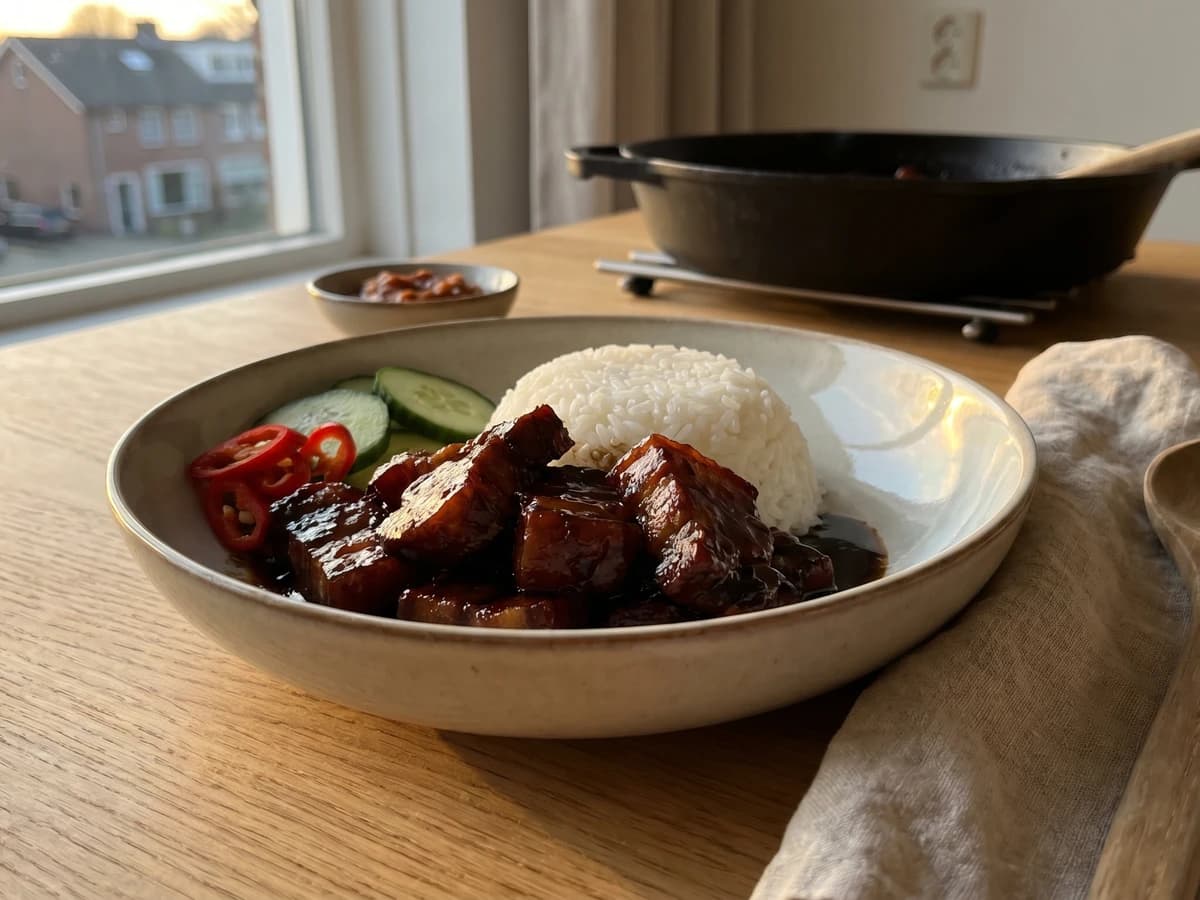
Pork, sweet soy, ginger, and patience: the Indo-Dutch braise that carried the colonial table into Dutch kitchens and made rice feel like Sunday dinner.
Chef Joost
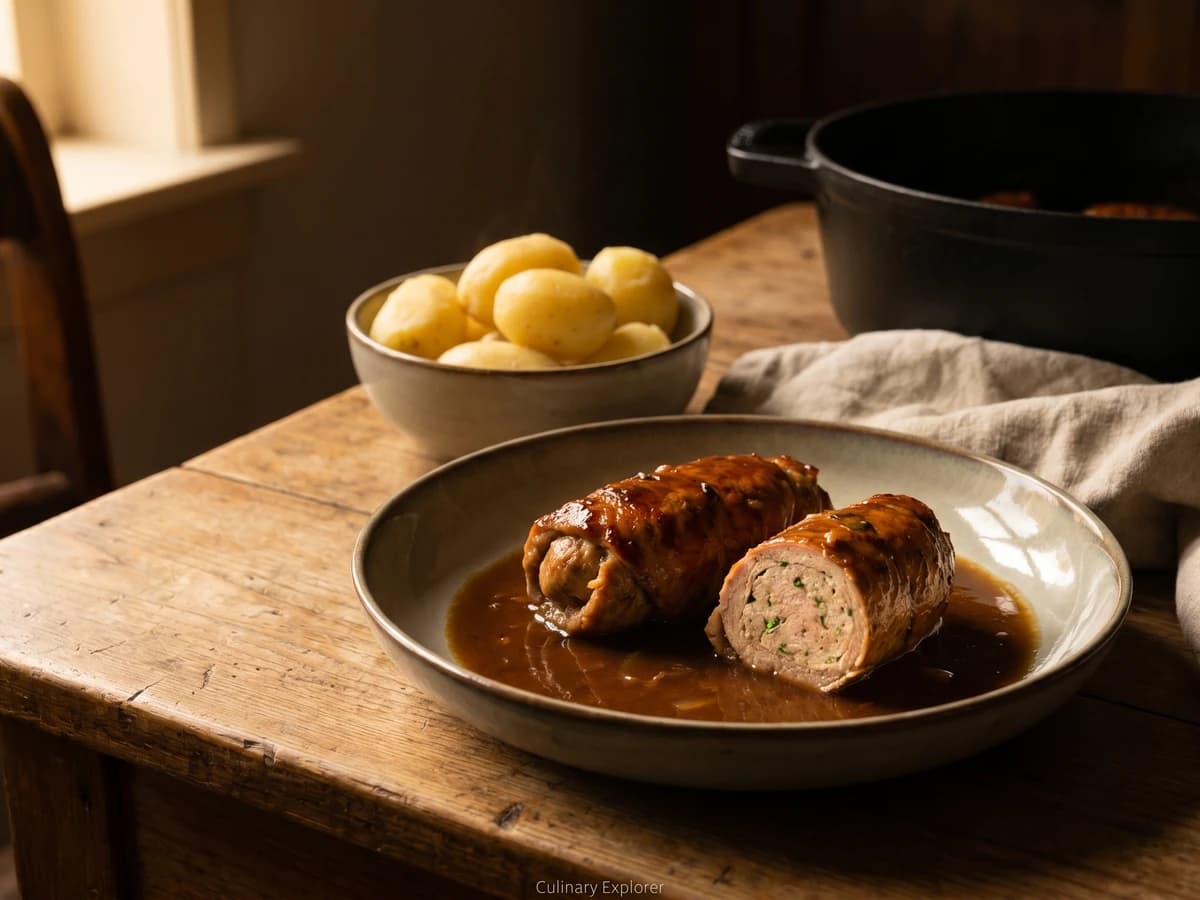
Blinde vinken are not birds but a butcher's little joke: seasoned mince tucked into thin veal or beef, browned dark in butter, then braised until the jus tastes of onion, mace, and patience.

Chef Joost
Bruine bonensoep is the quieter winter cousin of snert: brown beans, rookworst, bacon and roots in a broth that stays spoonable, frugal, and deeply Dutch.