Culinary Explorer

A cooking platform built around craft, culture, and the stories behind what we eat.
Discover Culinary Explorer
Leverworst (Dutch Liver Sausage)

Leverworst (Dutch Liver Sausage)

Created by

The name is almost rude in its honesty: liver, sausage, bread, mustard, and the old Dutch thrift that knew the best stories often sat at the cheap end of the table.

Appetizers & Snacks
Dutch
Budget Friendly
Potluck
Comfort Food
35 min
Active Time
1 hr 10 min cook8 hr 45 min total
Yield2 small loaves, about 12 servings

Leverworst belongs to the family table more than to the butcher's window, though the butcher has always dressed it better. In my grandmother's second notebook, it sits near the recipes that refuse to be grand: blood sausage, head cheese, split pea soup, pancakes stretched with yesterday's milk. The handwriting is neat, the ingredients are not polite. Liver. Fat pork. Mace. Pepper. Nothing wasted. Everything understood.

The name already tells you the bargain. Lever is liver, worst is sausage, and Dutch food at its most honest rarely hides behind poetry. But let me tell you a secret: this plain little sausage carries the whole logic of the northern kitchen. When a pig was slaughtered in late autumn, the fine cuts had their uses, but the household's intelligence showed in what happened to the rest. Offal was not a punishment. It was supper, breakfast, borrelhapje, the little snack with a drink, and lunch on rye bread for three days after.

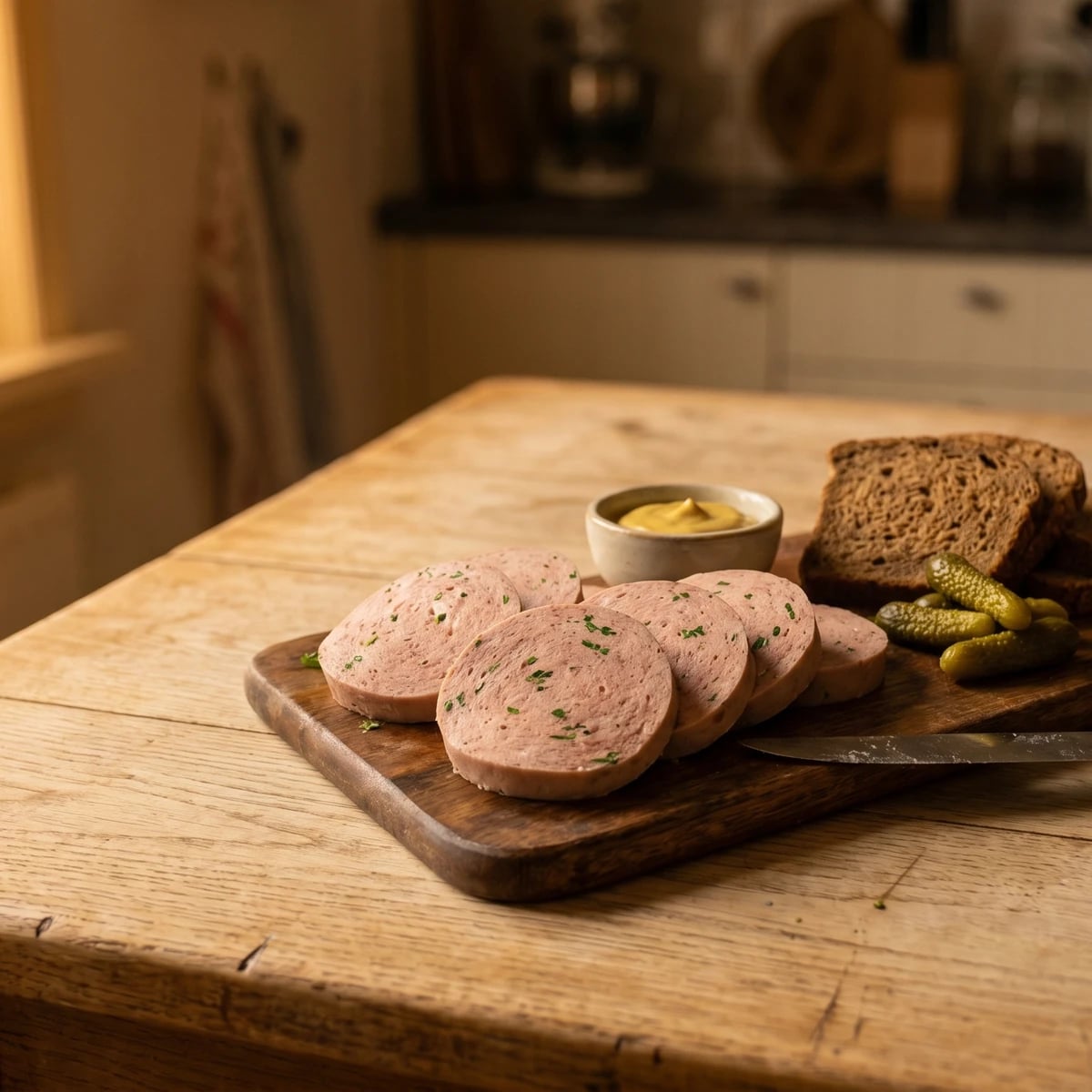
The trick is gentleness. Liver turns bitter and grainy when bullied, so we poach it softly, bind it with fatty pork, and season it the Dutch way: white pepper for clean heat, mace and nutmeg for that quiet VOC warmth that people forget has lived in our kitchens for centuries. Hou het altijd simpel, always keep it simple. Chill it well, slice it thick, put out mustard and pickles, and let the board do what Dutch boards do best: feed people without making a speech.

Leverworst belongs to the Dutch slachtmaand, the late-autumn slaughter season when farm households turned a pig into fresh meals, preserved meat, sausages, and head-to-tail preparations before winter. Regional versions differ sharply: Groningen is known for a firmer, often more heavily spiced leverworst, while much of the west prefers softer sliced or spreadable liver sausage for bread and borrel tables. The use of mace, nutmeg, and white pepper reflects the same spice trade that shaped everyday Dutch cooking from the seventeenth century onward, not only festive baking.

The technique, the tradition, and the story behind every dish.

Discover Culinary Explorer

Ingredients

pork liver

Quantity

400g

trimmed and cut into chunks

fatty pork belly

Quantity

350g

skin removed and diced

pork shoulder

Quantity

200g

diced

onion

Quantity

1 small

finely chopped

butter

Quantity

2 tablespoons

fresh white breadcrumbs

Quantity

90g

whole milk

Quantity

120ml

fine sea salt

Quantity

12g

ground white pepper

Quantity

1 teaspoon

ground mace

Quantity

1/2 teaspoon

freshly grated nutmeg

Quantity

1/4 teaspoon

ground ginger

Quantity

1/4 teaspoon

ground cloves

Quantity

1/8 teaspoon

flat-leaf parsley

Quantity

2 tablespoons

chopped

butter for greasing

Quantity

as needed

dark rye bread, mustard, and pickles (optional)

Quantity

as needed

Equipment Needed

  • Food processor or meat grinder
  • Two small loaf tins or heatproof straight-sided jars
  • Deep roasting pan for water bath
  • Instant-read thermometer

Instructions

  1. 1

    Soften the onion

    Melt the butter in a small pan and cook the onion gently for 8 to 10 minutes, until soft and sweet but not browned. Brown onion brings a roasted note that fights the liver; soft onion disappears into the sausage and does its quiet work.

  2. 2

    Soak the crumbs

    Put the breadcrumbs and milk in a bowl and let them stand for 10 minutes. This little panade, bread soaked in milk, is what keeps the leverworst tender instead of rubbery. Old household cooking knew these tricks long before anyone gave them French names.

  3. 3

    Grind the meat

    Chill the liver, pork belly, and pork shoulder until very cold, then pulse them in a food processor with the softened onion and soaked crumbs until you have a coarse, sticky paste. Stop before it becomes perfectly smooth. A little texture tells you this came from a kitchen, not a tube with a label.

  4. 4

    Season and test

    Mix in the salt, white pepper, mace, nutmeg, ginger, cloves, and parsley. Fry a teaspoon of the mixture in a small pan until cooked through, then taste it. It should be gently liver-rich, clearly seasoned, and warmer from spice than from heat. Adjust now, because once it is poached, the argument is over.

    Do not taste the raw mixture. Liver sausage is made from raw pork and liver, and scholarship is no excuse for poor hygiene.
  5. 5

    Pack the loaves

    Butter two small loaf tins or straight-sided heatproof jars. Pack in the mixture firmly, pressing out air pockets, then cover tightly with buttered parchment and foil. Air pockets become grey little holes in the slice; harmless, yes, but untidy in the way only sausage can be untidy.

  6. 6

    Poach gently

    Set the tins or jars in a deep roasting pan and pour in hot water to come halfway up their sides. Bake at 150C for about 1 hour, until the centre reaches 72C on a thermometer. Keep the water below a boil. Leverworst wants a bath, not a storm.

  7. 7

    Cool and weight

    Lift the loaves from the water bath, leave them covered, and cool for 30 minutes. Place a light weight on top, such as another small tin, and refrigerate for at least 6 hours. The chill firms the fat, settles the spice, and turns a soft mixture into something you can slice cleanly.

  8. 8

    Slice and serve

    Unmould the leverworst and slice it thickly with a sharp knife. Serve it cold or cool on dark rye bread with mustard and pickles. I prefer to keep it a bit more relaxed, in the Dutch way: a board in the middle, a knife beside it, and no one pretending this needs garnish.

Chef Tips

  • Buy very fresh pork liver from a butcher you trust, and cook the sausage the same day. Liver has a short temper in the refrigerator and grows metallic when it waits too long.
  • Mace matters here. Nutmeg alone is rounder and sweeter; mace gives the clean, old Dutch sausage-shop note that makes the slice taste familiar even before you know why.
  • For a softer smeerleverworst, spreadable liver sausage, increase the pork belly to 450g and pulse the mixture finer. Pack it into jars rather than loaf tins and serve it with a small knife.

Advance Preparation

  • Make the leverworst one day ahead; it slices best after a full night in the refrigerator.
  • Keeps 3 days refrigerated, tightly wrapped. For longer storage, freeze whole or in thick slices for up to 2 months and thaw overnight in the refrigerator.

Frequently Asked Questions

Nutrition Information

1 serving (about 170g)

Calories
380 calories
Total Fat
24 g
Saturated Fat
9 g
Trans Fat
0 g
Unsaturated Fat
14 g
Cholesterol
150 mg
Sodium
1050 mg
Total Carbohydrates
24 g
Dietary Fiber
3 g
Sugars
3 g
Protein
17 g

Note: Chef personas and recipes are created with AI assistance. Cook with care: follow safe food-handling practices, check doneness with a thermometer when needed, and adapt for allergies and your kitchen.

Where cooking meets culture.

Culinary guides, cultural storytelling, and the editorial depth that makes cooking meaningful.

Discover Culinary Explorer

More from De Borrel: Bar Snacks & Borrelplank

Browse the full collection