
Chef Isabel
Aguaillo de la Sierra de Cadiz
Aguaillo is from the Sierra de Cadiz: cold water, stale bread, garlic, oil and vinegar, closer to a field drink than a bowl of soup, and sharp enough to wake you in the heat.
A cooking platform built around craft, culture, and the stories behind what we eat.
Created by
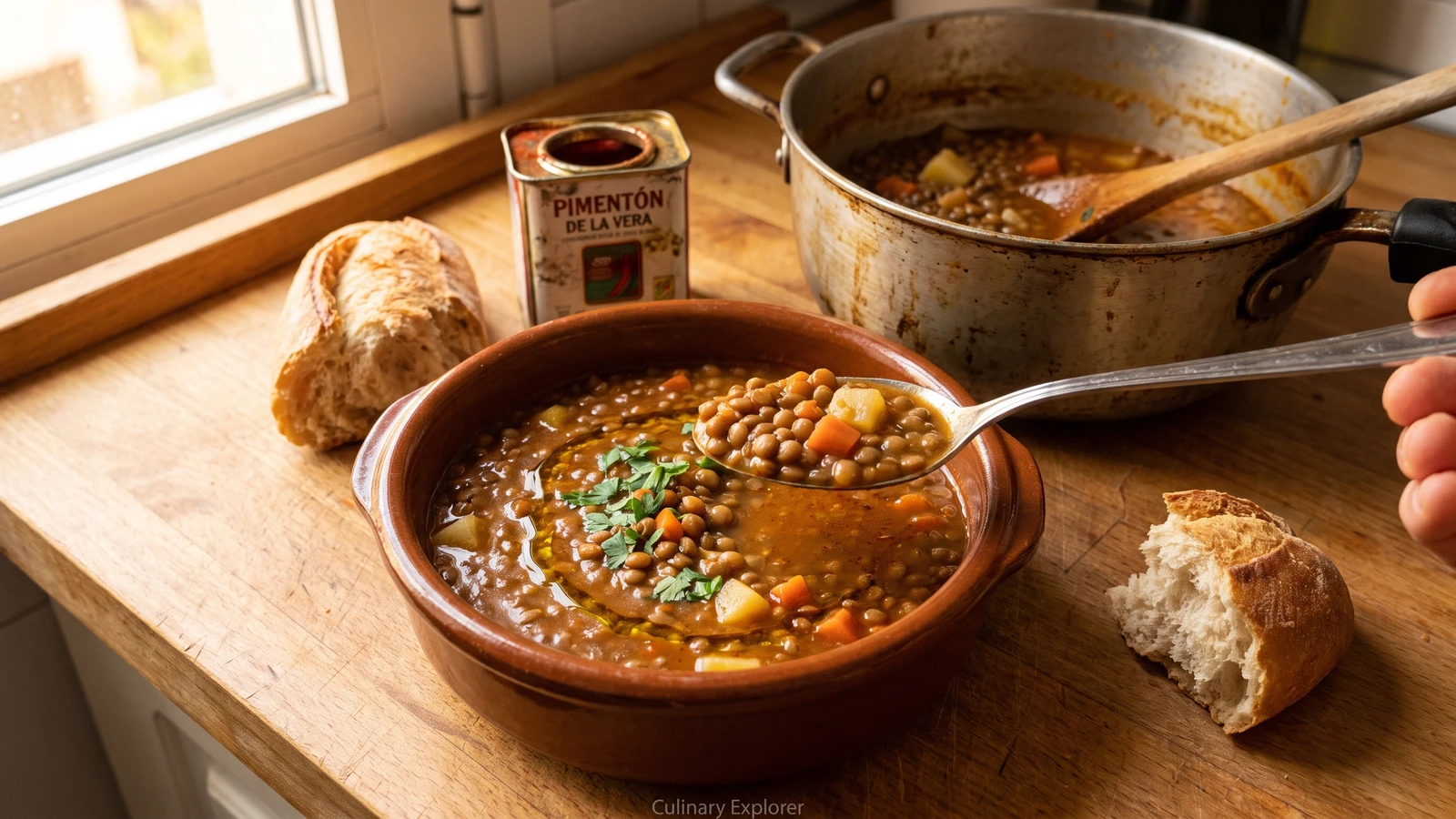
Lentejas viudas are Castilian spoon food: meatless lentils carried by a slow sofrito, sweet pimentón, and vegetables until the pot tastes full without chorizo.
Lentejas viudas are Castilian, the lean lentil pot of the inland table: lentils, vegetables, olive oil, pimentón, and no meat. They are called viudas, widowed, because the chorizo and morcilla are missing. That isn't a lack if you cook the base properly. It is a different dish, quieter and cheaper, and it has fed plenty of tables well.
The method that decides it is the sofrito, the slow onion base. Cook the onion, carrot, pepper, and garlic low until the onion goes dark gold and sweet, then let the grated tomato lose its water before the pimentón goes in. Rush that step and the lentils taste thin. Do it slowly and the pot has body before the lentils ever soften.
Use pardina lentils if you can find them, the small brown ones that hold their shape and don't need soaking. If you're far from Castilla, use small green or brown lentils with good turnover from the shop, not old dusty ones from the back of a cupboard. Red lentils are for another pot; they collapse. No hace falta haber pisado España. With good lentils, a patient sofrito, and the pimentón kept from burning, siempre sale, si lo sigues.
Lentejas viudas belong to the Castilian tradition of cocina de cuchara, spoon food built from legumes, vegetables, olive oil, and what the household could afford. The name viudas marks the absence of the usual cured meats, especially chorizo and morcilla, making the dish fit for lean days, Lent, and ordinary budget cooking. Castilla y León gives the pot two famous lentils, the pale lenteja de La Armuña of Salamanca and the small pardina of Tierra de Campos, both prized because they cook tender while keeping their shape.
Quantity
300g
picked over and rinsed
Quantity
60ml
Quantity
1 medium
finely chopped
Quantity
1 medium
finely diced
Quantity
1 small
finely diced
Quantity
3 cloves
minced
Quantity
150g fresh or 120g canned
grated if fresh
Quantity
1 teaspoon
Quantity
1
Quantity
1 medium
peeled and cut into 2cm chunks
Quantity
1.2 litres
Quantity
1 teaspoon, plus more to taste
Quantity
1 tablespoon
to finish
Quantity
2 tablespoons
chopped, to finish
| Ingredient | Quantity |
|---|---|
| pardina lentils or small brown lentilspicked over and rinsed | 300g |
| extra virgin olive oil | 60ml |
| onionfinely chopped | 1 medium |
| carrotfinely diced | 1 medium |
| green pepperfinely diced | 1 small |
| garlicminced | 3 cloves |
| ripe tomato, or canned crushed tomatograted if fresh | 150g fresh or 120g canned |
| sweet pimentón de la Vera | 1 teaspoon |
| bay leaf | 1 |
| potatopeeled and cut into 2cm chunks | 1 medium |
| water or light vegetable broth | 1.2 litres |
| fine salt | 1 teaspoon, plus more to taste |
| sherry vinegar (optional)to finish | 1 tablespoon |
| flat-leaf parsley (optional)chopped, to finish | 2 tablespoons |
Pick through the lentils for any small stones, then rinse them under cold water until the water runs clear. Pardina lentils don't need soaking; that is one kindness of this dish. If your lentils are large or old, soak them for 1 hour while you chop the vegetables, then drain them well.
Warm the olive oil in a heavy pot over medium-low heat. Add the onion, carrot, green pepper, and a pinch of the salt, then cook for 12 to 15 minutes, stirring often, until the onion is dark gold and the vegetables look soft and glossy. Add the garlic and cook for 1 minute. This slow sofrito is what replaces the depth people expect from chorizo, so don't hurry it.
Stir in the grated tomato and cook for 6 to 8 minutes, until the water has cooked off and the oil begins to show at the edges. Pull the pot off the heat, add the pimentón, and stir for 20 seconds until it smells sweet and smoky. Keep it off the flame for this part; burnt pimentón turns bitter and follows you all the way to the bowl.
Add the rinsed lentils, bay leaf, potato, water or light vegetable broth, and the remaining salt. Bring just to a boil, then lower the heat and simmer gently, half-covered, for 35 to 45 minutes. The lentils should be tender but still whole, and the potato should give easily when pressed with a spoon.
Lift out a few pieces of potato and a ladle of lentils, mash them with a fork, and stir them back into the pot. Simmer 5 minutes more, uncovered, until the broth turns lightly creamy but still loose enough to move around the spoon. Taste for salt.
Take the pot off the heat and let it rest for 10 minutes. Stir in the sherry vinegar if the lentils taste a little flat; it should brighten the pot, not make it sharp. Finish with parsley if you like, and serve in deep bowls with bread. Tal como se hace en casa, plainly and well.
1 serving (about 380g)
Culinary guides, cultural storytelling, and the editorial depth that makes cooking meaningful.
Discover Culinary ExplorerChef Isabel
Aguaillo is from the Sierra de Cadiz: cold water, stale bread, garlic, oil and vinegar, closer to a field drink than a bowl of soup, and sharp enough to wake you in the heat.

Chef Isabel
Ajilimojili is Jaen's tomato-free cold soup: potato, roasted red pepper, garlic, olive oil, and vinegar pounded into a cool, silky spoonful.

Chef Isabel
Ajo carretero is Soriano, from the pine country of Soria: lamb cooked in a plain garlicky broth, then served the old way, meat first and bread-soaked soup after.

Chef Isabel
Ajoblanco Extremeño is the poor-kitchen cold soup of Extremadura: bread, garlic, oil, egg yolk, vinegar, and icy water, with no almonds. Whisk it slowly and serve it bien fresquito.