
Chef Thomas
Apple Charlotte
Buttered bread baked to a deep mahogany around a filling of spiced Bramley apples, turned out at the table in a small moment of drama, cold cream poured from a jug alongside.
A cooking platform built around craft, culture, and the stories behind what we eat.
Created by Chef Thomas
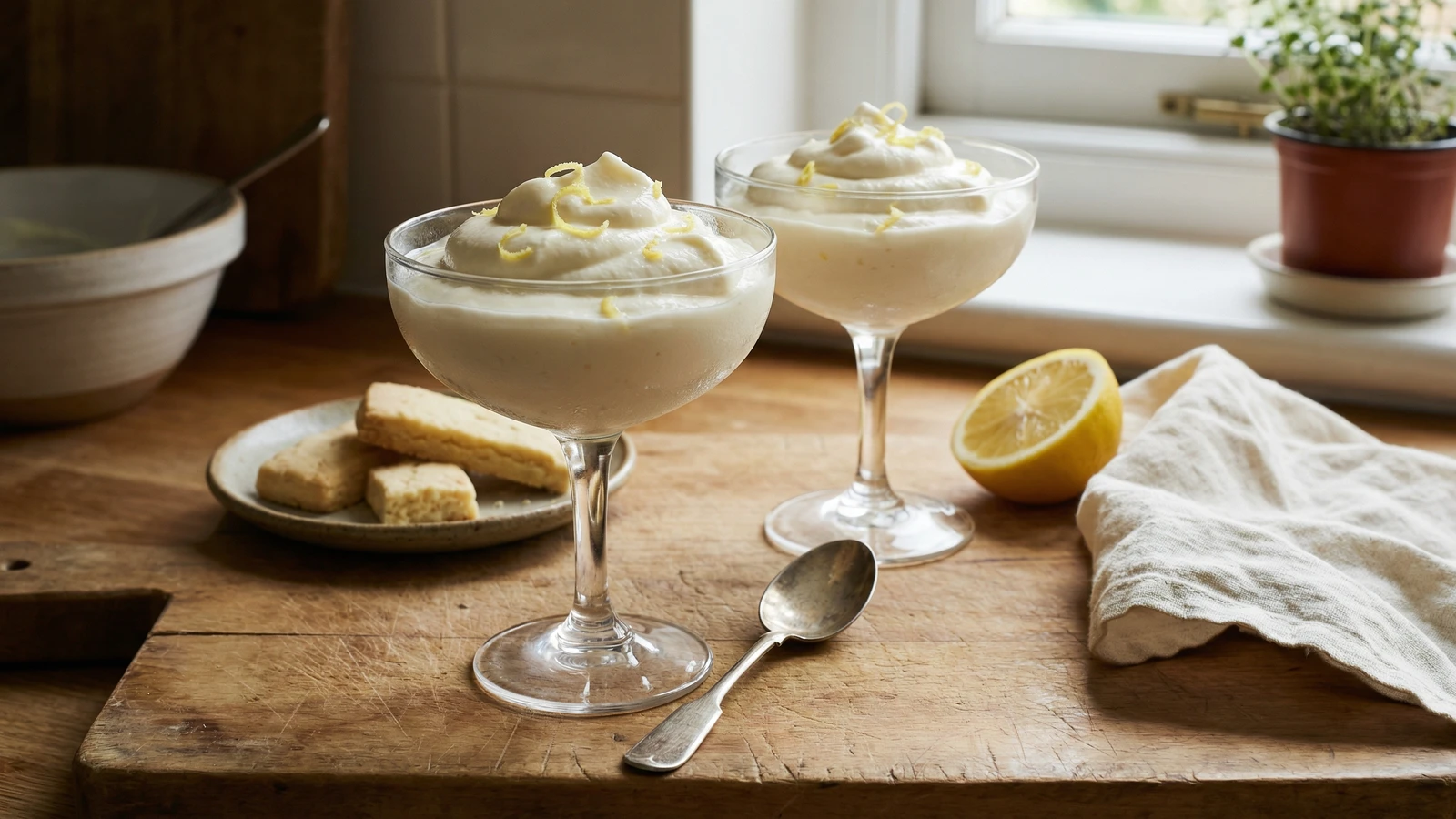
A pale, billowy cloud of cream whipped with white wine and lemon, cold and boozy and old-fashioned, the kind of pudding you spoon slowly and wish you'd made twice as much of.
There's a point, after a long supper on a warm evening, when nothing heavy will do. You want something cold. Something that feels like a pause. Lemons and cream and a splash of wine, whipped into a pale, billowy cloud and spooned into little glasses. That's syllabub.
It's a Tudor pudding, which is to say people have been making it for five hundred years because it works. The lemon and the wine cut through the cream so it never feels heavy, just cold and soft and faintly boozy, like the taste of a summer afternoon you didn't want to end. There's almost nothing to it. You infuse the wine with lemon zest and sugar, pour in the cream, whisk until it holds, and that's dinner finished.
I make it most in July, when the evenings stretch out and a proper baked pudding feels like too much to ask of anyone. But it's the sort of thing you can pull together any time of year when you need something that feels deliberate without demanding much of you. A recipe is a conversation, not a contract. Spoon it into whatever small glasses you have. Put them on the table cold, straight from the fridge, with a plate of shortbread or a few raspberries if the market had them. We're only making dinner.
I wrote it down in the notebook years ago: lemon, wine, cream, summer. It didn't need more than that.
Quantity
2
zested and juiced
Quantity
75ml
Quantity
2 tablespoons
Quantity
60g
Quantity
300ml
cold from the fridge
Quantity
a little extra
to finish
Quantity
to serve
| Ingredient | Quantity |
|---|---|
| unwaxed lemonszested and juiced | 2 |
| dry white wine | 75ml |
| brandy (optional) | 2 tablespoons |
| caster sugar | 60g |
| double creamcold from the fridge | 300ml |
| lemon zest (optional)to finish | a little extra |
| shortbread (optional) | to serve |
Zest the lemons straight into a bowl, then squeeze in their juice. Pour in the wine and the brandy if you're using it, add the sugar, and stir until the sugar has mostly dissolved. Cover and leave somewhere cool for at least an hour, overnight if you can manage it. The wine takes on the perfume of the lemon and softens into something altogether more interesting than the sum of its parts.
If you want a smooth syllabub, strain the infused wine through a fine sieve into a large mixing bowl and press the zest to get every drop. If you'd rather leave some of the zest in for a bit of texture and a sharper perfume, leave it. Your kitchen, your rules.
Pour the cold cream into the bowl with the wine mixture. Whisk slowly at first so it doesn't splash, then build up. Keep going until the cream holds soft, lazy peaks and falls from the whisk in slow folds. This is the moment you have to pay attention. Syllabub goes from cloud to grainy and split in about ten seconds flat. Stop while it still moves.
Spoon the syllabub into small glasses. Coupes, wine glasses, whatever you have. Small is the point. Rich and cold, a little goes a long way. Cover loosely and chill for at least an hour so it firms up and the flavours settle into each other.
Take the glasses straight from the fridge to the table. Grate a little more lemon zest over the top of each one, a pale yellow scattering against the cream. A piece of shortbread on the side if you have it, for something to dip in. Nothing else. This is a pudding that knows what it is.
1 serving (about 135g)
Culinary guides, cultural storytelling, and the editorial depth that makes cooking meaningful.
Discover Culinary ExplorerChef Thomas
Buttered bread baked to a deep mahogany around a filling of spiced Bramley apples, turned out at the table in a small moment of drama, cold cream poured from a jug alongside.

Chef Thomas
Whole Bramley apples cored and stuffed with butter, brown sugar and plump dried fruit, baked until they collapse and the kitchen fills with the smell of autumn getting on with itself.

Chef Thomas
A proper baked rice pudding, slow-cooked in whole milk with butter and nutmeg until the top sets into a freckled golden skin. The kind of pudding that makes January feel like less of a long haul.

Chef Thomas
Wild blackberries and Bramley apples collapsed together under a thick, sandy crumble, the pudding that makes September feel like it's worth staying in for.