
Chef Lupita
Acitrón de Cidra Conventual
Puebla's convent-style acitrón, made from cidra peel instead of endangered biznaga, built through repeated syrup soakings until the cubes turn firm, translucent, and ready for rosca or chiles en nogada.
A cooking platform built around craft, culture, and the stories behind what we eat.
Created by
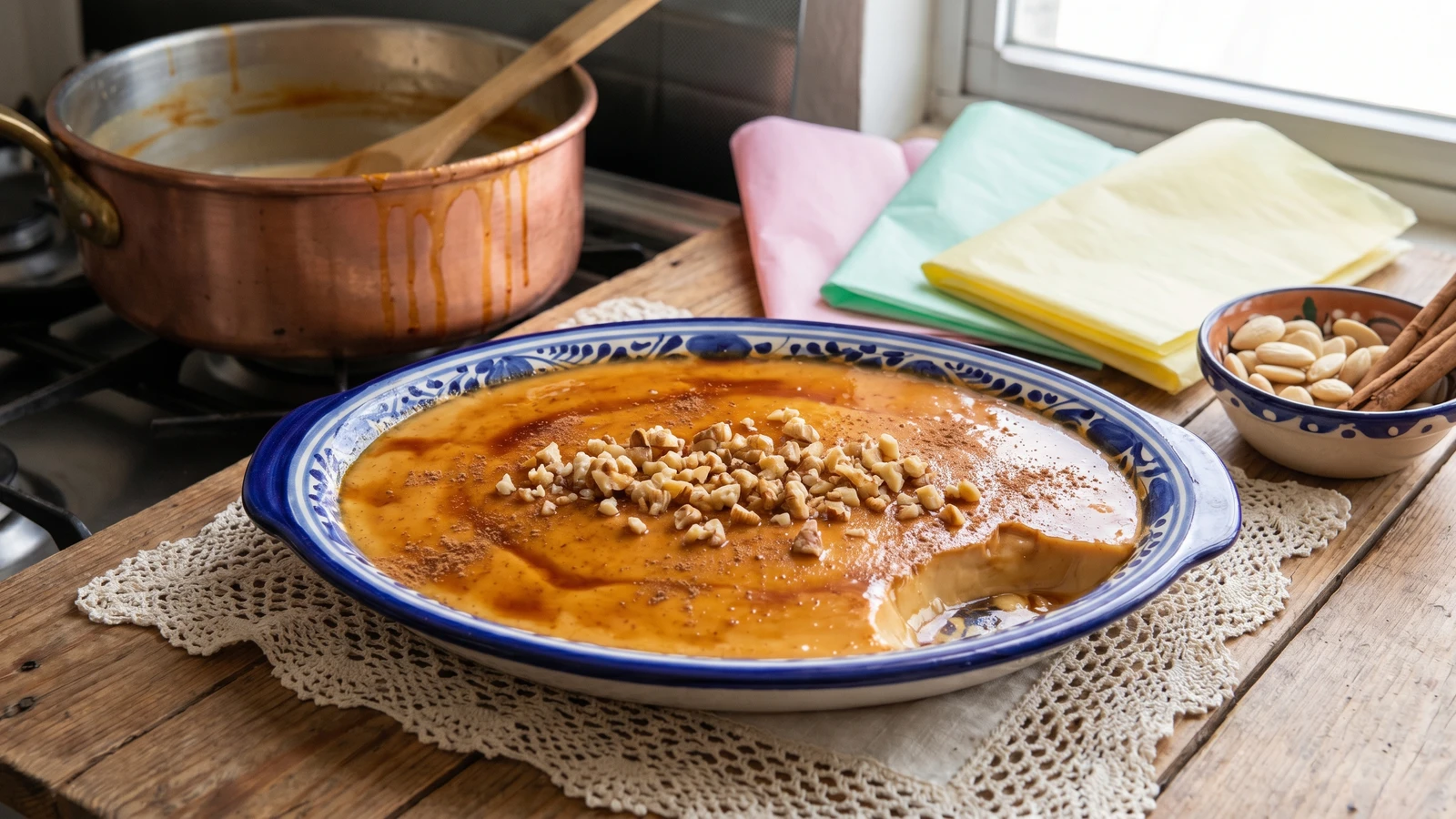
Puebla's convent milk sweet, cooked slowly until whole milk turns amber, bound with yemas de huevo, maicena, and almendra pelada, then chilled on talavera with nuez de Castilla and canela.
Puebla de los Angeles is where this sweet belongs, in the old convent city between Popocatepetl and the road to Veracruz. This is not a chile dish, not a tortilla dish, not the Mexico people flatten into one idea. This is Puebla's dulceria conventual: milk, cane sugar, canela, yemas, almonds, and patience. Cada estado, su propia cocina.
The geography is in the pot. Milk from the central highland dairy belt, piloncillo from cane country near Izucar de Matamoros, canela that came through the old trade routes, and talavera from Puebla on the table. The women who perfected this were not decorating dessert plates. They were sisters and lay cooks in convent kitchens, stirring copper cazos for hours because reduced milk cannot be rushed. La cocina no es decoracion, es trabajo.
Leche quemada does not mean burned in the careless sense. It means the milk is cooked until the sugars darken and the flavor turns amber, deep, and quiet. Condensed milk will make it sweet, yes, but it will not make this. My mother's notebook had a Puebla version copied from a woman near La Merced, and in the margin she wrote: do not stop stirring at the end. She was right. Saber cocinar es saber vivir.
Leche quemada belongs to Puebla's colonial convent sweet tradition, the same urban lineage that produced tortitas de Santa Clara, camotes, jamoncillo, and other dulces sold around Calle de Santa Clara. No single surviving manuscript honestly assigns this pudding to one convent, but its technique sits with the 17th- and 18th-century kitchens of Santa Clara, Santa Rosa, and other enclosed houses where milk, sugar, yemas, almonds, and canela were turned into durable sweets. The maicena-thickened home version is later than the earliest convent manuscripts, but it preserves the older rule: reduce the milk first, then bind it.
Quantity
8 cups
divided
Quantity
3/4 cup
Quantity
3 ounces
finely grated
Quantity
1 stick
Quantity
1/8 teaspoon
Quantity
1/4 teaspoon
Quantity
1/2 cup
ground very fine
Quantity
1/3 cup
Quantity
4
Quantity
1 teaspoon
Quantity
1/2 cup
lightly toasted and chopped
Quantity
1 teaspoon
| Ingredient | Quantity |
|---|---|
| leche entera de vacadivided | 8 cups |
| azucar de cana | 3/4 cup |
| piloncillo clarofinely grated | 3 ounces |
| canela mexicana | 1 stick |
| bicarbonato de sodio | 1/8 teaspoon |
| fine sea salt | 1/4 teaspoon |
| almendra peladaground very fine | 1/2 cup |
| maicena | 1/3 cup |
| yemas de huevo | 4 |
| Mexican vanilla extract | 1 teaspoon |
| nuez de Castilla (optional)lightly toasted and chopped | 1/2 cup |
| canela molida (optional) | 1 teaspoon |
Measure out 1/2 cup of the cold leche entera and set it aside for the binder. Pour the remaining milk into a heavy copper cazo or thick-bottomed pot. Use a wide pot if you have one. More surface area means better reduction, and this dish is reduction before it is pudding.
Add the azucar de cana, piloncillo claro, canela mexicana, bicarbonato de sodio, and salt to the pot. Set over medium-low heat and stir until the sugars dissolve. Keep the milk at a quiet simmer, not a rolling boil. The bicarbonato helps the milk brown and keeps it from breaking, but too much tastes soapy, so measure it like a serious cook.
Cook for 1 hour 30 minutes to 1 hour 45 minutes, stirring every few minutes and scraping the bottom and corners with a wooden spoon. The milk will move from ivory to beige to soft amber, and it should reduce to about 5 cups. Leche quemada means the milk is caramelized, not scorched. If black specks appear, your heat is too high and the pot is teaching you manners.
In a blender, combine the reserved 1/2 cup cold milk, almendra pelada, maicena, yemas de huevo, and vanilla. Blend until completely smooth. The almonds give the body that older convent sweets had before every kitchen trusted a box of maicena. The maicena sets it cleanly. Both have a job.
Remove the canela stick from the reduced milk. With the blender running on low, pour in 1 cup of the hot reduced milk to warm the yemas slowly. Do not dump cold yemas into the pot. They will scramble, and then you will have sweetened eggs floating in good milk. No me vengas con atajos.
Pour the tempered mixture back into the pot in a thin stream, whisking constantly. Cook over low heat for 8 to 12 minutes, stirring with a wooden spoon, until the pudding thickens enough to leave a clean track on the spoon and a few slow bubbles break at the surface. Do not boil it hard. The yemas bind, the almonds thicken, the cinnamon holds the aroma. Asi se hace y punto.
Pass the pudding through a fine-mesh strainer into a shallow talavera serving dish or small talavera cups. Press gently with a spatula so the smooth custard goes through and any stubborn bits stay behind. Let it cool at room temperature for 30 minutes, then cover and refrigerate for at least 4 hours. It should set softly, not like gelatin.
Just before serving, scatter the nuez de Castilla over the top and dust lightly with canela molida. Serve cold, from the talavera, with small spoons. This is Puebla's sweet discipline: milk, sugar, patience, and a cook who knows when amber is enough. Recetas probadas y garantizadas.
1 serving (about 240g)
Culinary guides, cultural storytelling, and the editorial depth that makes cooking meaningful.
Discover Culinary ExplorerChef Lupita
Puebla's convent-style acitrón, made from cidra peel instead of endangered biznaga, built through repeated syrup soakings until the cubes turn firm, translucent, and ready for rosca or chiles en nogada.

Chef Lupita
Ciudad de México's Tulyehualco alegría is popped huautli folded into piloncillo honey, pressed with peanuts, pepitas, and raisins, then cut into the rectangular bars that built a pueblo's identity.

Chef Lupita
Oaxaca's pre-Columbian amaranth bar, popped on a hot comal and bound with piloncillo, honey, and the sacred Zapotec grain that the Spanish tried, and failed, to outlaw.

Chef Lupita
Querétaro's mercado candy of popped amaranto pressed with dark piloncillo syrup, pepitas, pecans, and cacahuate, a Bajío sweet that respects the seed before it decorates the table.