
Chef Freja
Andelår med Rødkål
Slow-roasted duck legs with crisp, deeply golden skin, served with braised red cabbage and caramelized potatoes. The weeknight Danish duck that proves the best part of the bird is the one that takes its time.
A cooking platform built around craft, culture, and the stories behind what we eat.
Created by Chef Freja
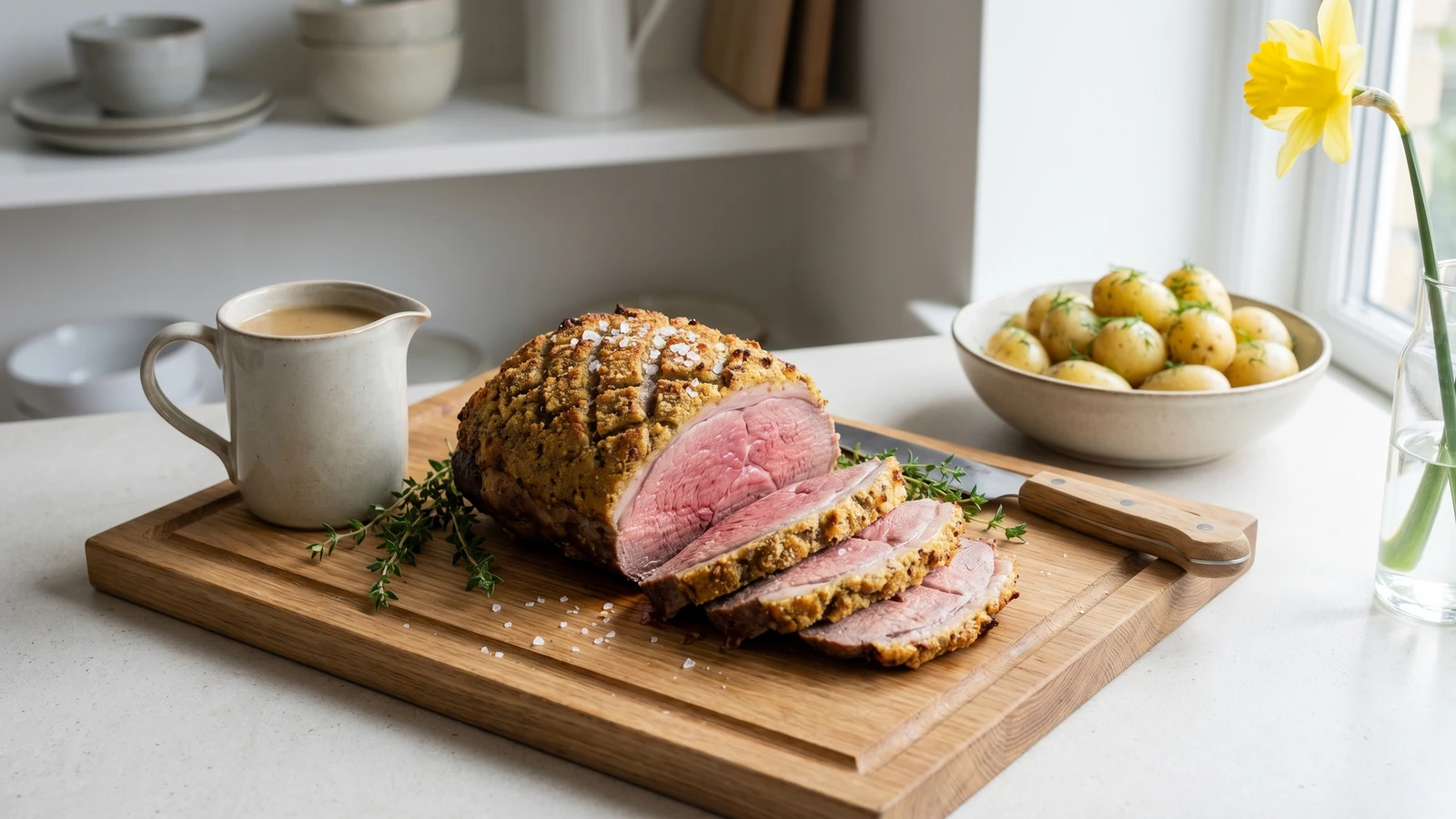
Spring lamb rump with a golden mustard, thyme, and garlic crust pressed into scored fat. Roasted hot until the outside crackles and the inside stays pink. The dish that says paaskelam has arrived.
April in Copenhagen. The light is back. Not the thin, hopeful light of March, but the real thing, warm on the windows by mid-morning, lasting long enough that you eat dinner before it fades. The markets have new potatoes the size of marbles and asparagus bundled in white paper. And somewhere, in every butcher's window across the city, the lammekulotte appears. Paaskelam. Easter lamb. Spring on a plate.
This is the roast that marks the turn of the year in Danish kitchens. Not the heavy, slow-cooked meats of winter, but something quicker, brighter, cooked with heat and confidence. A lamb rump, fat cap scored in a tight crosshatch, seared until golden, then coated in a crust of two mustards, garlic, fresh thyme, and breadcrumbs. The oven does the rest. Twenty-five minutes at high heat and the crust turns deep gold while the meat inside stays pink and tender.
I want you to pay attention to two things. First: the scoring. You're cutting through fat, not into meat. Every line you make is a channel for salt and mustard to reach the lamb, and a path for fat to render and crisp. Second: the resting. Fifteen minutes, not five. The lamb needs that time to collect itself, to pull its juices back in and settle. Skip the rest and you'll carve beautifully and watch the board fill with liquid that should have stayed in the meat. Give it the time and you'll understand why patience is the last ingredient in every good roast.
Lamb has been part of the Danish Easter table since the Reformation, when the symbolism of the paschal lamb merged with the practical reality that spring lambs were reaching slaughter weight just as Lent ended. The tradition of paaskelam is strongest on the islands and in southern Jutland, where sheep farming has deeper roots. The mustard crust, sennepsskorpe, is a more recent addition, likely arriving in bourgeois Copenhagen kitchens in the late 19th century when French-influenced Danish cooking embraced mustard as a companion to roasted meats. Today it is as fixed a part of Danish Easter as painted eggs and the first daffodils on the table.
Quantity
1, about 1kg
fat cap intact
Quantity
2 tablespoons
Quantity
1 tablespoon
Quantity
3 cloves
finely minced
Quantity
1 tablespoon
stripped from the stems
Quantity
50g
from day-old white bread
Quantity
20g
Quantity
1 tablespoon
Quantity
to taste
Quantity
freshly cracked, to taste
Quantity
200ml
Quantity
300ml
Quantity
15g
Quantity
a few, for the roasting tin
| Ingredient | Quantity |
|---|---|
| lamb rump (lammekulotte)fat cap intact | 1, about 1kg |
| Dijon mustard | 2 tablespoons |
| coarse-grain mustard | 1 tablespoon |
| garlicfinely minced | 3 cloves |
| fresh thyme leavesstripped from the stems | 1 tablespoon |
| fresh breadcrumbsfrom day-old white bread | 50g |
| unsalted butter (melted, for crust) | 20g |
| rapeseed oil | 1 tablespoon |
| coarse sea salt | to taste |
| black pepper | freshly cracked, to taste |
| dry white wine | 200ml |
| lamb or chicken stock | 300ml |
| cold unsalted butter (for sauce) | 15g |
| fresh thyme sprigs (optional) | a few, for the roasting tin |
Take the lamb out of the fridge a full hour before you cook it. Cold meat in a hot oven seizes, the outside overcooks before the centre warms, and you end up with grey edges around a cold middle. Room temperature is where even cooking begins. While the lamb tempers, lay it fat-side up on a board and score the fat cap in a crosshatch pattern with a very sharp knife. You're cutting through the fat only, not into the meat beneath. The lines should be about 1cm apart. These grooves do two things: they let the fat render faster in the oven's heat, and they give the salt and mustard a way into the meat. Without them, the crust sits on the surface and slides off the moment you carve.
Rub coarse sea salt into the scored fat cap, pressing it down into every groove with your fingers. Use more than feels polite. Coarse salt here is doing two jobs: it pulls moisture from the surface of the fat so it crisps instead of steaming, and it seasons the meat from the outside in through every cut line you've made. Season the underside and the edges with salt and freshly cracked black pepper. The coarseness of the salt matters. Fine salt dissolves too fast and doesn't give the crust its texture.
Heat the rapeseed oil in a heavy ovenproof pan or roasting tin over medium-high heat. When the oil shimmers, lay the lamb in fat-side down. Don't touch it. Let it sear for four to five minutes until the fat is deep golden and the crosshatch lines have tightened and crisped at the edges. You'll hear it crackling. That sound is the fat rendering and the surface browning, both of which are flavour. Lift the lamb out and set it aside on a board, fat-side up. Pour off most of the rendered fat but don't clean the pan. Those brown bits on the bottom are your sauce later.
In a small bowl, mix both mustards with the minced garlic, thyme leaves, breadcrumbs, and the melted butter. Stir until you have a rough, slightly sticky paste. The Dijon gives heat and sharpness. The coarse-grain gives texture and a gentler,seedy warmth. Together they form a crust that browns in the oven without burning because the breadcrumbs absorb the moisture and the butter helps them crisp. This is the skorpe, and it's what makes the dish.
Heat the oven to 220C. Press the mustard mixture firmly onto the seared fat cap, packing it into the scored lines. It should coat the top and edges in a thick, even layer. Don't be delicate. Press it on like you mean it, because a loose crust falls off during carving. Place the lamb crust-side up in the same pan, scatter the thyme sprigs around it, and put it straight into the hot oven. Roast for 25 minutes for pink meat, 30 for medium, 35 if you want it cooked through. I'll tell you now: this lamb is best at pink. The mustard crust wants something tender and rosy underneath it, not something grey.
This is the step that people skip, and it's the step that matters most. Lift the lamb onto a warm plate or board and cover it loosely with foil. Let it rest for fifteen minutes. Not five. Fifteen. Resting lets the muscle fibres relax and reabsorb their juices. If you carve too soon, those juices pour out onto the board and the meat is dry. After fifteen minutes, the lamb will be warm, pink, and juicy all the way through. The crust will have set and firmed. You'll know when it's right.
While the lamb rests, set the roasting pan over medium heat on the hob. Pour in the white wine and let it bubble, scraping the brown bits from the bottom with a wooden spoon. These are the fond, the concentrated flavour of the sear and the roast, and they dissolve into the wine as it reduces. When the wine has reduced by half, add the stock and let the whole thing simmer for five or six minutes until it coats the back of a spoon. Take it off the heat and stir in the cold butter. The butter emulsifies the sauce, giving it body and a gentle gloss. Strain through a sieve into a warm jug. Season with salt and pepper. This is a light sauce, not a heavy gravy. It should taste of lamb and mustard and thyme.
Carve the lamb into thick slices, about 1cm, cutting across the grain so each slice is tender. The crust should hold as a golden cap on each piece, the meat beneath it pink and glossy. Lay the slices on a warm serving platter, spoon a little sauce alongside, and bring the rest to the table in its jug. New potatoes and the first asparagus of the season belong next to this, if the calendar agrees. Tak for mad.
1 serving (about 240g)
Culinary guides, cultural storytelling, and the editorial depth that makes cooking meaningful.
Discover Culinary ExplorerChef Freja
Slow-roasted duck legs with crisp, deeply golden skin, served with braised red cabbage and caramelized potatoes. The weeknight Danish duck that proves the best part of the bird is the one that takes its time.

Chef Freja
The whole roasted duck of juleaften, stuffed with tart apples and dark prunes, slow-roasted for four patient hours until the skin crackles like something earned and the meat underneath gives way without resistance.
Chef Freja
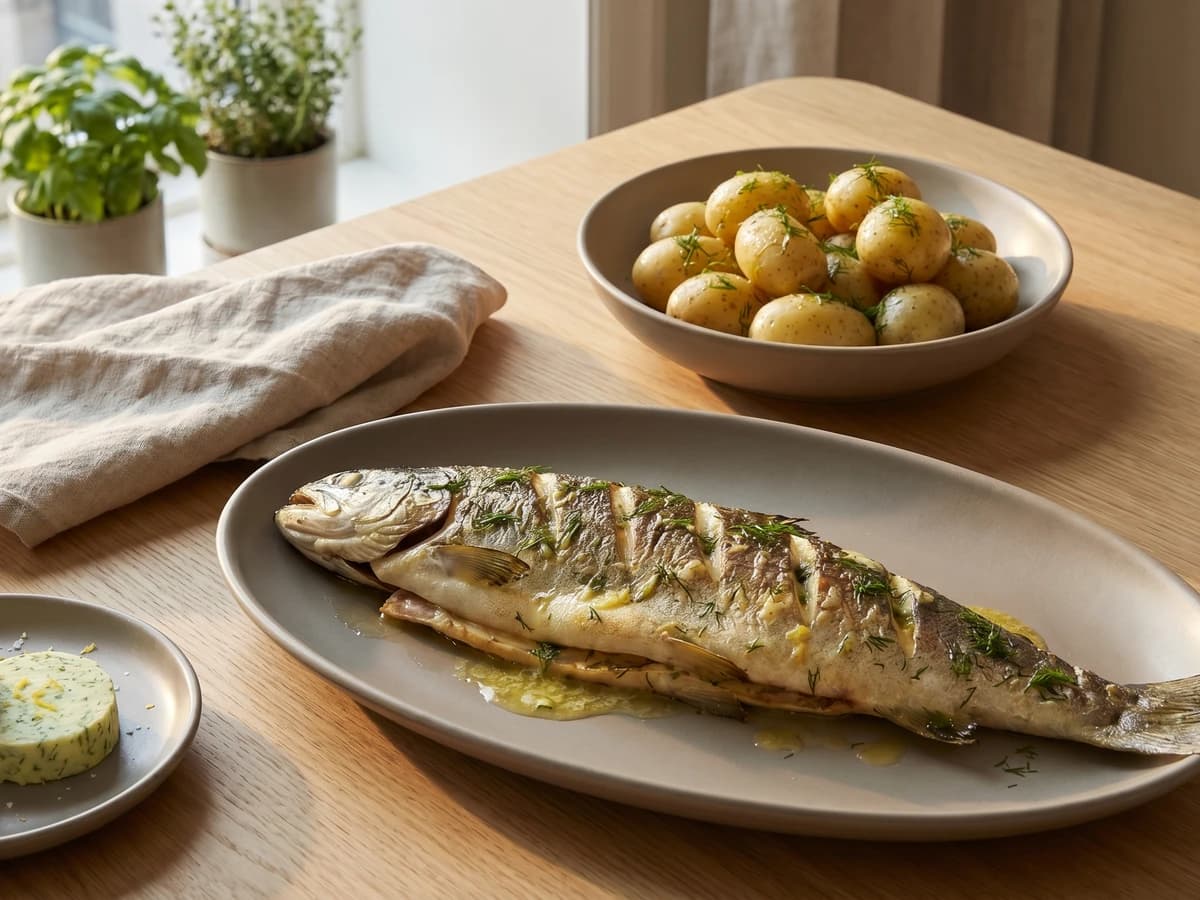
Whole sea trout baked with butter, lemon, and armfuls of dill, served beside the first nye kartofler of the season and a melting slab of dildsmor. The Danish summer table at its most generous.
Chef Freja
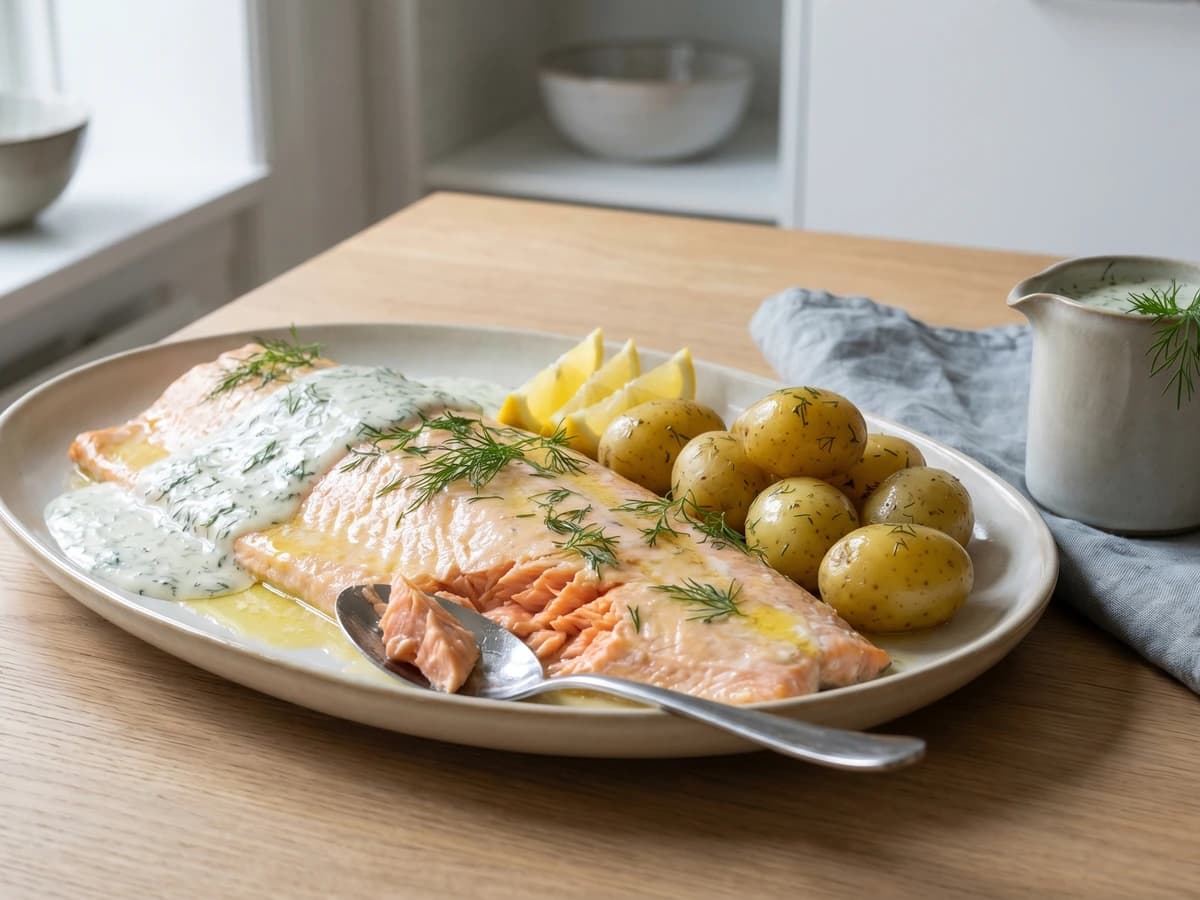
A side of salmon baked gently in butter and white wine, served warm with a bright dill cream sauce and the season's first nye kartofler. Late spring on a Danish table, cooked with love.