Chef Freja
Aebleflaesk
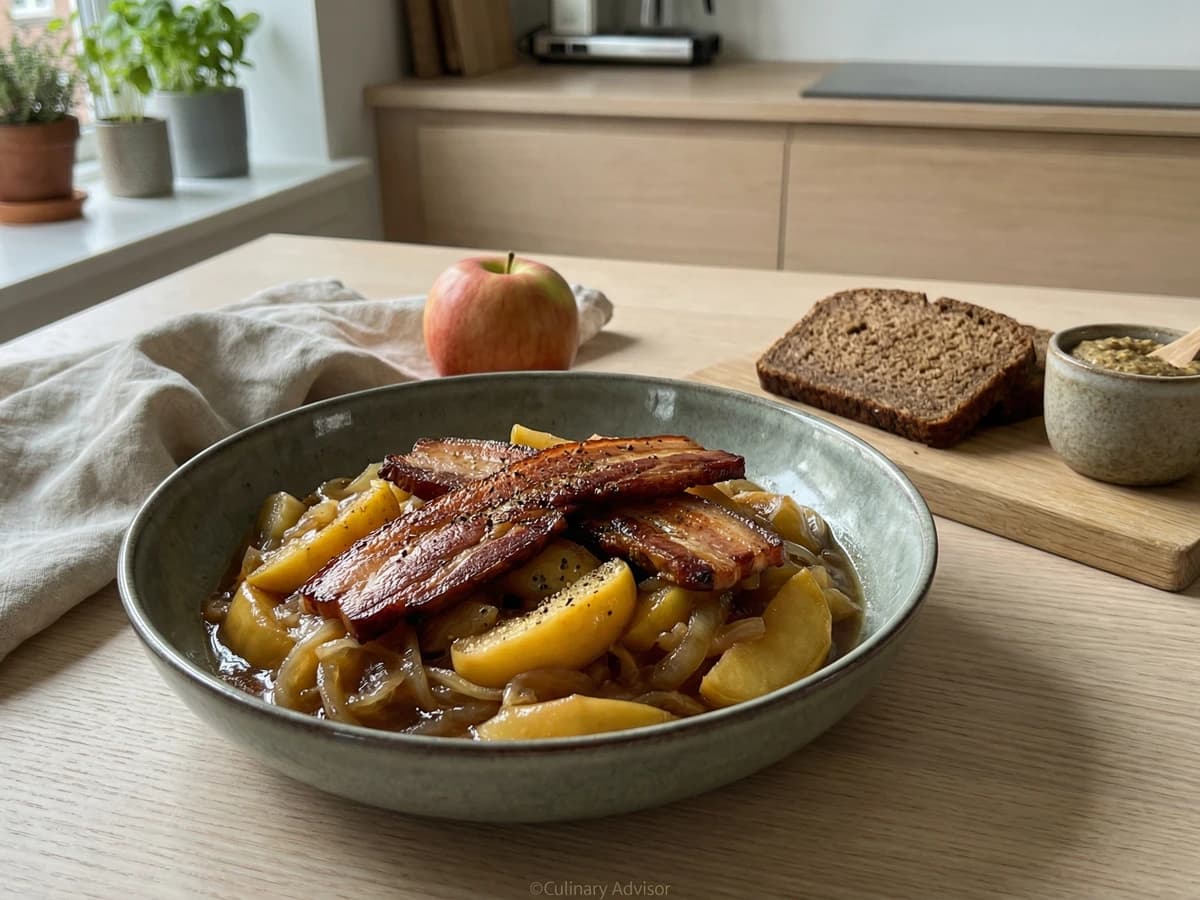
The Fyn autumn supper where thick pork belly renders slowly into its own fat, then meets apples and onions that cook down into a deep amber tangle. Sweet, salt, and the oldest pairing in the Danish larder.
A cooking platform built around craft, culture, and the stories behind what we eat.
Created by Chef Freja
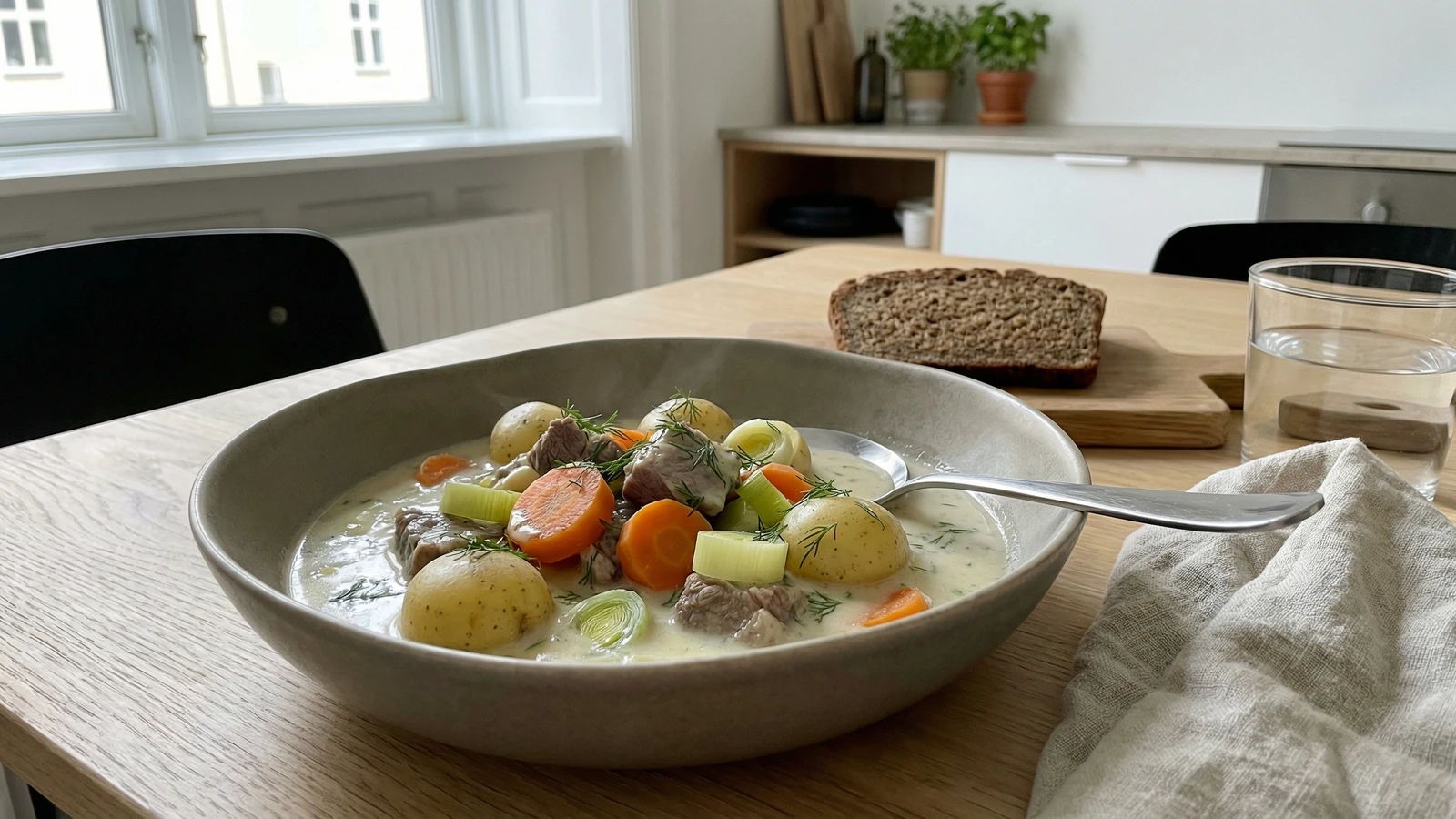
Spring lamb poached gently with new potatoes, carrots, and leeks, then finished in a pale dill sauce bright with vinegar and cream. Danish island cooking at its most honest.
Danish lamb belongs to May. That's when the first of the new season's animals come to market, lean and grass-fed, raised on salt marshes along the coasts of Jutland and the grazing fields of Bornholm and Samsø. The meat tastes of where it has been. You can cook it any way you like once the season starts, but this is the dish I reach for first, because it lets the lamb speak plainly.
Lammegryde med dild is not a browned, wine-darkened stew. It is the opposite. The lamb is poached gently in water until the broth is clear and pale, then lifted out while a butter-and-flour base is whisked smooth with the cooking liquor and finished with cream, vinegar, and a great deal of fresh dill. The result is ivory-colored and delicate, the meat silky, the vegetables holding their shape, the sauce bright with herbs. It is a dish that rewards restraint.
Two things matter most. Start the lamb in cold water and bring it up slowly, skimming the foam until the broth runs clean. That's what gives you a pale sauce later instead of a muddy one. And use real dill, a generous bunch of it, chopped fresh at the last minute. Dried dill tastes of nothing. The season decides, and in Danish spring cooking, dill is as much the point as the lamb. You'll know when the balance is right because the sauce will taste both rich and alive at once.
Lamb has been eaten in Denmark since the Iron Age, but the modern Danish affection for spring lamb owes much to the salt-marsh grazing traditions of the Wadden Sea coast in South Jutland and the island sheep-farming of Bornholm and Læsø, where the animals feed on sea thrift and wild herbs that flavor the meat directly. The technique of poaching meat in water and building a sauce from the cooking liquor, rather than browning first as in French or German cookery, is a hallmark of the old Danish kitchen and produces the pale ivory sauces, dildkød, citronfromage-colored, gently acidic, that defined Sunday dinners in farmhouses across the country well into the twentieth century. The pairing of lamb with dill specifically became popular through nineteenth-century Danish cookbooks that codified the dish as a spring counterpart to the winter's boiled beef with horseradish.
Quantity
1kg
cut into 5cm chunks
Quantity
1 large
peeled and studded with 4 whole cloves
Quantity
2
Quantity
1 teaspoon
Quantity
1.5 litres
Quantity
500g
scrubbed but left whole
Quantity
4 medium
peeled and cut into thick coins
Quantity
2 medium
white and pale green parts, sliced into 3cm rounds
Quantity
40g
Quantity
40g
Quantity
150ml
Quantity
1 tablespoon
Quantity
large bunch
finely chopped, plus extra fronds to finish
Quantity
to taste
Quantity
freshly ground, to taste
Quantity
a small pinch
to balance
Quantity
thick slices, to serve
| Ingredient | Quantity |
|---|---|
| boneless lamb shouldercut into 5cm chunks | 1kg |
| yellow onionpeeled and studded with 4 whole cloves | 1 large |
| bay leaves | 2 |
| white peppercorns | 1 teaspoon |
| cold water or light chicken stock | 1.5 litres |
| small new potatoesscrubbed but left whole | 500g |
| carrotspeeled and cut into thick coins | 4 medium |
| leekswhite and pale green parts, sliced into 3cm rounds | 2 medium |
| unsalted butter | 40g |
| plain flour | 40g |
| whipping cream | 150ml |
| white wine vinegar | 1 tablespoon |
| fresh dillfinely chopped, plus extra fronds to finish | large bunch |
| fine sea salt | to taste |
| white pepper | freshly ground, to taste |
| caster sugarto balance | a small pinch |
| dark rugbrod | thick slices, to serve |
Place the lamb in a heavy pot and cover with the cold water or stock. Bring it slowly to a gentle simmer. This is the opposite of what you might do with a French stew. You are not browning the meat. You want a pale, clean broth that carries the flavor of the lamb without clouding it, and that only happens if you start cold and rise slowly. As the water heats, a grey foam will come to the surface. Skim it off with a spoon every few minutes until the foam turns white and almost disappears.
Once the broth is clear, drop in the clove-studded onion, the bay leaves, and the white peppercorns. Add a good pinch of salt. Cover the pot with the lid slightly ajar and let it simmer gently for about an hour, until the lamb is tender enough to give way under a fork but still holds its shape. Gentle is the word. A hard boil toughens the meat and breaks the broth. You want the surface barely trembling.
Lift out the onion and bay leaves and discard them. Add the potatoes, carrots, and leeks to the pot. Simmer for another fifteen to twenty minutes, until the potatoes are tender all the way through and the carrots have softened but still hold their shape. A knife should slide into a potato with no resistance. If there is any, give it a few minutes more.
Using a slotted spoon, carefully lift the lamb and vegetables out of the pot and into a warm bowl. Cover loosely to keep them warm. Now strain the cooking liquid through a fine sieve into a jug. You should have a clear, pale, fragrant broth. This is the foundation of the sauce, and the reason the whole dish works.
Melt the butter in a clean pan over medium heat. When it foams, add the flour and whisk it into a smooth paste. Cook this roux for a minute or two, stirring constantly. You are not browning it. You want it to smell biscuity and look pale gold, no darker. A dark roux would turn the sauce the wrong color and the wrong flavor. Now ladle in the warm lamb broth a little at a time, whisking between additions. Keep going until you have added about 700ml and the sauce is smooth and the consistency of thick cream.
Let the sauce simmer for five minutes to cook out any floury taste. Stir in the cream and bring it back to a gentle simmer. Add the white wine vinegar, then the chopped dill, keeping back a small handful for the top. Taste. The sauce should be rich but bright, with the dill forward and the vinegar lifting everything. Adjust with salt, a grind of white pepper, and a tiny pinch of sugar if it needs rounding. The balance between cream and acidity is what makes this dish, and only by tasting do you really understand it.
Return the lamb and vegetables to the sauce. Warm everything through over a very gentle heat for two or three minutes. Don't let it boil again, or the cream can split. Ladle into deep bowls, scatter with the reserved dill, and serve at once with thick slices of dark rugbrod alongside for soaking up what's left in the bowl. Tak for mad.
1 serving (about 580g)
Culinary guides, cultural storytelling, and the editorial depth that makes cooking meaningful.
Discover Culinary ExplorerChef Freja
The Fyn autumn supper where thick pork belly renders slowly into its own fat, then meets apples and onions that cook down into a deep amber tangle. Sweet, salt, and the oldest pairing in the Danish larder.

Chef Freja
Warm Danish apple soup for the first cool evenings of autumn. Tart apples simmered with cinnamon and lemon peel, thickened to a soft gloss, and served with cold cream and buttery toasted oats.

Chef Freja
Danish white asparagus velouté with tiny veal meatballs, flour dumplings, and bright green tips scattered on the surface. The Easter soup of Copenhagen, built from five small pans of spring.
Chef Freja
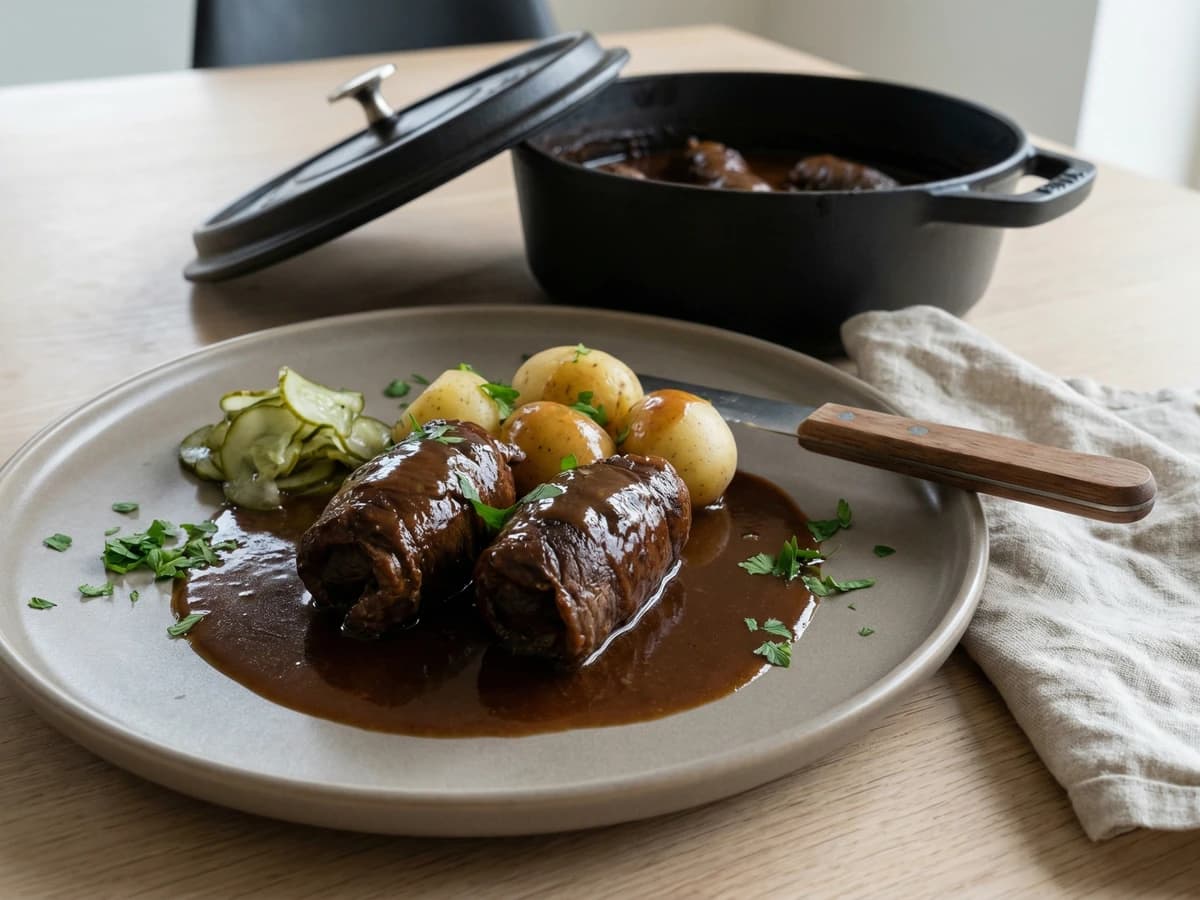
Thin beef slices rolled around bacon and onion, tied with string, and braised slowly in a dark glossy gravy finished with cream and redcurrant jelly. Danish Sunday dinner at its most comforting.