
Chef Freja
Andelår med Rødkål
Slow-roasted duck legs with crisp, deeply golden skin, served with braised red cabbage and caramelized potatoes. The weeknight Danish duck that proves the best part of the bird is the one that takes its time.
A cooking platform built around craft, culture, and the stories behind what we eat.
Created by Chef Freja
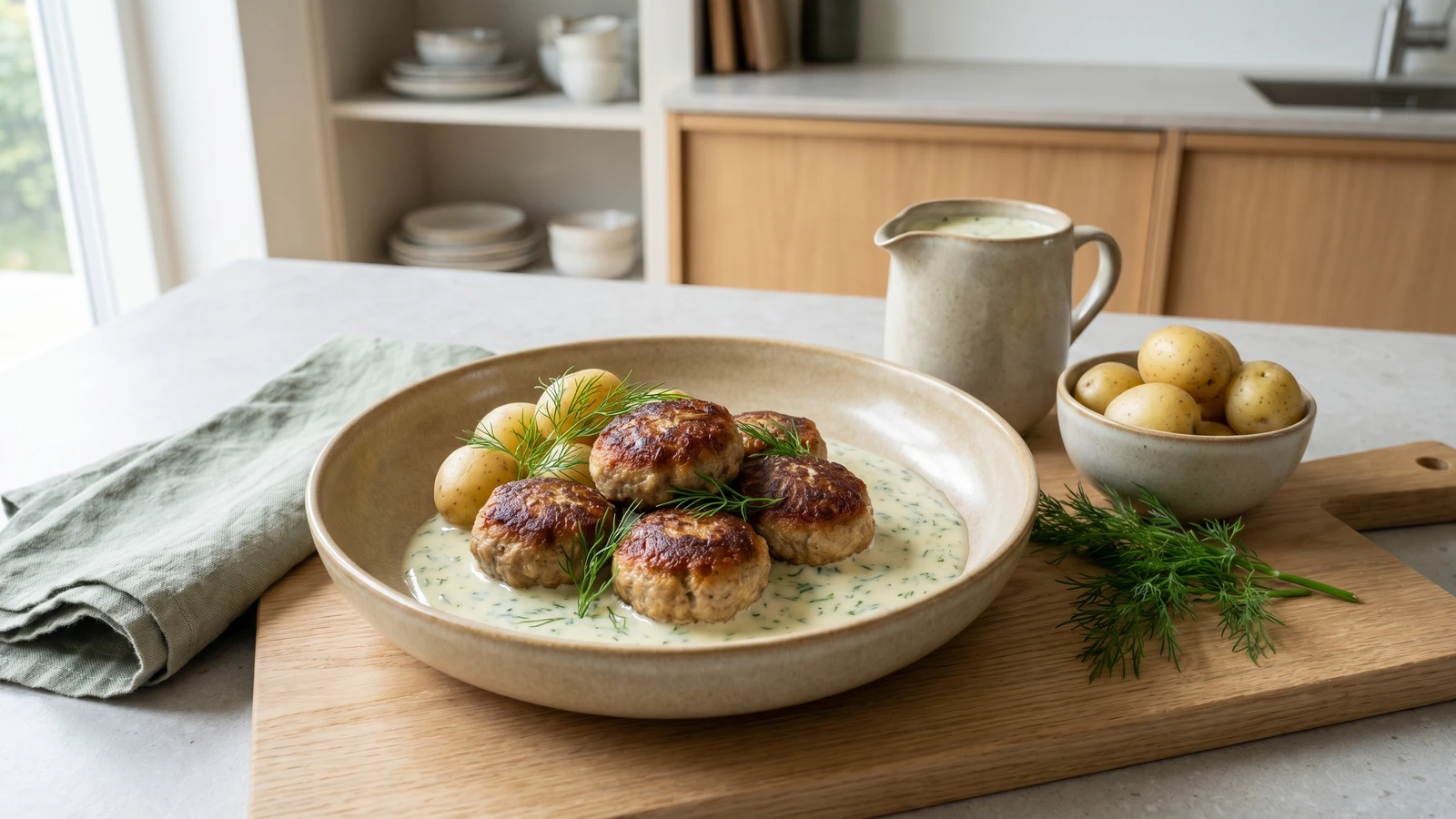
Lamb frikadeller pan-fried until golden in butter, resting in a pool of creamy dill sauce. The Easter table version of Denmark's most-loved weeknight dinner, with new potatoes and the first dill of spring.
There's a shift that happens in Danish kitchens around Easter. The root vegetables recede. The heavy braises go quiet. Lamb appears at the butcher, and with it, the first bunches of greenhouse dill, impossibly green against the wax paper. This is when lammefrikadeller come to the table.
Frikadeller are the closest thing Denmark has to a national dish, and most of the year they're made with pork or a pork-and-veal mix. But in spring, when lamb is young and sweet and carries less of the muttony weight it picks up later in the year, the whole tradition tilts. You make the mixture the same way (sparkling water and all), shape the patties the same way (oval, slightly flat, never round), and fry them in butter and oil until the crust goes deep gold. What changes is the flavor. Lamb gives the frikadeller a richness that pork doesn't have, something earthy and warm that pairs with dill the way few things do.
The sauce is the heart of this dish. Dildsovs is a simple white sauce built on a roux and finished with a generous handful of fresh dill and a splash of vinegar. Don't underestimate it. That vinegar is what keeps the sauce bright and stops it from tipping into heaviness. I want you to taste the sauce before you serve it. If it doesn't make you want to eat it with a spoon, add more dill, more vinegar, more salt. You'll know when it's right.
Frikadeller appear in Danish cookbooks as early as the 1700s, the word arriving from French via German (fricadelle), but the lamb variation belongs specifically to the Easter kitchen, when spring lamb has been the celebratory protein in Denmark since at least the medieval period. Dildsovs, the flour-thickened dill sauce, is part of a family of Danish white sauces (persillesovs, sennepssovs, kaperssovs) that date to the 18th and 19th centuries, when French-influenced cream sauces were domesticated into the simpler Danish kitchen. The pairing of lamb and dill in a single dish is one of those combinations so old that nobody remembers who first put them together, only that it tastes like late March and the year turning.
Quantity
500g
not too lean
Quantity
1 small
finely grated
Quantity
1 large
Quantity
3 tablespoons
Quantity
100ml
cold
Quantity
1 teaspoon
Quantity
½ teaspoon
Quantity
½ teaspoon
Quantity
30g
Quantity
1 tablespoon
Quantity
40g
Quantity
3 tablespoons
Quantity
400ml
Quantity
200ml
Quantity
large bunch
finely chopped
Quantity
1 tablespoon
Quantity
to taste
Quantity
to taste
Quantity
to serve
boiled
| Ingredient | Quantity |
|---|---|
| ground lambnot too lean | 500g |
| onionfinely grated | 1 small |
| egg | 1 large |
| plain flour (for the meatballs) | 3 tablespoons |
| sparkling watercold | 100ml |
| fine sea salt | 1 teaspoon |
| white pepper | ½ teaspoon |
| ground cumin | ½ teaspoon |
| unsalted butter (for frying) | 30g |
| neutral oil | 1 tablespoon |
| unsalted butter (for the sauce) | 40g |
| plain flour (for the sauce) | 3 tablespoons |
| chicken or lamb stock | 400ml |
| whole milk | 200ml |
| fresh dillfinely chopped | large bunch |
| white wine vinegar | 1 tablespoon |
| fine sea salt (for the sauce) | to taste |
| white pepper (for the sauce) | to taste |
| new potatoesboiled | to serve |
Put the ground lamb in a large bowl. Add the grated onion, egg, flour, salt, white pepper, and cumin. Pour in the cold sparkling water. Now mix it with a fork, working in one direction, until the mixture becomes cohesive and slightly sticky. This takes a minute or two. The sparkling water does something that still water can't: the bubbles create tiny air pockets inside the mixture, and those pockets survive the frying, giving you frikadeller that are lighter than they have any right to be. Let the mixture rest in the fridge for fifteen minutes. Cold mixture holds its shape in the pan.
Wet your hands with cold water. Take a generous tablespoon of the mixture and shape it into an oval patty, about the size of a small egg, then flatten it slightly. You're not making round meatballs. Danish frikadeller are oval and a little flat, which gives you more surface in contact with the pan and more of that golden crust where the flavor concentrates. You should get about sixteen pieces.
Heat the butter and oil together in a large, heavy frying pan over medium heat. Butter alone burns before the centers cook through. Oil alone tastes like nothing. Together they give you the golden crust and the nutty richness that makes these taste right. When the butter foams and the foam begins to subside, lay the frikadeller in the pan without crowding them. You may need to work in two batches. Cook for three to four minutes on each side. Don't move them once they're down. Let the heat do its work. When you flip them, the underside should be deep golden brown and firm enough to turn without breaking. The lamb fat will render into the pan and the kitchen will smell like spring.
In a separate saucepan, melt the 40g of butter over medium heat. Add the flour and stir continuously for two minutes. This is a roux, and the reason you cook it is to get rid of the raw flour taste that would otherwise haunt the finished sauce. The roux should turn a shade paler and smell biscuity, not toasted. You're not browning it. You want a blonde roux that will keep the sauce pale and clean.
Pour in the stock in a slow, steady stream, whisking constantly. The whisk matters. A spoon leaves lumps. A whisk breaks them apart before they form. Once all the stock is in and the sauce is smooth, add the milk. Bring everything to a gentle simmer and let it cook for eight to ten minutes, stirring often, until the sauce has thickened enough to coat the back of a spoon. It should be the consistency of single cream, not thick paste. If it goes too thick, add a splash more milk.
Take the sauce off the heat. Stir in the chopped dill and the white wine vinegar. The vinegar is quiet but essential: it lifts the richness of the butter and milk and gives the sauce a brightness that keeps it from feeling heavy. Season with salt and white pepper. Taste it. The sauce should taste of dill first, cream second, and a gentle acidity underneath that pulls everything together. Be generous with the dill. More than you think. That green running through the white sauce is half the beauty of this dish.
Nestle the fried frikadeller into the warm sauce, spooning it gently over the top so each one is half-coated. Let them sit for two or three minutes in the sauce over the lowest heat. This is not more cooking. This is the moment when the lamb and the dill and the cream find each other and become one dish instead of two. Serve in the pan or on a warm plate with boiled new potatoes alongside. A spoonful of the sauce over the potatoes is not optional. That's how it's done. Tak for mad.
1 serving (about 320g)
Culinary guides, cultural storytelling, and the editorial depth that makes cooking meaningful.
Discover Culinary ExplorerChef Freja
Slow-roasted duck legs with crisp, deeply golden skin, served with braised red cabbage and caramelized potatoes. The weeknight Danish duck that proves the best part of the bird is the one that takes its time.

Chef Freja
The whole roasted duck of juleaften, stuffed with tart apples and dark prunes, slow-roasted for four patient hours until the skin crackles like something earned and the meat underneath gives way without resistance.
Chef Freja
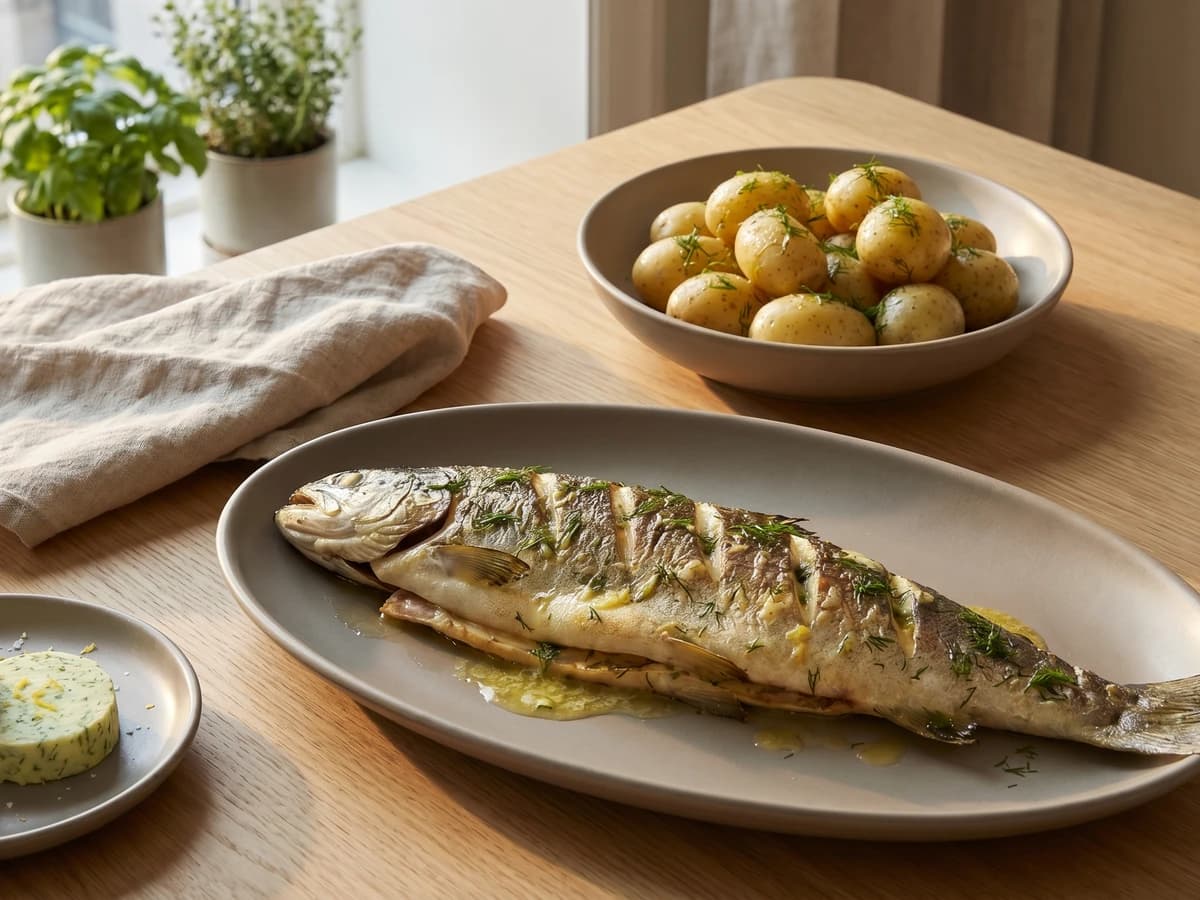
Whole sea trout baked with butter, lemon, and armfuls of dill, served beside the first nye kartofler of the season and a melting slab of dildsmor. The Danish summer table at its most generous.
Chef Freja
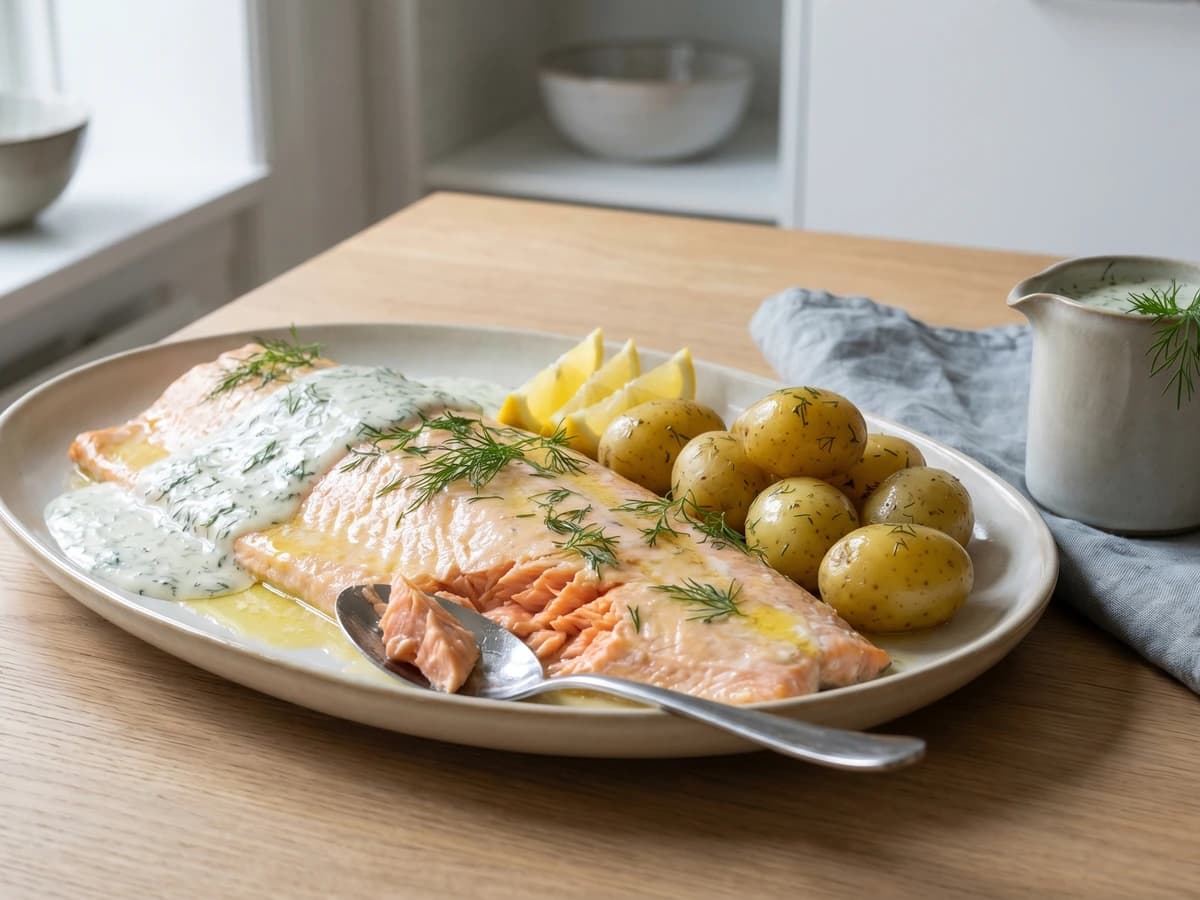
A side of salmon baked gently in butter and white wine, served warm with a bright dill cream sauce and the season's first nye kartofler. Late spring on a Danish table, cooked with love.