
Chef Thomas
A Proper Chicken Broth
Sunday's roast chicken, simmered slowly on Monday with carrots, celery, leeks, and thyme into a bowl of clear, golden broth that smells like the kitchen is paying attention.
A cooking platform built around craft, culture, and the stories behind what we eat.
Created by Chef Thomas
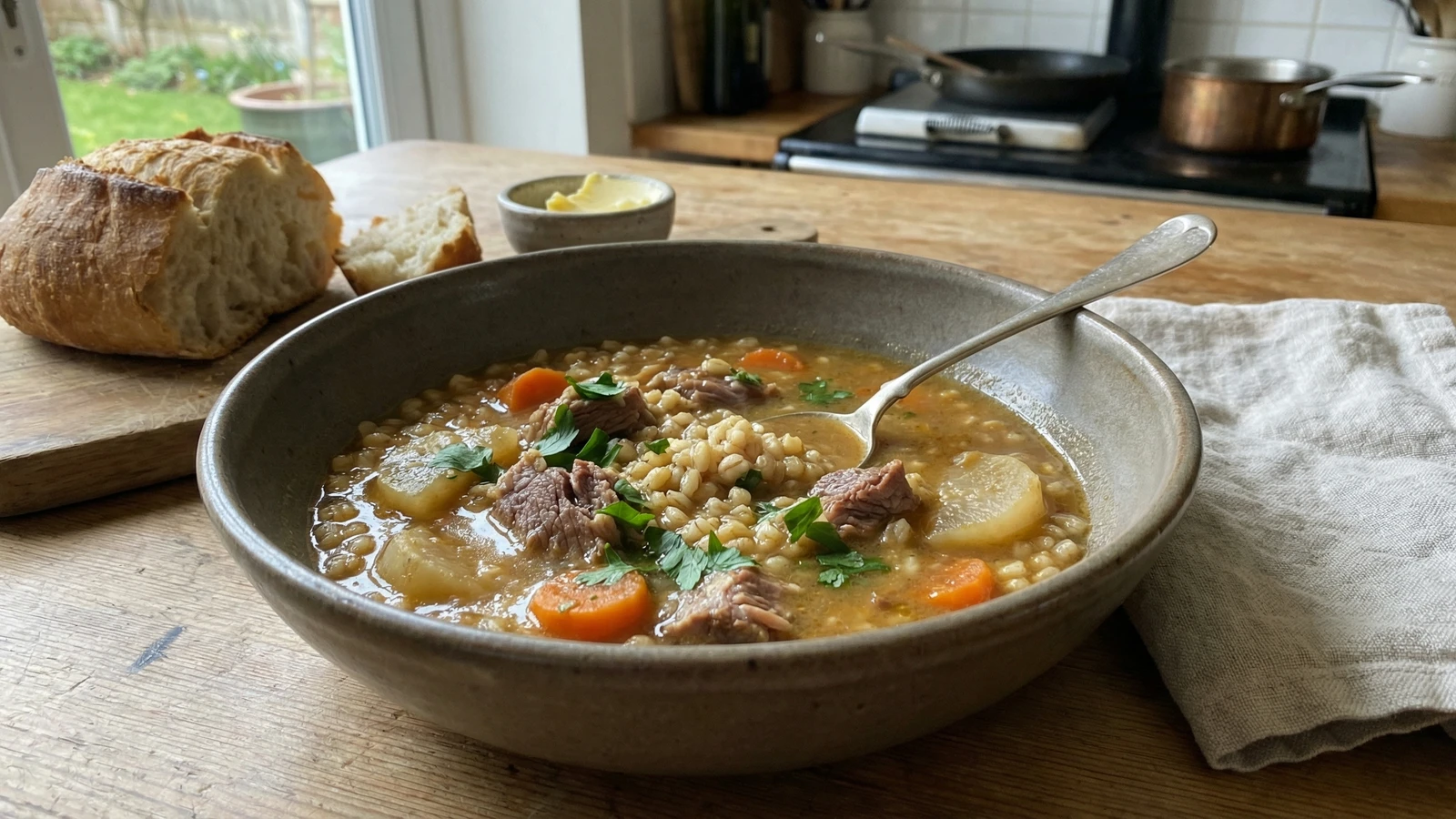
Lamb shoulder braised slowly with pearl barley until the meat gives way and the broth turns thick and savoury, the kind of bowl you build a cold evening around and remember on warmer ones.
January. The garden is bare and the light goes by four. The kind of afternoon where you come in from the cold and the kitchen feels like the warmest room in the house, which it is, because something has been on the hob since lunch.
This is not a quick supper. It asks for a couple of hours of your time, most of it spent doing nothing while the pot does the work. Lamb shoulder, cut on the bone so the marrow enriches the broth as it cooks. Pearl barley that swells and softens and thickens the liquid into something halfway between soup and stew. Carrots, turnips, celery, the winter roots that are at their best right now, sweet from the cold ground. It's the kind of cooking that rewards patience, not skill.
I make this when the weather turns properly bitter and the notebook gets its first entry of the new year. The market decides what goes in: sometimes a swede instead of turnips, sometimes a parsnip finds its way in. A recipe is a conversation, not a contract. The bones are the only non-negotiable. They give the broth a richness and body that meat alone can't manage, a silky quality you feel on your lips before you taste it on your tongue.
It's better the next day. I wrote that in the notebook years ago and it's still true. The barley continues to drink up the broth overnight, the flavours settle and deepen, and reheating it fills the kitchen with that same smell all over again. We're only making dinner. But sometimes dinner is the best thing that happens all day.
Quantity
800g, bone in
cut into large chunks
Quantity
2 tablespoons
Quantity
2
peeled and roughly chopped
Quantity
3
peeled and cut into thick rounds
Quantity
3 sticks
sliced
Quantity
2 cloves
crushed
Quantity
150g
rinsed
Quantity
2
Quantity
a few sprigs
Quantity
1 tablespoon
Quantity
1.5 litres
Quantity
2 medium
peeled and cut into chunks
Quantity
a handful
roughly chopped
Quantity
to taste
Quantity
to taste
| Ingredient | Quantity |
|---|---|
| lamb shouldercut into large chunks | 800g, bone in |
| olive oil | 2 tablespoons |
| onionspeeled and roughly chopped | 2 |
| carrotspeeled and cut into thick rounds | 3 |
| celerysliced | 3 sticks |
| garliccrushed | 2 cloves |
| pearl barleyrinsed | 150g |
| bay leaves | 2 |
| thyme | a few sprigs |
| tomato purée | 1 tablespoon |
| lamb or chicken stock | 1.5 litres |
| turnipspeeled and cut into chunks | 2 medium |
| flat-leaf parsleyroughly chopped | a handful |
| fine sea salt | to taste |
| black pepper | to taste |
Pat the lamb dry. This matters. Wet meat steams instead of browning, and browning is where the flavour begins. Heat the olive oil in a large, heavy pot over a high heat until it shimmers. Add the lamb in batches, giving each piece space in the pan. Don't crowd them or they'll turn grey and sad. You want a proper, deep brown crust on at least two sides. It takes three or four minutes a side, and the kitchen will start to smell like something worth coming home to. Set the browned pieces aside on a plate.
Turn the heat down to medium. Add the onions, carrots, and celery to the same pot with all its sticky, dark residue. A pinch of salt. Stir them around, scraping up what the lamb left behind, because that's concentrated flavour stuck to the bottom and it belongs in the stew. Let the vegetables soften for eight to ten minutes, until the onions have gone translucent and the kitchen smells sweet and savoury at once. Add the garlic and the tomato purée, stir for a minute until the raw edge comes off.
Return the lamb and any resting juices to the pot. Add the pearl barley, bay leaves, and thyme. Pour in the stock. It should come up to just cover everything. If it doesn't, add a splash of water. Bring it to a simmer, then turn the heat to the lowest setting your hob will manage. Put the lid on, slightly ajar to let a wisp of steam escape, and leave it alone for an hour.
After an hour, add the turnips. Stir gently. The barley will have started to swell and the broth will already be thicker than when you began. Put the lid back on and cook for another hour to hour and a half, checking now and then. You're looking for lamb that falls apart when you press it with a spoon, barley that's plump and tender but still has a bit of bite, and a broth that coats the back of a spoon. If it's getting too thick, add a splash of stock or water. If it's too thin, take the lid off for the last twenty minutes.
Fish out the bay leaves and thyme stalks. Season with salt and pepper. Taste it. Then taste it again. The broth should be savoury and deep, the lamb should be giving and soft, the barley should have thickened everything into something that sits between a soup and a stew. Ladle it into warm bowls, scatter the parsley over the top, and put it on the table with good bread and cold butter. There are few better feelings than putting a warm plate in front of someone on a night like this.
1 serving (about 490g)
Culinary guides, cultural storytelling, and the editorial depth that makes cooking meaningful.
Discover Culinary ExplorerChef Thomas
Sunday's roast chicken, simmered slowly on Monday with carrots, celery, leeks, and thyme into a bowl of clear, golden broth that smells like the kitchen is paying attention.
Chef Thomas
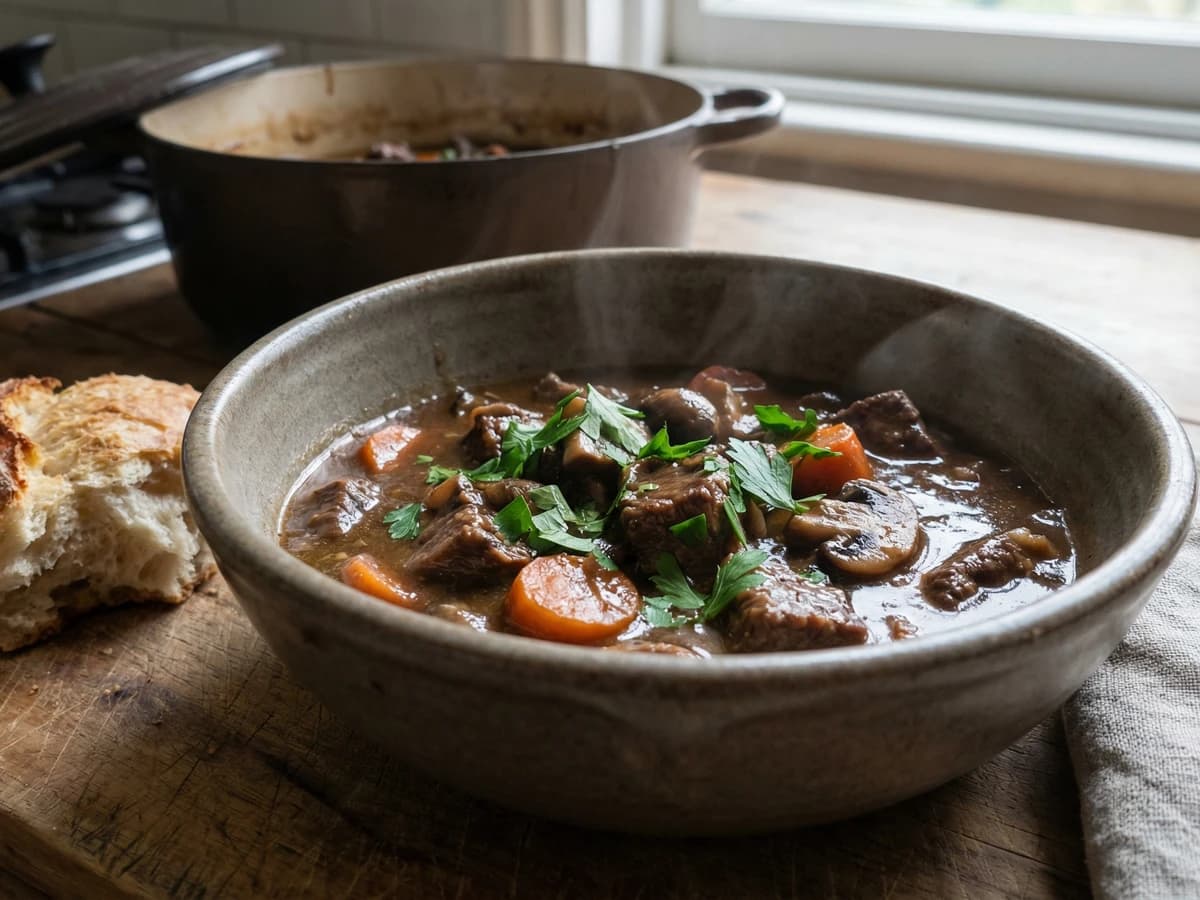
Braising steak surrendered to dark ale and slow time, with onions and mushrooms, until the gravy turns thick and malty and the kitchen smells like the kind of evening you want to stay in for.

Chef Thomas
Beef shin and pearl barley simmered low and slow with root vegetables until the meat gives way and the broth thickens into something between a soup and a stew, the kind of bowl that steadies you on a cold night.
Chef Thomas
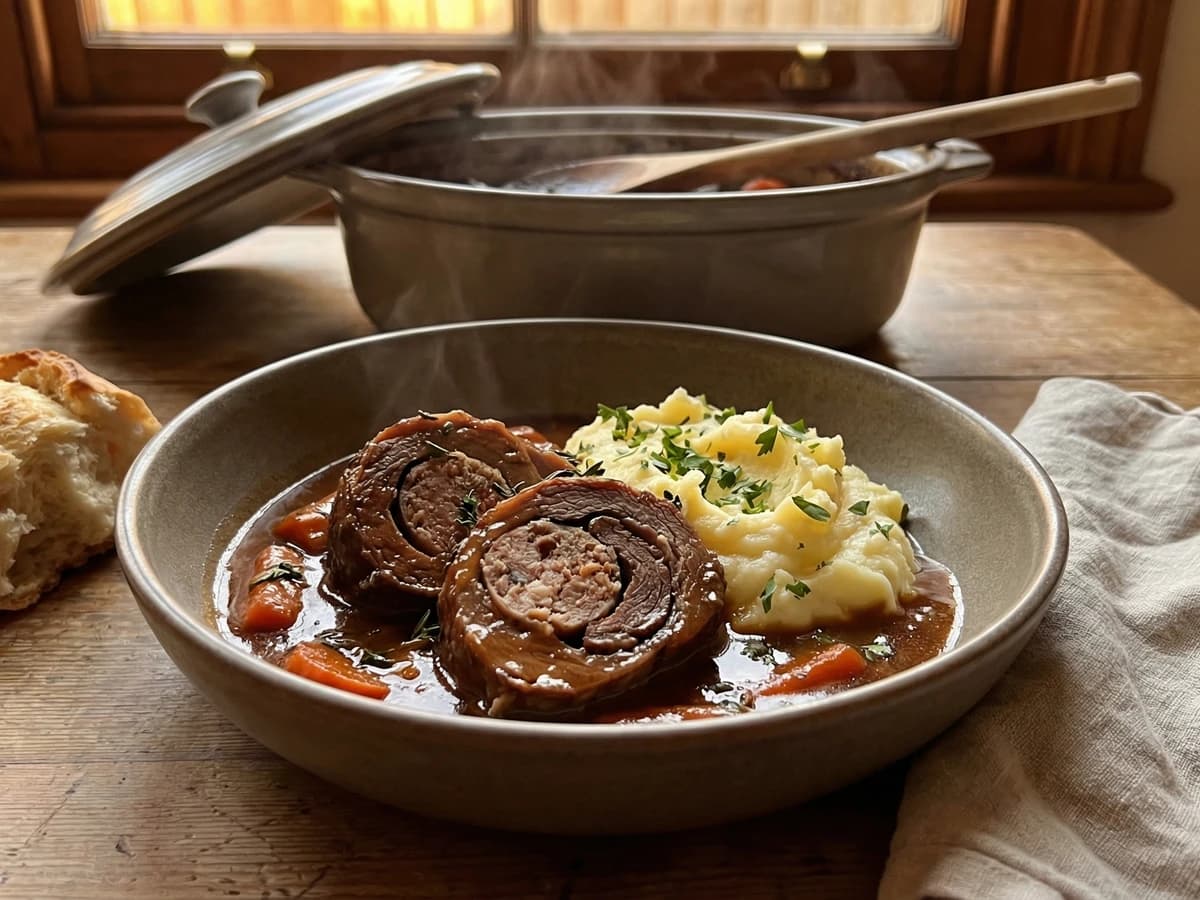
Thin slices of beef rolled around a stuffing of sausage meat and herbs, browned in butter, and braised for two patient hours until the meat yields and the gravy turns dark and rich and worth mopping up with bread.