
Chef Takumi
Ago Dashi (あごだし, grilled flying fish stock)
Ago dashi is quiet luxury: roasted flying fish, konbu, and patient water. Steep it slowly and you get a clear stock that tastes sweet, clean, and full without heaviness.
A cooking platform built around craft, culture, and the stories behind what we eat.

Created by
Senmaizuke asks for one good winter turnip, sliced thin enough to turn translucent, then left under weight with konbu and sweet rice vinegar until it softens into quiet elegance.
Senmaizuke begins with winter, and with a turnip large enough to make you wonder whether the vegetable has ambitions. Shōgoin kabu, the great round Kyoto turnip, is the one we want. When it is at its prime, shun, the flesh is pale, sweet, and full of water, and the pickle needs very little help.
The fear is the slicing. People hear "a thousand sheets" and imagine a specialist's knife, a silent room, and probably a small committee judging them. No. The name is poetry with a practical instruction inside it: slice the turnip thin, even, and broad, so salt can draw out water quickly and the vinegar can enter without making the flesh harsh. A mandoline does honest work here. An usuba knife is beautiful, but thinness matters more than showing off.
The first salting is not optional. Salt pulls water from the turnip, firms the flesh, and leaves room for the sweet rice vinegar to season it cleanly. Skip that step and the pickle tastes watery, because water is still sitting where flavor should be. Layer in konbu for the quiet sea depth and a little slickness, add a red chile if you like its edge, then weight the stack and leave it alone. This is honmono made by patience, not by complication.
On the table, senmaizuke belongs with the small dishes, tsukemono that sharpen the rice and calm the richer plates around New Year. Serve only a few folded sheets in a small dish, with a strip of konbu among them. Leave it room. A pickle this pale speaks best when nobody crowds it.
Senmaizuke is counted among Kyoto's three famous pickles, along with suguki and shibazuke, and is closely tied to Shōgoin kabu, a large Kyoto turnip cultivated in the city's Shōgoin area. The pickle is often traced to the late Edo period, when Ōfuji Tōkichi, associated with kitchens serving the Kyoto Imperial Palace, adapted thin-sliced turnip into a refined vinegar pickle. Its name means "thousand-sheet pickle," a reference to the many thin, overlapping slices rather than a literal count.
Quantity
1 large (about 1kg)
peeled and sliced very thin
Quantity
2 tablespoons
Quantity
1 piece (about 10g)
wiped and cut into thin strips
Quantity
1
seeded and sliced into thin rings
Quantity
1/2 cup
Quantity
1/3 cup
Quantity
2 tablespoons
Quantity
1 teaspoon
| Ingredient | Quantity |
|---|---|
| Shōgoin kabu or other large white turnippeeled and sliced very thin | 1 large (about 1kg) |
| fine sea salt | 2 tablespoons |
| konbu (dried kelp)wiped and cut into thin strips | 1 piece (about 10g) |
| dried red chile (optional)seeded and sliced into thin rings | 1 |
| rice vinegar | 1/2 cup |
| sugar | 1/3 cup |
| mirin | 2 tablespoons |
| usukuchi shōyu (light soy sauce) (optional) | 1 teaspoon |
Choose a heavy winter Shōgoin kabu if you can find one, with taut white skin and no spongy give at the stem end. Sourcing comes first here. A tired turnip makes a tired pickle, and no vinegar will rescue it.
Peel the turnip thickly enough to remove the fibrous outer layer, then slice it into very thin rounds, about 1 to 2mm thick. Use a mandoline if that gives you even slices. Evenness is the point, because thick pieces stay raw and stubborn while thin ones become translucent and tender.
Layer the turnip slices in a nonreactive bowl, sprinkling the salt between layers. Set a plate directly on the surface and add a weight. Leave for 2 to 3 hours, until the slices bend softly and a clear pool of water has gathered. The salt is drawing out excess water now so the vinegar can season the turnip later instead of being diluted by it.
Drain the turnip, then rinse briefly under cold water to remove surface salt. Press the slices gently between your palms or in a clean towel until damp but not crushed. Don't wring them hard. You want flexible sheets, not bruised pulp.
Warm the rice vinegar, sugar, mirin, and usukuchi shōyu just enough to dissolve the sugar, then let the brine cool completely. Cooling matters because hot brine would cook the turnip's surface and dull its pale, clean bite. Taste it: it should be sweet-tart and bright, not syrupy.
In a clean nonreactive container, layer the turnip slices with strips of konbu and a few chile rings if using. Pour the cooled brine over the top. The konbu gives body and quiet depth, and the chile adds only a small edge. This is a pale pickle, not a shouting one.
Press a piece of parchment or plastic wrap onto the surface, set a plate on top, and add a light weight. Refrigerate overnight, 12 to 24 hours. The slices are ready when they look faintly translucent, bend without cracking, and carry a clean sweet-sour fragrance from the vinegar and konbu.
Lift out a few slices, fold or overlap them loosely, and serve with a strip of the softened konbu. Keep the portion small. Tsukemono are there to sharpen the meal, not take over the tray.
1 serving (about 140g)
Culinary guides, cultural storytelling, and the editorial depth that makes cooking meaningful.
Discover Culinary ExplorerChef Takumi
Ago dashi is quiet luxury: roasted flying fish, konbu, and patient water. Steep it slowly and you get a clear stock that tastes sweet, clean, and full without heaviness.
Chef Takumi
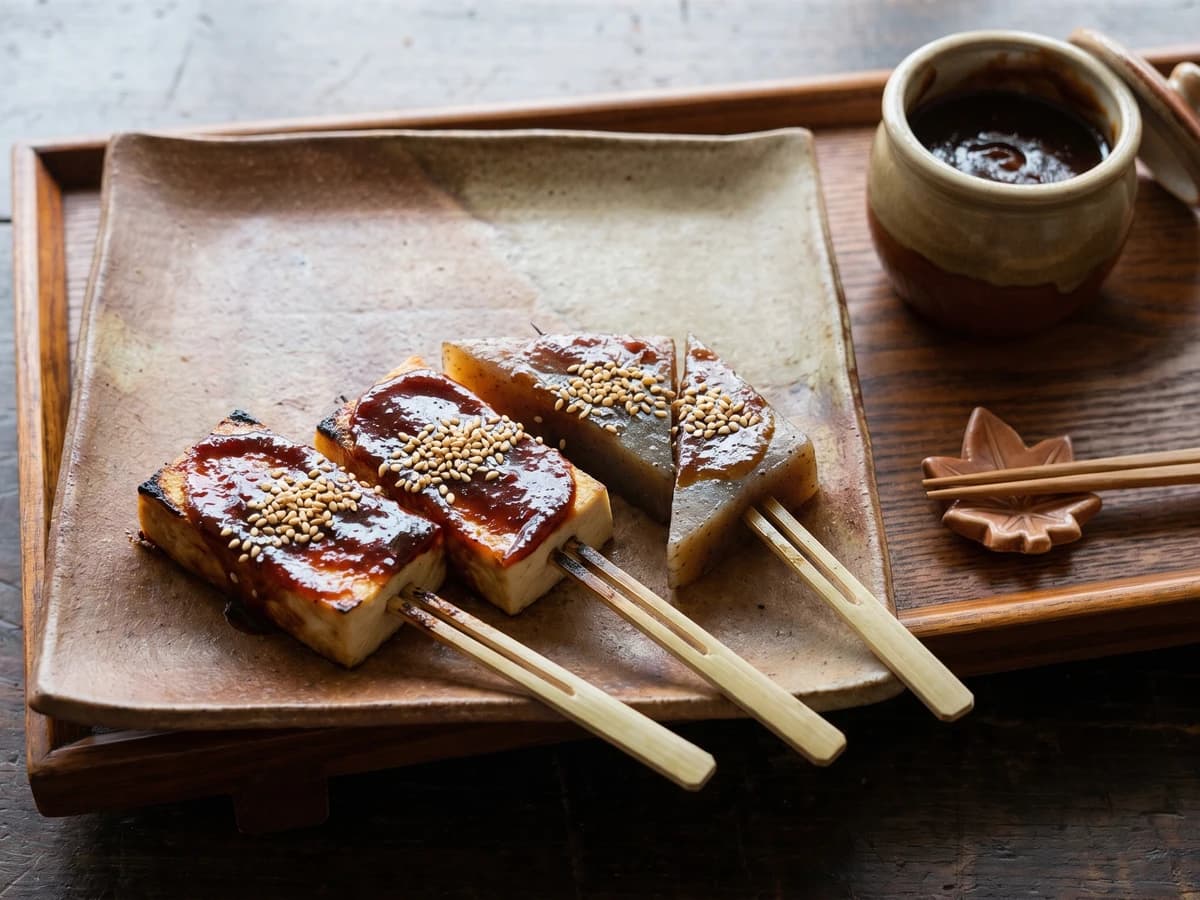
Akamiso dengaku-miso is plain work: bean miso, sweetness, sake, and patient stirring until the glaze turns dark, glossy, and thick enough to cling to the grill.
Chef Takumi
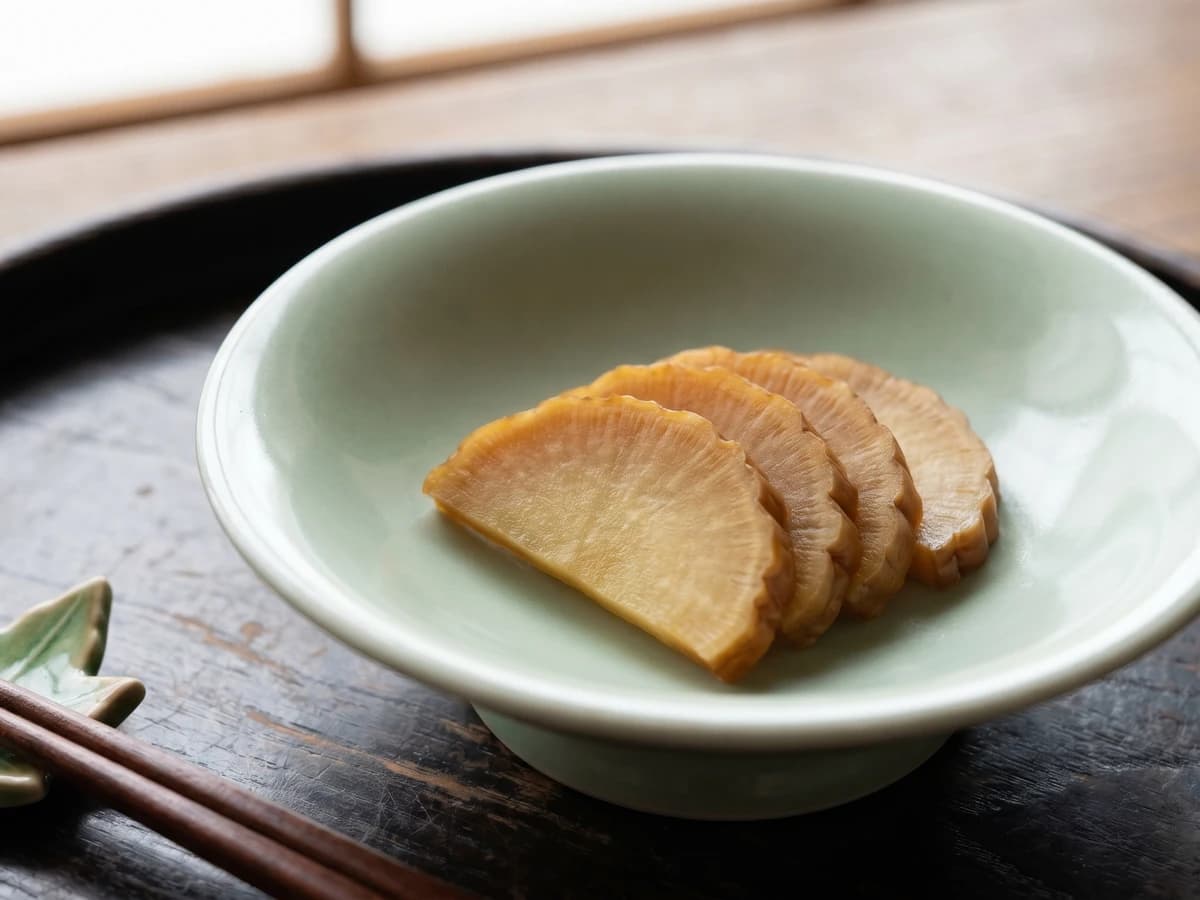
Snow-country takuan begins with smoke. Hang the daikon, dry it gently, then let rice bran, salt, and time turn it into Akita's amber pickle.

Chef Takumi
Aso takanazuke is spring caught in salt: sharp mustard greens pressed until they soften, fermented until their edge turns round, then fried briefly with sesame for rice.