
Chef Lesia
Buryakovyi Salat (буряковий салат, raw beet salad)
The beet stays raw, so the salad bites back: crimson, garlicky, nutty, slick with green sunflower oil, and ready before the bread is on the table.
A cooking platform built around craft, culture, and the stories behind what we eat.
Created by
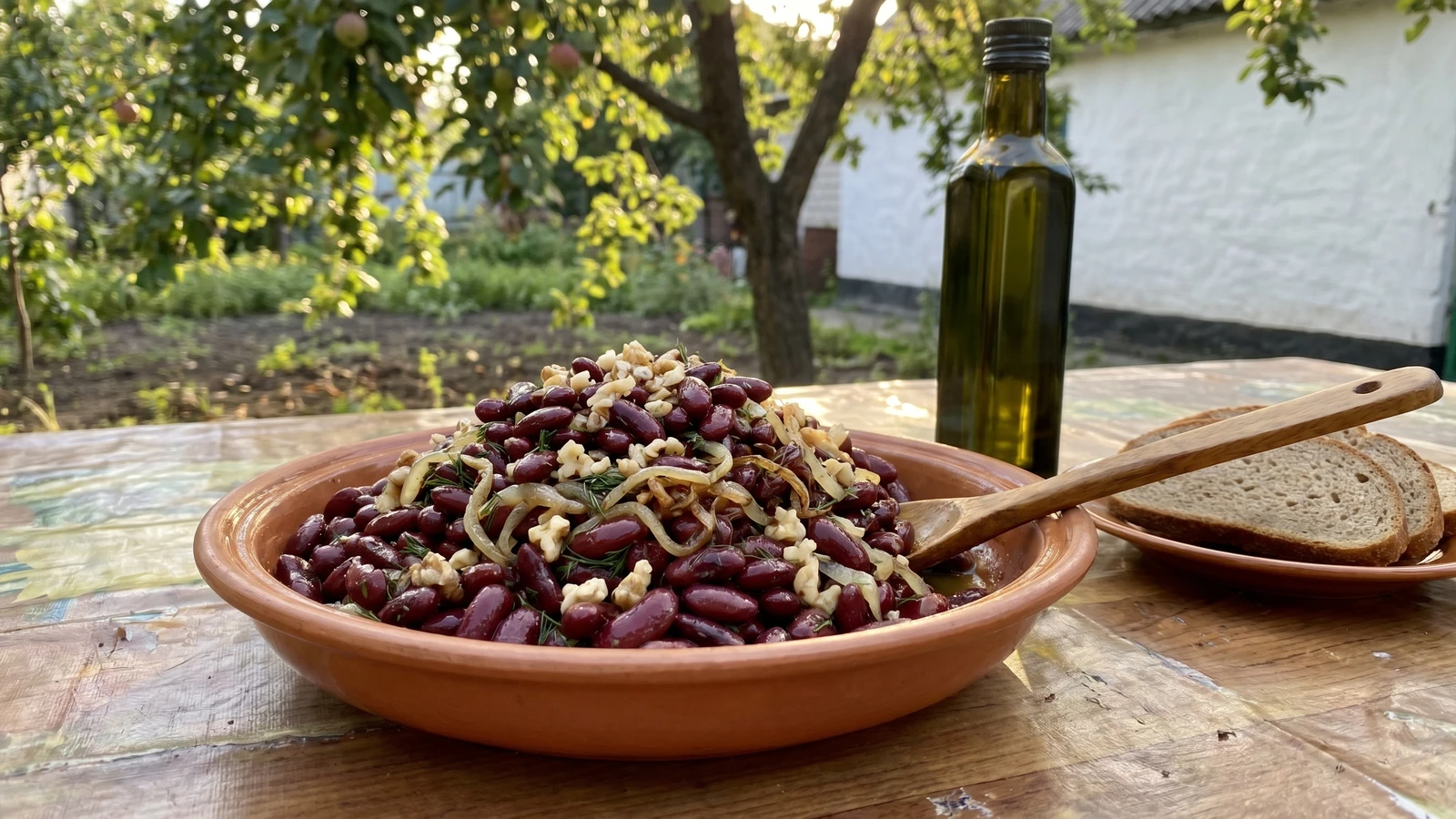
Kidney beans go glossy and dark under fried onion oil, crushed walnuts, and garlic. This is the salad you bring to a potluck when nobody asked you to make dinner, but you did.
The beans are not the quiet part. They come out of the pot burgundy and swollen, then they drink the fried onion oil until every skin shines, every walnut crumb catches garlic, and the bowl starts looking less like a salad and more like lunch with its elbows on the table.
This is a southern-leaning bowl for lean weeks, fast tables, and the sort of gathering where someone says, "just bring something small," then thirty people arrive. The trick is not decoration. Cook the beans until their middles are creamy, not chalky, and dress them while they're warm so the oil, garlic, and onion slip under the skins instead of sitting on top like a coat.
Aunt Nadia wrote beans in one letter with no quantity at all, only "until they stop knocking." She meant that dry rattle in the spoon when beans are not ready. You'll hear it change: sharp little stones at first, then a soft, padded sound as they turn tender. My hands remember that sound now.
Use unrefined sunflower oil if you can. Green-gold, nutty, almost grassy, Ukraine in a bottle of oil. It binds the walnuts and the garlic, carries the sweet onion through the beans, and turns a cheap pot into enough for eight guests or one hungry Ukrainian.
Kvasolia, beans, became deeply rooted in Ukrainian home cooking after common beans spread through Europe from the Americas, and by the nineteenth century they were ordinary food across village kitchens, especially where meat was kept for feast days. This walnut, garlic, and fried-onion version leans toward Bessarabia and the Black Sea south-west, today's Odesa region and neighbouring Moldovan and Gagauz kitchens, where beans, nuts, peppers, and sunflower oil meet easily on the table. Soviet cafeterias made bean salads look grey and tired; home cooks kept the sharper bowl alive with garlic, dill, good oil, and enough onion to make the whole room pay attention.
Quantity
500g
soaked overnight
Quantity
1
Quantity
1
halved, for the bean pot
Quantity
1 teaspoon, plus more to taste
Quantity
3 large
thinly sliced
Quantity
6 tablespoons, plus more to finish
Quantity
3 cloves
finely grated or crushed
Quantity
120g
toasted and crushed
Quantity
2 tablespoons
Quantity
1 teaspoon
Quantity
1 small bunch
chopped
Quantity
1/2 teaspoon
Quantity
1 chilli or a pinch
| Ingredient | Quantity |
|---|---|
| dried red kidney beanssoaked overnight | 500g |
| bay leaf | 1 |
| small onionhalved, for the bean pot | 1 |
| fine sea salt | 1 teaspoon, plus more to taste |
| onionsthinly sliced | 3 large |
| unrefined sunflower oil | 6 tablespoons, plus more to finish |
| garlicfinely grated or crushed | 3 cloves |
| walnutstoasted and crushed | 120g |
| apple cider vinegar or brine from fermented tomatoes | 2 tablespoons |
| honey or sugar (optional) | 1 teaspoon |
| dillchopped | 1 small bunch |
| freshly ground black pepper | 1/2 teaspoon |
| small red chilli or hot paprika (optional) | 1 chilli or a pinch |
Rinse the beans, cover them with plenty of cold water, and leave them overnight. They should swell and wrinkle a little at the skins. If your kitchen is hot, put the bowl in the fridge so the water stays clean-smelling.
Drain the soaked beans, cover with fresh water, add the bay leaf and halved onion, and bring to a lively boil for ten minutes. Lower the heat and simmer gently until the beans stop knocking against the spoon and turn creamy in the middle. Salt them once they begin to soften, not at the beginning.
Warm the sunflower oil in a wide pan and add the sliced onions with a pinch of salt. Let them cook slowly until soft, sweet, and golden at the edges, stirring when they begin to catch. You're not making crisp onions. You're making onion oil, and that oil is the dressing.
Turn the heat low, add the garlic to the onion pan, and stir just until the raw bite changes into a warm smell. Half a minute can be enough. If the garlic browns, it goes bitter, so pull the pan off the heat when your nose tells you it has opened.
Toast the walnuts in a dry pan until they smell warm and oily, then crush them roughly with a rolling pin or the bottom of a glass. Leave some pieces big enough to find under your teeth. Walnut dust thickens the dressing; walnut chunks make the salad worth chewing.
Drain the beans, saving a small cup of their cooking liquid, and tip them into a large bowl while still warm. Add the onion oil, garlic, walnuts, vinegar or fermented tomato brine, black pepper, and chilli if using. Fold gently, adding a spoonful or two of bean liquid if the bowl looks dry, until everything turns glossy.
Let the salad sit for at least thirty minutes so the beans can take in the oil and sourness. Taste again, then add salt, a little honey or sugar if the vinegar is too sharp, most of the dill, and one last thread of green sunflower oil. Serve at room temperature, with the remaining dill scattered over the top.
1 serving (about 225g)
Culinary guides, cultural storytelling, and the editorial depth that makes cooking meaningful.
Discover Culinary ExplorerChef Lesia
The beet stays raw, so the salad bites back: crimson, garlicky, nutty, slick with green sunflower oil, and ready before the bread is on the table.

Chef Lesia
The pickle keeps this so-called men's salad honest: beef and beans bring the appetite, fried onion brings sweetness, and cucumber brine cuts through the mayonnaise until the bowl wakes up.
Chef Lesia
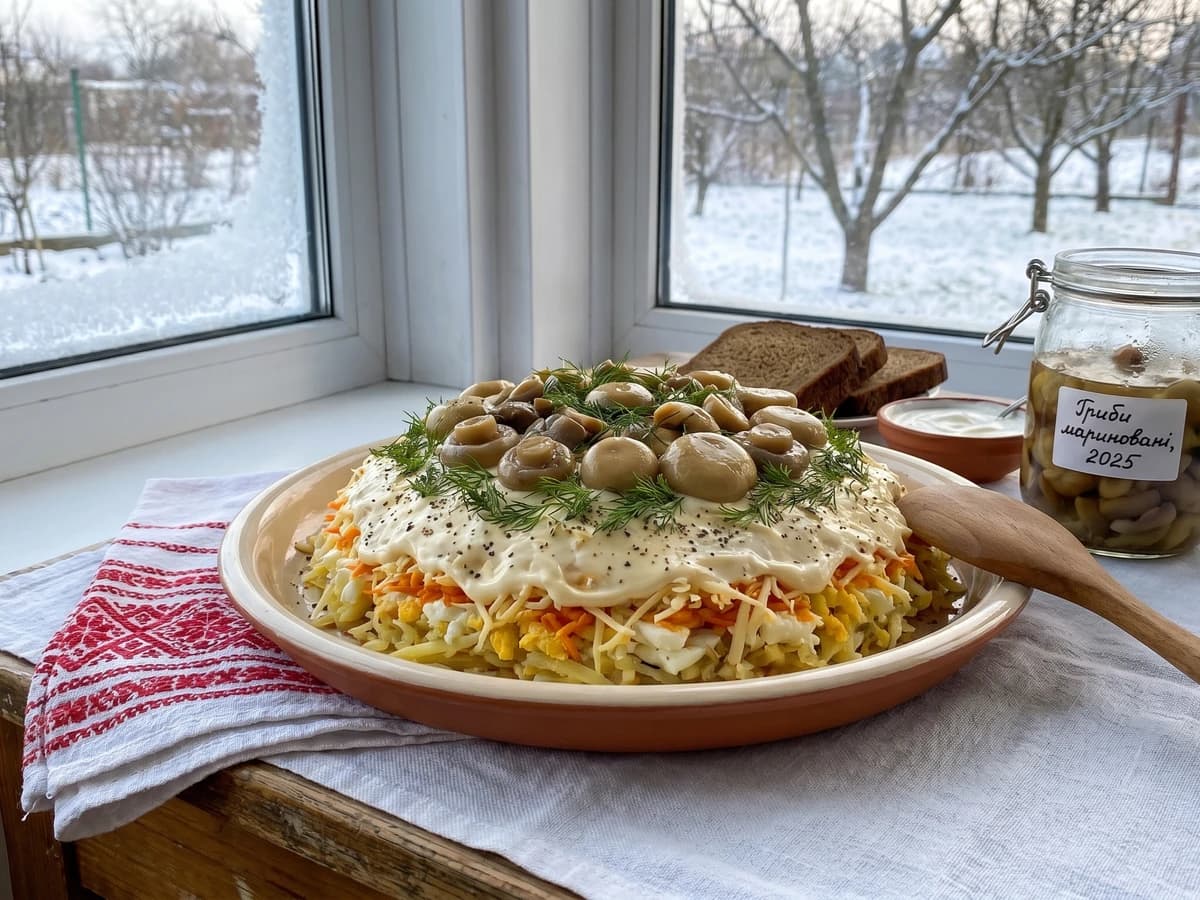
Open the jar and the holiday table smells briefly of the woods: marinated mushrooms, potato, egg, cheese, dill, and just enough mayonnaise to make it hold together.

Chef Lesia
The cabbage changes under your hands: stiff, squeaky ribbons soften into a glossy summer salad with carrot sweetness, dill sharpness, and green sunflower oil catching the light.