Chef Lesia
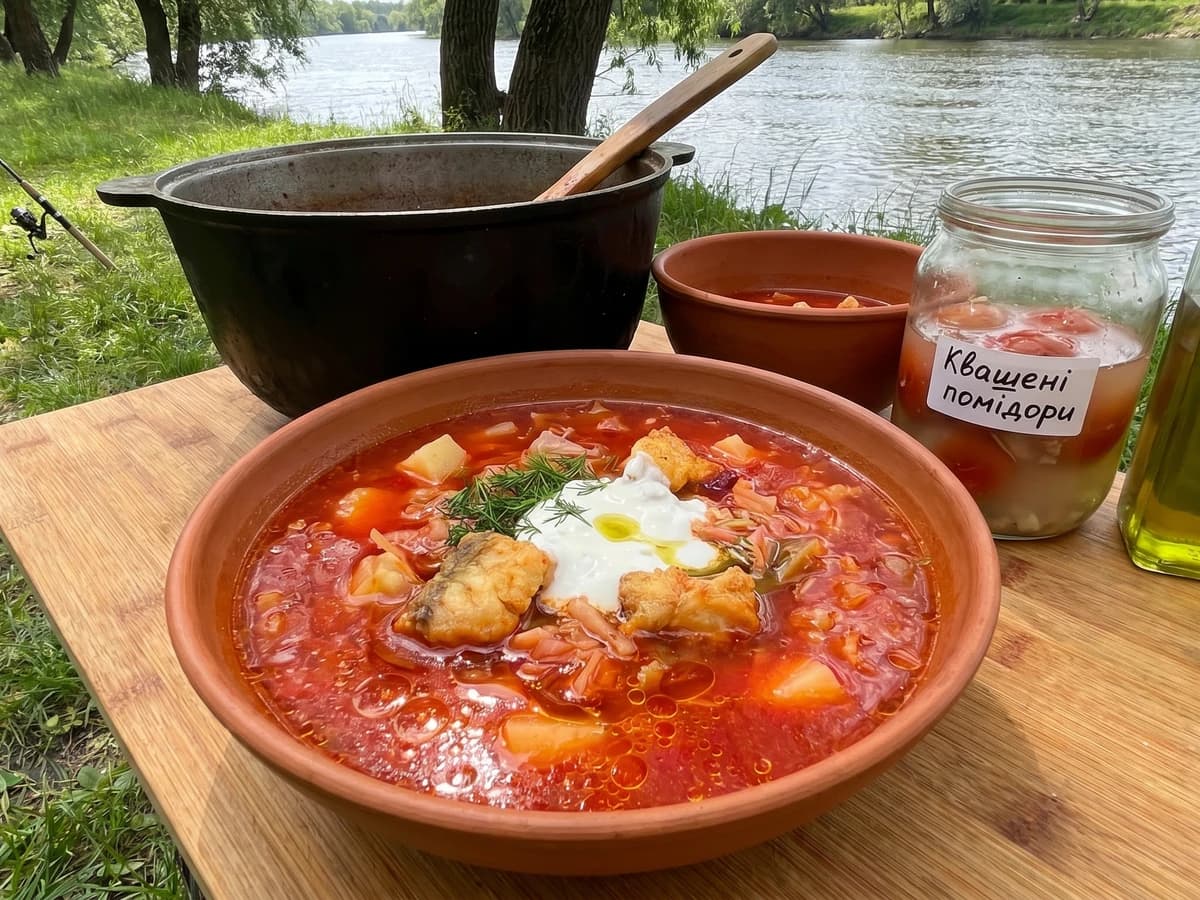
Bessarabskyi Borshch (бессарабський борщ, fish borshch)
The catch goes into the pan before it ever meets the pot, so Danube fish stays whole in a tomato-red broth sour enough to wake the table.
A cooking platform built around craft, culture, and the stories behind what we eat.
Created by
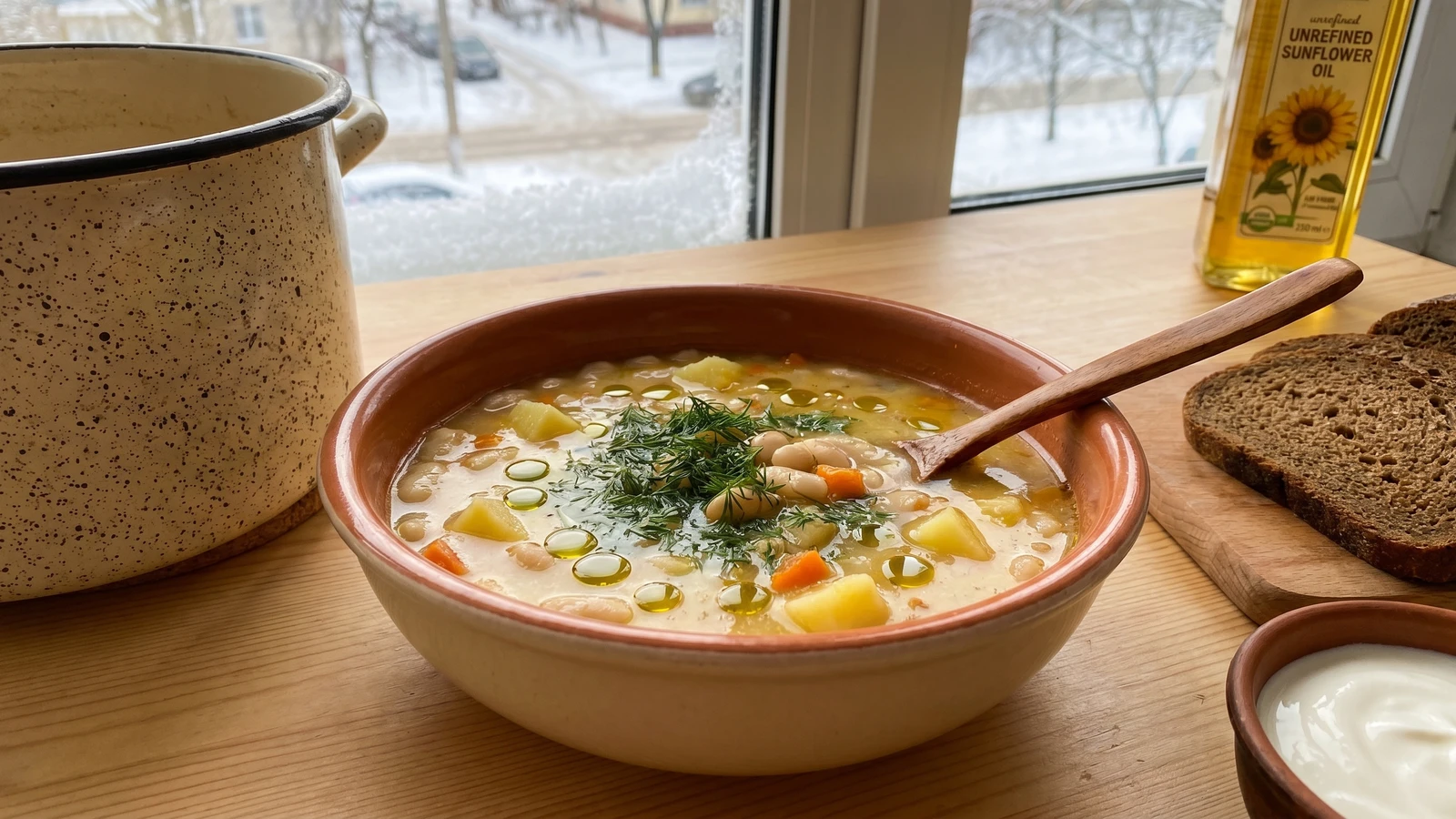
White beans don't make a white soup: they turn creamy and gold, carrying roots, dill, and sunflower oil until a plain-looking pot tastes like somebody planned for you.
White beans don't make a white soup. They cloud the pot softly, then give themselves over, and the broth turns cream-gold from their starch, orange at the edges from carrot, green where the sunflower oil catches the light. It looks quiet. Then you taste it and understand that quiet was not the same as thin.
This is winter food from the southern steppe, the kind of pot that starts with dry beans from a jar, roots from the cellar, and whatever the day allows: Lenten with oil, richer with salo, sometimes loosened with a spoon of brine from kvasheni tomatoes if the kitchen has a loud shelf hissing away. The point is not luxury. The point is a pot big enough to feed people twice.
The one thing that decides the yushka is the zasmazhka, the slow-sweated onion and carrot. It goes in near the end so its sweetness sits brightly on the broth instead of flattening into the stock. Aunt Nadia wrote beside beans, "until it sounds right," which was unhelpful and completely exact: at first they click against the spoon, then they roll soft and heavy, and the whole pot changes its voice.
Make enough for eight guests or one hungry Ukrainian. The second day is better, when the beans have thickened the broth and the dill has stopped shouting.
Yushka is an older Ukrainian word for broth or thin soup, still used for fish, mushroom, bean, and festive broths; bean versions were especially useful on Orthodox fasting days, when meat and dairy left the table but a household still needed feeding. In the southern steppe, where sunflower became a major oil crop in the nineteenth century, a Lenten bean yushka finished with unrefined oil is not an imitation of the salo version. It is its own kitchen, green-gold and practical.
Quantity
450g
rinsed and soaked overnight
Quantity
2.5 litres
Quantity
1 large
halved
Quantity
1
peeled and split lengthwise
Quantity
1 medium
cut into large pieces
Quantity
1
Quantity
2 medium
peeled and diced
Quantity
1 1/2 teaspoons, plus more to taste
Quantity
3 tablespoons, plus more to finish
Quantity
1 medium
finely diced
Quantity
1 large
coarsely grated
Quantity
80g
finely diced
Quantity
3 cloves
smashed to a paste
Quantity
2 to 3 tablespoons
Quantity
1 large bunch
finely chopped
Quantity
to taste
freshly ground
Quantity
to serve
| Ingredient | Quantity |
|---|---|
| dried white beansrinsed and soaked overnight | 450g |
| cold water | 2.5 litres |
| onionhalved | 1 large |
| parsley root or small parsnippeeled and split lengthwise | 1 |
| carrotcut into large pieces | 1 medium |
| bay leaf | 1 |
| potatoespeeled and diced | 2 medium |
| sea salt | 1 1/2 teaspoons, plus more to taste |
| unrefined sunflower oil | 3 tablespoons, plus more to finish |
| onionfinely diced | 1 medium |
| carrotcoarsely grated | 1 large |
| salo (optional)finely diced | 80g |
| garlicsmashed to a paste | 3 cloves |
| brine from fermented tomatoes or cucumbers (optional) | 2 to 3 tablespoons |
| dillfinely chopped | 1 large bunch |
| black pepperfreshly ground | to taste |
| smetana (optional) | to serve |
The night before, cover the beans with plenty of cold water, more than you think, because dry beans drink like gossiping aunties. By morning they should look plump and a little wrinkled at the edges. Drain them and rinse once; the soaking water has done its job.
Put the drained beans into a big pot with the cold water, halved onion, parsley root or parsnip, carrot pieces, and bay leaf. Bring it up slowly, skim off any foam, then let it murmur rather than boil hard. At first the beans tap sharply against the spoon; later the sound goes dull and soft. That is the pot beginning to feed you.
When the beans give under your spoon but still hold their shape, lift out the spent onion, carrot, parsley root, and bay leaf. Add the diced potatoes and salt lightly. Keep simmering until the potato corners soften and the broth looks cloudy, not watery. Crush a few beans against the side of the pot if you want more body.
Warm the sunflower oil in a wide pan. If you're using salo, render it first until the little cubes turn golden at the edges, then add the onion. Cook low and slow until the onion turns translucent and sweet, then add the grated carrot and keep going until the oil is orange and glossy. You're not browning. You're coaxing sweetness out.
Scrape the zasmazhka into the soup, including every green-gold drop of oil from the pan. Add the garlic, black pepper, and most of the dill. If the pot tastes sleepy, stir in a spoon or two of fermented tomato or cucumber brine, but only after the beans are fully soft; acid tightens bean skins if you rush it. Taste again. It should be creamy, savory, and bright at the edges.
Turn off the heat and let the yushka sit covered until it settles into itself. Ladle it into deep bowls, finish with more dill and a thin thread of unrefined sunflower oil. Add smetana if the table is not fasting, or don't. Both pots are honest.
1 serving (about 390g)
Culinary guides, cultural storytelling, and the editorial depth that makes cooking meaningful.
Discover Culinary ExplorerChef Lesia
The catch goes into the pan before it ever meets the pot, so Danube fish stays whole in a tomato-red broth sour enough to wake the table.

Chef Lesia
The fish leaves the pot before the soup reaches the table: broth in the bowl, river fish on a platter, garlic salamur waiting to wake both.

Chef Lesia
Brick-red paprika blooms in bacon fat, beef darkens at the edges, and potatoes thicken the cauldron until it stands between soup and stew. This is comfort with a fire under it.
Chef Lesia
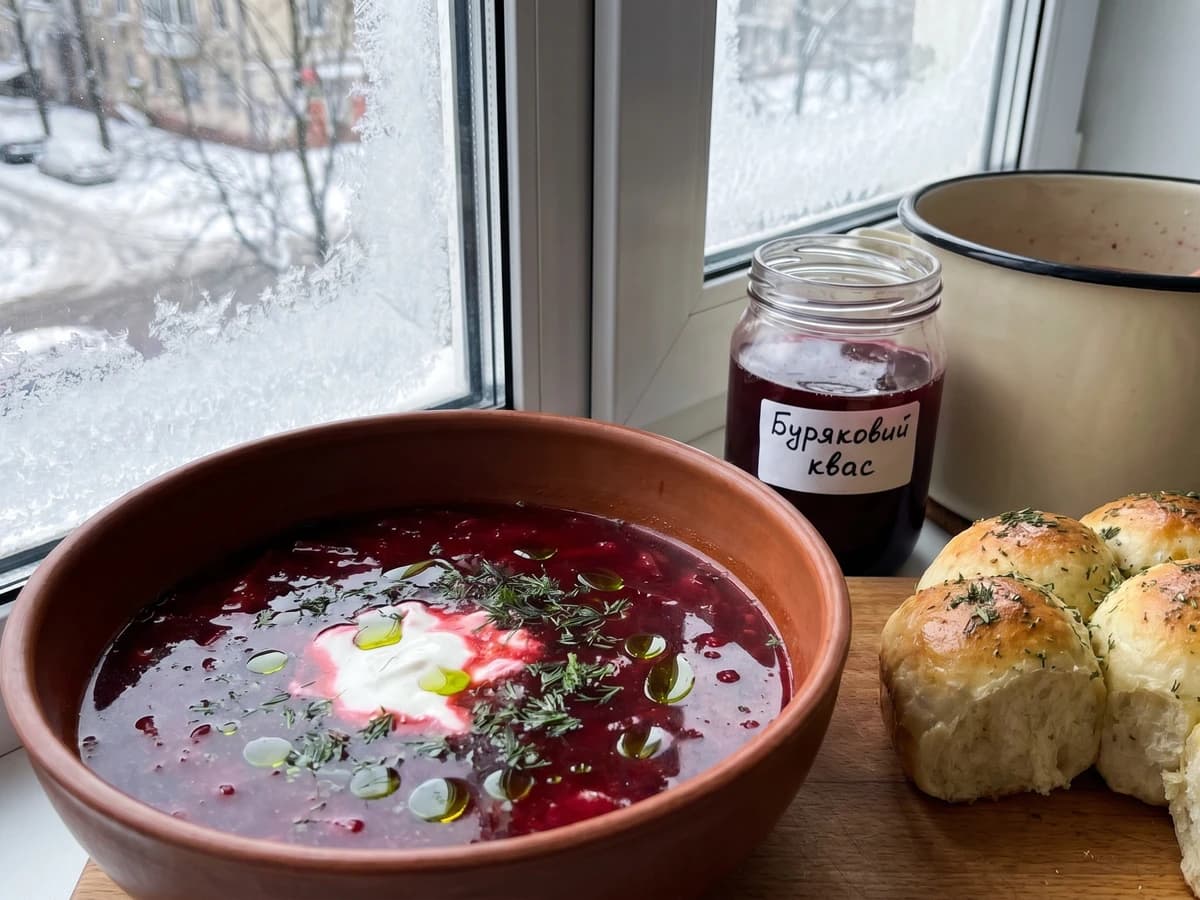
Beets hit slow-sweated zasmazhka and the broth goes dark ruby, sour from beet zakwas, sweet from bone and garden, thick enough for the spoon to stand up straight.