
Chef Lesia
Adzhyka po-Ukrainsky (аджика, tomato-pepper relish)
The tomatoes go from garden-red to brick-red while the peppers slump and the garlic waits. By the end, the spoon leaves a path and the whole south fits in one jar.
A cooking platform built around craft, culture, and the stories behind what we eat.
Created by
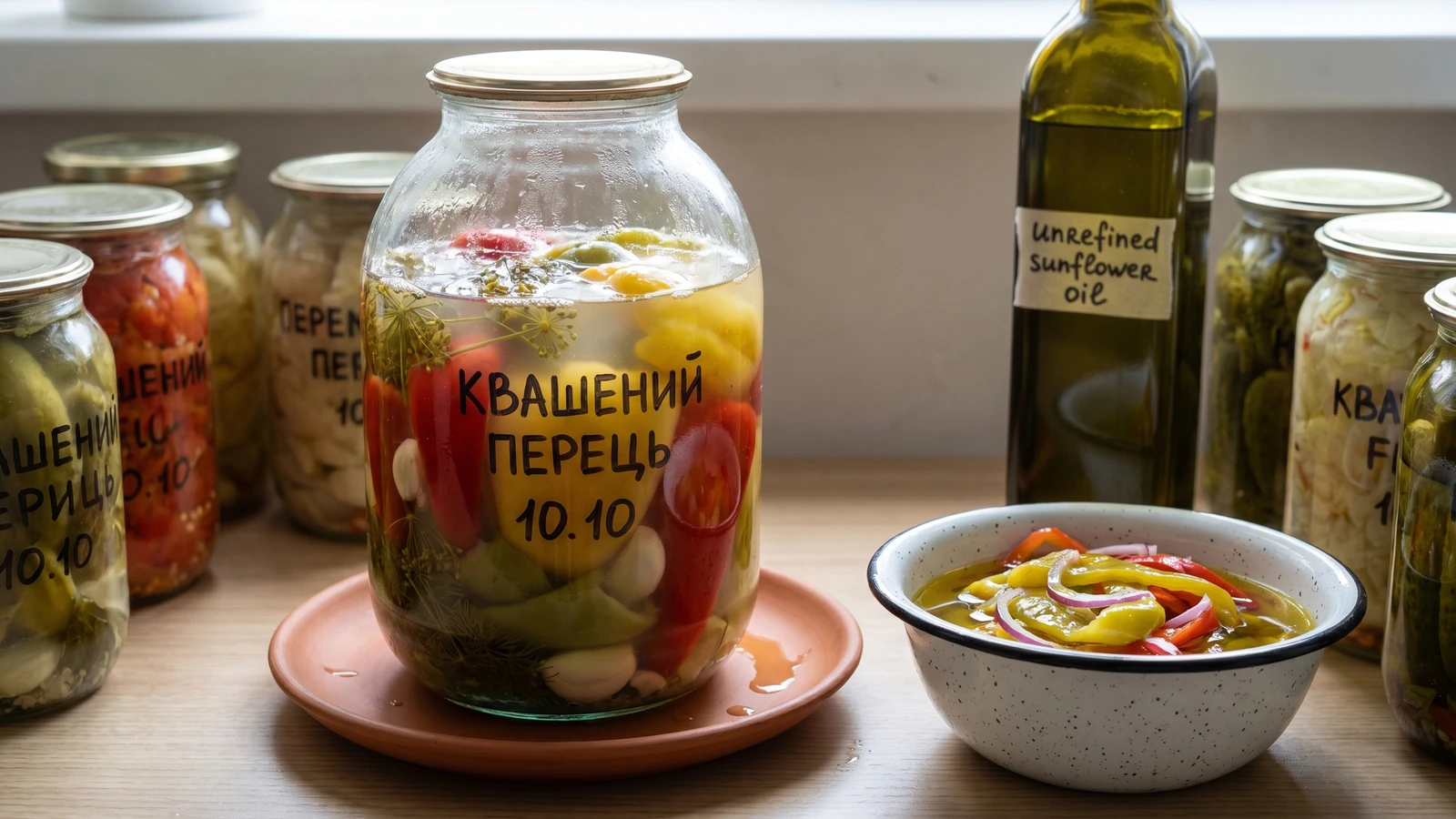
Red and yellow peppers go into the jar glossy and loud, then the brine turns cloudy and they soften into a sour, fizzy condiment for potatoes, beans, rye bread, and winter plates.
The jar looks like a summer market after closing: red, yellow, and green peppers pressed shoulder to shoulder, garlic hiding in the folds, dill heads gone pale under the brine. Then, after a few days, it starts talking. The brine clouds, little bubbles catch on the skins, and the raw green smell turns sour-sweet, like someone opened the litnya kuhnia, the summer kitchen, door in September.
This is kvashennia, our living brine, not a quick vinegar pickle. Sweet peppers have a lot of sugar and soft walls, so the salt has to hold them steady while the good bacteria do their work. Four percent brine is the spine here: strong enough to keep the peppers from collapsing too soon, gentle enough that their garden sweetness still comes through.
Aunt Nadia's letter had no timings, of course, only "perets, garlic, dill, until it sounds right," which was rude and accurate. You listen for the small tick in the jar when you loosen the lid, look for the cloudy brine, taste for a clean sourness. In August we'd be drowning in peppers; in January we open a jar instead. That's not a substitute. That's the actual tradition.
Sweet peppers became common in Ukrainian gardens after capsicums reached Europe from the Americas, and they settled especially well in the warmer Black Sea steppe and Bessarabian kitchens around Odesa, Mykolaiv, Kherson, and Budzhak. In the litnya kuhnia, peppers joined tomatoes, aubergines, cucumbers, and even whole watermelons in brine, a household preservation system older than modern sterile canning. Soviet-era books favored vinegar and sealed jars because they standardized well, while living pepper ferments stayed mostly in family notebooks and on pantry shelves.
Quantity
1.2 kg
mixed colors, small peppers left whole or large peppers cut into wide panels
Quantity
1 litre
filtered or boiled and cooled
Quantity
40g
4 percent of the water weight
Quantity
6
lightly crushed
Quantity
1 large
or 6 dill stalks
Quantity
2
for tannin
Quantity
1 teaspoon
Quantity
2
Quantity
1
slit
Quantity
1 tablespoon
to serve
Quantity
1/2 small
thinly sliced, to serve
| Ingredient | Quantity |
|---|---|
| firm sweet peppersmixed colors, small peppers left whole or large peppers cut into wide panels | 1.2 kg |
| waterfiltered or boiled and cooled | 1 litre |
| fine sea salt4 percent of the water weight | 40g |
| garlic cloveslightly crushed | 6 |
| dill head with stalksor 6 dill stalks | 1 large |
| horseradish, cherry, blackcurrant, grape, or oak leaves (optional)for tannin | 2 |
| black peppercorns | 1 teaspoon |
| bay leaves | 2 |
| small hot pepper (optional)slit | 1 |
| unrefined sunflower oil (optional)to serve | 1 tablespoon |
| red onion (optional)thinly sliced, to serve | 1/2 small |
Wash a 2-litre glass jar, lid, and fermentation weight in hot soapy water, rinse well, and let them air-dry. Clean is enough; you don't need a surgery theatre. Set the jar on a plate now, because the loud shelf likes to announce itself later.
Stir 40g salt into 1 litre cool water until fully dissolved. Four percent. The scale wins here, because the salt is not only seasoning, it is the guardrail that lets the peppers sour cleanly instead of spoiling.
Use small firm peppers whole, trimming the stems and cutting one long slit from shoulder to tip so brine can enter. If your peppers are large bell peppers, cut them into wide panels and pull away the core and big clumps of seed. Don't cut them thin. Big pieces stay meaty; little strips go soft before the sourness arrives.
Put half the dill, garlic, tannin leaves, peppercorns, bay leaves, and hot pepper, if using, into the bottom of the jar. Pack the sweet peppers in tightly but without crushing them, then tuck the remaining dill and garlic down the sides. It should look crowded. Good jars are crowded.
Pour in enough brine to cover the peppers by at least 2cm, then add a fermentation weight so nothing floats above the surface. Close the lid loosely, or use an airlock if you have one. Everything under the brine is food; anything above it is a problem waiting.
Leave the jar at room temperature, out of direct sun. Each day, loosen the lid if it is tight and press the peppers back under the brine with a clean spoon. The brine will turn cloudy, bubbles will cling to the skins, and the smell will change from raw green pepper to something fruity and sour. Taste from day five; in a cool kitchen it may want longer.
When the peppers taste cleanly sour and the flesh bends but still has a bite, move the jar to the fridge. Serve them cold, sliced if they were fermented whole, with a little unrefined sunflower oil and thin red onion if you like. The brine is useful too: splash it into bean soup, potato salad, or borshch when fermented tomatoes have run out.
1 serving (about 105g)
Culinary guides, cultural storytelling, and the editorial depth that makes cooking meaningful.
Discover Culinary ExplorerChef Lesia
The tomatoes go from garden-red to brick-red while the peppers slump and the garlic waits. By the end, the spoon leaves a path and the whole south fits in one jar.

Chef Lesia
A jar of grated beets turns ordinary water into sour red light, the kind that wakes borshch from inside instead of shouting over it.

Chef Lesia
Raw garlic, salt, and green sunflower oil turn into a sauce that announces itself from the doorway, sharp enough for pampushky, potatoes, grilled meat, and any tired Tuesday plate.

Chef Lesia
The gravy should start dark as wet bark, then soften when smetana goes in. Spoon it over buckwheat, potatoes, or mlyntsi and nobody asks where the meat went.