Culinary Explorer
A cooking platform built around craft, culture, and the stories behind what we eat.
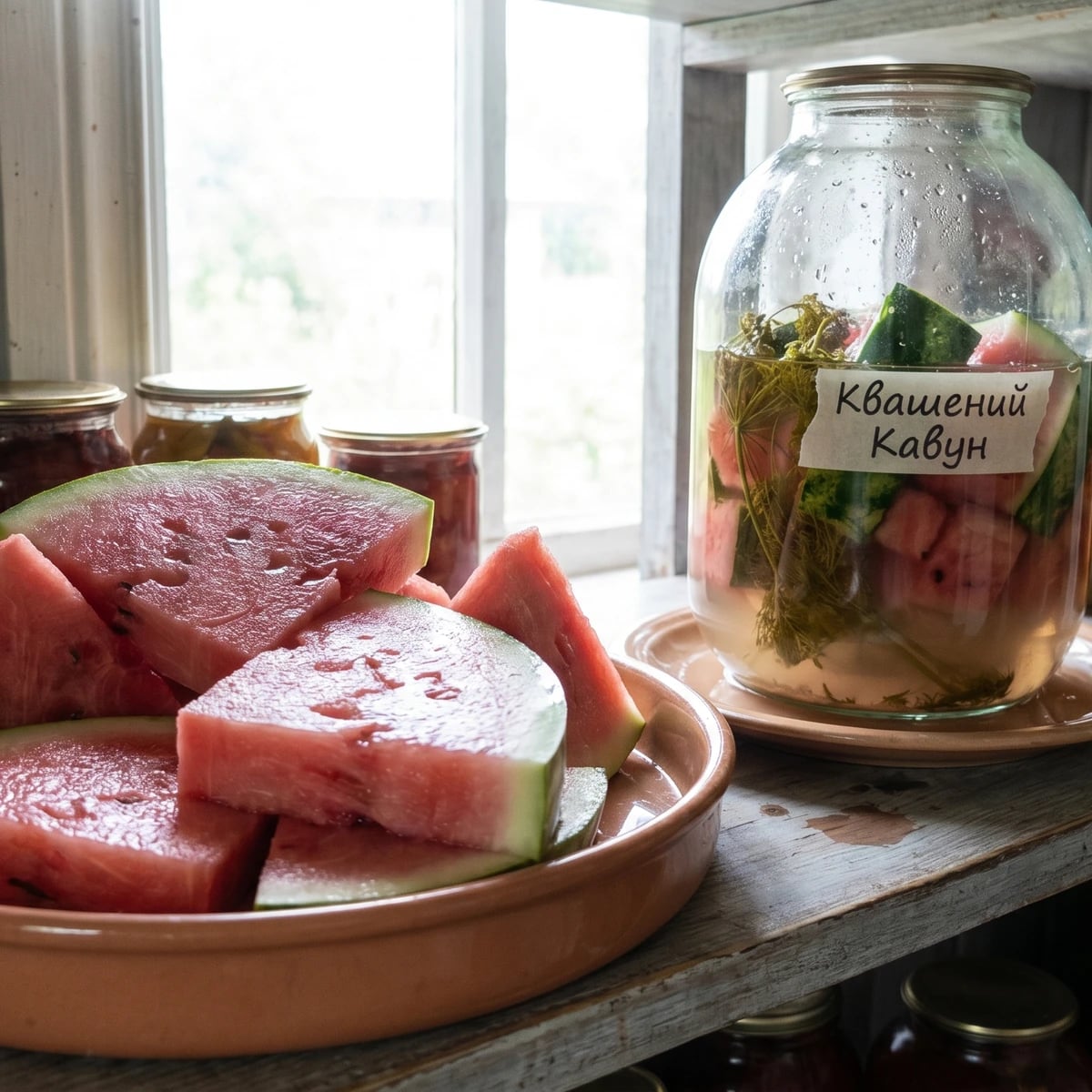
Kvashenyi Kavun (квашений кавун, fermented watermelon)
Created by Chef Lesia
A whole watermelon goes into brine as summer fruit and comes back as something stranger: pink, salty, sour-sweet, faintly fizzy, and very much alive.
The first surprise is that the watermelon stays whole. Not slices, not cubes, not a polite little jar pickle, but the whole green beast lowered under brine and left to change its mind. Weeks later the knife goes in, the rind gives softly, and the flesh is pink, salty, sour-sweet, almost fizzy on the tongue. This is the south speaking plainly.
In the Kherson steppe, watermelons were never only dessert. In August we'd be drowning in them; in January we opened a jar or, if someone had the space, a barrel. The litnya kuhnia, the summer kitchen, was where the glut went to become winter food: tomatoes, aubergines, cucumbers, and kavuny, watermelons, tucked down under dill stalks and leaves while the brine began its quiet work.
The dish rests on one thing: the fruit must stay fully under a four to five percent brine. That is the safety, the flavor, and the patience all in one. Aunt Nadia wrote, maddening woman, "when it smells clean-sour," which took me three attempts and one leaky shelf to understand. You'll know it by the brine clouding, the lid sighing when opened, and the watermelon losing its raw candy smell.
Serve it cold, cut into thick wedges, with black bread, cured fish, roast meats, or just a fork over the sink. Enough for eight guests or one hungry Ukrainian.
Ingredients
small unwaxed watermelon
Quantity
1, about 2.5 to 3 kg
firm, uncracked, scrubbed well
water
Quantity
3 litres, or enough to cover
sea salt
Quantity
135g (4.5 percent of the water weight)
| Ingredient | Quantity |
|---|---|
| small unwaxed watermelonfirm, uncracked, scrubbed well | 1, about 2.5 to 3 kg |
| water | 3 litres, or enough to cover |
| sea salt | 135g (4.5 percent of the water weight) |
Where cooking meets culture.
Culinary guides, cultural storytelling, and the editorial depth that makes cooking meaningful.
Discover Culinary Explorer