Culinary Explorer
A cooking platform built around craft, culture, and the stories behind what we eat.
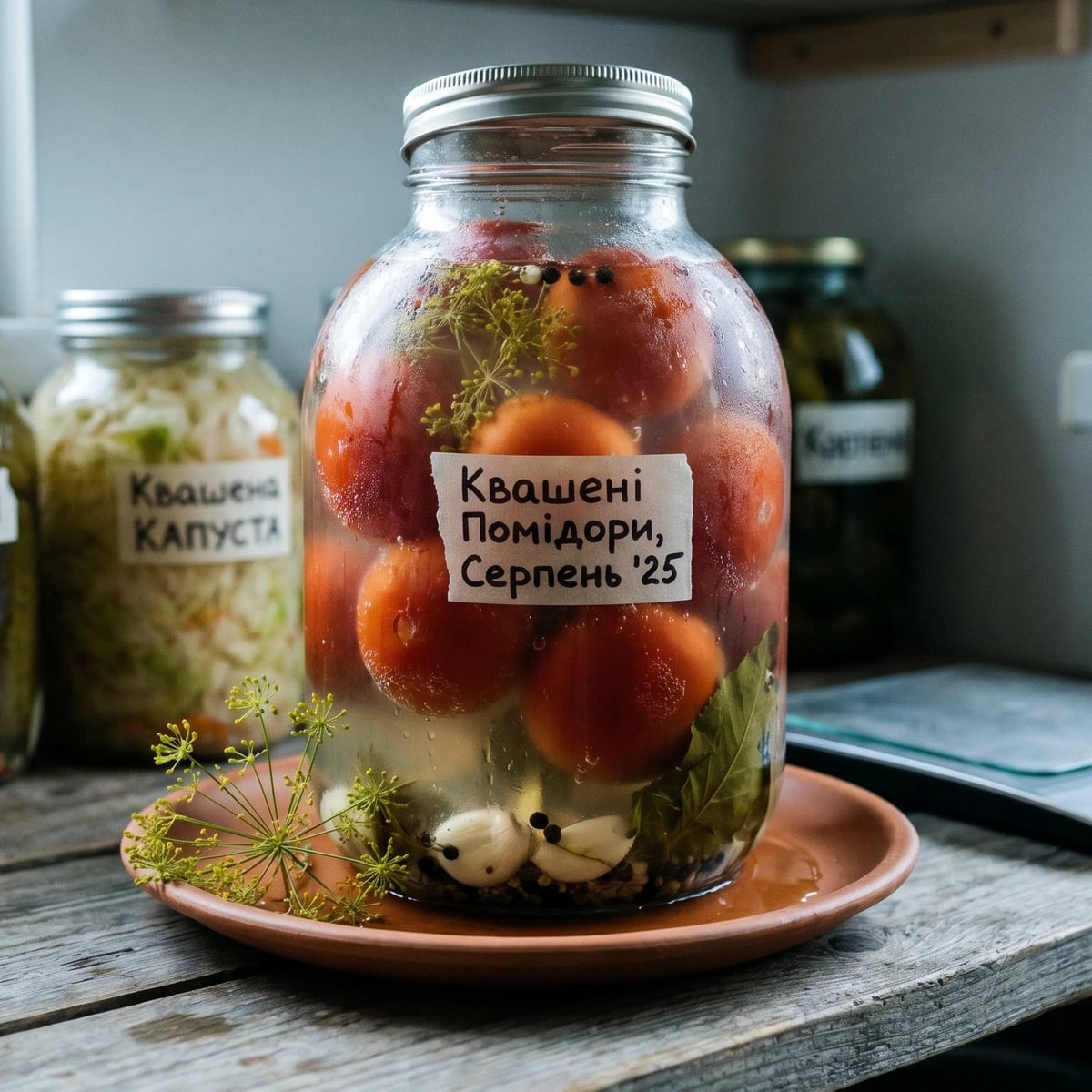
Kvasheni Pomidory (квашені помідори, fermented tomatoes)
Created by Chef Lesia
Whole tomatoes go into the jar taut and glossy, then come out fizzing, sour, and a little alive. Weigh the water, weigh the salt; this brine doubts nothing.
Whole tomatoes go into the brine tight-skinned and proud, then three weeks later they hiss when you open the jar. The first bite is sour, salty, spritzy, almost rude. Good. A vinegar pickle sits still. Kvasheni pomidory are alive.
This is the southern steppe speaking: hot gardens, too many tomatoes, dill gone to flower, garlic under the nails, the litnya kuhnia, the summer kitchen, working from May until October. We fermented because summer is generous and winter is long. Whole watermelons, stuffed aubergines, tomatoes by the jarful. In August we'd be drowning in them; in January we open a jar instead.
The dish rests on one thing: five percent salt, weighed against the water. After that, your job is mostly to keep the tomatoes under the brine and listen. Aunt Nadia wrote, "until it sounds right," and here that means cloudy brine, little bubbles clinging to the skins, a soft sigh when the lid opens. If one tomato floats above the surface, push it down or take it out. Everything under the brine is doing exactly what it should.
Ingredients
small firm ripe tomatoes
Quantity
1.2 kg
whole, unblemished
water
Quantity
1 litre
filtered or boiled and cooled
non-iodized sea salt or pickling salt
Quantity
50g
| Ingredient | Quantity |
|---|---|
| small firm ripe tomatoeswhole, unblemished | 1.2 kg |
| waterfiltered or boiled and cooled | 1 litre |
| non-iodized sea salt or pickling salt | 50g |
Where cooking meets culture.
Culinary guides, cultural storytelling, and the editorial depth that makes cooking meaningful.
Discover Culinary Explorer