
Chef Lesia
Adzhyka po-Ukrainsky (аджика, tomato-pepper relish)
The tomatoes go from garden-red to brick-red while the peppers slump and the garlic waits. By the end, the spoon leaves a path and the whole south fits in one jar.
A cooking platform built around craft, culture, and the stories behind what we eat.
Created by
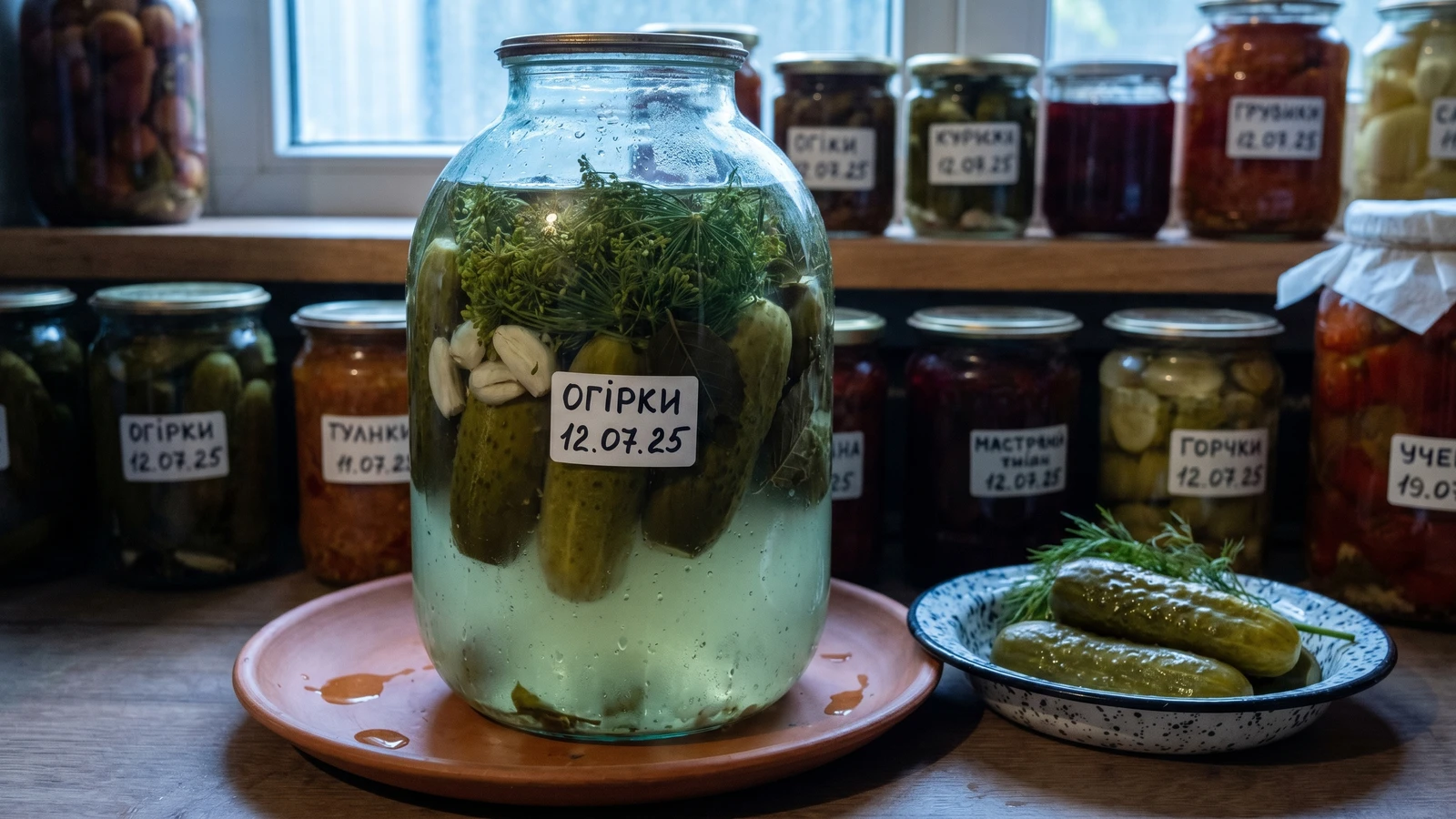
The brine goes cloudy on purpose: small cucumbers, dill crowns, garlic and one tannin leaf sour slowly until they snap under your teeth with salt, fizz and summer-kitchen sharpness.
The cloudy brine is the proof, not the problem. A fresh cucumber goes into the jar snappy and green, held down under salt water with dill crowns, garlic, and one oak or cherry leaf, and a few days later the liquid turns milky, the lid starts to mutter, and the kitchen smells of summer turning itself into winter. No vinegar. Just salt, time, and bacteria doing honest work.
At home this was litnya kuhnia work, the summer kitchen, when cucumbers came in faster than people could eat them. My Aunt Nadia's letter says only 'strong brine, much dill, until the smell changes,' which is extremely useful if you've stood beside her and a comedy if you haven't. So we weigh it: 4 percent salt against the water, enough to guard the jar while the cucumbers sour, not so much that they taste like the sea.
The one thing that decides the dish is submersion. Anything under brine is safe and busy; anything floating at the top is asking for trouble, so weigh it down and set the jar on a plate because the loud shelf always earns its name. Eat them cold with boiled potatoes, rye bread, grilled meat, or straight from the jar while pretending you came to the fridge for something else.
Kvasheni ohirky belong to kvashennia, the Ukrainian practice of souring vegetables in salt brine before vinegar canning became household routine. In central villages and on the southern steppe, cucumbers were layered in barrels with dill crowns, garlic, horseradish and tannin leaves, then kept for winter alongside fermented tomatoes, cabbage and even whole watermelons. Factory pickles later made clear vinegar brine look normal, but the older jar is cloudy, alive, and meant to be drunk in little guilty mouthfuls.
Quantity
1.2 kg
scrubbed
Quantity
1 litre
chlorine-free if possible
Quantity
40g
4 percent of the water weight
Quantity
1 large
or a big handful flowering dill
Quantity
5 cloves
smashed
Quantity
2
unsprayed, for crunch
Quantity
1 leaf or 5cm root
sliced
Quantity
1 teaspoon
Quantity
1 teaspoon
Quantity
1 small
| Ingredient | Quantity |
|---|---|
| small unwaxed pickling cucumbersscrubbed | 1.2 kg |
| cool waterchlorine-free if possible | 1 litre |
| fine sea salt4 percent of the water weight | 40g |
| dill crown with stalksor a big handful flowering dill | 1 large |
| garlicsmashed | 5 cloves |
| oak, cherry, blackcurrant, or grape leavesunsprayed, for crunch | 2 |
| horseradish leaf or fresh horseradish root (optional)sliced | 1 leaf or 5cm root |
| black peppercorns | 1 teaspoon |
| coriander seeds (optional) | 1 teaspoon |
| hot pepper (optional) | 1 small |
Rinse the cucumbers and soak them in very cold water if they have been sitting at the market or in your fridge. Trim a thin sliver from the blossom end, the end opposite the stem. They should feel firm and cold before they go into the jar, with the skins tight under your fingers.
Weigh the water, weigh the salt. For cucumbers I use 4 percent: forty grams of salt to one litre of water. Stir until the salt disappears. If your tap water smells of chlorine, boil it first and let it cool completely, because the good bacteria prefer not to fight a swimming pool.
Put half the dill, garlic, leaves, horseradish if using, peppercorns, and coriander into a clean 2-litre jar. Pack the cucumbers in tightly, standing them upright if they fit, then tuck the remaining dill and leaves over the top. Tight is good. Crushed is not. You want them held in place, not bruised before the brine has even started its work.
Pour in the brine until the cucumbers are fully covered, leaving a little room at the top for the jar to burp. Weight everything down with a fermentation weight or a small clean jar filled with water. Cover loosely with a lid, or close it and open it once a day. Set the jar on a plate because it will leak when it gets lively.
Leave the jar at room temperature, out of direct sun. The brine will turn cloudy, tiny bubbles will cling to the cucumbers, and the smell will move from raw cucumber and sharp garlic to clean sour dill. Taste when it smells ready to you: a few days gives a half-sour crunch, longer gives a deeper pickle. If you see fuzzy colored mold or smell rot, compost the batch and start again.
When the cucumbers are sour enough for your mouth, move the jar to the fridge to slow the ferment. Keep them under brine. Serve cold and wet, snapped in half beside potatoes, rye bread, borshch, grilled meat, or anything rich that needs a bright slap of salt and dill.
1 serving (about 100g)
Culinary guides, cultural storytelling, and the editorial depth that makes cooking meaningful.
Discover Culinary ExplorerChef Lesia
The tomatoes go from garden-red to brick-red while the peppers slump and the garlic waits. By the end, the spoon leaves a path and the whole south fits in one jar.

Chef Lesia
A jar of grated beets turns ordinary water into sour red light, the kind that wakes borshch from inside instead of shouting over it.

Chef Lesia
Raw garlic, salt, and green sunflower oil turn into a sauce that announces itself from the doorway, sharp enough for pampushky, potatoes, grilled meat, and any tired Tuesday plate.

Chef Lesia
The gravy should start dark as wet bark, then soften when smetana goes in. Spoon it over buckwheat, potatoes, or mlyntsi and nobody asks where the meat went.