
Chef Lesia
Adzhyka po-Ukrainsky (аджика, tomato-pepper relish)
The tomatoes go from garden-red to brick-red while the peppers slump and the garlic waits. By the end, the spoon leaves a path and the whole south fits in one jar.
A cooking platform built around craft, culture, and the stories behind what we eat.
Created by
Mushrooms are not pickled here to make them sharp. They are salted, weighted, and left to sour slowly until the forest smell turns deep, garlicky, and alive.
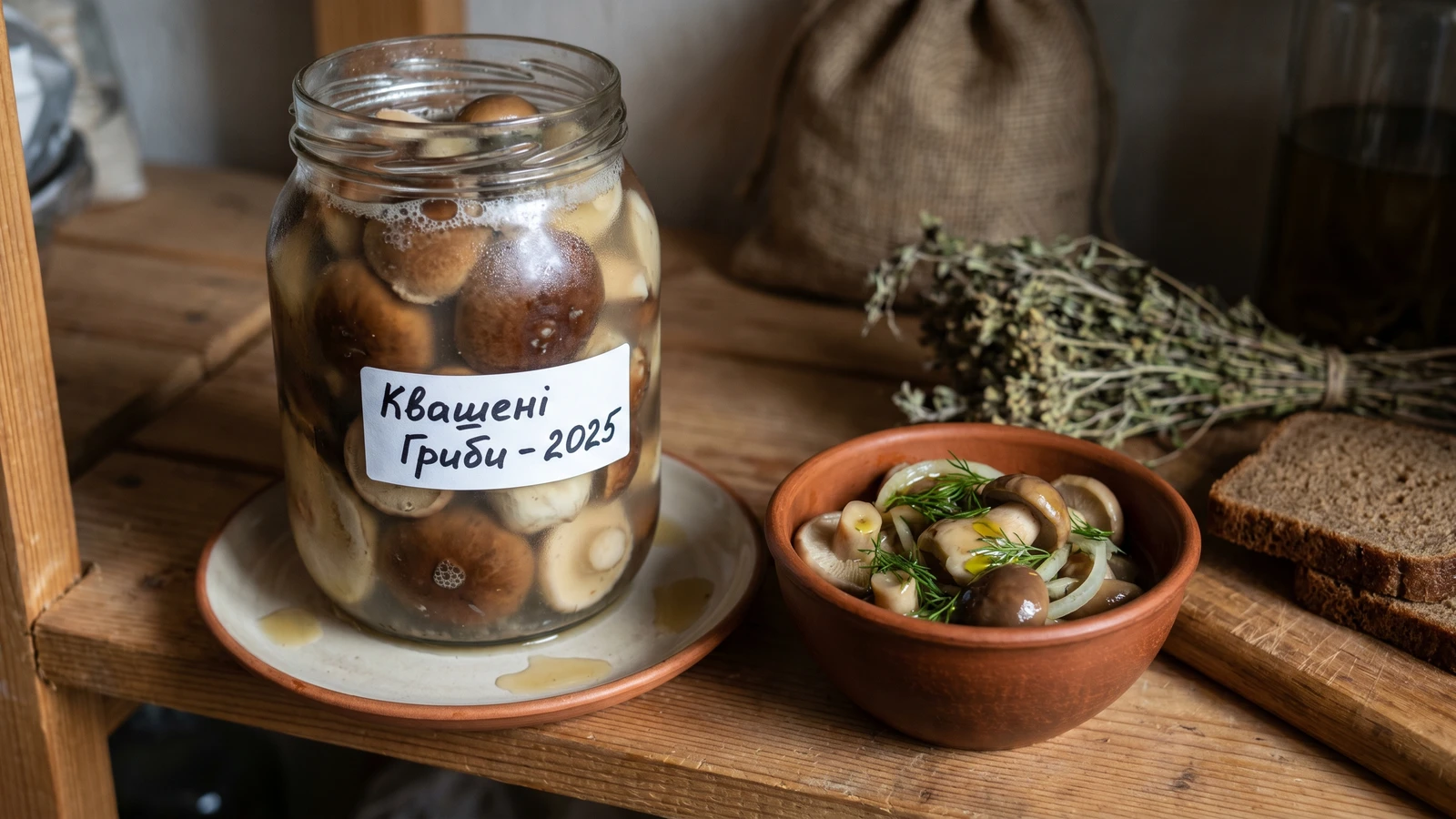
The first thing is the smell: clean forest floor, garlic crushed under a knife, dill stalks bruised until they turn green and loud. Kvasheni hryby are not vinegar mushrooms. They are living mushrooms, boiled for safety, packed under brine, then left until the smell changes from raw woodland to something tangy, rounded, and ready for bread.
This is a cold-table dish, zakusky food, the jar you open when people arrive too early and hungry. Spoon them into a little bowl with onion, dill, and a gloss of unrefined sunflower oil, Ukraine in a bottle of oil, and suddenly the table has begun before the hot food appears.
The one thing that decides the dish is submersion. Mushrooms are porous and cheeky; they float if you give them a chance. Keep them under a four percent brine, weigh the salt against the water, and let the bacteria do their old work. Aunt Nadia wrote only, "until it sounds right," which in this jar means tiny bubbles at the edge, a faint hiss when you loosen the lid, and a sourness that tastes clean, not harsh.
Use wild mushrooms only if someone who truly knows them has identified them. I mean truly. Otherwise use oyster, chestnut, cremini, or small button mushrooms and cook the dish anyway. The tradition lives because working kitchens keep feeding people, not because everyone has a forest at the end of the road.
Kvasheni hryby belong especially to Ukraine's forest and forest-steppe regions, including Polissia, Volyn, the Carpathians, and northern village kitchens where autumn mushrooming filled crocks before winter. Older household methods often salted or soured boiled wild mushrooms in wooden tubs with dill, garlic, horseradish, currant, or cherry leaves, then served them cold with onion and sunflower oil. Soviet canning books pushed vinegar sterilization because it standardized preservation, but the older brined jars remained on family pantry shelves, hissing quietly and tasting of the woods.
Quantity
1 kg
cleaned, trimmed, larger ones halved
Quantity
1 litre
for the brine
Quantity
40g (4 percent of water weight)
for the brine
Quantity
1 tablespoon
for boiling the mushrooms
Quantity
4 cloves
smashed
Quantity
2 heads or 1 large bunch
Quantity
1 horseradish leaf or 2 small leaves
Quantity
1 teaspoon
Quantity
1
Quantity
1 small piece
sliced
Quantity
1 small
thinly sliced, to serve
Quantity
2 tablespoons
to serve
Quantity
extra handful
chopped, to serve
| Ingredient | Quantity |
|---|---|
| firm edible mushroomscleaned, trimmed, larger ones halved | 1 kg |
| waterfor the brine | 1 litre |
| sea saltfor the brine | 40g (4 percent of water weight) |
| sea saltfor boiling the mushrooms | 1 tablespoon |
| garlicsmashed | 4 cloves |
| dill heads or dill stalks | 2 heads or 1 large bunch |
| horseradish leaf or blackcurrant or cherry leaves | 1 horseradish leaf or 2 small leaves |
| black peppercorns | 1 teaspoon |
| bay leaf | 1 |
| fresh horseradish root (optional)sliced | 1 small piece |
| onionthinly sliced, to serve | 1 small |
| unrefined sunflower oilto serve | 2 tablespoons |
| dillchopped, to serve | extra handful |
Use only mushrooms you trust completely. If they are wild, they must be identified by someone who knows that forest, not by a hopeful photograph. Brush away grit, trim the stems, and halve only the large ones so they ferment evenly but still feel like mushrooms under the teeth.
Bring a large pot of water to a lively boil with 1 tablespoon salt. Add the mushrooms and cook until they slump, darken slightly, and the raw forest smell turns savoury. Skim any foam, then drain well and let them cool until they are only warm to the touch. Discard this cooking water.
Weigh the water, weigh the salt. For this jar, stir 40g sea salt into 1 litre water until fully dissolved. Four percent is firm enough for mushrooms, which need a little discipline in the jar. This is the one place where the scale wins over the hand.
Put dill, garlic, peppercorns, bay, the tannin leaf, and horseradish if using into a clean 1.5 litre jar, then pack in the cooled mushrooms. Pour over the brine until everything is covered. Press down gently; mushrooms hold air in their folds, and those little trapped bubbles will rise if you give them a minute.
Set a fermentation weight or a small clean jar on top so every mushroom stays below the brine. Put the jar on a plate because the loud shelf likes to announce itself, cover loosely, and leave it at cool room temperature away from direct sun. After a few days the brine will cloud, tiny bubbles will gather at the edges, and the smell will turn pleasantly sour and garlicky.
Start tasting when the jar begins to hiss softly as you loosen it. The mushrooms should be tangy, firm, and salty, with no bitterness or harsh rot smell. When they taste right to you, usually after 5 to 10 days in a cool kitchen, seal the jar and move it to the fridge. Give them another week there if you can; they settle and deepen.
Lift out what you need with a clean spoon. Slice the mushrooms if they are large, toss with thin onion, chopped dill, and unrefined sunflower oil, then spoon them onto the zakusky board cold. They should shine, not swim. Bread nearby is not optional at my table.
1 serving (about 140g)
Culinary guides, cultural storytelling, and the editorial depth that makes cooking meaningful.
Discover Culinary ExplorerChef Lesia
The tomatoes go from garden-red to brick-red while the peppers slump and the garlic waits. By the end, the spoon leaves a path and the whole south fits in one jar.

Chef Lesia
A jar of grated beets turns ordinary water into sour red light, the kind that wakes borshch from inside instead of shouting over it.

Chef Lesia
Raw garlic, salt, and green sunflower oil turn into a sauce that announces itself from the doorway, sharp enough for pampushky, potatoes, grilled meat, and any tired Tuesday plate.

Chef Lesia
The gravy should start dark as wet bark, then soften when smetana goes in. Spoon it over buckwheat, potatoes, or mlyntsi and nobody asks where the meat went.