Chef Elsa
Almjause (Alpine Hut Snack Board)
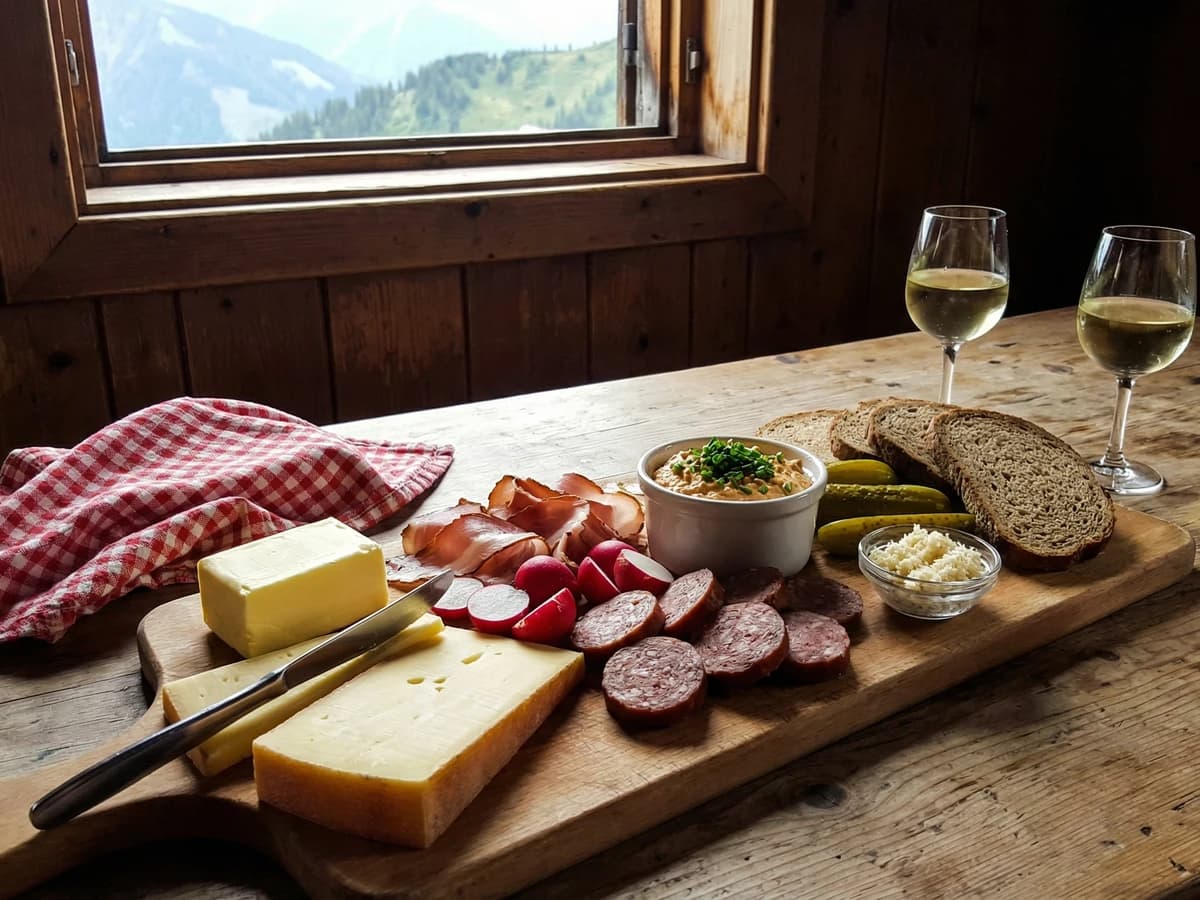
A wooden board loaded with mountain cheese, juniper-smoked Speck, air-dried Hauswürstel, handmade Liptauer, fresh Kren, and thick-cut Bauernbrot, the way Austrian Almhütten have fed hikers for generations.
A cooking platform built around craft, culture, and the stories behind what we eat.

Created by
Toasted Styrian pumpkin seeds folded into tangy cream cheese with a dark-green river of Kernöl pooling on top, served on a Brettl with good bread at a Buschenschank table.
The first time I tasted proper Kernöl was on a childhood trip to Styria with Gretel and my grandmother Eva. We'd stopped at a Buschenschank outside Leibnitz, one of those farmhouse wine taverns where you sit at a wooden table in the garden and eat whatever the family has made that morning. The farmer's wife brought out a wooden board with three Aufstriche, and one of them was this deep, speckled, green-streaked spread made from the pumpkin seeds they grew in the fields behind the house. Gretel took one taste and spent the next twenty minutes asking the woman exactly how she toasted her seeds. That was Gretel. She never stopped learning.
Kürbiskernaufstrich is Styria in a bowl. The region grows a particular variety of pumpkin, Cucurbita pepo var. styriaca, whose seeds have no hull. They're dark green, tender, and intensely nutty. You toast them dry, chop them rough, and fold them into cream cheese with a drizzle of Kernöl, the thick, nearly black pumpkin seed oil that Styrians put on everything from salads to vanilla ice cream. The oil is what makes this spread unmistakable. It smells like roasted nuts and tastes like the earth it grew out of.
This is not a recipe that asks for technique. It asks for good ingredients. If you have proper Styrian pumpkin seeds and real Kernöl, you're ten minutes away from one of the best things you'll ever put on bread. If you don't have them, wait until you do. There's no substitute for that oil. It's the whole point.
Styria's hull-less pumpkin seed, first documented in the region in the late 19th century, is a natural mutation that made the seeds far easier to press for oil. Kernöl production in southern Styria became a protected geographical indication (g.g.A.) under EU law in 1996, recognizing that genuine Styrian pumpkin seed oil can only come from seeds grown and pressed in designated Austrian regions. A single liter of Kernöl requires the seeds of roughly thirty to thirty-five pumpkins, which is why Styrians guard the good bottles the way the French guard their best wine.
Quantity
120g
hull-less
Quantity
150g
full fat, at room temperature
Quantity
80g
Quantity
2 tablespoons
plus more for drizzling
Quantity
1 small clove
finely grated
Quantity
1 tablespoon
Quantity
1/2 teaspoon
Quantity
to taste
freshly ground
Quantity
1 tablespoon
finely cut
| Ingredient | Quantity |
|---|---|
| Styrian pumpkin seeds (Steirische Kürbiskerne)hull-less | 120g |
| cream cheese (Frischkäse)full fat, at room temperature | 150g |
| sour cream (Sauerrahm) | 80g |
| Styrian pumpkin seed oil (Kernöl)plus more for drizzling | 2 tablespoons |
| garlicfinely grated | 1 small clove |
| fresh lemon juice | 1 tablespoon |
| fine sea salt | 1/2 teaspoon |
| black pepperfreshly ground | to taste |
| fresh chivesfinely cut | 1 tablespoon |
Spread the pumpkin seeds in a single layer in a dry pan over medium heat. No oil. The seeds have plenty of their own fat, and you want to coax it out slowly. Shake the pan every thirty seconds or so. After three to four minutes, the seeds will start to pop and crackle and the kitchen will fill with a deep, roasted nuttiness. Some will puff slightly and turn a shade darker. Pull them off the heat the moment you smell that warm, toasty fragrance. They go from perfect to burnt in about fifteen seconds, so stay close.
Tip the toasted seeds onto a plate and spread them out so they stop cooking from their own heat. Let them cool for five minutes. They'll crisp up as they cool. Set aside about two tablespoons of whole seeds for finishing. Roughly chop the rest with a knife. You want a mix of textures: some pieces nearly fine, some left in chunky halves. A food processor makes this too uniform. Use a knife.
In a bowl, stir the cream cheese and sour cream together until smooth. The cream cheese gives body. The sour cream gives tang. You need both. Fold in the chopped pumpkin seeds, grated garlic, lemon juice, and two tablespoons of Kernöl. The oil will streak the mixture with dark green, which is exactly right. Season with salt and pepper. Taste it now. The seeds should be the loudest flavor, with the garlic and lemon sitting quietly behind them. Adjust the salt if it needs it.
Cover the bowl and let the spread rest in the fridge for at least thirty minutes. This is not optional. The flavors need time to come together and the seeds need time to soften just slightly against the cream, giving the whole thing a more cohesive texture. When you're ready to serve, spoon the Aufstrich into an earthenware crock or onto a wooden Brettl. Drizzle a generous amount of Kernöl over the top, letting it pool in the hollows. Scatter the reserved whole seeds and the chives on top. Serve with thick slices of dark rye bread or Bauernbrot and let people help themselves. Mahlzeit!
1 serving (about 100g)
Culinary guides, cultural storytelling, and the editorial depth that makes cooking meaningful.
Discover Culinary ExplorerChef Elsa
A wooden board loaded with mountain cheese, juniper-smoked Speck, air-dried Hauswürstel, handmade Liptauer, fresh Kren, and thick-cut Bauernbrot, the way Austrian Almhütten have fed hikers for generations.

Chef Elsa
Dark, spiced, and wickedly good: Blunzn mashed with onion, mustard, and marjoram into the kind of spread that disappears first from every Heuriger Brettl, scooped up on torn hunks of dark bread.

Chef Elsa
A silky potato and sour cream spread with raw onion and paprika, piled onto dark rye bread the way they serve it at every Heuriger in Lower Austria. No cheese, despite the name. Just good potatoes and honest cooking.
Chef Elsa
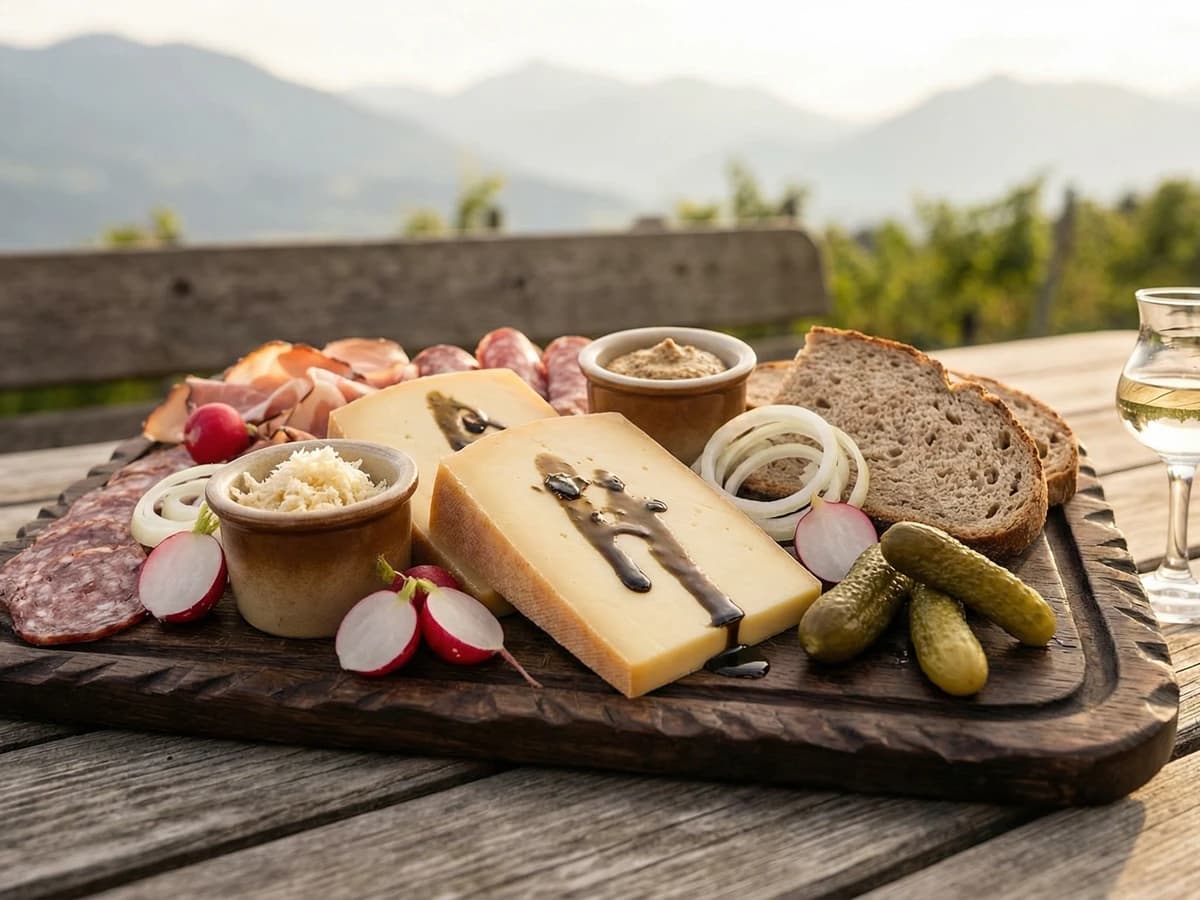
A proper Carinthian Brettljause built around PDO Gailtaler Almkäse, nutty raw-milk alpine cheese served with Speck, dark Bauernbrot, pickles, fresh horseradish, and everything you need for an afternoon on an Almhütte terrace.