
Chef Fai
Dry Egg Noodles (Ba Mee Haeng)
The four pillars live at the bottom of the bowl before the noodles ever touch it: nam pla for salt, sugar for sweet, vinegar for sour, chili for heat. Every noodle cart in Bangkok runs on this principle.
A cooking platform built around craft, culture, and the stories behind what we eat.
Created by
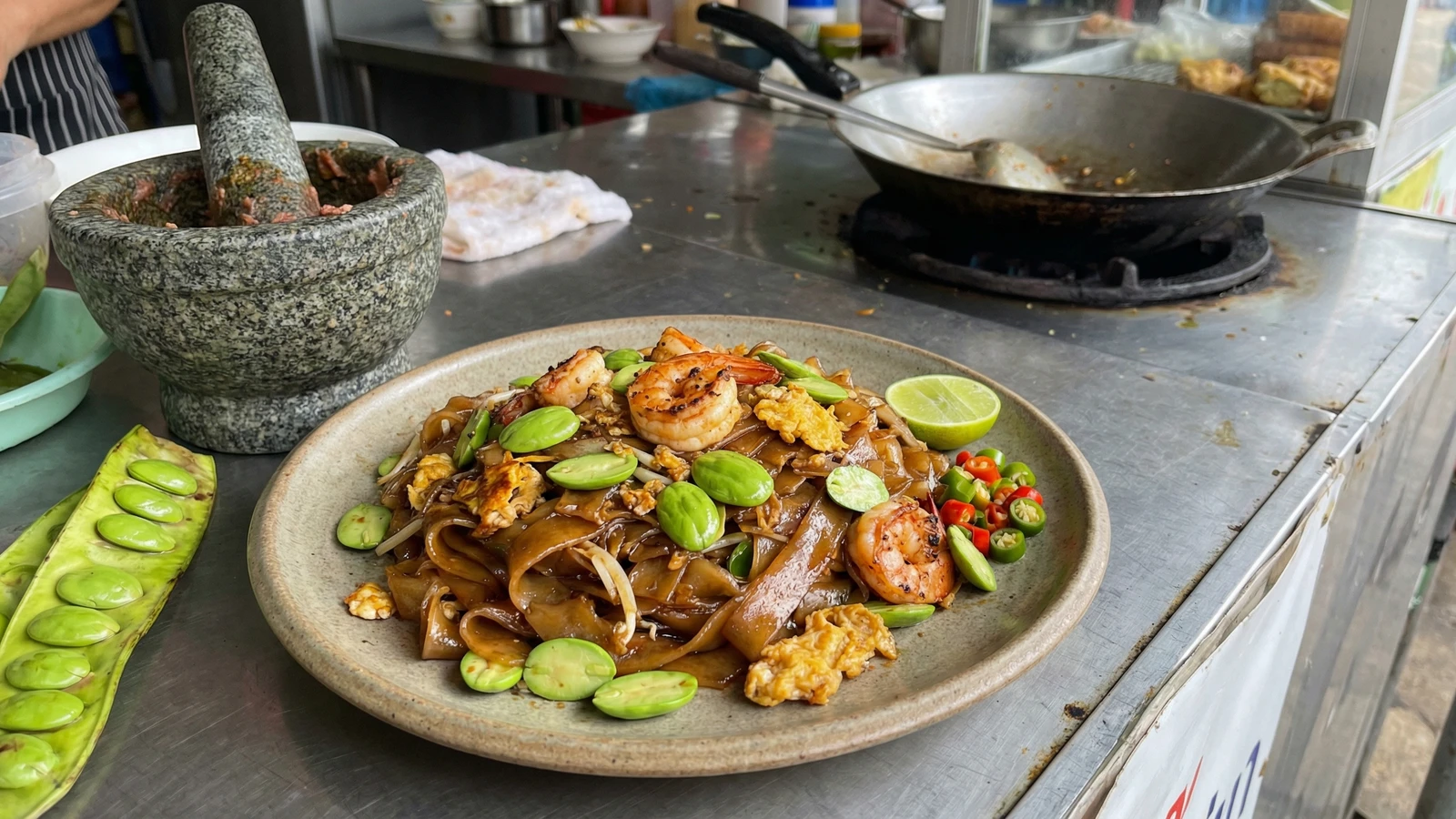
Flat rice noodles wok-fried with Southern Thailand's most polarizing ingredient: sataw, the sulfurous stink bean that separates the South from every other region. Kapi for depth, chili for fire, budu for soul.
Sataw draws the line. If you know this bean, you're either Southern or you've eaten with someone who is.
Parkia speciosa. Bright green, the size of a fat almond, with a sulfur hit that announces itself before you open the pod. Westerners call them stink beans, and that's fair. They stink. They also taste like nothing else on earth: nutty, bitter, vegetal, with a lingering funk that stays with you (and your breath) for a day. Southern Thais don't apologize for this. They build dishes around it.
This stir-fry doesn't start with a full kreung tam, but the principle is still there in miniature. Garlic, chilies, and kapi (shrimp paste) get pounded together in the mortar before they hit the wok. That's your flavor base. Three ingredients, thirty seconds of pounding, and you've got a concentrated bomb of salt, funk, and heat that coats every noodle. Ajarn always said the kreung tam is everything. Even when the paste is small, the principle is the same: pound first, cook second. The mortar opens the cells. The wok finishes the job.
The four pillars land differently in the South. Nam pla or budu for salt (budu hits harder, murkier, more fermented). Palm sugar barely shows up. The South leans sour and spicy, not sweet. Lime goes on at the table, not in the wok. And the chili? Southern Thai food runs hotter than any other region. That's not bravado. That's geography. Hotter climate, more chilies grown, more chilies eaten. Simple.
I learned this dish from a noodle vendor in Nakhon Si Thammarat who fried flat sen yai with sataw, shrimp, and a slap of kapi that turned the whole plate dark and fragrant. She didn't use a recipe card. She had a mortar next to her wok, a bag of sataw under the counter, and thirty years of muscle memory. That's the teacher you want.
Sataw (สะตอ, Parkia speciosa) grows wild across Southern Thailand and Southeast Asia, and its use in Thai cooking is concentrated almost entirely below the Chumphon isthmus. The bean has been a staple of Southern Thai home cooking for centuries, appearing in stir-fries, curries, and nam prik long before it gained trendy restaurant status in Bangkok. Pad sataw with shrimp (goong pad sataw) is the best-known Southern preparation; the noodle version is a market-stall adaptation that emerged in cities like Nakhon Si Thammarat, Surat Thani, and Hat Yai, where vendors combined the region's beloved bean with the convenience of stir-fried kuay tiew.
Quantity
200g
separated gently by hand
Quantity
150g
split lengthwise, seeds removed
Quantity
200g
peeled and deveined
Quantity
4 cloves
Quantity
5
Quantity
1 tablespoon
Quantity
2 tablespoons nam pla, or 1.5 tablespoons budu
Quantity
1 teaspoon
Quantity
1 teaspoon
Quantity
2 tablespoons
Quantity
1
Quantity
for serving
| Ingredient | Quantity |
|---|---|
| fresh flat rice noodles (sen yai)separated gently by hand | 200g |
| sataw (stink beans)split lengthwise, seeds removed | 150g |
| shrimppeeled and deveined | 200g |
| garlic | 4 cloves |
| bird's eye chilies (prik khi nu) | 5 |
| shrimp paste (kapi) | 1 tablespoon |
| fish sauce (nam pla) or budu (nam budu) | 2 tablespoons nam pla, or 1.5 tablespoons budu |
| dark soy sauce (si ew dam) | 1 teaspoon |
| palm sugar (nam tan pip) | 1 teaspoon |
| vegetable oil | 2 tablespoons |
| egg | 1 |
| lime wedges | for serving |
In your granite mortar (krok hin), pound the garlic and bird's eye chilies to a rough, chunky paste. Not smooth. You want pieces. Add the kapi (shrimp paste) and pound it in until everything is integrated, maybe ten more strikes. The smell should be intense: raw garlic, chili heat hitting your sinuses, and that deep, fermented funk of the kapi. That's your flavor base. Three ingredients. Thirty seconds. This is the kreung tam principle in miniature.
Split each sataw pod and pop out the beans. Peel off the thin skin if it's tough (young beans won't need this). Split each bean lengthwise so it opens like a book. This doubles the surface area and lets the bean absorb the sauce. If your sataw smells like sulfur and garlic had a baby, good. That's what fresh sataw smells like. If it smells like nothing, it's been sitting too long.
Get your wok ripping hot over the highest flame you have. Add the oil and let it shimmer. Scrape in the pounded garlic-chili-kapi paste. It will spit and sizzle and the kitchen will smell like a Southern Thai market. Stir it around for five seconds. The kapi needs to fry briefly, not burn. You'll know it's ready when the raw shrimp paste smell transforms into something toasty and deep.
Add the shrimp. Toss them in the paste and let them sear. Thirty seconds per side, until they're pink and starting to curl. Don't move them constantly. Let them get color. Now add the sataw. Stir-fry for one minute. The beans should turn a deeper green and start to soften at the edges but stay firm in the center. Sataw that's cooked to mush has lost the point. You want that bite.
Push everything to one side of the wok. Crack the egg into the empty space and scramble it roughly for ten seconds, then fold it into the mix. Add the sen yai noodles. Be gentle. Fresh rice noodles tear easily, and torn noodles turn to paste. Toss with a lifting motion, using your spatula to fold rather than stir. Add the fish sauce (or budu), dark soy sauce, and palm sugar. Toss three or four more times until the noodles are evenly coated, glossy, and picking up color from the dark soy.
Slide the noodles onto a plate. The sataw should be scattered throughout, bright green against the dark-stained noodles. Shrimp on top where you can see them. Lime wedges on the side. Squeeze the lime over right before you eat. The sour goes on at the table in Southern Thai cooking. Sour last, sour at the moment of eating. That's the principle.
1 serving (about 310g)
Culinary guides, cultural storytelling, and the editorial depth that makes cooking meaningful.
Discover Culinary ExplorerChef Fai
The four pillars live at the bottom of the bowl before the noodles ever touch it: nam pla for salt, sugar for sweet, vinegar for sour, chili for heat. Every noodle cart in Bangkok runs on this principle.

Chef Fai
The kreung tam fried in cracked coconut cream until the oil bleeds red. That's the technique. Concentrated, semi-dry, spooned thick over crispy fish. This is what happens when the four pillars meet restraint.

Chef Fai
Isan foraging in a bowl: wild taro stems stripped of their sting, simmered in padaek broth with a pounded chili paste and yanang leaf extract. The land feeds you if you know the rules.

Chef Fai
Lanna's kreung tam breaks from Central Thai rules: ginger over galangal, cumin and coriander from Burmese spice routes, tamarind for sour instead of lime. The North has its own system, and this curry is its crown.