Chef Joost
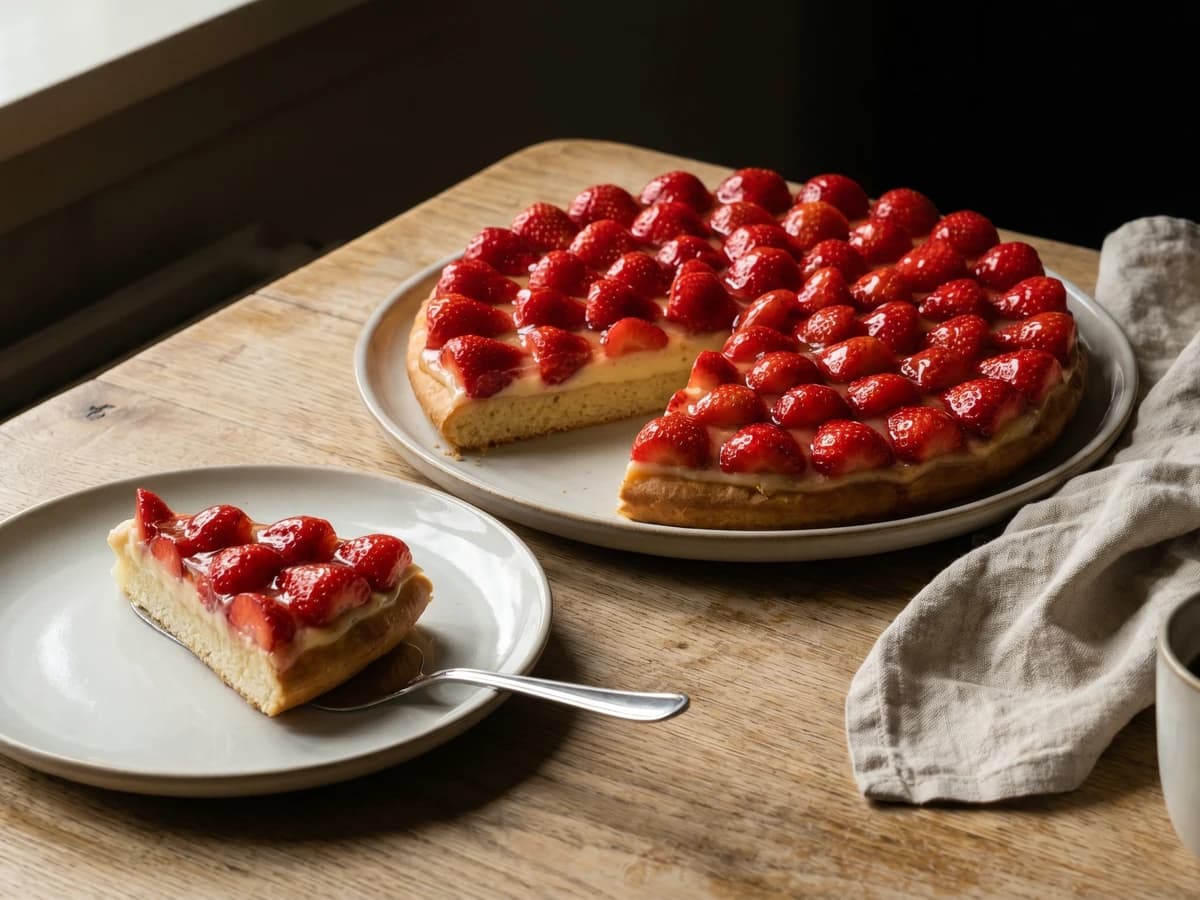
Aardbeienvlaai (Limburg Strawberry Vlaai)
The summer vlaai that politely breaks Limburg's baked-fruit rule: soft gistdeeg, cool pastry cream, and strawberries left fresh because June knows better than the oven.
A cooking platform built around craft, culture, and the stories behind what we eat.
Created by
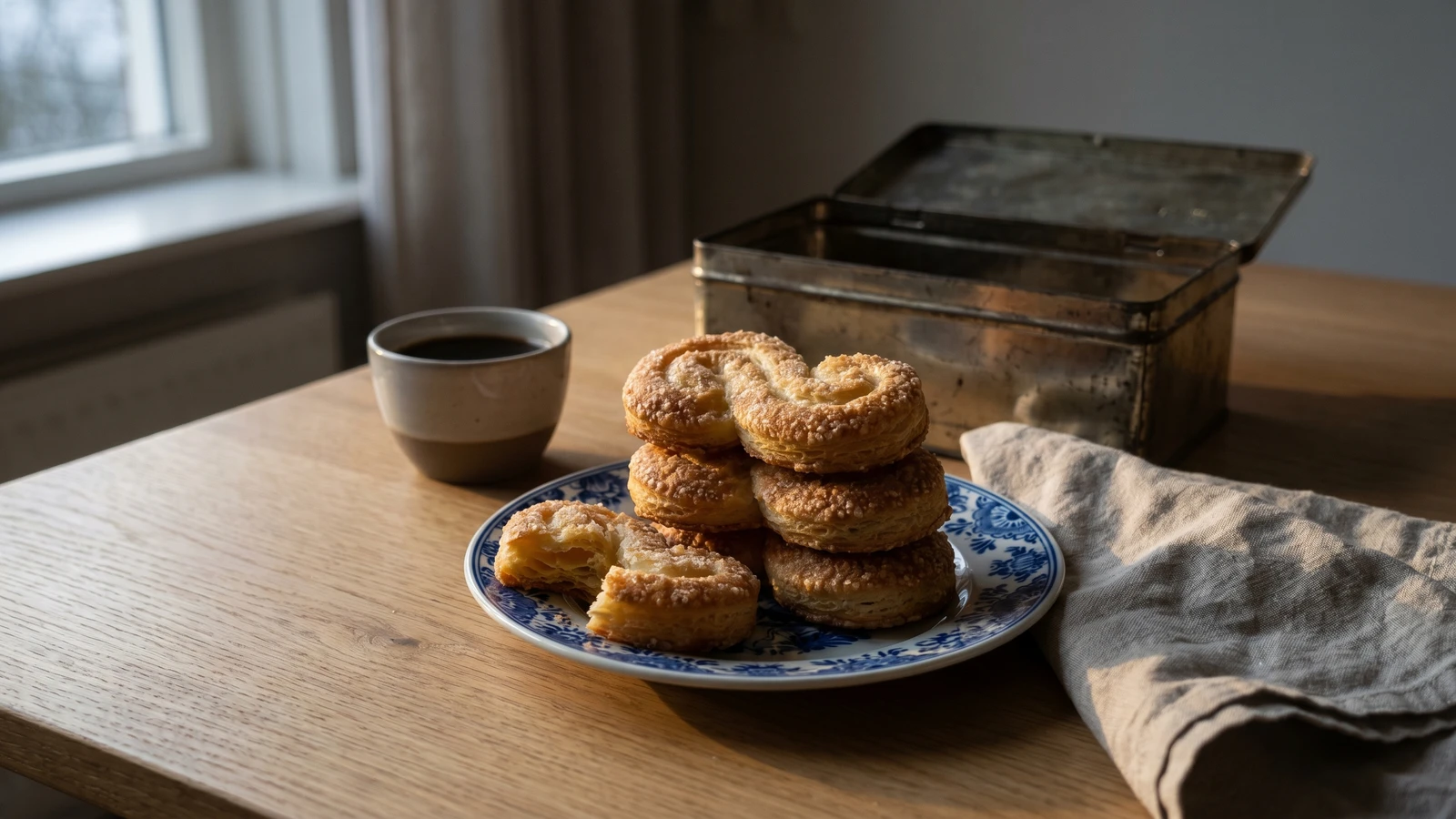
The looped little pastry that proves Dutch baking knows drama in small measures: cold butter, coarse sugar, two windows in the dough, and a crackle you hear before you taste.
Every Dutch kitchen has a tin that makes a particular sound. Not a noble sound. A small metallic complaint from the shelf, then the lid lifts and there they are: krakelingen, the looped sugar biscuits that look almost too simple to have history, which is how old things often hide. In my grandmother's second notebook the recipe takes three lines. Bladerdeeg, puff pastry. Suiker, sugar. Goed koud houden, keep it properly cold. She had survived a flood and wrote down the weather, the tide, and the oven like a woman who trusted memory only after it had been inked.
The name already tells you. Krakeling belongs with kraken, to crack, and the old crakelinc was a thing named for what it did under the teeth. Its shape belongs to the medieval pretzel family of Europe, but the Dutch sugar krakeling took a quieter path: less monastery legend, more bakery counter, coffee table, picnic tin, the sort of pastry that vanishes while adults are still arguing about whether one is enough.
But let me tell you a secret: the sugar is not decoration. It is the dish. Press it into both sides, keep the butter cold, and make the two holes larger than seems polite, because puff pastry swells and closes every shy gesture. Hou het altijd simpel, always keep it simple. Cold dough, coarse sugar, a hot oven, and patience while the caramel hardens. Bite too soon and it flakes politely. Wait, and the krakeling answers its name.
Krakeling appears in Middle Dutch as crakelinc or crakeling, from the same crackling word-family as kraken, to crack; it named a crisp baked loop before it became the sweet puff pastry biscuit familiar in Dutch bakeries. The shape belongs to the wider medieval European pretzel tradition, and the Low Countries keep an unusually public memory of it at Geraardsbergen's Krakelingenworp, recorded in municipal accounts in 1393 and now on UNESCO's intangible heritage list. The Dutch suikerkrakeling, sugar krakeling, is the domestic bakery version: no lye bath, no salt crust, just laminated dough and coarse sugar baked until the edges turn amber.
Quantity
500g
thawed if frozen, kept cold
Quantity
160g
Quantity
1/4 teaspoon
Quantity
1 teaspoon
Quantity
1 tablespoon
for brushing dry pastry
| Ingredient | Quantity |
|---|---|
| all-butter puff pastrythawed if frozen, kept cold | 500g |
| coarse sugar, such as grove kristalsuiker (coarse granulated sugar) or demerara | 160g |
| fine salt | 1/4 teaspoon |
| ground cinnamon (optional) | 1 teaspoon |
| cold water (optional)for brushing dry pastry | 1 tablespoon |
Heat the oven to 200C (400F) and line two baking trays with parchment. Stir the sugar, salt, and cinnamon together if you're using cinnamon. Keep the puff pastry in the refrigerator until the moment you roll it; cold pastry is the difference between lifted layers and a sad buttery puddle.
Scatter half the sugar mixture over the work surface, lay the cold puff pastry on it, and scatter most of the remaining sugar on top. If the surface is floury and the sugar won't stick, brush it with the thinnest film of cold water first. Roll gently to about 30 x 40cm and 3mm thick, turning once so both sides are gritty with sugar. If the pastry starts to bend like a wet envelope, stop and chill it for ten minutes.
Cut the pastry into 18 strips, each about 2cm wide and 30cm long. Use a sharp knife or pastry wheel and press straight down rather than dragging hard through the layers. Puff pastry rises from clean-cut edges; bruise them and the oven remembers.
Bring the ends of one strip together and pinch them, making a long oval ring. Twist the ring once in the middle, open the two windows with your fingers, and lay it down as a loose figure eight. Press the crossing lightly, but don't flatten the pastry; the layers need room. Repeat with the remaining strips, giving each krakeling space on the tray.
Slide the trays into the refrigerator for 15 minutes. This small wait buys height and shape: cold butter lifts the layers, warm butter leaks into the sugar and leaves the pastry flat. Hou het altijd simpel, always keep it simple, but don't skip the cold.
Bake for 15 to 18 minutes, rotating the trays after 10 minutes, until the pastry is deep golden and the sugar at the edges has turned amber. Leave the krakelingen on the tray for 3 minutes, then move them to a rack before the caramel glues them down. Cool completely. The crackle arrives as the sugar hardens, which is why the first bite should wait for the last minute of cooling.
1 serving (about 34g)
Culinary guides, cultural storytelling, and the editorial depth that makes cooking meaningful.
Discover Culinary ExplorerChef Joost
The summer vlaai that politely breaks Limburg's baked-fruit rule: soft gistdeeg, cool pastry cream, and strawberries left fresh because June knows better than the oven.

Chef Joost
A Limburg vlaai is not a pie trying to be grand. It is a thin yeast-dough round, fruit-bright and generous, made for birthdays, coffee, and second slices.

Chef Joost
The December bakery counter made small: cold leafed pastry wrapped around lemon-scented amandelspijs, brushed gold, and scattered with almonds so one person gets the whole holiday in both hands.
Chef Joost
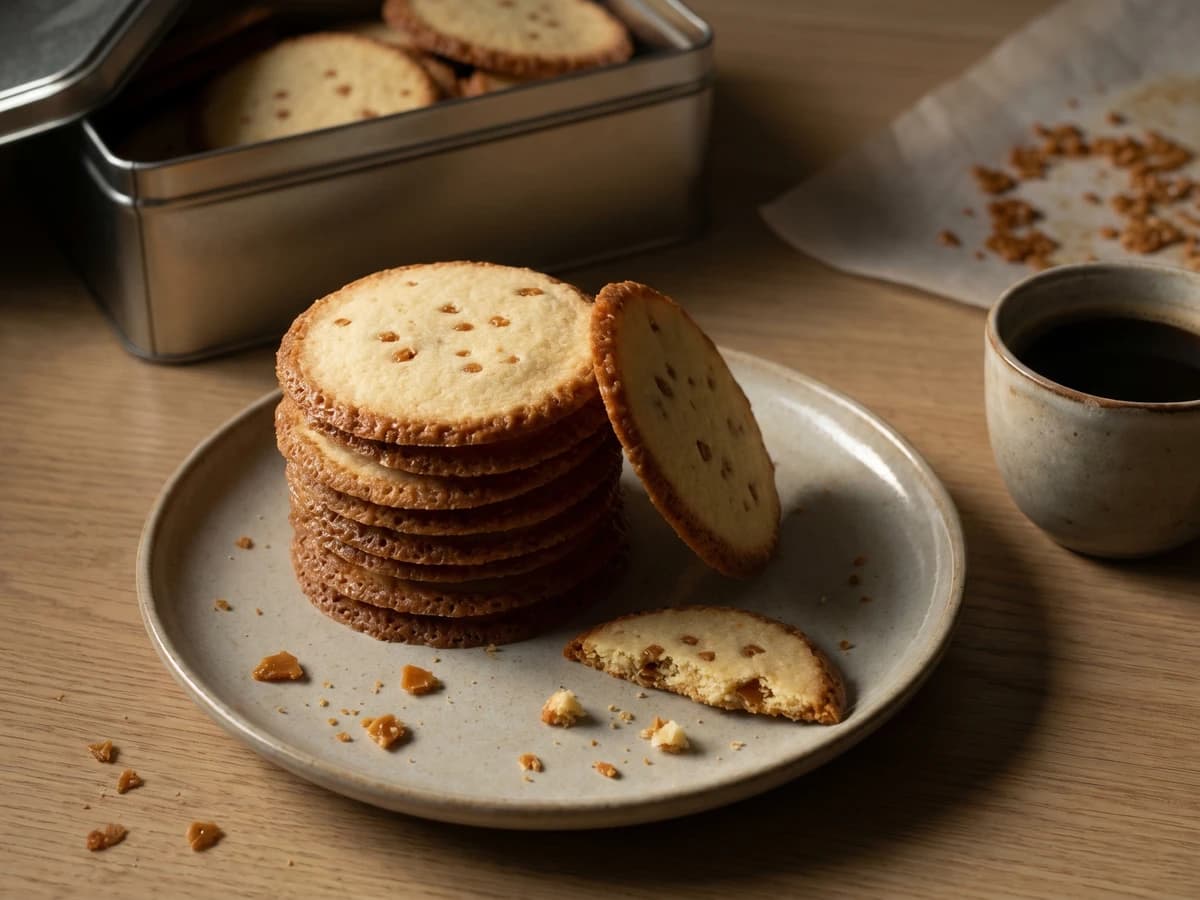
A thin Amsterdam cookie carrying a cog ship in its name: caramelized butter dough, almond nougatine, and a 1934 contest that turned municipal pride into something for coffee.