
Chef Zohra
Baghrir (بغرير)
The lacy Moroccan pancake of fine semolina, cooked on one side only so every little hole stays open for warm butter and honey.
A cooking platform built around craft, culture, and the stories behind what we eat.
Created by
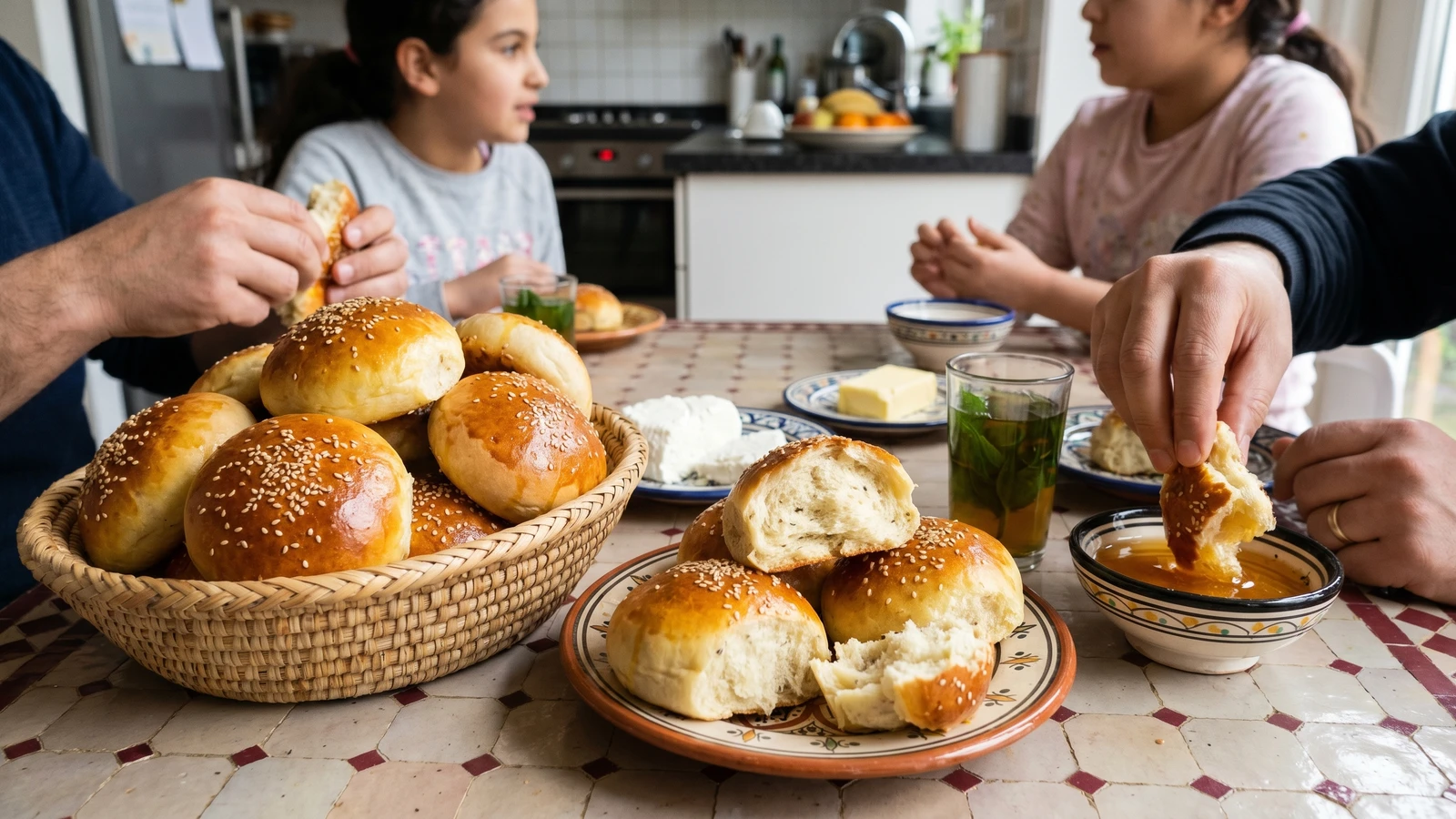
Soft Fassi krachel, glossy with egg wash and sesame, scented with anise and orange-flower water. Pull them warm at ftour, with honey, beldi cheese, and one more glass of tea.
At Ramadan ftour, krachel arrive like a small promise: not too sweet, not plain, just fragrant enough that the whole table knows the oven has done its work. Anise, sesame, orange-flower water, a little butter. You tear one open while it's still tender and pass the honey before anyone asks.
The dough asks for patience, not fear. Knead until it turns smooth and elastic, then let it rise twice, because those rests are what give krachel their soft, pull-apart crumb and let the seeds perfume the flour properly. Dead yeast will not forgive you, and tired flour will not become generous just because you wish it so. Sourcing comes first.
These are oven breads, from the ferran family, not griddle breads. In a home oven you look for a hot, steady heat, a shiny egg-washed crust, and sesame seeds that toast gold before the crumb dries out. Make a basketful. Une table, c'est une porte qu'on laisse ouverte, a table is a door you leave open.
Krachel are strongly associated with Fez and the citadin baking repertoire, shaped by Andalusi and Jewish-Moroccan habits of perfuming doughs with anise, sesame, and orange-flower water. Their written dating is not fixed, but the bread belongs to Morocco's old urban oven culture, where household doughs were carried to the communal ferran and marked before baking. Across des cuisines marocaines, related sweet breads appear under different names and seasonings, which is why krachel should not be folded into one generic idea of Moroccan bread.
Quantity
500g
plus more for dusting
Quantity
75g
Quantity
2 tsp
or 7g instant yeast
Quantity
1 tsp
Quantity
1 tbsp
lightly crushed
Quantity
2 tbsp
plus more for topping
Quantity
1/4 tsp
Quantity
2 large
1 for the dough and 1 for glazing
Quantity
180ml
Quantity
2 tbsp
Quantity
60g
softened
Quantity
2 tbsp
Quantity
1 tbsp
for glazing
| Ingredient | Quantity |
|---|---|
| strong white bread flourplus more for dusting | 500g |
| sugar | 75g |
| active dry yeastor 7g instant yeast | 2 tsp |
| fine sea salt | 1 tsp |
| anise seedslightly crushed | 1 tbsp |
| sesame seedsplus more for topping | 2 tbsp |
| ground mastic or gum arabic (optional) | 1/4 tsp |
| eggs1 for the dough and 1 for glazing | 2 large |
| warm milk | 180ml |
| orange-flower water | 2 tbsp |
| unsalted buttersoftened | 60g |
| neutral oil | 2 tbsp |
| milkfor glazing | 1 tbsp |
Stir the yeast with the warm milk and a spoonful of the sugar, then leave it 5 to 10 minutes, until the surface looks foamy and alive. If nothing happens, stop there and replace the yeast. No gesture rescues dead yeast.
In a wide bowl, mix the flour, remaining sugar, salt, crushed anise, sesame seeds, and mastic if you're using it. Add 1 egg, the orange-flower water, the foamy yeast milk, butter, and oil. Bring it together with your hand until no dry flour remains and the dough feels soft, a little tacky, and fragrant.
Knead 10 to 12 minutes by hand, or 7 minutes in a mixer on low, until the dough smooths out and stretches without tearing at once. This is the gesture that decides the crumb: enough kneading gives krachel their tender pull, too little leaves them heavy.
Set the dough in a lightly oiled bowl, cover it, and let it rise in a warm place until doubled, about 1 hour to 1 hour 15 minutes. It should look swollen and soft, and when you press it gently, the mark should return slowly.
Turn the dough out and divide it into 12 equal pieces. Roll each piece under your palm into a smooth round, pulling the surface tight so the rolls rise upward instead of spreading flat. Set them on a lined baking sheet with space between them.
Cover the shaped rolls and let them rise again until puffy, 35 to 45 minutes. Heat the oven to 190°C. Beat the second egg with 1 tablespoon milk, brush the rolls gently, and scatter sesame seeds over the tops.
Bake 18 to 22 minutes, until the tops are deep gold, glossy, and lightly firm when touched. The sesame should smell toasted, not scorched. Cool on a rack for at least 10 minutes before tearing them open.
Serve warm or at room temperature with honey, butter, beldi cheese, dates, or mint tea. Krachel keep their welcome well, but they are most tender the day they're baked.
1 serving (about 75g)
Culinary guides, cultural storytelling, and the editorial depth that makes cooking meaningful.
Discover Culinary ExplorerChef Zohra
The lacy Moroccan pancake of fine semolina, cooked on one side only so every little hole stays open for warm butter and honey.

Chef Zohra
Small rounds of Moroccan bread puffed on a hot pan, tender inside with a pocket ready for sauce, olives, honey, or whatever the table has made room for.

Chef Zohra
A Chaouia griddle bread halfway between loaf and light beignet, made from a loose semolina dough spread by hand, fried gold, and eaten warm with butter, honey, or olive oil.

Chef Zohra
A pan-cooked semolina galette, golden at the edges and tenderly crumbly inside, called harcha in much of Morocco and mbesses in the Oujda east.