
Chef Klaus
Berlin Currywurst
The Berlin Imbiss counter on a plate: fried sausage cut thick, a tomato curry sauce cooked until glossy, and enough fries or bread to chase every bit.
A cooking platform built around craft, culture, and the stories behind what we eat.
Created by
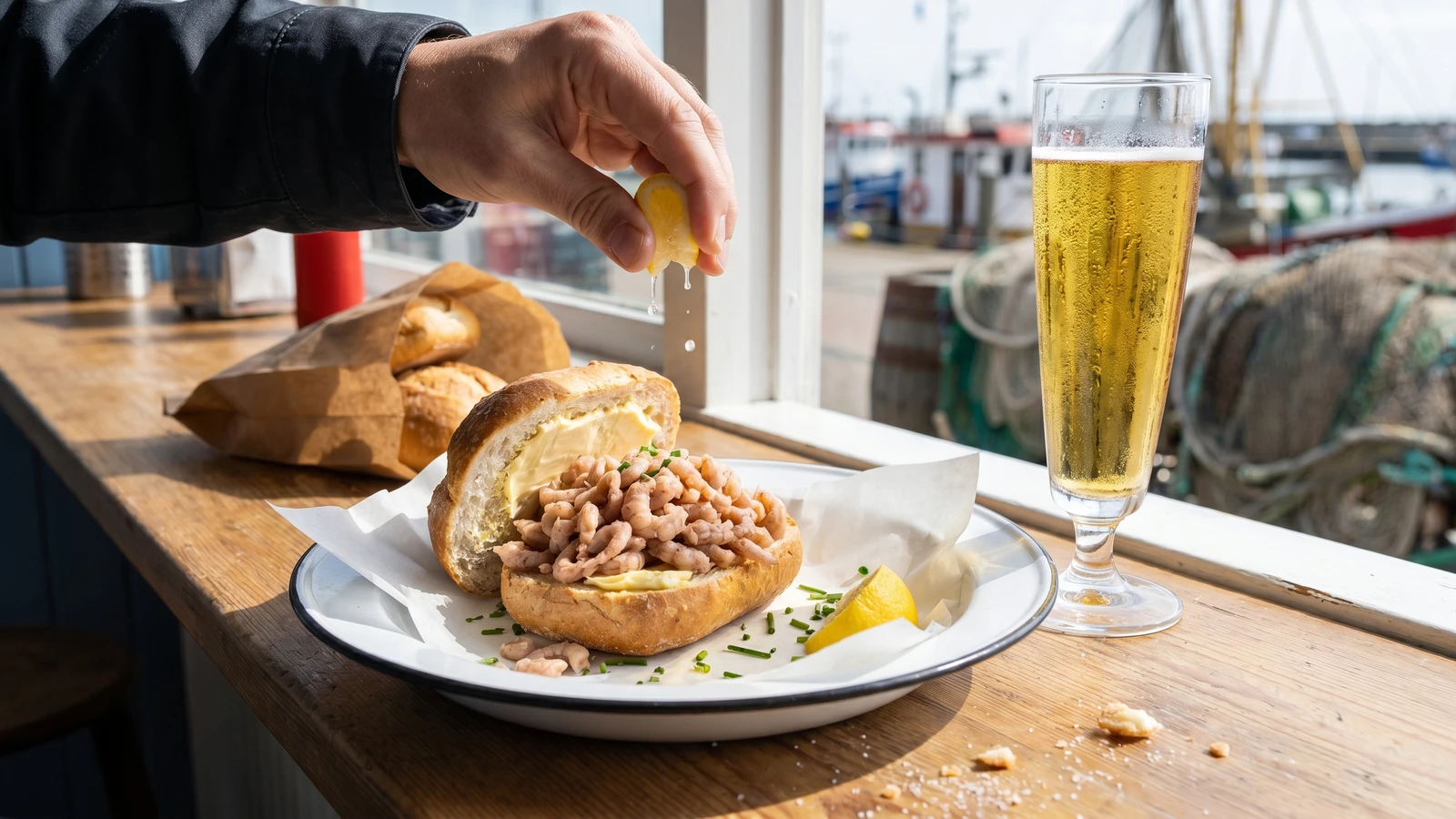
A North Sea roll lives on the sweet brown shrimp: butter the bread, drain the Krabben, and keep the lemon sharp but late, because this sandwich has nowhere to hide.
Krabbenbrötchen belongs to the North Sea, to the harbour kiosk, the fish market, and the windy picnic bench where lunch comes wrapped in paper. The Krabben are not crabs; on this coast the word means small brown shrimp, already cooked, peeled, and sweet from the cold water. It is best from late summer into autumn when the catch runs full, though good chilled Krabben make it a proper quick meal all year.
Every coast town has an opinion. In Büsum and East Frisia you hear butter, lemon, and leave it alone; in Hamburg stalls you see remoulade, egg, lettuce, and sometimes enough dressing to make the shrimp disappear. Im Norden anders, im Süden anders, yes, but this dish is northern in its bones. The south can eat it gladly, but it doesn't get to bury the coast under mayonnaise.
The technique is not cooking. It is restraint and order. Drain the Nordseekrabben well, pat them dry, butter the cut roll to the edges, and squeeze the lemon only at the table. Wet shrimp soak the crumb and taste flat; early lemon tightens them and pulls out brine; butter gives the bread a little wall of fat so the heap stays sweet, cold, and clean. Nicht aus dem Glas. If you need a sauce to taste the shrimp, you bought the wrong shrimp.
North Sea brown shrimp, Crangon crangon, have been landed around the Wadden Sea for centuries, but the Krabbenbrötchen as a roll from a stall belongs to the age of railways, ice, and seaside tourism in the late nineteenth and early twentieth centuries. In coastal German usage Krabben means shrimp, not crab, and towns such as Büsum, Husum, Greetsiel, and the Hamburg fish markets built a snack culture around the peeled catch. The argument over butter and lemon versus remoulade and egg follows the line between the bare harbour version and the city fish-stall version.
Quantity
300g
cooked and chilled
Quantity
4
split
Quantity
50g
softened
Quantity
1
cut into wedges
Quantity
1 tablespoon
Quantity
to taste
Quantity
only if needed
| Ingredient | Quantity |
|---|---|
| hand-peeled Nordseekrabbencooked and chilled | 300g |
| fresh Brötchen or Rundstückesplit | 4 |
| good salted buttersoftened | 50g |
| unwaxed lemoncut into wedges | 1 |
| snipped chives (optional) | 1 tablespoon |
| freshly ground black pepper (optional) | to taste |
| fine sea salt (optional) | only if needed |
Tip the Nordseekrabben into a fine sieve and let them drain for five minutes, then pat them gently dry. Don't rinse them. Water steals the sweet briny taste and makes the bread soggy before you've taken two bites.
Taste a spoonful cold. Good Krabben are sweet, mild, and clean, with enough salt from the sea and the cooking liquor. Add salt only if they taste flat, because once this little shrimp is over-salted there is nowhere for it to hide.
Split the Brötchen and butter the cut sides right to the edge. The butter is not decoration; it is the fat wall between the juicy shrimp and the crumb, so the roll stays crisp enough to carry the heap.
Divide the Krabben over the buttered roll bottoms in loose mounds and leave the top halves angled beside them. Pressing them down squeezes out brine and turns a good Krabbenbrötchen into a wet little mistake.
Add a small squeeze of lemon just before eating, then chives or black pepper if you want them. Lemon goes late because acid firms the shrimp and pulls out moisture if it sits. Würzen, Fett, Salz zum Schluss. Serve at once.
1 serving (about 150g)
Culinary guides, cultural storytelling, and the editorial depth that makes cooking meaningful.
Discover Culinary ExplorerChef Klaus
The Berlin Imbiss counter on a plate: fried sausage cut thick, a tomato curry sauce cooked until glossy, and enough fries or bread to chase every bit.

Chef Klaus
A northern fish-stall roll built on sharp Bismarck herring, raw onion, and pickle, with one rule deciding the whole thing: the vinegar cure goes on cold and gets its time.

Chef Klaus
Franconia's sour-poached bratwurst skips the grill: raw sausages, onion, vinegar, wine, and one quiet rule, keep the sud below the boil.

Chef Klaus
A Berlin Brühwurst belongs in hot water, not boiling water: warm it gently, keep the skin tight, then eat it in a roll with sharp mustard.