
Chef Makoa
Carpaccio de Atún Kahi (Rapa Nui Tuna Carpaccio)
Rapa Nui's kahi, tuna from the far eastern corner of the Triangle, sliced thin and dressed with lemon, olive oil, and capers. Same ocean fish, this island's modern bowl.
A cooking platform built around craft, culture, and the stories behind what we eat.
Created by
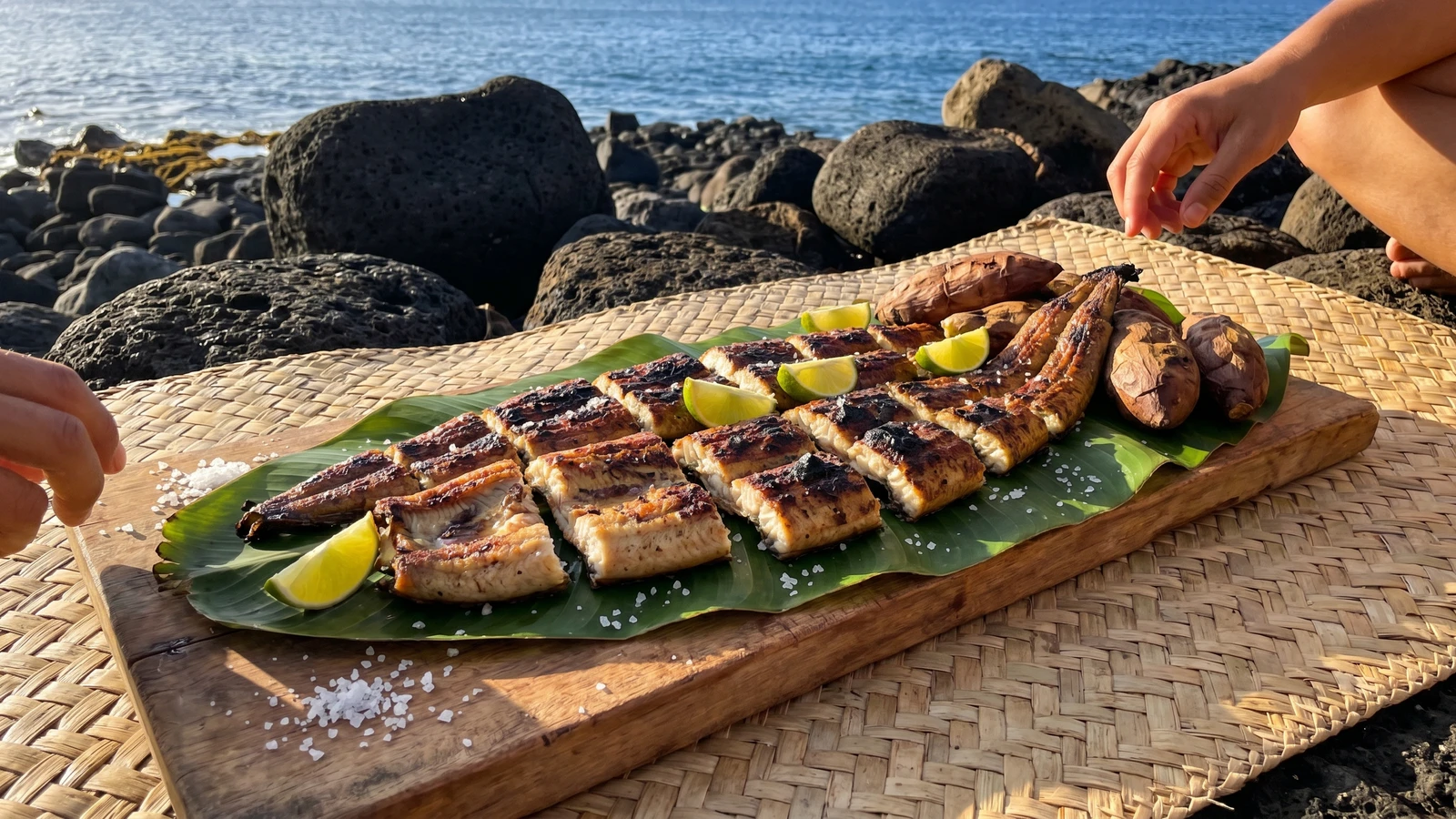
Rapa Nui koreha, reef eel salted and grilled over hot stone heat until the skin crisps and the rich flesh turns glossy, served simply with kumara and a squeeze of modern citrus.
At the far eastern corner of our Triangle, Rapa Nui sits with the whole sea pressing on it, and that ocean is not scenery there, it is kin. Koreha, eel, belongs to that Rapa Nui shore: a prized old-island catch from the rocky shallows, salted plain and set against hot stone heat until the skin crisps and the rich flesh shines. This is not Hawaiʻi's puhi, eel from our reefs and stories, and not Aotearoa's tuna, eel treasured by Māori families in the rivers. Those are cousins. This hand is Rapa Nui's.
I cook this one open-handed, because Rapa Nui is not my home seat. The old people there know the deeper layers, the right places, the right seasons, the stories tied to each shore, and for those parts you go to them. What I can bring you is the kitchen path: clean eel, good salt, a hot grill or safe cooking stone, and enough restraint not to bury the fish under sauce.
The why is simple. Eel is rich, so it wants dry heat and a little patience. The salt firms the flesh, the skin protects it, the stone or iron gives it that crisp edge, and the rest after cooking lets the fat settle back where it belongs. No need make it precious. Eat what you have, but name whose table fed you. One ocean, one canoe, one root, and still every island keeps its own name.
Rapa Nui, the eastern point of the Polynesian Triangle, was settled by Polynesian voyagers centuries before Dutch captain Jacob Roggeveen reached it in 1722; the people fed themselves from rock-mulched gardens, manavai stone enclosures, chickens, sweet potato, taro, and a hard-working shore fishery. Koreha belongs to that older coastal table, reef eel speared or caught in rocky shallows and cooked simply with sea salt and hot stones beside foods from the umu pae, the Rapa Nui stone earth oven. Seen beside Hawaiian puhi (eel) and Māori tuna (eel) of Aotearoa, it shows the family without smearing the islands: one ocean, each island's own name for the creature and the way to cook it.
Quantity
2 pounds
reef eel, conger eel, or freshwater eel, cut into 4-inch sections or fillets
Quantity
1 1/2 teaspoons
plus more for finishing
Quantity
1 tablespoon
Quantity
1
cut into wedges
Quantity
2
rinsed and warmed until pliable, for lining the platter
Quantity
for serving
| Ingredient | Quantity |
|---|---|
| fresh cleaned eel (koreha)reef eel, conger eel, or freshwater eel, cut into 4-inch sections or fillets | 2 pounds |
| coarse sea saltplus more for finishing | 1 1/2 teaspoons |
| neutral oil or melted coconut oil | 1 tablespoon |
| lime or lemon (optional)cut into wedges | 1 |
| banana leaves (optional)rinsed and warmed until pliable, for lining the platter | 2 |
| roasted kumara (sweet potato) or taro (optional) | for serving |
Buy the eel cleaned from a fishmonger who can tell you when it came out of the water. It should smell clean, like the sea and almost nothing else. Rinse away any blood, pat it very dry, and cut it into sturdy sections or fillets that will hold together over the fire.
Score the skin lightly every inch so it doesn't curl hard on the grill. Salt the koreha all over and let it sit 15 to 20 minutes while the fire comes up. Pat away the moisture that rises, then rub the eel with the oil. Keep it plain. The old work here is fish, salt, stone, and patience.
Build a medium-hot charcoal fire, or heat a gas grill with a heavy cast-iron griddle. If you use cooking stones, use only dry, grill-safe volcanic stones set over the heat until they are fierce enough that your hand can stay a few inches above them for only two seconds.
Lay the eel skin side down on the oiled grate, stone, or griddle. Let it sit without fussing until the skin tightens, crisps at the edges, and releases cleanly, about 4 to 6 minutes. Eel carries its own fat, so watch for flare-ups and move the pieces to calmer heat if the fire gets too hungry.
Turn the koreha and cook the flesh side until it is opaque and glossy, another 3 to 6 minutes depending on thickness. The flesh should flake when pressed, but not dry out. No blame the eel if it turns tough. That means the fire ran too hot or you kept it on too long.
Move the eel to banana leaf and let it rest 5 minutes so the juices settle back in. Finish with a small pinch of sea salt and lime or lemon if you want that modern bright edge. Serve it family-style with roasted kumara or taro beside it, enough for one more hand to reach in.
1 serving (about 330g)
Culinary guides, cultural storytelling, and the editorial depth that makes cooking meaningful.
Discover Culinary ExplorerChef Makoa
Rapa Nui's kahi, tuna from the far eastern corner of the Triangle, sliced thin and dressed with lemon, olive oil, and capers. Same ocean fish, this island's modern bowl.
Chef Makoa
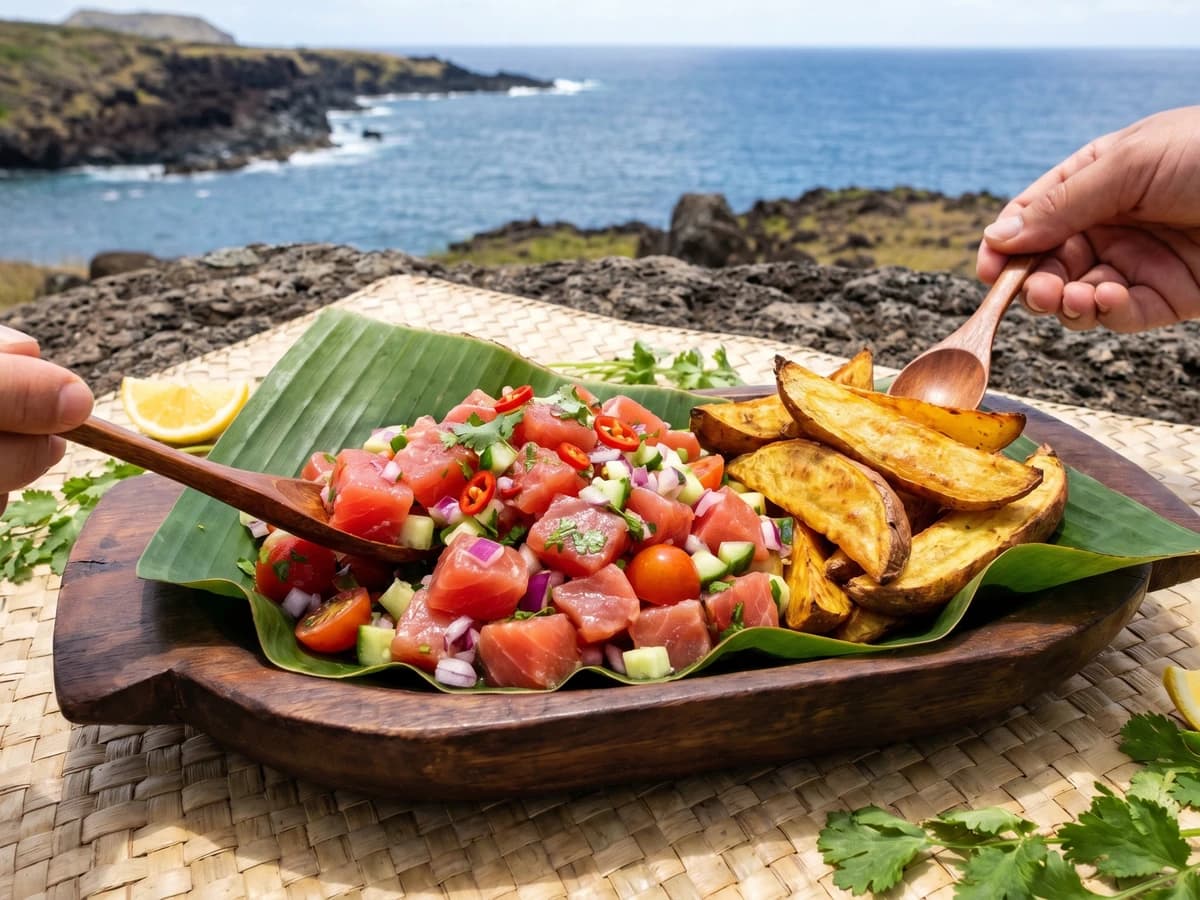
Fresh kahi from Rapa Nui, turned bright in lemon with onion, chili, and cilantro, then served with sweet kumara. A Chilean overlay, yes, but eaten in the island's own hand.
Chef Makoa
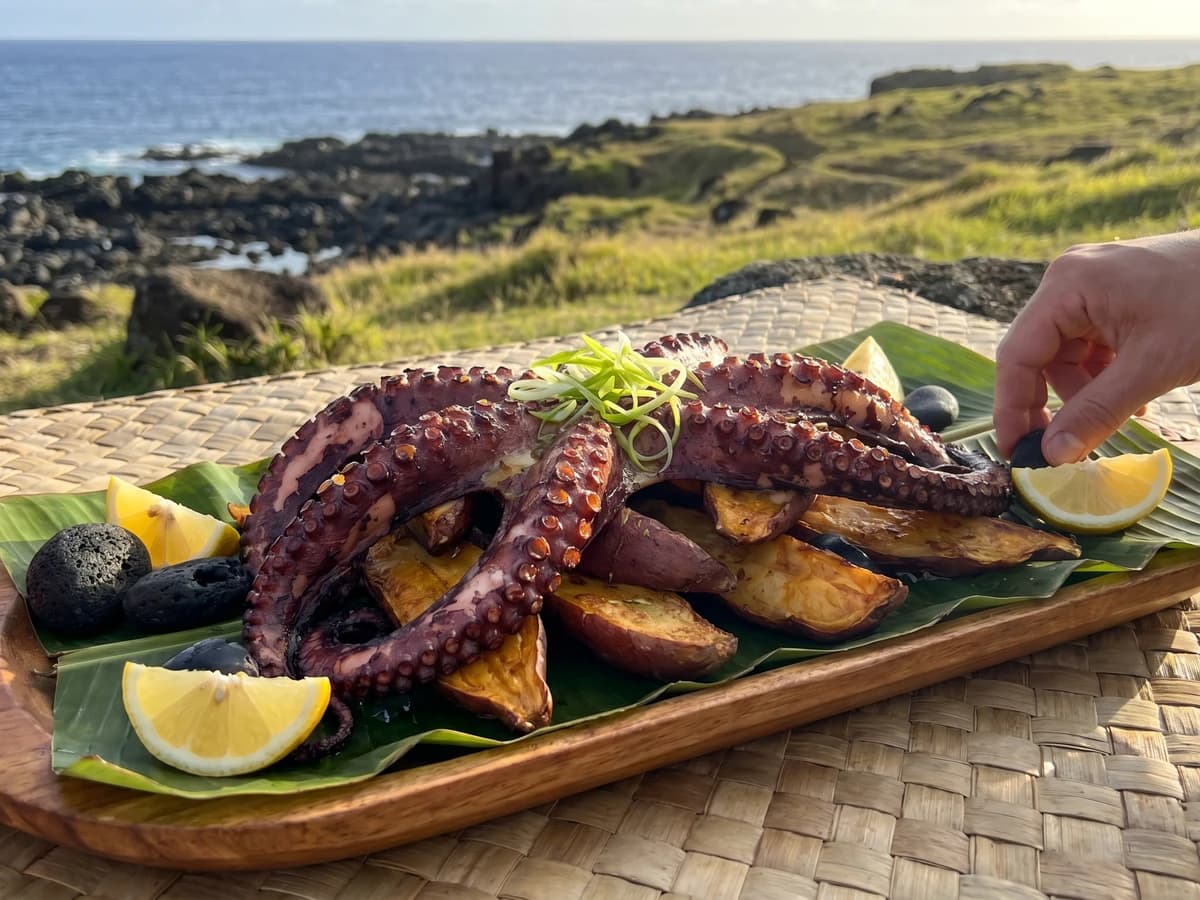
At Rapa Nui's far ocean edge, heke, reef octopus, is simmered tender, grilled until glossy and charred, then served with kumara and lemon, the cousin of Hawaiian heʻe and Māori wheke.

Chef Makoa
Rapa Nui's kana kana, the long sierra fish of the cold current, grilled simple over coals with boiled kumara. The far corner's weeknight plate, plain, good, and close to the sea.