
Chef Takumi
Agar Jelly with Anko and Fruit (あんみつ, Anmitsu)
Anmitsu looks like a tray of small tasks, but the work is calm: dissolve the kanten fully, chill the pieces clean, then let fruit, anko, and kuromitsu do the speaking.
A cooking platform built around craft, culture, and the stories behind what we eat.
Created by
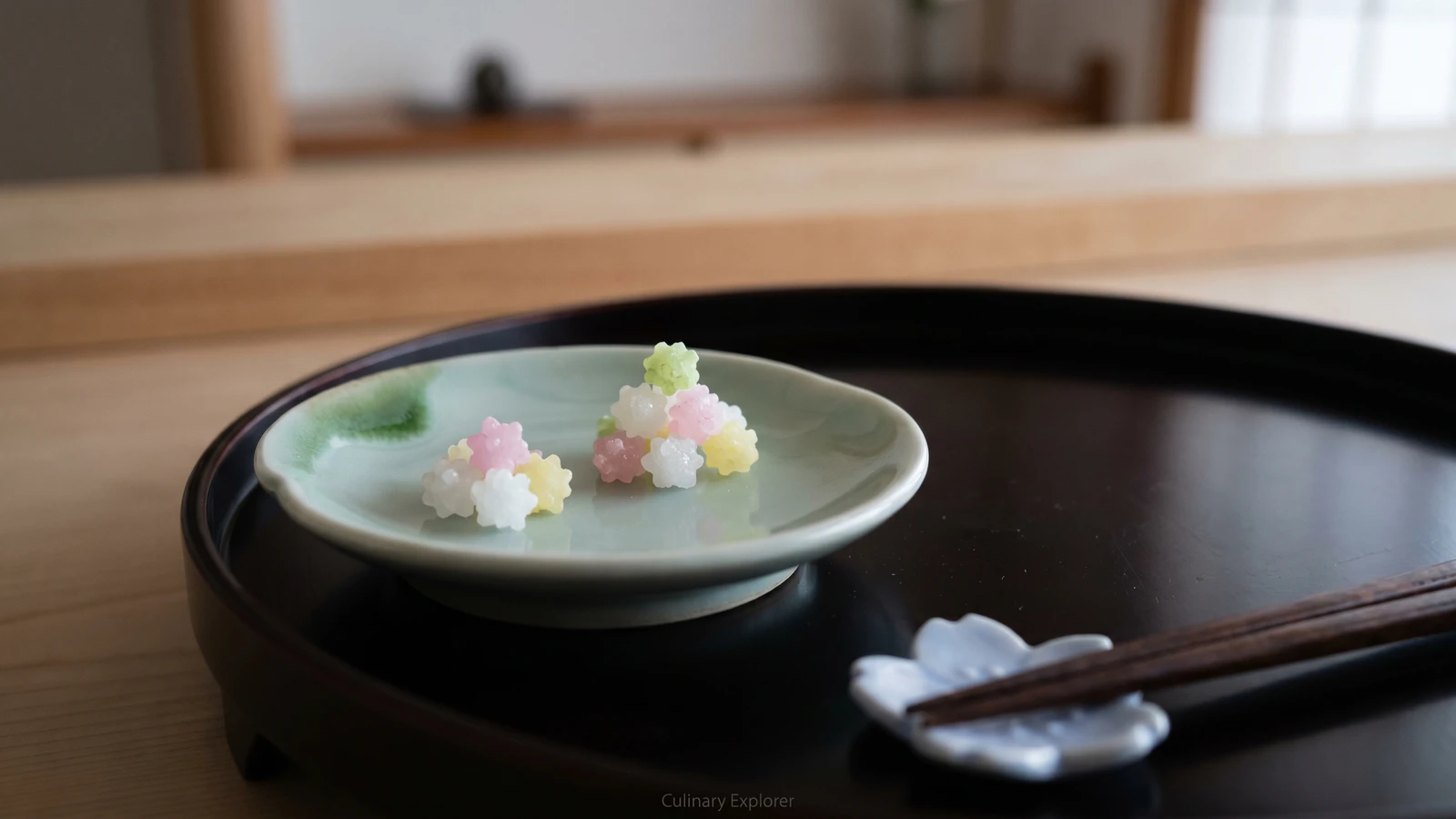
Konpeitō looks like magic, but it is patient sugar work: tiny cores warmed and turned while thin syrup dries in layers, growing points one careful spoonful at a time.
Konpeitō has the look of a toy from a very serious shop: small sugar stars, pale as spring sleeves or bright as festival paper, each one rough with little points. People see those points and assume some mold must be hiding nearby. There isn't one. The shape grows because sugar, warmth, and movement are given enough time to argue among themselves.
The one detail that decides it is restraint with the syrup. Add too much and the seeds clump into a sad little gravel road. Add a few drops at a time and keep them moving, and the syrup dries as a thin skin before the next layer goes on. Layer by layer, the candy becomes heavier, rounder, and finally pointed. Not difficult, only unhurried.
This is celebration wagashi, sweet enough to be served in pinches, not handfuls. At weddings, at tea, in small boxes for a gift, konpeitō asks for ma, the empty space around it. Serve five or seven pieces in a small dish and stop there. The candy has already taken days to grow. Let it have room on the table.
Konpeitō takes its name from the Portuguese confeito, sugar confection, brought to Japan by Portuguese traders and missionaries in the sixteenth century. In 1569, the Jesuit missionary Luís Fróis is recorded as presenting confections to Oda Nobunaga, when refined sugar was still rare enough to carry diplomatic weight. By the Edo period, Japanese makers had absorbed the candy into wagashi, developing the long rotating-pan method that gives konpeitō its points without a mold.
Quantity
1 tablespoon
Quantity
2 cups
divided
Quantity
3/4 cup
divided
Quantity
1/8 teaspoon
| Ingredient | Quantity |
|---|---|
| white poppy seeds | 1 tablespoon |
| granulated sugardivided | 2 cups |
| waterdivided | 3/4 cup |
| powdered food coloring (optional) | 1/8 teaspoon |
Put the poppy seeds in a dry, heavy skillet or small wok over the lowest heat. Shake the pan for two minutes, just until the seeds feel warm and dry, not toasted. Warm, dry cores catch the first sugar film more evenly, while oily or damp seeds make the syrup slide off.
Combine 1/2 cup sugar with 1/4 cup water in a small saucepan. Warm gently, stirring only until the sugar dissolves, then keep it barely warm at the side of the stove. You want a thin syrup, not caramel. Thick syrup makes lumps before it can dry into layers.
Keep the seeds moving in the warm skillet and drizzle in 1/2 teaspoon of syrup. Stir and shake until the seeds separate again and look dry and dusty, about two minutes. That dry look matters: the surface must set before the next spoonful, or the candies glue themselves together.
Repeat the same rhythm: a few drops of syrup, constant movement, then patience until the surface dries. If the pan looks wet, wait. If the seeds clump, lower the heat and separate them with a wooden spoon while the sugar is still soft. This is the whole craft, and it is mostly the nerve to add less than you want.
When the syrup becomes thick or grainy, make a fresh small batch with another 1/2 cup sugar and 1/4 cup water. Keep working in small batches because old syrup concentrates as water evaporates, and concentrated syrup builds rough lumps instead of fine, even growth.
For colored konpeitō, dissolve a pinch of powdered food coloring into the last small batch of syrup. Keep the color pale. Traditional konpeitō often speaks softly, and a little color shows the points better than a loud one.
After one and a half to two hours of coating, spread the candies on parchment and let them dry uncovered at room temperature until the next day. The rest is not wasted time. It lets the sugar harden through, so tomorrow's layers build shape instead of softening yesterday's work.
Repeat the coating and drying over two or three days, until the candies are about 5 to 7 millimeters across and have clear little points. Let them dry one final night, then store airtight. A true maker works longer in a heated rotating pan called a dora, but this small-pan method keeps the same principle: thin syrup, steady turning, nothing rushed.
1 serving (about 25g)
Culinary guides, cultural storytelling, and the editorial depth that makes cooking meaningful.
Discover Culinary ExplorerChef Takumi
Anmitsu looks like a tray of small tasks, but the work is calm: dissolve the kanten fully, chill the pieces clean, then let fruit, anko, and kuromitsu do the speaking.

Chef Takumi
A cool square of almond-scented milk, set softly and served with mikan in thin syrup, is dinner-party food without theater. The only stern demand is restraint with the fragrance.

Chef Takumi
Azuki bar asks for patience twice: once while the beans soften, and once while the frozen bar yields. That hardness is not a flaw. It is the character of the thing.
Chef Takumi
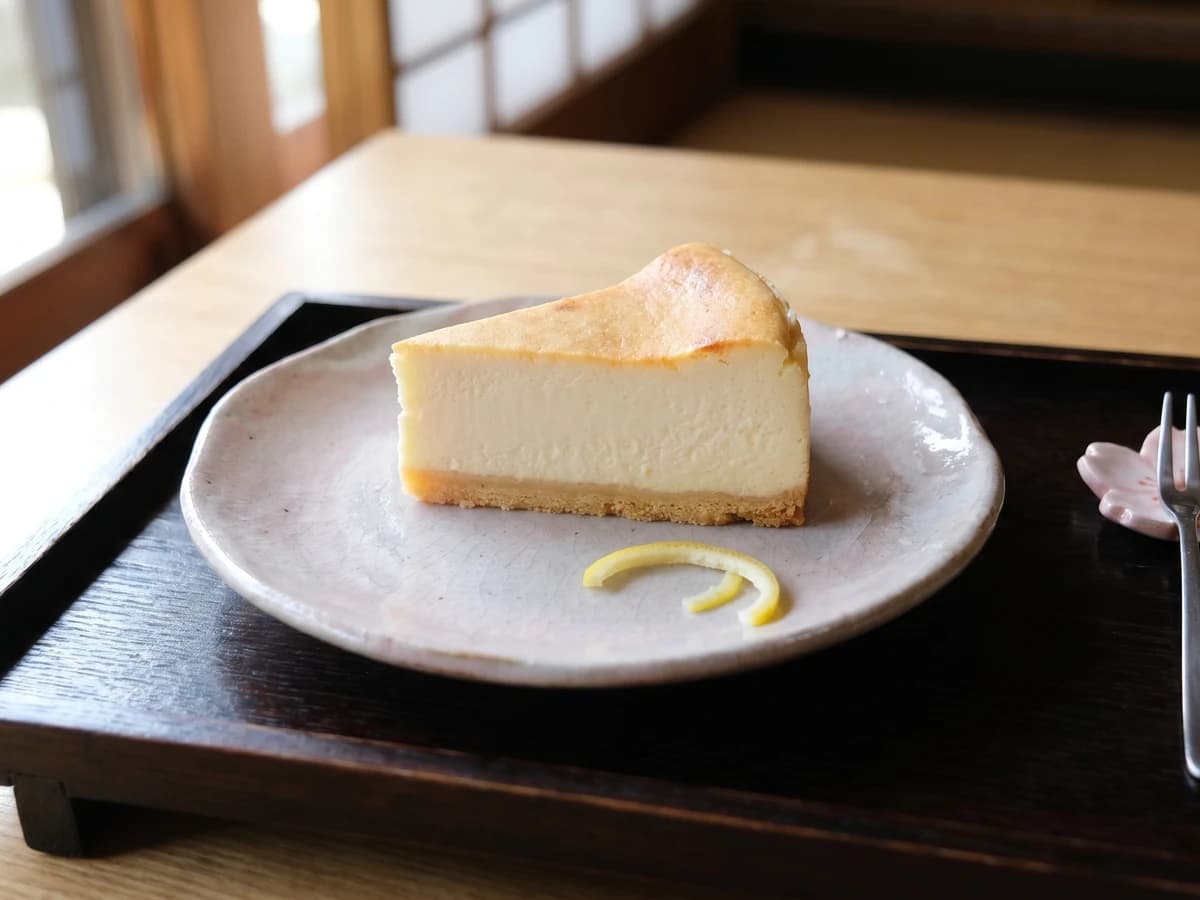
A Japanese baked cheesecake is not trying to float away. It is dense, smooth, and quietly tart, with a clean slice doing the work of decoration.