
Chef Joost
Aspergesoep (Dutch White Asparagus Soup)
White asparagus is Limburg's spring clock, and this soup uses every pale stem and peeling to make wit goud, white gold, taste like the season it refuses to outlive.
A cooking platform built around craft, culture, and the stories behind what we eat.

Created by
In Zuid-Limburg, Christmas rabbit goes into vinegar before it goes near the fire, because the sour marinade is the old magic that makes the meat tender, dark, and festive.
AZuid-Limburg Christmas table asks for patience before it asks for fire. The rabbit goes into vinegar with onion, bay, clove, and pepper, and every impatient cook in the house is told to leave it alone. The first time I ate it was not in Zeeland but near Maastricht, where the marinating dish was treated like a locked cupboard: opened only to turn the meat, then closed again. For obvious reasons, children considered this tyranny.
The name already tells you the method: konijn in het zuur, rabbit in the sour. Sour is the word that frightens outsiders, because they imagine punishment instead of balance. But let me tell you a secret: in Limburg, zuur is only the door. Behind it wait apple syrup, ontbijtkoek, clove, bay, and onions cooked until they lose their argument. This is exuberant cookery in a frugal country, a Christmas braise built from a farmhouse animal and a pantry shelf.
Rabbit is lean, and lean meat needs kindness. The vinegar marinade seasons it deeply and loosens the old country toughness; the long low braise finishes what the vinegar began. Then the ontbijtkoek, Dutch spiced breakfast cake, dissolves into the pot, thickening the sauce and lending its spice cargo without making a speech. Hou het altijd simpel: brown the pieces properly, boil the marinade once because safety is also tradition, and let time do the rest.
Konijn in het zuur belongs to the Limburg family of zuurvlees, or in Maastricht dialect zoervleisj, sour meat, a sweet-sour braise associated especially with Maastricht and Zuid-Limburg. The older city version was often made with horse meat, while rabbit became a festive household variant where small livestock was common and Christmas tables wanted something richer than weekday stew. The method, one to three days in vinegar with bay and clove, reflects older preservation practice before refrigeration; the finish with appelstroop and ontbijtkoek gives the sauce the dark sweet-sour balance Limburg cooks still guard.
Quantity
1.3kg
jointed into 6 to 8 pieces
Quantity
500ml
Quantity
500ml
Quantity
3 large
thinly sliced
Quantity
4
Quantity
6
Quantity
12
Quantity
6
lightly crushed
Quantity
2 teaspoons
plus more to taste
Quantity
50g
Quantity
2 tablespoons
Quantity
250ml
Quantity
2 to 3 tablespoons
Quantity
3 slices
crumbled
Quantity
1 tablespoon
Quantity
to taste
Quantity
to serve
| Ingredient | Quantity |
|---|---|
| rabbitjointed into 6 to 8 pieces | 1.3kg |
| mild red wine vinegar or natuurazijn (plain vinegar) | 500ml |
| cold water | 500ml |
| onionsthinly sliced | 3 large |
| bay leaves | 4 |
| whole cloves | 6 |
| black peppercorns | 12 |
| juniper berries (optional)lightly crushed | 6 |
| fine sea saltplus more to taste | 2 teaspoons |
| butter | 50g |
| neutral oil | 2 tablespoons |
| chicken or rabbit stock | 250ml |
| apple syrup (appelstroop) | 2 to 3 tablespoons |
| ontbijtkoek (Dutch spiced breakfast cake)crumbled | 3 slices |
| dark brown sugar (optional) | 1 tablespoon |
| freshly ground black pepper | to taste |
| frieten, mashed potatoes, or red cabbage (optional) | to serve |
Put the vinegar, cold water, sliced onions, bay leaves, cloves, peppercorns, juniper berries if using, and salt into a nonreactive dish. Add the rabbit pieces and turn them so every surface meets the sour marinade. Cover and refrigerate for 24 to 48 hours, turning the pieces once. The leaner or wilder the rabbit, the longer it deserves.
Lift the rabbit from the marinade and pat the pieces very dry. Strain the marinade, keeping both the liquid and the onions with their spices. Wet rabbit greys in the pan instead of browning, and browning is where the sauce begins to find its depth.
Set a heavy braadpan, a Dutch oven, over medium heat with the butter and oil. Brown the rabbit in batches until the edges are walnut-brown, about 4 minutes per side. Do not crowd the pan and do not try to cook the meat through yet; this is colour, not doneness.
Add the drained onions and spices to the same pan and cook for 8 to 10 minutes, scraping the browned bits from the bottom as the onions soften. Return the rabbit to the pan. Pour in about 400ml of the reserved marinade and the stock, enough liquid to come halfway up the meat. Bring it to a full boil for 2 minutes, then lower the heat.
Cover the pan and let the rabbit barely murmur for 1 1/2 to 2 hours, turning the pieces once or twice. A fierce boil tightens rabbit, which is a mean thing to do to a lean animal. It is ready when the thigh meat gives easily under a fork but still holds its shape.
Lift the rabbit to a warm plate. Remove the bay leaves and any cloves you can find without turning the kitchen into an excavation site. Whisk the appelstroop and crumbled ontbijtkoek into the sauce and simmer uncovered for 10 to 15 minutes, until it turns dark, glossy, and coats the back of a spoon. Taste for salt, pepper, and balance; add the brown sugar only if the vinegar still speaks too sharply.
Return the rabbit to the sauce and let it sit for 10 minutes off the heat, or cool the whole pot and serve it the next day. Spoon it onto plates with frieten, mashed potatoes, or red cabbage. If you make mash, press a kuiltje, a little hollow, into the middle and let the sauce settle there. Sensible engineering, and delicious.
1 serving (about 430g)
Culinary guides, cultural storytelling, and the editorial depth that makes cooking meaningful.
Discover Culinary ExplorerChef Joost
White asparagus is Limburg's spring clock, and this soup uses every pale stem and peeling to make wit goud, white gold, taste like the season it refuses to outlive.
Chef Joost
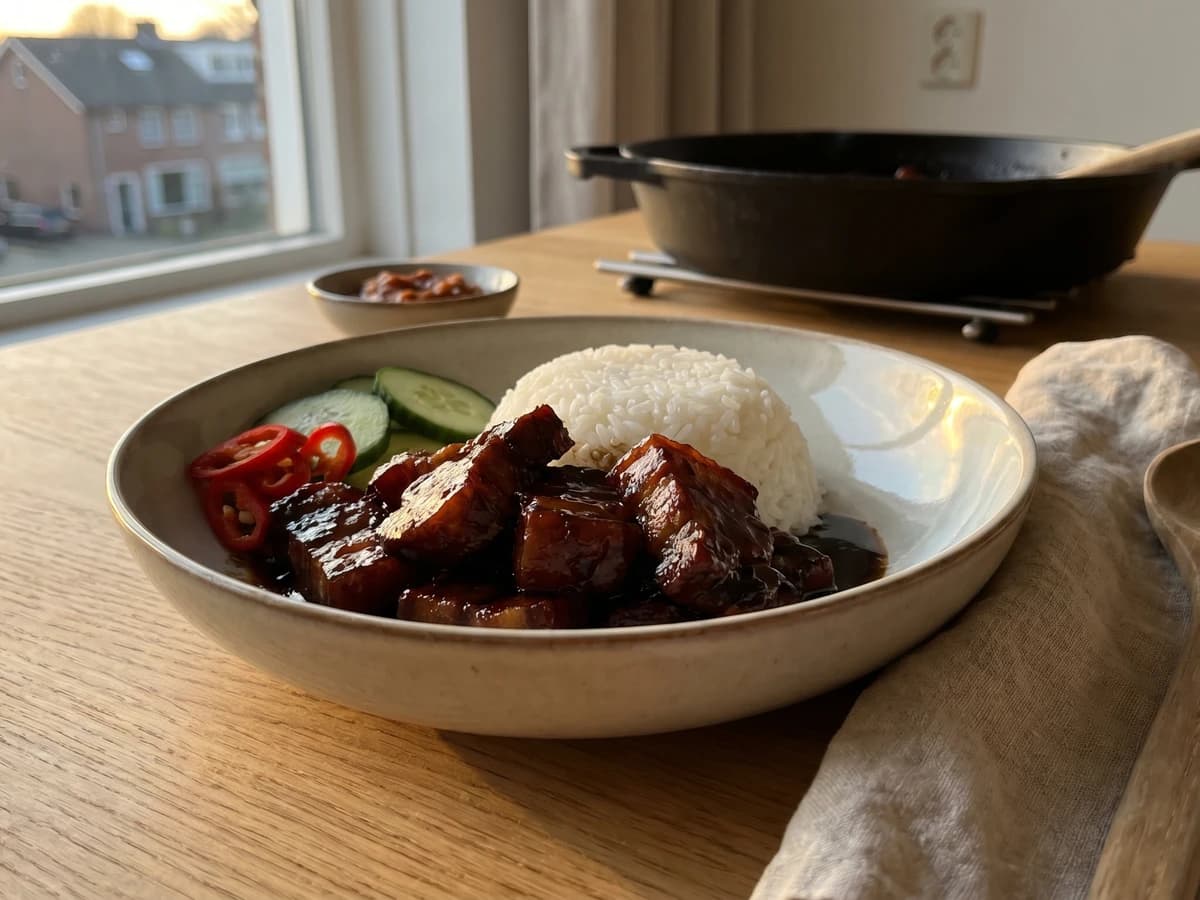
Pork, sweet soy, ginger, and patience: the Indo-Dutch braise that carried the colonial table into Dutch kitchens and made rice feel like Sunday dinner.
Chef Joost
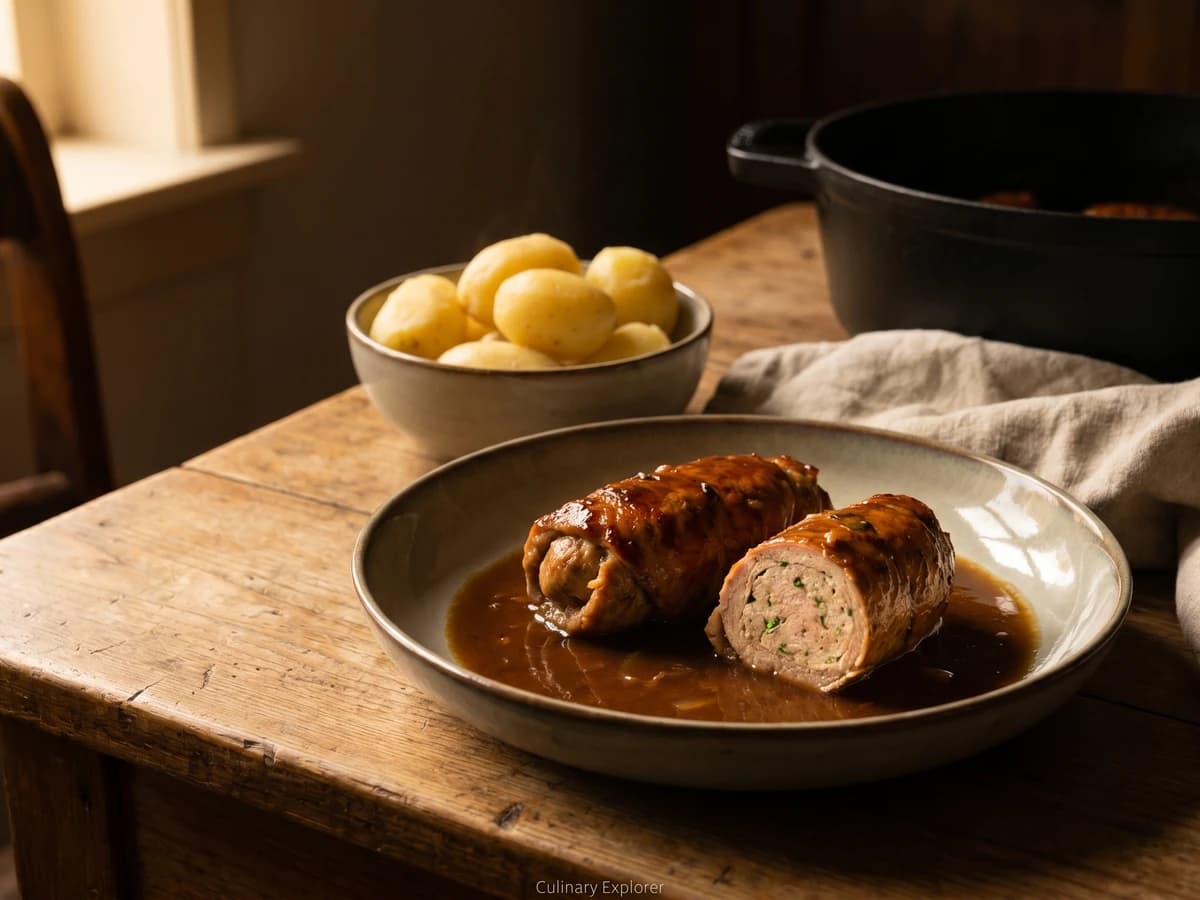
Blinde vinken are not birds but a butcher's little joke: seasoned mince tucked into thin veal or beef, browned dark in butter, then braised until the jus tastes of onion, mace, and patience.

Chef Joost
Bruine bonensoep is the quieter winter cousin of snert: brown beans, rookworst, bacon and roots in a broth that stays spoonable, frugal, and deeply Dutch.