
Chef Jeong-sun
Aehobak-bokkeum (Korean Stir-Fried Zucchini)
Tender Korean zucchini half-moons cooked quickly over real heat, seasoned with salted shrimp so the squash tastes deeper than oil and still clean enough for a weeknight table.
A cooking platform built around craft, culture, and the stories behind what we eat.
Created by
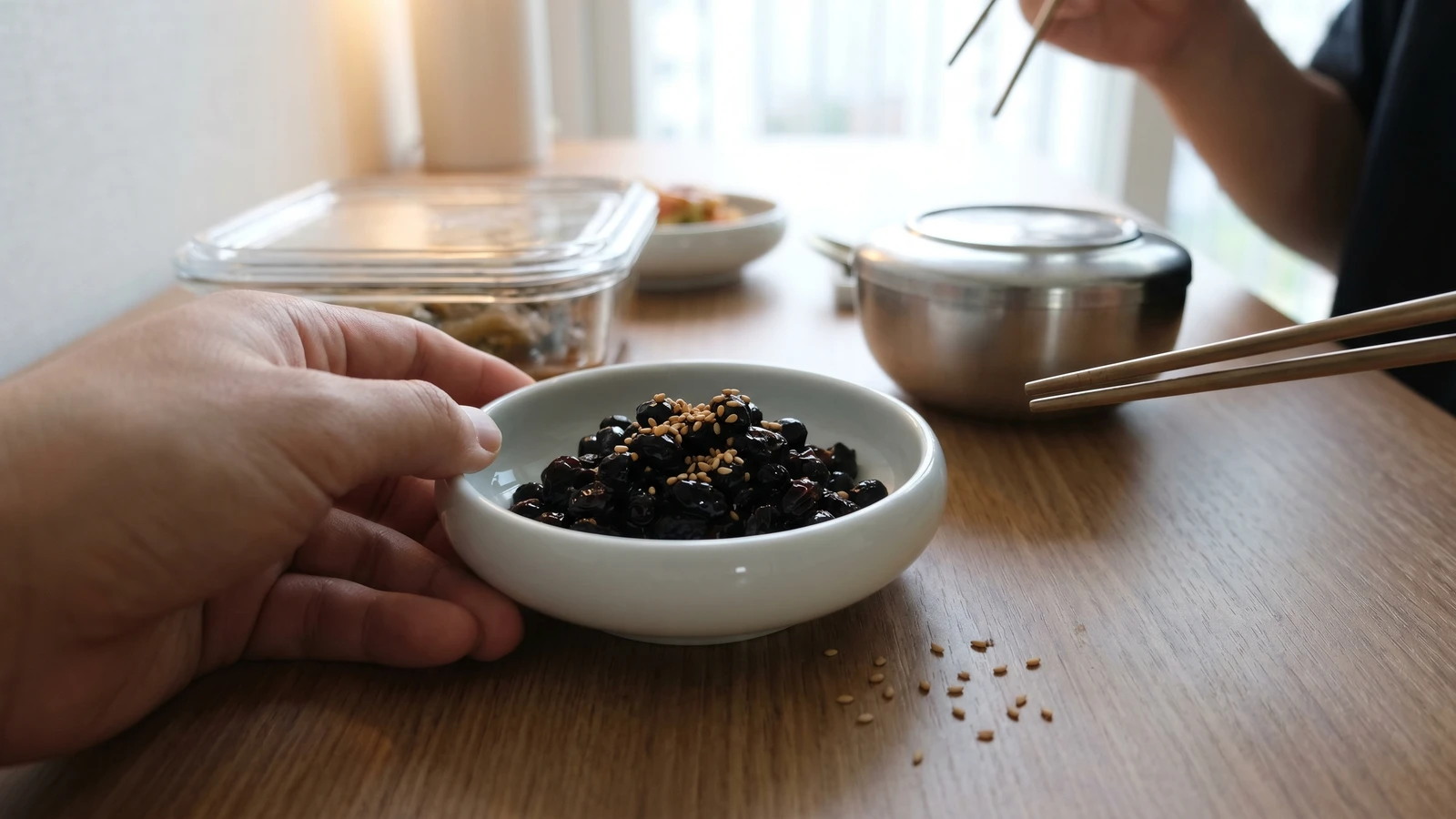
Black soybeans braised after soaking, then tightened in soy sauce and rice syrup until the skins wrinkle, shine, and keep a firm little chew beside plain rice.
콩자반 lives or dies by the moment you add the soy sauce. Add it too early and the bean skins tighten before the centers soften. Add the sweet syrup too early and the pot scorches just when you were almost done. The dish is small, but it makes you honest.
This is mitbanchan (make-ahead side dish), the kind that waits in a lidded container all week and turns a bowl of rice into a meal. My mother kept it next to kimchi and myeolchi-bokkeum (stir-fried dried anchovies), two spoonfuls at a time, never enough to fill you but enough to make the table feel kept. It should be glossy and black-brown, firm at the skin, tender at the center, sweet only after the soy has spoken.
Tonight it asks you to soak, simmer gently, and resist fussing. Cook the beans in plain water first, then season, then finish the shine with rice syrup at the end. Notebook 18 says five tablespoons soy sauce to one cup dried black soybeans, but taste your brand. Write it down. Memory is a borrowed bowl.
Kongjaban belongs to jorim (soy-braised dishes) and to mitbanchan, the make-ahead side dishes that keep a Korean rice table ready through the week. The word jaban historically referred to salty preserved foods kept beside rice, and kongjaban applies that habit to black soybeans simmered with ganjang (soy sauce) and sweetener until they keep for days. Many homes use seoritae (frost beans), a black soybean with green flesh named for the late-autumn frost around harvest time.
Quantity
1 cup (180g)
picked over and rinsed
Quantity
4 cups
Quantity
2 1/2 cups
plus more if needed
Quantity
5 tablespoons
Quantity
2 tablespoons
Quantity
3 tablespoons
Quantity
1 teaspoon
Quantity
2 teaspoons
| Ingredient | Quantity |
|---|---|
| dried Korean black soybeans (seoritae or geomjeongkong)picked over and rinsed | 1 cup (180g) |
| cold water for soaking | 4 cups |
| water for braisingplus more if needed | 2 1/2 cups |
| Korean soy sauce (jin-ganjang) | 5 tablespoons |
| sugar | 2 tablespoons |
| rice syrup (jocheong) or Korean corn syrup (mulyeot) | 3 tablespoons |
| toasted sesame oil | 1 teaspoon |
| toasted sesame seeds | 2 teaspoons |
Spread the beans out and remove any cracked beans, shriveled beans, or small stones. Rinse until the water runs mostly clear, then soak in 4 cups cold water for 8 to 12 hours. Refrigerate the bowl if your kitchen is warm. A soaked bean should be swollen and should split cleanly when bitten; this lets the center cook before the skin breaks.
Drain the soaked beans and put them in a 2-quart heavy saucepan with 2 1/2 cups fresh water. Bring to a boil, skim off the grey foam, then lower to a gentle simmer and cook partially covered for 35 to 45 minutes. Do not add soy sauce yet. Salt tightens bean skins, and if the center is still hard when the soy goes in, the pot will make you wait for it.
When a bean gives under your teeth but still holds its shape, add the soy sauce and sugar. Simmer uncovered for 20 to 25 minutes, stirring gently every few minutes, until the liquid reduces to about 1/2 cup. Keep the simmer low. Hard boiling splits the skins and turns the glaze cloudy.
Stir in the rice syrup and simmer 6 to 8 minutes more, stirring more often now. The beans should look black-brown and glossy, with only 2 to 3 tablespoons of thick sauce left at the bottom. Add the syrup late because it catches easily and sweetens the outside before the soy has seasoned the bean through.
Turn off the heat and stir in the sesame oil and toasted sesame seeds. Let the beans rest in the pot for 20 minutes before serving; the glaze tightens as it cools and clings better. Taste one bean. If it is too salty, add 2 tablespoons hot water and simmer 2 minutes. If it is too mild, add 1 teaspoon soy sauce and stir through while warm.
Serve at room temperature beside rice, not refrigerator-cold, because the glaze stiffens when chilled. Cool completely before packing into a clean lidded container. Refrigerate up to 5 days, spooning a little of the glaze over the beans each time you serve them.
1 serving (about 65g)
Culinary guides, cultural storytelling, and the editorial depth that makes cooking meaningful.
Discover Culinary ExplorerChef Jeong-sun
Tender Korean zucchini half-moons cooked quickly over real heat, seasoned with salted shrimp so the squash tastes deeper than oil and still clean enough for a weeknight table.

Chef Jeong-sun
Tender Korean summer zucchini softened gently in the pan with saeujeot for salt and depth, finished with sesame so the vegetable stays sweet, green, and plainly itself.

Chef Jeong-sun
A bittersweet spring green from the southern shore, blanched just until pliant, then seasoned lightly so its clean coastal bitterness stays alive on the rice table.

Chef Jeong-sun
Torn king oyster or shiitake mushrooms, browned until their own water disappears, then finished with soy, garlic, sesame oil, and onion for a quiet banchan that earns its place.