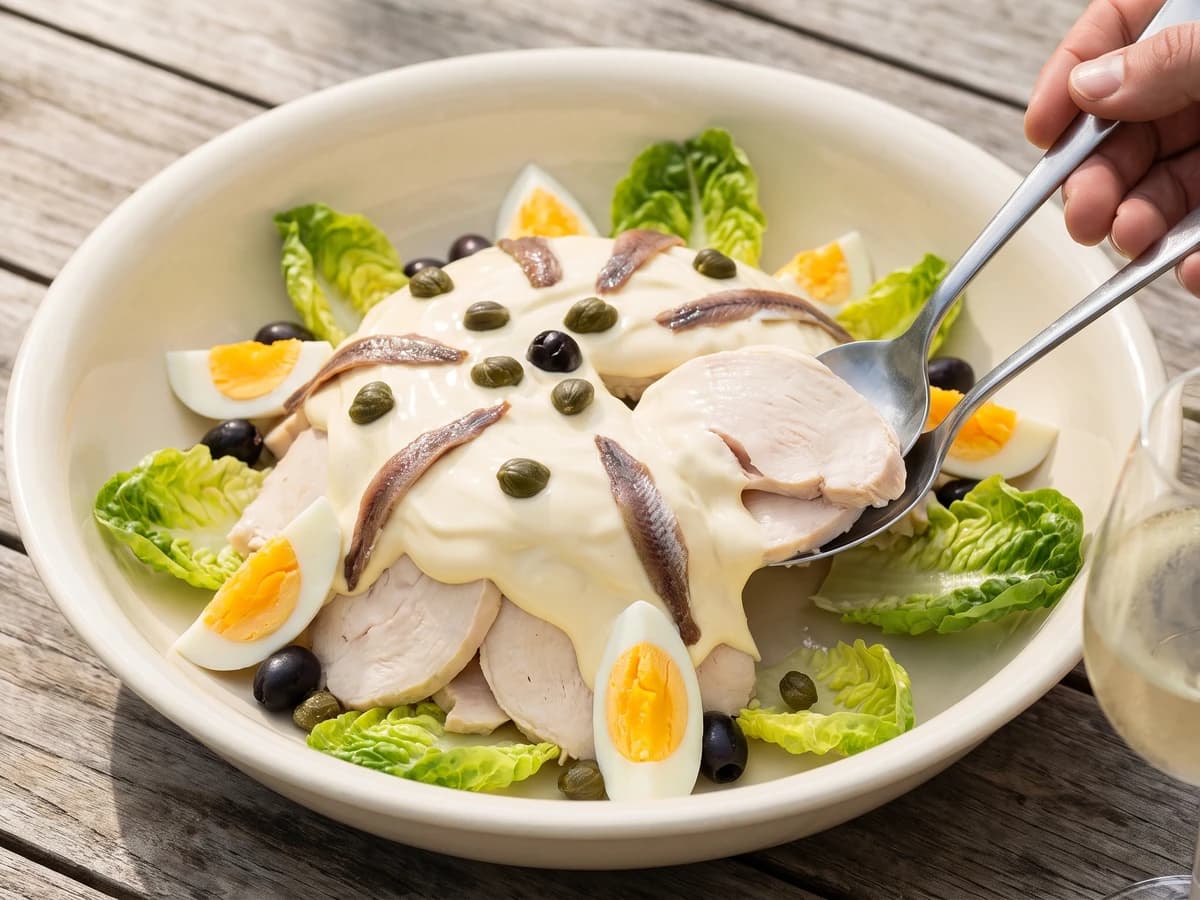
Crisp kohlrabi cut into matchsticks and tossed with tart apple, toasted caraway, and a simple mustard dressing. A German tradition that makes the case for this underappreciated vegetable.
Salads
German
BBQ
Weeknight
20 min
Active Time
0 min cook•20 min total
Yield6 servings
Kohlrabi is one of the most neglected vegetables at the market. People walk past it, unsure what to do with those strange pale green or purple orbs. But peel away the tough skin and you find flesh that is crisp as an apple, mild as a cucumber, with a faint sweetness that needs almost nothing done to it.
In Germany, kohlrabi gets the respect it deserves. Sliced raw into salads, braised with butter, or shredded into slaws like this one. Caraway is its natural partner there, that warm, faintly anise flavor that shows up in rye bread and sauerkraut. Toast the seeds briefly and they lose any harshness, becoming fragrant and almost sweet.
This slaw improves for the first hour as the dressing softens the kohlrabi slightly, but it holds its crunch far longer than cabbage ever could. Make it before your guests arrive and it will wait patiently. That is the nature of kohlrabi: sturdy, uncomplaining, and rewarding to those who pay attention.
The technique, the tradition, and the story behind every dish.
Warm a small dry skillet over medium heat. Add the caraway seeds and shake the pan gently for one to two minutes until fragrant and slightly darkened. The moment you smell them, they are ready. Transfer immediately to a plate to stop the cooking. Toasting wakes up the oils and transforms caraway from medicinal to warm and almost sweet.
2
Prepare the kohlrabi
Trim the stems and leaves from the kohlrabi if still attached. Peel away the tough outer skin with a sharp vegetable peeler or paring knife, removing enough to reach the pale, crisp flesh beneath. The skin is fibrous and will not soften. Cut each bulb in half, then into thin matchsticks using a mandoline or sharp knife. You want pieces about the width of a wooden matchstick, thin enough to be tender but substantial enough to hold their crunch.
If your kohlrabi came with fresh greens still attached, save them. They are edible and delicious sautéed with garlic and olive oil.
3
Cut the apple
Core the apple and cut into thin matchsticks to match the kohlrabi. Leave the skin on for color and texture. Work quickly here. The apple does not need a lemon bath if you dress the slaw promptly. The vinegar in the dressing will do that work.
4
Make the dressing
In a small jar or bowl, combine the olive oil, apple cider vinegar, Dijon mustard, honey, and salt. Shake or whisk until the mustard emulsifies everything into a smooth, pale dressing. Taste it. The balance should lean bright and tangy with just enough honey to round the edges. Adjust salt if needed.
5
Assemble the slaw
Place the kohlrabi and apple in a large bowl. Pour the dressing over and toss thoroughly with your hands or two forks. Add the toasted caraway seeds and most of the parsley, tossing again to distribute. Season with black pepper. Let the slaw rest for ten minutes at room temperature. This brief rest softens the kohlrabi just enough while it absorbs the dressing.
Unlike cabbage slaws, kohlrabi holds its crunch beautifully. It will not go limp even after an hour.
6
Taste and serve
Taste the slaw and adjust seasoning. It often wants more salt than you expect. Transfer to a serving bowl and scatter the remaining parsley over the top. Serve at cool room temperature. This slaw is a good companion to grilled sausages, roast pork, or anything that needs something crisp and bright alongside.
Chef Tips
•Choose kohlrabi that feels heavy for its size with smooth, unblemished skin. Smaller bulbs tend to be more tender. Anything larger than a tennis ball may have a woody core.
•The leaves attached to fresh kohlrabi tell you everything. Crisp, bright green leaves mean the bulb was harvested recently. Wilted or yellowing leaves suggest it has been sitting too long.
•Look for kohlrabi at farmers markets from late spring through early fall. It tolerates light frost, so autumn kohlrabi can be particularly sweet.
•A tart, crisp apple is essential here. Soft or mealy apples will disappear into the slaw. Granny Smith, Honeycrisp, or Pink Lady all work beautifully.
•This slaw pairs wonderfully with grilled bratwurst, roast pork shoulder, or smoked trout. It cuts through richness the way good German food should.
Advance Preparation
•The dressing can be made up to a week ahead and refrigerated. Shake well before using.
•The complete slaw holds well for up to four hours, covered and refrigerated. The kohlrabi stays remarkably crisp.
•Do not add the apple more than an hour before serving if you want it to maintain its texture.
Frequently Asked Questions
Nutrition Information
1 serving (about 160g)
Calories
115 calories
Total Fat
7 g
Saturated Fat
1 g
Trans Fat
0 g
Unsaturated Fat
6 g
Cholesterol
0 mg
Sodium
320 mg
Total Carbohydrates
12 g
Dietary Fiber
5 g
Sugars
6 g
Protein
2 g
Where cooking meets culture.
Culinary guides, cultural storytelling, and the editorial depth that makes cooking meaningful.